
Orangutans are among the world's most extraordinary primates, admired for their intelligence, gentle nature, and striking appearance.
Endemic to the rainforests of Borneo and Sumatra, these great apes spend almost their entire lives in the forest canopy, where they forage, build nests, and raise their young.
Watching an orangutan move effortlessly through the treetops or pause to study its surroundings is an unforgettable wildlife experience that highlights the remarkable connection between humans and our closest relatives in the animal kingdom. For wildlife photographers, orangutans offer a rare opportunity to capture authentic moments of emotion and behaviour in one of Earth's richest ecosystems.
Their expressive faces, slow movements, and natural curiosity make them exceptional photographic subjects, while the lush rainforest setting provides dramatic compositions unlike any other wildlife destination. Encountering an orangutan in the wild is not only a photographic highlight but also a powerful reminder of the importance of conserving these critically endangered great apes and the forests they call home.
Find them at the following tours
Overview
Orangutans are the largest tree-dwelling mammals in the world and are among our closest living relatives. Instantly recognisable by their long reddish-orange hair and remarkably expressive faces, they spend most of their lives moving quietly through the rainforest canopy in search of fruit and other food sources. Their slow, deliberate movements and thoughtful behaviour make every encounter feel personal.
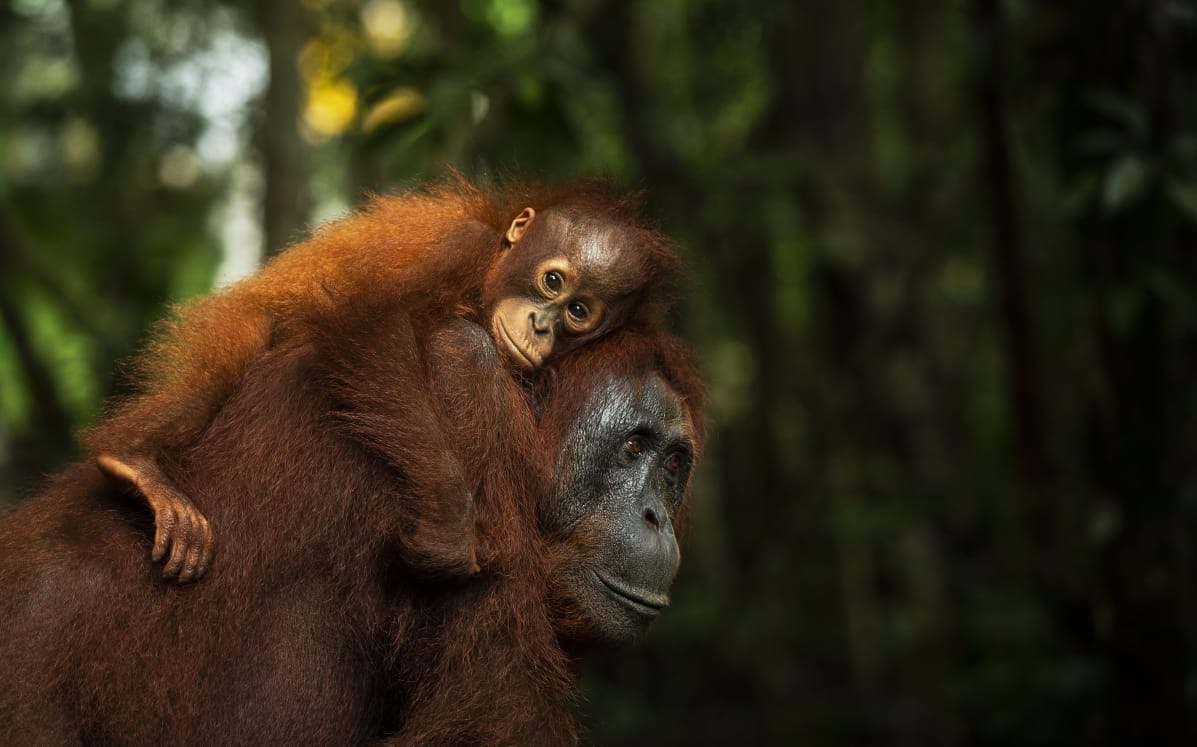
Found only on the islands of Borneo and Sumatra, orangutans inhabit some of the world's oldest tropical rainforests. Unlike many primates, they are largely solitary, offering photographers unique opportunities to capture intimate portraits and natural behaviours rather than large troop interactions. Whether a mother carefully guiding her infant through the trees or a dominant male calling across the forest, every sighting tells a compelling story.
As critically endangered great apes, orangutans face increasing pressure from habitat loss and deforestation. Responsible wildlife tourism plays an important role in supporting conservation while allowing photographers to witness one of the planet's most intelligent and charismatic animals in its natural environment.

Key Facts
Types and Habitats
There are three recognised species of orangutan: the Bornean Orangutan (Pongo pygmaeus), the Sumatran Orangutan (Pongo abelii), and the recently identified Tapanuli Orangutan (Pongo tapanuliensis). Each occupies tropical rainforest habitats, but they differ in distribution, behaviour, and population size.
Bornean orangutans are found throughout the forests of Borneo, including lowland rainforest, peat swamp forests, and riverine woodlands. Sumatran orangutans are restricted to the northern rainforests of Sumatra, where they spend almost their entire lives high in the canopy. The critically endangered Tapanuli orangutan is found only in the Batang Toru ecosystem of northern Sumatra, making it the rarest great ape in the world.
Dense tropical forests with abundant fruiting trees provide the food, shelter, and nesting sites these remarkable primates need to survive.
FAQ
Explore the Fascinating World of This Animal Through These Frequently Asked Questions (FAQs)
Where can I photograph orangutans in the wild?
What is the best time of year to photograph orangutans?
Are orangutans dangerous to humans?
Why are orangutans such a unique wildlife photography subject?
What threats do orangutans face in the wild?


