
Wildebeests are iconic African animals famous for their impressive migratory behavior and their crucial role in the savanna ecosystem.
The wildebeest is a migratory grazer found across the African savanna, known for its seasonal movements, herd behaviour, and role in one of the continent’s most dramatic wildlife spectacles.
Wildebeest photography capturesone of Africa’s greatest wildlife spectacles: the movement of enormous herdsacross the continent’s plains. Famous for the Great Migration, wildebeestprovide opportunities for dramatic action photography, sweeping landscapeimages, and intimate behavioural moments. Discover where to photographwildebeest, the best seasons for sightings, and techniques for capturing theseiconic African animals.
Find them at the following tours
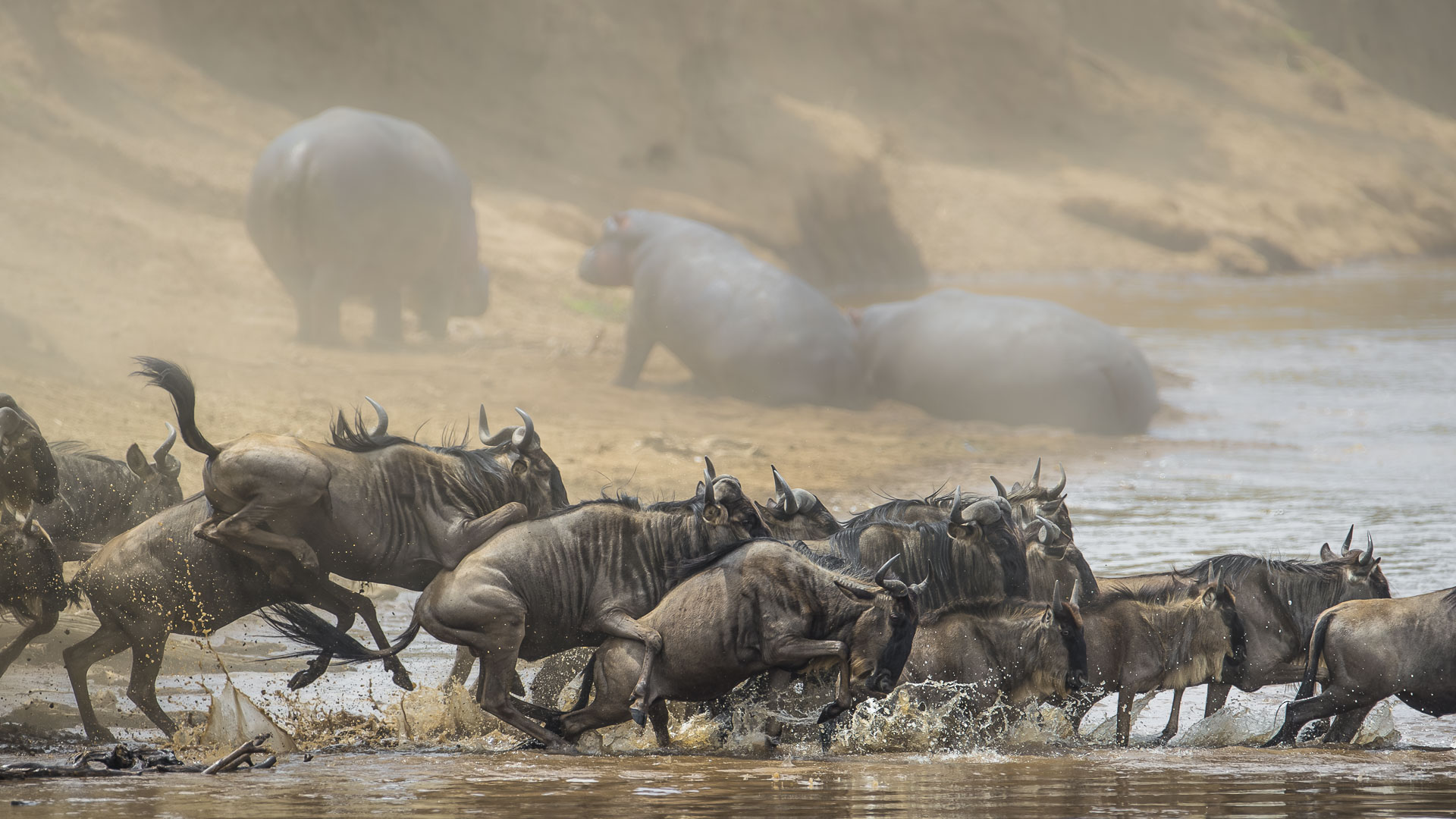
Overview
Wildebeest photography capturesone of Africa’s greatest wildlife spectacles: the movement of enormous herdsacross the continent’s plains. Famous for the Great Migration, wildebeestprovide opportunities for dramatic action photography, sweeping landscapeimages, and intimate behavioural moments. Discover where to photographwildebeest, the best seasons for sightings, and techniques for capturing theseiconic African animals.

Key Facts
Types and Habitats
There are two species of wildebeests: the blue wildebeest and the black wildebeest. The blue wildebeest, also known as the common wildebeest, is found in the grasslands and savannas of eastern and southern Africa. They inhabit a variety of habitats, including open plains, woodlands, and scrublands. The black wildebeest, on the other hand, is native to the grassy plains of South Africa. It prefers open habitats and is often found in areas with tall grasses. Both species of wildebeests are well-adapted to the grassland ecosystems, utilizing their grazing habits to feed on the abundant vegetation available.
Wildebeests are highly nomadic animals, constantly on the move in search of food and water. They are well-suited to grassy habitats, where their grazing helps maintain the balance of the ecosystem. Wildebeests have a specialized digestive system that allows them to efficiently extract nutrients from the tough grasses they consume. Their migratory behaviour is driven by the need to access fresh grazing areas as the seasons change.
WHERE TO FIND ME

FAQ
Explore the Fascinating World of This Animal Through These Frequently Asked Questions (FAQs)
Where is the best place to photograph wildebeest?
Why are wildebeest popular with wildlife photographers?
What is the Great Migration?
When is the best time to photograph wildebeest?
What camera lens is best for wildebeest photography?


