
Zambia Photo Safari in South Luangwa and the Luangwa Valley

South Luangwa rewards patient wildlife photographers with rich opportunities, especially during the dry season from May to October. A Zambia photo safari here can bring you close to varied wildlife and more than 400 recorded bird species. The right trip balances time in the field with the pace and support that suit you.
Choosing a safari involves more than picking a destination. Consider what you hope to photograph, how the experience suits your skill level, and whether a group trip or tailor-made journey fits your plans. This guide explores South Luangwa and the wider Luangwa Valley, including seasonal conditions, photography opportunities and how different safari formats shape your time in the field.
South Luangwa National Park covers over 9,000 km² of wilderness, with the Luangwa River shaping its landscapes. Plan around travel time, camp location and the kind of photographs you hope to make.
Look beyond close-up portraits: riverbanks, forest edges and open areas offer different ways to frame wildlife in its surroundings. On a South Luangwa itinerary, Chikunto provides a base inside the national park, while a six-night extension gives you more time in the area. Decide whether you prefer varied scenes or a longer stay focused on one landscape.
Walking safaris draw attention to tracks, plants and small details that can be easy to miss from a vehicle. Vehicle-based outings make it more practical to carry camera equipment and follow wildlife across wider areas. Choose the format that suits your mobility and photographic interests. Both depend on the guide’s direction and the conditions in the bush.
Keep a respectful distance from wildlife and follow your guide’s instructions during encounters. Don’t assume drones are suitable in a national park. Prioritize ground-based images and follow directions from park staff. Plan malaria prevention and vaccine advice with a travel-health professional, taking your itinerary and health history into account.
South Luangwa suits photographers drawn to riverine habitats and varied wildlife. Kafue and Lower Zambezi offer different landscapes, so compare the subjects and settings each itinerary emphasizes. For South Luangwa, flights from Lusaka to Mfuwe allow 15kgs of checked baggage and 3kg of hand luggage, including camera equipment. The transfer from Mfuwe Airstrip to Shawa Camp takes one hour.
Wildlife photography can suit beginners and experienced photographers, though each may benefit from a different focus. If you’re new to field photography, practise composing a clear frame and observing an animal’s movement before adjusting your camera. More experienced photographers can use each sighting to work on timing, background and visual storytelling.
Guides can support both approaches. They help interpret animal tracks and behaviour, offering clues about where wildlife may move. Use that insight to prepare your settings and position before a moment unfolds. You don’t need to fill every frame: a pause can help you notice how an animal relates to its surroundings.
Some Zambia safari vehicles have seats that rotate 360 degrees, which can help photographers adjust their view without changing position. Before a drive, organize your camera and spare batteries so you can respond without searching through your bag. Remote bush camps may run generators for limited periods each day, so arrive with backup batteries charged.
At Chikunto, image-review sessions give participants a chance to revisit photographs made during the safari. Bring a laptop with your preferred editing software installed if you plan to join. The sessions don’t teach participants how to use their editing software, so prepare your workflow before travelling.
Set a personal practice goal for each outing, such as tracking movement or strengthening a composition. Beginners can build confidence through repetition, while seasoned photographers can refine their choices as field conditions change. This simple approach makes each encounter useful, whether it yields a finished image or a lesson for the next opportunity.
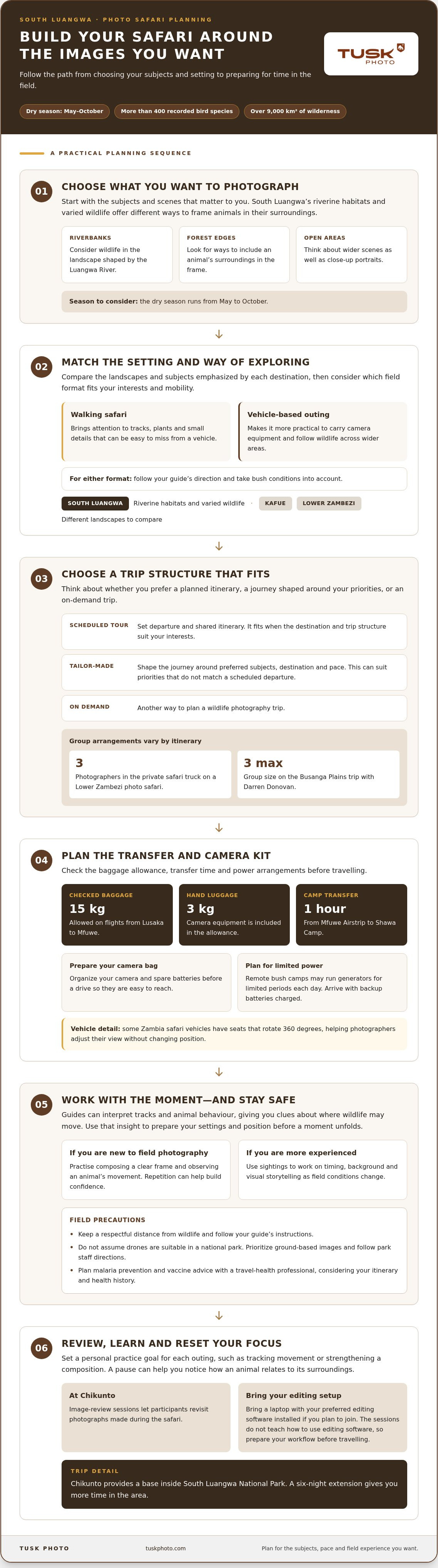
A small group can give a photography trip a shared focus while leaving room to work carefully at sightings. Group arrangements vary by destination: a Lower Zambezi photo safari includes a private safari truck for three photographers, while the Busanga Plains trip with Darren Donovan has a maximum group size of three. These details help you compare how each itinerary is organized.
Consider the kind of field experience you want. A leopard moving through woodland may call for patience and time to compose, while elephants or buffalo crossing open ground may invite wider frames. A smaller group can suit photographers who want to give each encounter attention, while a set itinerary determines the trip’s destination and structure.
A tailor-made journey gives you more room to shape the experience around your priorities. Centre your plans on particular wildlife, landscapes or a preferred pace, then consider how these choices affect the route and time spent in each setting. It’s a useful option if a scheduled departure doesn’t match the photographs you hope to make.
Before deciding, list your priority subjects, preferred travel pace and whether fixed dates work for you. Compare those priorities with the itinerary, group arrangement and destination. A clear brief makes it easier to choose between a planned departure and a journey shaped around your interests.
Explore tailor-made photographic tours to plan a journey around the wildlife, landscapes and pace you want.
Tusk Photo offers Scheduled Tours for photographers who want a planned journey with a set departure and shared itinerary. Choose this option when the destination and trip structure suit your interests and you’d like to travel with fellow wildlife photographers.
If you have a specific photography goal, Tailor Made Tours can shape a journey around your preferred destination, pace and subjects. On Demand Tours offer another way to plan a wildlife photography trip. Each format helps you match the experience to your interests, from photographing South Luangwa’s wildlife to exploring a different landscape.
First, decide what matters most: fixed dates, a journey designed around your interests, or an on-demand trip. Tusk Photo offers all three formats to help shape your plans. Contact Tusk Photo to discuss a Zambia safari.
Before choosing your next step, picture the moments you most want to experience in the Luangwa Valley. You might hope to follow a leopard through woodland, watch elephants at the river or spend quiet time composing bird images. That vision can guide the pace, setting and style of your Zambia photo safari.
Tusk Photo offers Scheduled Tours, Tailor Made Tours and On Demand Tours, giving you different ways to plan a journey. Choose a scheduled departure if its itinerary suits you, or explore a more personal route built around your photography interests. A clear sense of your priorities makes planning more focused.
Contact Tusk Photo to plan your safari and take the next step toward photographing Zambia’s wild places. Your story in the Luangwa Valley starts with a plan that feels right for you.
For clearer wildlife views, the dry season from May to October is a strong choice. October can bring increased predator activity as grazing dwindles and temperatures rise. The Green Season, from November to April, brings greener scenes and generally quieter wildlife sightings, though tall grass can hide animals. Choose dates according to whether open views or lush landscapes matter more to your photographs.
South Luangwa offers opportunities to photograph antelope, birds, wild dogs, elephants, buffalo and leopards. The park has 14 antelope species and more than 400 recorded bird species, so consider whether you want wide wildlife scenes or close portraits. For a Zambia photo safari focused on birds, build time into your plans for patient observation and changing light.
Chikunto and Shawa Camp are named in South Luangwa itineraries, but the best base depends on your route and photography priorities. Consider each camp’s position relative to the areas you’ll explore, how much time you want in the field, and whether the itinerary offers varied settings. A camp name alone doesn’t determine the photographs you’ll make.
A telephoto lens reaching beyond 400 mm is recommended for South Luangwa, especially when animals are distant. Bring fully charged backup batteries, since remote bush camps may run generators for limited periods. If you plan to join image-review sessions at Chikunto, bring a laptop with your preferred editing software installed. Pack with internal-flight luggage limits in mind.
Travelers commonly fly to Lusaka, then take an internal flight to Mfuwe for South Luangwa. Entry permits depend on your passport and itinerary, while vaccine advice depends on your route and health history. Discuss travel health with a qualified professional before departure. The Centers for Disease Control and Prevention identifies game-park tourists as among those at higher risk of sleeping sickness.


