
Wildlife Photography Workshop: Level Up Your Skills in 2026
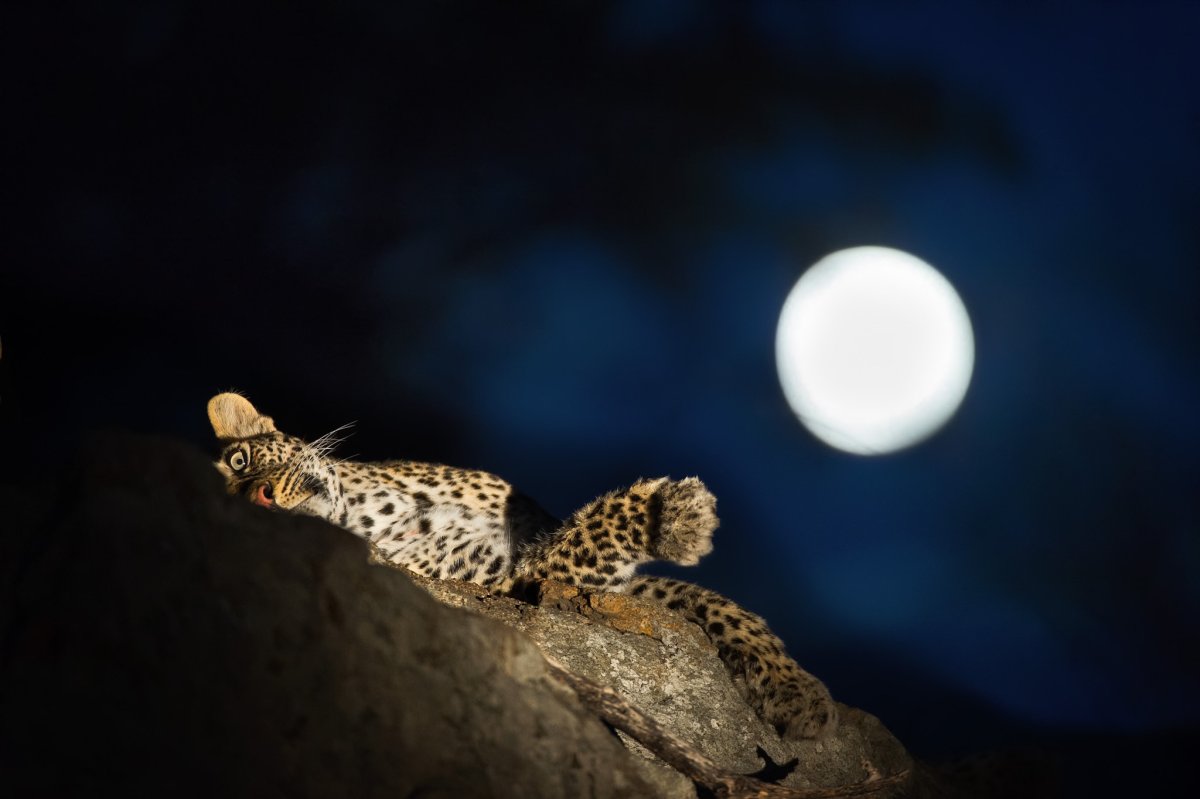

Imagine standing in the golden light of the savannah as a leopard shifts its weight, ready to spring. You look down at your camera dial, fumbling with your settings, and by the time you look back up, the moment is gone. Most photographers know that sinking feeling of missing a once in a lifetime shot because their gear felt like a puzzle. It's frustrating when your hard earned photos look flat or feel more like snapshots from a zoo than professional art. Joining a wildlife photography workshop in the field changes everything by giving you real time guidance while the action is actually happening.
We agree that the best way to learn is by doing, not by sitting in a classroom. You'll discover how hands on experience turns average shots into professional grade portfolio pieces that capture the true spirit of nature. We'll explore how you can master manual settings during high action moments, predict animal behavior, and build a world class portfolio in 2026.
Reading about a leopard's habits is a start. Seeing its muscles ripple as it prepares to hunt is an education. A wildlife photography workshop in the field takes you out of the theory and drops you into the heart of the action. It's the bridge between looking at a manual and feeling the shutter click at the exact right moment. You aren't just taking photos; you're learning to tell a story with your lens.
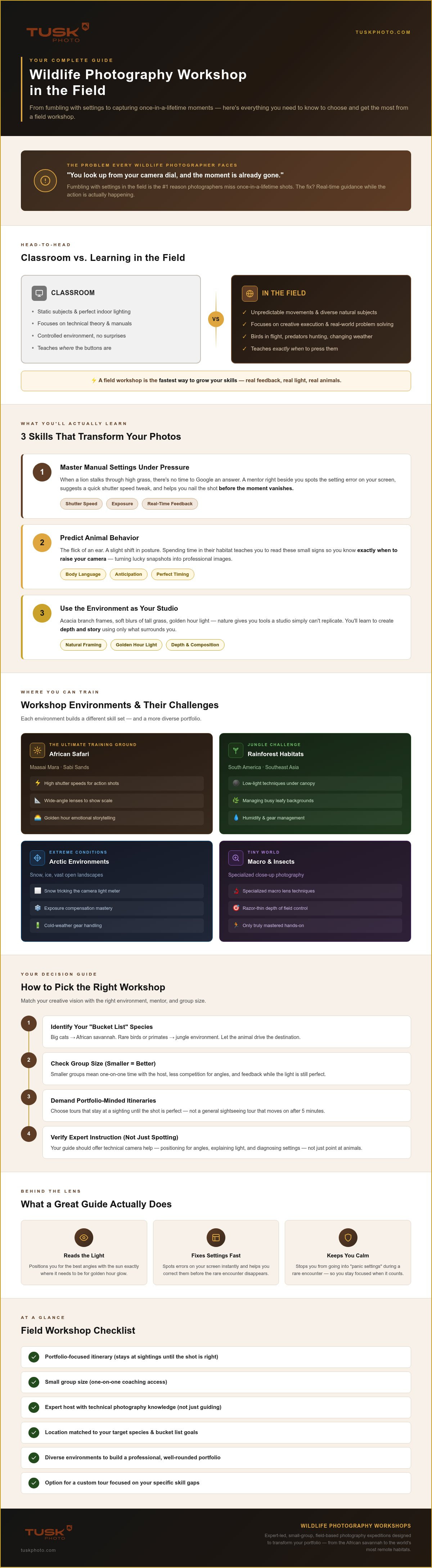
When you're in the bush, things happen fast. If your exposure is off while a lion stalks through the high grass, you don't have time to search for an answer online. Having a mentor right there means you get instant feedback. They can spot a setting error on your screen, suggest a quick tweak to your shutter speed, and help you nail the shot before the moment vanishes. This real time coaching fixes mistakes before they become missed opportunities.
Success in the wild isn't just about your camera. It's about knowing what the animal will do next. By spending time in their habitat, you learn to spot the flick of an ear or a specific change in posture. These small signs tell you when to get ready. This anticipation is what turns a lucky snapshot into a professional image. You'll also learn to use the natural environment, like a frame of acacia branches or the soft blur of tall grass, to create depth that a studio simply can't replicate.
Professional guides do more than just drive. They understand the dance of light and shadow. During our journeys, our expert guides prioritize your learning during every drive, ensuring you don't fall into "panic settings" when a rare encounter happens. They help you position for the best angles, making sure the sun is exactly where it needs to be for that golden hour glow. This guidance helps you stay calm and focused when the action peaks.
A classroom is great for learning where your buttons are, but the field teaches you exactly when to press them. In a controlled room, everything is static. In the wild, you're dealing with birds in flight, predators on the hunt, and changing weather. This hands on approach is why a wildlife photography workshop in the field is the fastest way to grow your skills.
Static subjects and perfect indoor lighting.
Unpredictable movements and diverse, natural subjects.
Focuses on technical theory and manuals.
Focuses on creative execution and real world problem solving.
Choosing a wildlife photography workshop in the field allows you to target specific environments that challenge your current skills in new ways. Every landscape offers a different lesson. In the Arctic, you might struggle with bright snow tricking your camera's light meter. In a dense rainforest, the challenge is finding enough light under the thick canopy while managing high humidity. These workshops provide the perfect setting to build a diverse, professional portfolio that shows you can handle any situation nature throws at you.
The vast plains of the Maasai Mara or the thickets of Sabi Sands are famous for a reason. They offer some of the most dramatic action on the planet. Here, you'll learn to capture the raw emotion of a big cat hunt or the quiet dignity of an elephant at sunset. It isn't just about the animals; it's about learning how to use wide angle lenses to show the subject within its massive environment. If you're ready to start your journey, check our scheduled departures to see which dates align with the best wildlife action. This type of expedition is a major step in your wildlife photography trip planning, moving you from local parks to world class destinations.
Different terrains require a shift in your technical approach. On the dusty plains of Africa, you might focus on high shutter speeds to freeze a sprinting cheetah. In the humid jungles of South America, you'll need to master low light techniques and manage busy, leafy backgrounds to make your subject stand out. Even the tiny world of insects requires specialized macro techniques that you can only truly learn through hands on practice. Adapting your style to the specific species you're tracking is a core part of the experience. Every wildlife photography workshop in the field we lead is designed to help you navigate these unique environmental hurdles. If you want a trip designed just for your interests, a custom tour might be the perfect way to focus on the specific skills you want to grow.
Finding the right wildlife photography workshop in the field is about more than just picking a destination. It's about matching your creative vision with the right environment and mentor. Many people get bogged down in gear lists, but the real secret to a great trip is the quality of the instruction and the focus of the itinerary. You want a journey designed for photographers, not just a general sightseeing tour where the vehicle moves on as soon as the guide spots an animal.
Start by identifying your "Bucket List" species. If you're passionate about big cats, an African savannah is your best bet. If you prefer rare birds or primates, a jungle environment might be better. Once you've picked a location, look at the group size. A wildlife photography workshop in the field works best when the group is small. This ensures you get one on one time with the professional host, allowing them to look at your screen and give specific advice while the light is still perfect.
Choose tours that prioritize staying at a sighting until the shot is perfect.
Make sure the professional host offers technical help, not just animal spotting.
Smaller groups mean less competition for the best angles and more personalized coaching.
If you have specific portfolio needs or a tight schedule, a custom tour offers the ultimate flexibility. You can focus entirely on one species or technique. On the other hand, joining a scheduled safari is a fantastic way to learn alongside like minded photographers. These trips are precision timed for peak wildlife action, offering a social and inspiring environment to grow your skills.
You don't need the most expensive lens on the market to create art. It's far more important to know your current gear inside and out. Before you head out, set one or two realistic goals, like mastering backlighting or improving your tracking of fast moving subjects. For more help getting ready, check our wildlife photography tips for beginners. This prep work ensures you arrive with a clear head and a ready camera.
Mastering wildlife photography isn't about reading more books; it's about being in the moment when the action happens. By choosing a wildlife photography workshop in the field, you give yourself the chance to learn from real world challenges while receiving instant feedback from the pros. Whether you are tracking predators on the savannah or managing light in the Arctic, the right environment will push your creative boundaries and help you build a portfolio you are truly proud of.
Our expeditions are led by world renowned photography hosts who provide personalized coaching in small group settings. You'll gain exclusive access to top wildlife destinations, ensuring every moment is spent focusing on your craft. It's time to move past "zoo shots" and start creating impactful art that tells a story. We believe that with the right guidance, anyone can turn a passion for nature into a professional grade collection of images.
Ready to take the next step? Explore our upcoming wildlife photography workshops in the field and join us for an unforgettable journey in 2026. We can't wait to see the incredible shots you'll bring home.
You can expect early starts to catch the best morning light and long days spent in the heart of nature. Most of your time is spent tracking animals and learning how to position your vehicle or yourself for the best possible angle. It's an active, hands on experience where you learn by doing rather than just listening to a lecture.
No, you don't need the most expensive professional gear to participate and learn. While a camera with a decent zoom lens is helpful for wildlife, our focus is on teaching you how to master the equipment you already have. We prioritize composition, timing, and understanding light over having the latest camera body or lens.
Yes, getting help with your specific gear is a major benefit of a wildlife photography workshop in the field. Instructors are right there with you to look at your settings and suggest quick changes to your shutter speed or aperture. This real time coaching helps you nail the shot while the animal is still in view.
They are very safe and welcoming for photographers of all experience levels. You'll be guided by experts who have years of experience in animal behavior and wilderness safety. They know exactly how to keep a respectful distance while still getting you close enough to capture incredible, professional grade images for your portfolio.
We keep our groups small to make sure everyone has plenty of space and personal attention. Usually, there are only a few photographers per vehicle, which gives you a clear line of sight for every sighting. This smaller setting allows for a much more relaxed and focused learning environment compared to larger tours.
We often keep shooting because "bad" weather can actually create some of the most dramatic and moody photos. Rain, mist, or stormy skies often lead to unique shots that stand out from typical sunny day photos. If the weather is truly too rough to be outside, we use that time for indoor editing tips or gear care.


