
Wildlife Photography Tour South America: 5 Regions to Explore
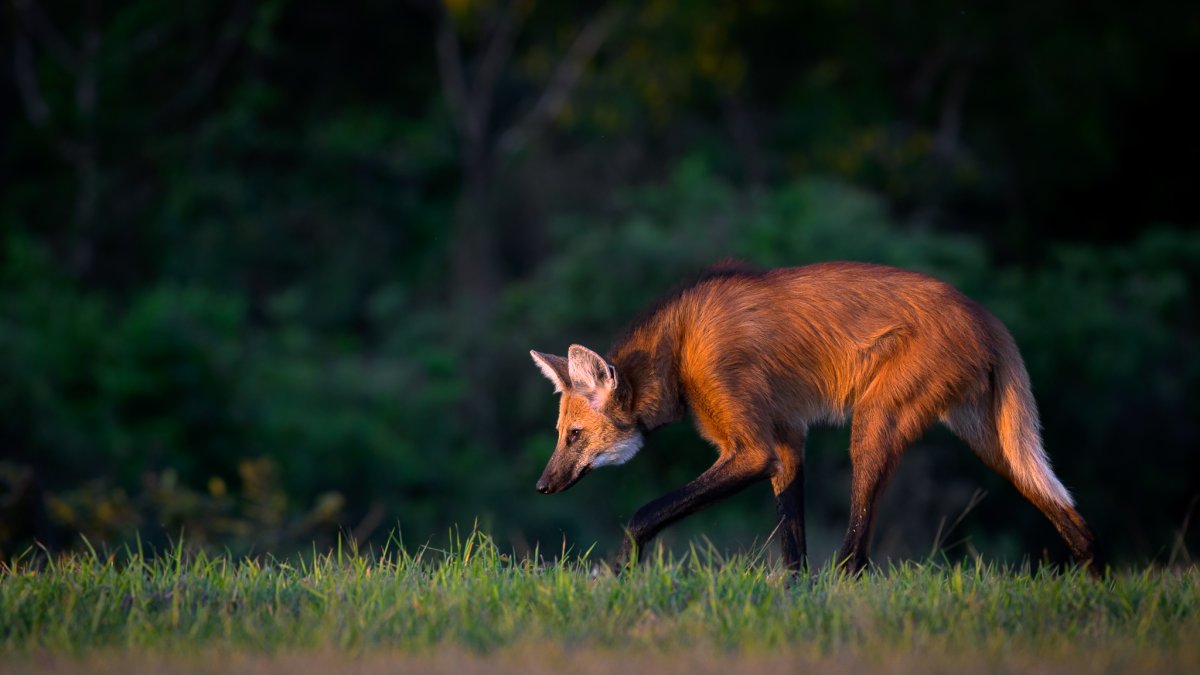

The region with the most famous animal isn’t always the best match for your camera. A wildlife photography tour South America can take you to jaguars in the Pantanal, birds in cloud forests, pumas against Patagonia’s open landscapes, or wildlife in the Galápagos and Amazon. The right choice depends on the habitat and the images you want to make, not just the species on your wish list.
With so many different landscapes, it can be hard to know where to begin. This guide compares five regions by habitat and photographic subject, then covers practical ways to choose a trip that suits your interests and experience. Tusk Photo’s experienced guides lead expeditions for beginners and seasoned photographers, with scheduled, tailor-made, and on-demand options.
South America brings together wetlands, rainforest, volcanic islands, mountains, and wide-open plains. Each setting creates a different photographic challenge, from working around dense foliage to framing wildlife against a broad landscape. Comparing these habitats is a practical first step when choosing a wildlife photography tour in South America.
Habitat affects where animals move, how easy they are to see, and what surrounds them in a photograph. Think about the setting as well as the species. A close encounter in thick forest calls for a different approach from photographing wildlife across open country.
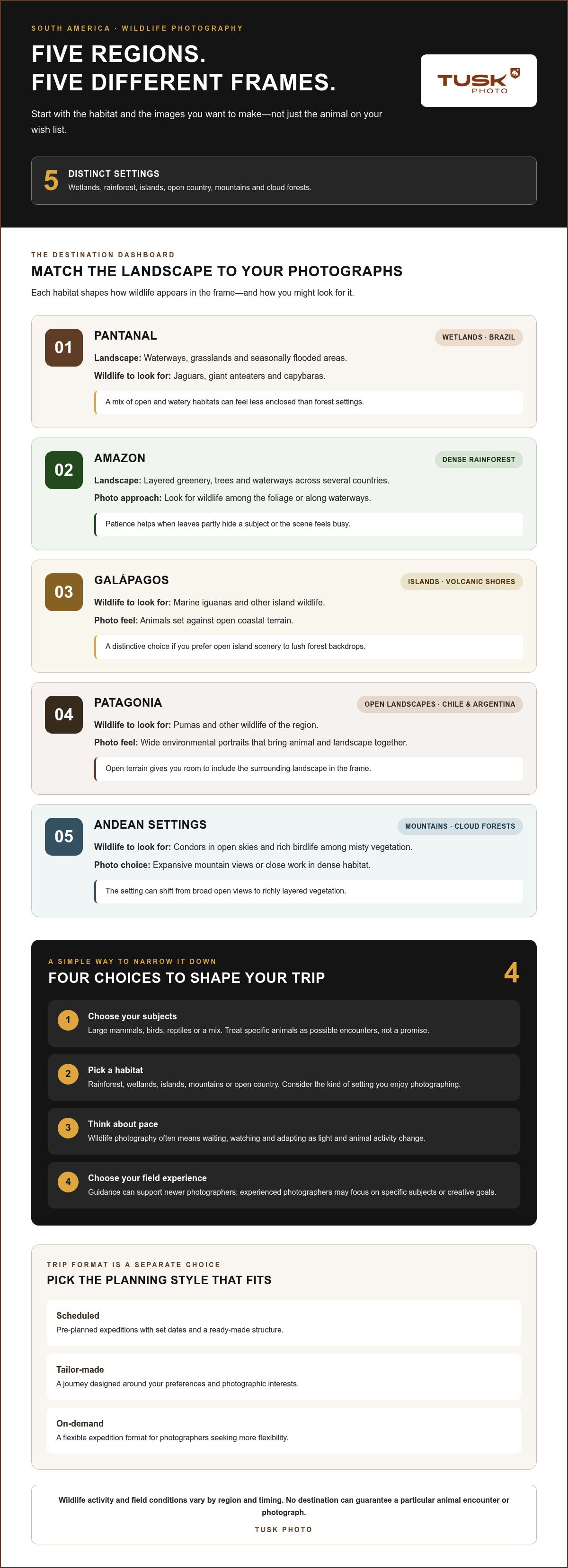
This vast Brazilian wetland combines waterways, grasslands, and seasonally flooded areas. Jaguars, giant anteaters, and capybaras are among the wildlife photographers may hope to encounter. Its mix of open and watery habitats can offer views that feel less enclosed than forest settings.
Dense rainforest across several countries suits photographers drawn to layered greenery and wildlife glimpsed among trees or along waterways. Patience matters when foliage partly hides a subject, so think about whether you enjoy looking for details within a busy scene.
Island shores and volcanic landscapes create a distinctive backdrop for wildlife such as marine iguanas. Choose this setting if you’re drawn to the contrast between animals and open coastal terrain rather than lush forest.
Open landscapes across Chile and Argentina suit wide environmental portraits, with pumas among the wildlife photographers may seek. The varied terrain also gives you room to bring landscape and animal photography together in one frame.
High mountain scenery and cloud forests offer very different subjects, including condors in open skies and rich birdlife among misty vegetation. Decide whether you prefer expansive views or close work in dense habitat.
Start with the photographs you want to make, then choose a setting and trip style that suit them. This helps you compare destinations without expecting nature to follow a schedule. Use these four steps to narrow down the right wildlife photography tour in South America.
Decide whether you’re drawn to large mammals, birds, reptiles, or a mix. Treat particular animals as possible encounters, not a promise.
Consider rainforest, wetlands, islands, mountains, or open country. Think about whether you’d enjoy looking for subjects through dense greenery, watching a shoreline, or framing an animal against a wide landscape.
Wildlife photography often involves waiting, watching, and adapting as light and animal activity change. A flexible mindset is more useful than a packed shot list.
If you’re new to wildlife photography, guidance can help you feel more confident in the field. Experienced photographers may want to focus on specific subjects or creative goals. Tusk Photo’s guided expeditions are designed for both beginners and seasoned photographers.
Picture the final image: an animal in its habitat, a close portrait, or a bird in flight. That can help narrow your choice of landscape. Then think about what you enjoy while making pictures. Forest settings call for patience when foliage blocks a clear view. Open terrain can offer wider compositions, though the light changes. Conditions and wildlife activity vary by region and time, so leave room to adapt. No destination can guarantee a particular animal encounter.
New to wildlife photography? Practise observing carefully, being patient, and adapting to changing conditions before you travel. A tailor-made journey can be built around your photographic interests and preferred pace. Explore custom wildlife photography tours if you want a more individual plan.
Good planning leaves room for the unexpected. Wildlife activity and field conditions vary with location and timing, so plan around the habitat and photographic experience you want rather than a fixed list of shots. A guide can help you read changing conditions, notice animal behavior, and make thoughtful choices in the field. Their local knowledge also supports respectful wildlife viewing.
When planning a wildlife photography tour in South America, separate your destination choice from your trip format. The format shapes how the journey is planned, but it can’t guarantee a particular region, animal encounter, or photograph.
Scheduled departures are pre-planned expeditions with set dates, making them a good fit if you prefer a ready-made structure. Browse scheduled tour dates to consider the timing and focus of available journeys. Tailor-made trips are designed around your preferences and photographic interests, so the experience can reflect your priorities. Tusk Photo also offers on-demand tours for photographers seeking a more flexible expedition.
Before choosing, write down the subjects and habitats that matter most, how much flexibility you’d enjoy, and what support would help you feel ready in the field. Tusk Photo’s experienced guides lead journeys for beginners and seasoned photographers. Browse Tusk Photo wildlife photography tours to compare the available planning styles and find a next step that suits you.
Let the images you hope to create guide your next step. A wildlife photography tour in South America gives you a starting point for planning around a habitat, a subject, and the kind of time you want in the field. With experienced photography guides alongside you, you can focus on observing carefully and responding to what nature offers, rather than chasing a guaranteed shot.
Think about whether a scheduled expedition, a tailor-made journey, or an on-demand tour best fits the way you like to travel. Each offers a different path from inspiration to planning, with your photographic interests at the center. Tusk Photo brings these options together for photographers ready to keep exploring.
Explore Tusk Photo wildlife photography tours and take the next step toward a journey shaped by curiosity, patience, and a love of the wild.
It depends on the region and the wildlife you hope to photograph. In Brazil’s Pantanal, the dry season from April to October is considered the best time for wildlife spotting, as animals gather near remaining water sources. Other South American habitats follow different patterns, so plan your travel timing around your destination and photographic interests.
No, professional equipment isn’t a requirement for a wildlife photography tour in South America. A camera you know how to use is a good starting point. Before travelling, practise adjusting focus and exposure, and consider whether your equipment suits the subjects you’re drawn to, such as nearby wildlife or animals framed in a broad landscape.
No. Wild animals move freely, so sightings and photo opportunities can’t be guaranteed. Even in a habitat known for a particular species, animal movements, weather, and visibility can affect what you see. Stay open to photographing the wider setting or other wildlife, and treat each encounter as a privilege rather than a promised result.


