
Wildlife Photography in Low Light: How to Capture Magic After Sunset
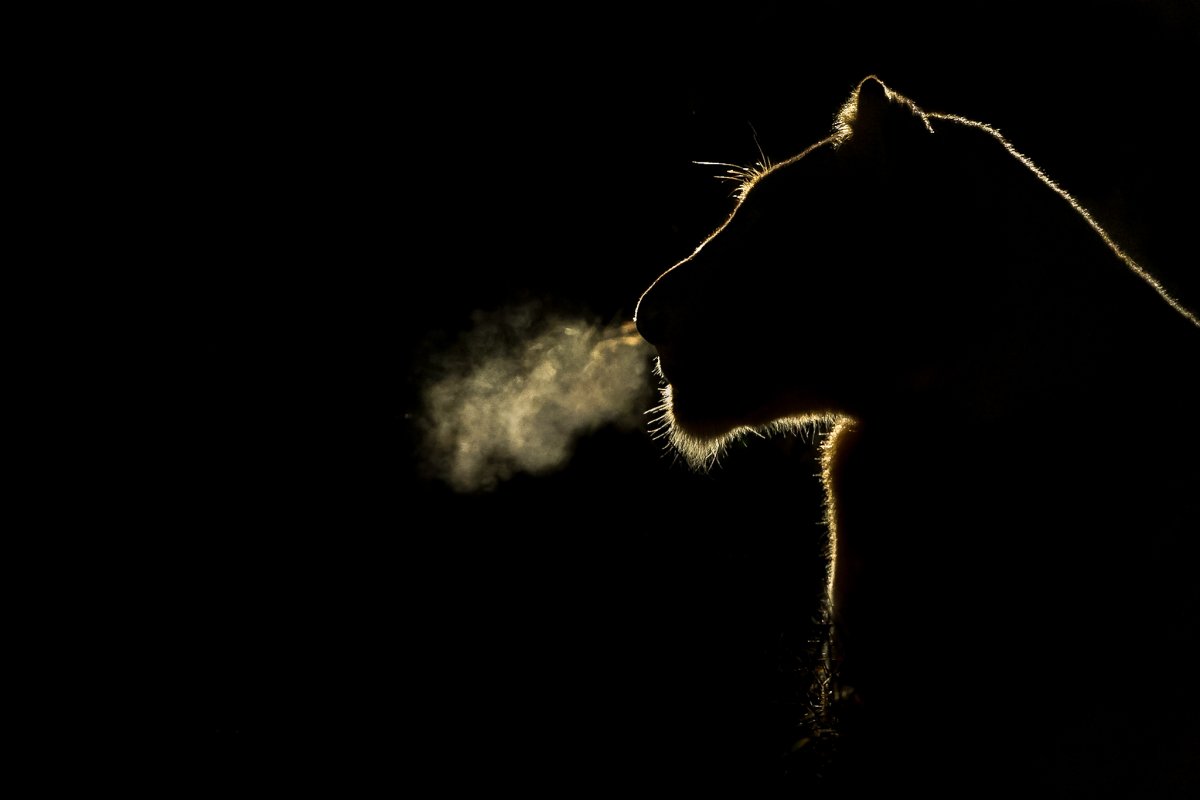

The most magical moments in the wild don't happen under the bright midday sun; they unfold in the fading shadows of dusk. You've likely felt the frustration of packing up your gear just as the bush comes to life because you're worried about grainy, blurry images. It's tough when your camera struggles to focus on a beautiful subject right in front of you. We've all been there, feeling like we're missing out on the best part of the day.
The good news is that wildlife photography in low light doesn't have to be a technical nightmare. You can capture sharp, moody photos that look professional without getting lost in confusing jargon. This guide will show you how to use simple settings and 2026's latest AI autofocus tools to gain total confidence after sunset. We'll look at easy ways to keep your shots clear and your portfolio full of stunning, atmospheric animal portraits.
Many photographers pack up when the sun dips low, but that's actually when the magic begins. While bright midday sun creates harsh shadows and flat colors, low light adds a deep sense of mood and mystery. It tells a story that high-noon shots just can't match. This is also when the wild truly wakes up. Most animals are most active during the cooler hours of dawn and dusk; this gives you the best chance for action shots like a hunting leopard or a playful cub.
Low-light wildlife photography is the art of using dim, natural light to create dramatic and emotional portraits. One of the best times for this is "The Golden Hour." This is that soft, warm glow just before the sun vanishes. It paints fur and feathers in a rich, golden light that makes your subjects look like they're glowing from within. Mastering wildlife photography in low light allows you to turn a standard animal sighting into a professional-looking portfolio piece.
You don't always need to see every detail of an animal to make a great photo. Sometimes, less is more. Look for silhouettes; a dark outline of a lion against a fiery orange sky is incredibly powerful. You aren't worried about the texture of the mane, but the strength of the shape. Even in the dimmest settings, try to keep the focus on the eyes. A sharp, glinting eye in a dark frame pulls the viewer in and makes the whole image work. On our scheduled tours, our guides act as mentors to help you find these angles in real-time. This ensures you don't miss the shot as the light fades.
Keeping your camera steady is the first step to success. In the dim light of dusk, even a tiny hand shake can ruin a photo. Use a beanbag on the safari vehicle's edge or a tripod to keep things still. This stability is vital for wildlife photography in low light because it allows you to use slower speeds without the blur. It's a simple way to ensure your images stay crisp as the day ends.
Don't be afraid to bump up your ISO. This setting makes your camera more sensitive to light. While it might add a bit of "grain" or texture to the shot, this often adds a film-like character that feels authentic and moody. Think of opening your lens wide like opening a large window; it lets in every bit of available light to brighten the scene. If you're struggling with focus, pick one specific animal to track. This helps your camera's "brain" lock on quickly in the dark.
You don't need to be a tech wizard to get great results. Try using "Aperture Priority" mode. It keeps your lens wide open for maximum light while the camera handles the rest. However, keep an eye on your shutter speed to ensure it's fast enough to stop a moving leopard in its tracks. If you need a refresher on the basics, check out our guide on Wildlife Photography Tips for Beginners.
On our scheduled tours, our guides act as mentors to help you adjust these settings in real-time. This hands-on support means you can focus on the animals while we handle the technical hurdles together in the field.
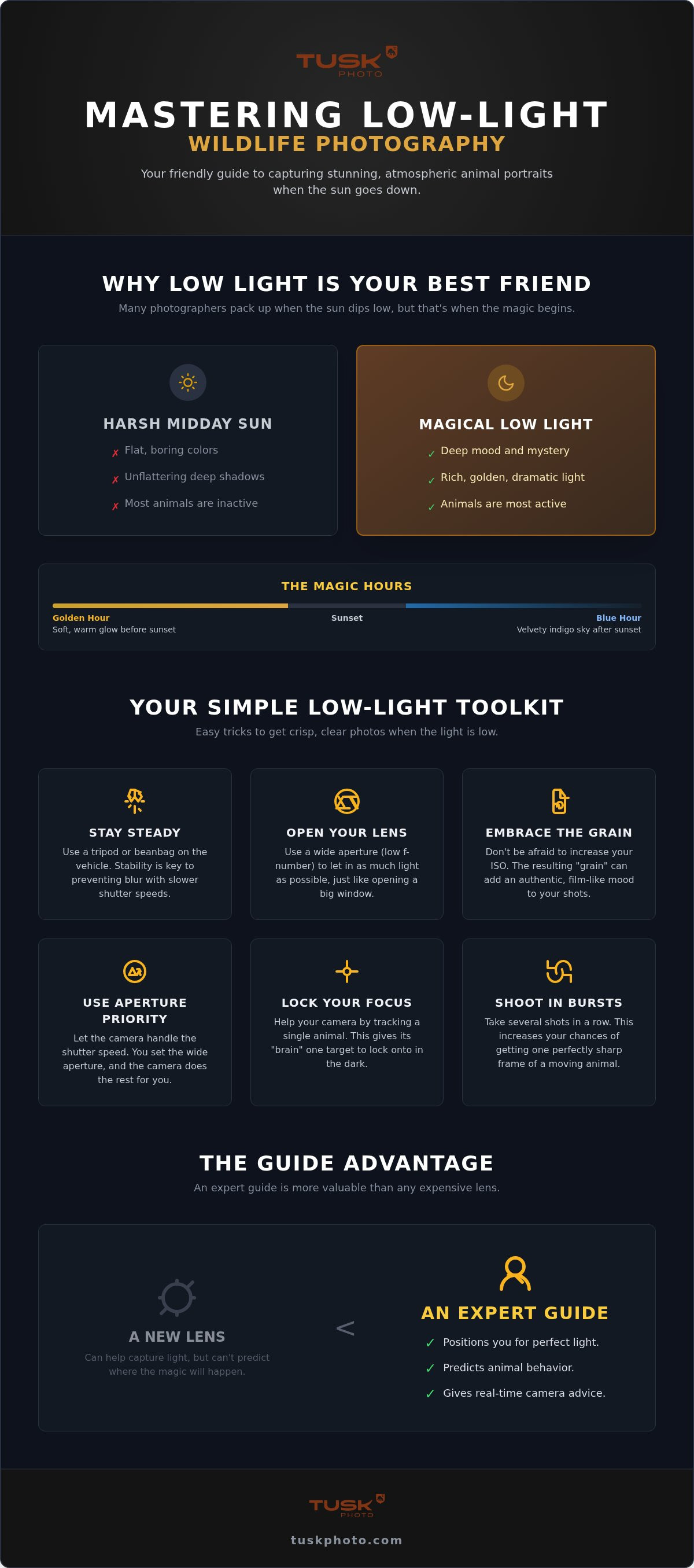
While having the latest camera is a great start, the real secret to wildlife photography in low light is being in the right spot at the right time. An expert guide knows exactly where to position the vehicle so the dying light hits a lion's mane or a leopard's spots perfectly. They don't just find animals; they find the light. On a scheduled photography tour, you're surrounded by a community of fellow enthusiasts who help spot subjects and share the excitement of a rare find.
Our guides act as mentors, literally standing right next to you as the sun dips below the horizon. They'll suggest settings on the fly as the shadows stretch, helping you master your gear in real-time. If you want even more flexibility, our custom tours allow you to stay out longer. This means you can wait for that stunning "Blue Hour" moment after sunset when the sky turns a deep, velvety indigo.
A guide's greatest tool is their understanding of animal behavior. They can often predict where a predator will move before the light disappears entirely. This foresight is more valuable than any expensive lens when you're perfecting your wildlife photography in low light. Because we prioritize small groups, you'll always have the space to move and find that perfect angle for a dramatic silhouette. Our Tailor Made Tours offer the best way to focus on specific elusive species like leopards without the rush of a standard safari.
You've seen how the fading sun can transform a standard animal sighting into a dramatic, atmospheric story. By embracing a bit of grain and keeping your camera steady, you can master wildlife photography in low light without feeling overwhelmed by technical dials. It's all about being in the right place when the "Blue Hour" begins. Our professional photography hosts lead every expedition to ensure you have access to world-class wildlife destinations and the best possible position in the vehicle. These experiences are tailored for all skill levels; you'll feel confident whether you're just starting out or looking to refine your portfolio.
Ready to master the light? Explore our 2026 Scheduled Tours and join an expert-led expedition. The wild is waiting for you to capture its most quiet, powerful moments under the stars.
Stopping blur starts with keeping your shutter speed high and your camera steady. While you might be tempted to use a slow speed to let in light, it's better to stay fast and use burst mode. Taking several shots in a row increases your chance of finding that one perfectly sharp frame when you're practicing wildlife photography in low light.
It's generally better to avoid using a flash because it can disturb the animals and ruin their natural behavior. Most ethical safari operators and parks discourage or even ban flash photography. Instead, work with the available light or the subtle spotlights used by your guide. This approach respects the environment while creating much more atmospheric, moody images.
You should set your ISO high enough to maintain a fast shutter speed, often between 1600 and 6400. While higher numbers can create some grain, modern AI noise-reduction tools make this easy to clean up later. High ISO is a vital tool for wildlife photography in low light because it ensures you don't lose a precious shot to motion blur.
You don't necessarily need a tripod because they can be difficult to manage in a moving vehicle. A beanbag is much more flexible for following a moving subject. Since Tusk Photo limits group sizes, you'll have enough room to brace your camera against the vehicle's frame, which provides plenty of stability for most evening shots.


