
Wildlife Photography Composition Techniques: Easy Ways to Take Better Photos in 2026
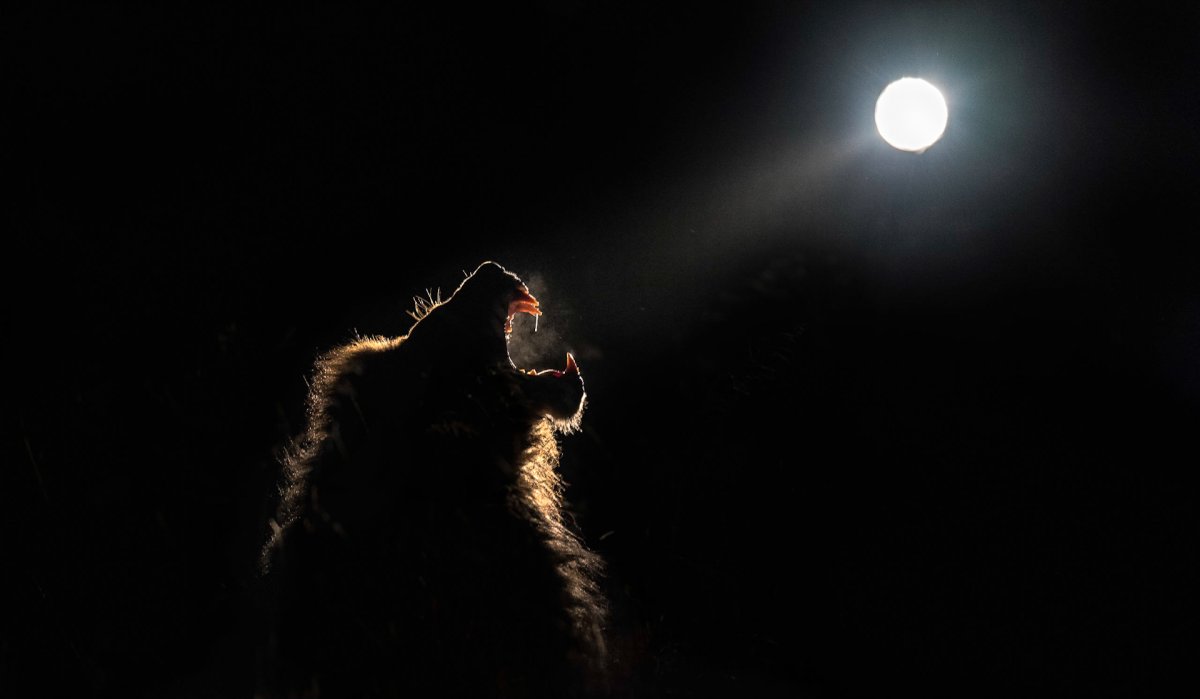

You've finally tracked a leopard through the tall grass, but when you look at your screen, the cat is lost in a messy blur. It's frustrating when a rare moment feels cluttered or the subject looks too small. Mastering wildlife photography composition techniques is the fastest way to fix this. In 2026, great photos go beyond sharp focus. They're about how you arrange the scene to tell a story.
We've all felt the sting of coming home with photos that don't capture the magic of the moment. You'll learn the simple framing secrets that turn ordinary snapshots into professional-quality wildlife stories. This guide provides clear, actionable rules for your next trip. We'll explore how to place your subject for impact and use the environment for depth. Our expert guides help guests spot these moments on our tailor-made tours, so you can apply these same habits to your own work.
Starting with the basics makes a huge difference. Most beginners place the animal right in the center of the frame. While this feels natural, it often makes the photo look static. Instead, try using the Rule of Thirds. Imagine a grid on your screen with two horizontal and two vertical lines. Placing your subject where these lines cross creates a much more balanced and interesting image. It's one of the most effective wildlife photography composition techniques because it guides the viewer's eye through the whole scene.
Movement is another key part of a great shot. If an animal is running or flying, use "Active Space." This means leaving more room in front of the animal than behind it. It gives the subject somewhere to go and makes the viewer feel the action. On our Scheduled Tours, our expert guides help you practice this in real-time. They show you exactly how to adjust your framing as the action unfolds.
It's tempting to zoom in as much as possible to see every detail. However, filling the frame too tightly can make the animal feel trapped. Using negative space in photography helps the subject stand out and tells a bigger story about their home. Our Tailor Made Tours are perfect for this; they allow you to spend more time with a single subject until you find that perfect balance. Looking room is simply the empty space in front of an animal’s eyes. By leaving this space open, you create a sense of curiosity; the viewer starts to wonder what the animal is watching.
One of the most powerful wildlife photography composition techniques is simply changing your height. Most people take photos from a standing position or a high vehicle seat. This creates a "top-down" view that makes the animal look small and distant. By getting down to eye level, you enter the animal's world. This perspective creates an intimate connection that makes the viewer feel like they're right there in the grass with the subject.
Lowering your camera also does wonders for your background. When you shoot from a low angle, the ground behind the animal falls away. This creates a smooth, blurry background that makes your subject pop. It also gives the animal a heroic look; it makes even a small bird appear grand and important. Achieving this from a safari vehicle can be tricky. Our hosts are experts at positioning the vehicle to give you the best possible vantage point without disturbing the wildlife.
The eyes are the first thing anyone looks at in a photo. They're the window to the animal's soul and the key to a professional shot. If the eyes aren't sharp, the whole image feels off. Always make sure the eye closest to your camera is the sharpest point in the frame. This tiny detail is what separates a snapshot from a masterpiece.
Patience is your best friend here. You often have to wait for that split second when the animal looks toward your lens. These moments of connection are rare, but they're worth the wait. Our scheduled departure photography tours are designed to give you the time needed for these moments. We don't rush sightings, so you can focus on getting that perfect, eye-to-eye frame.
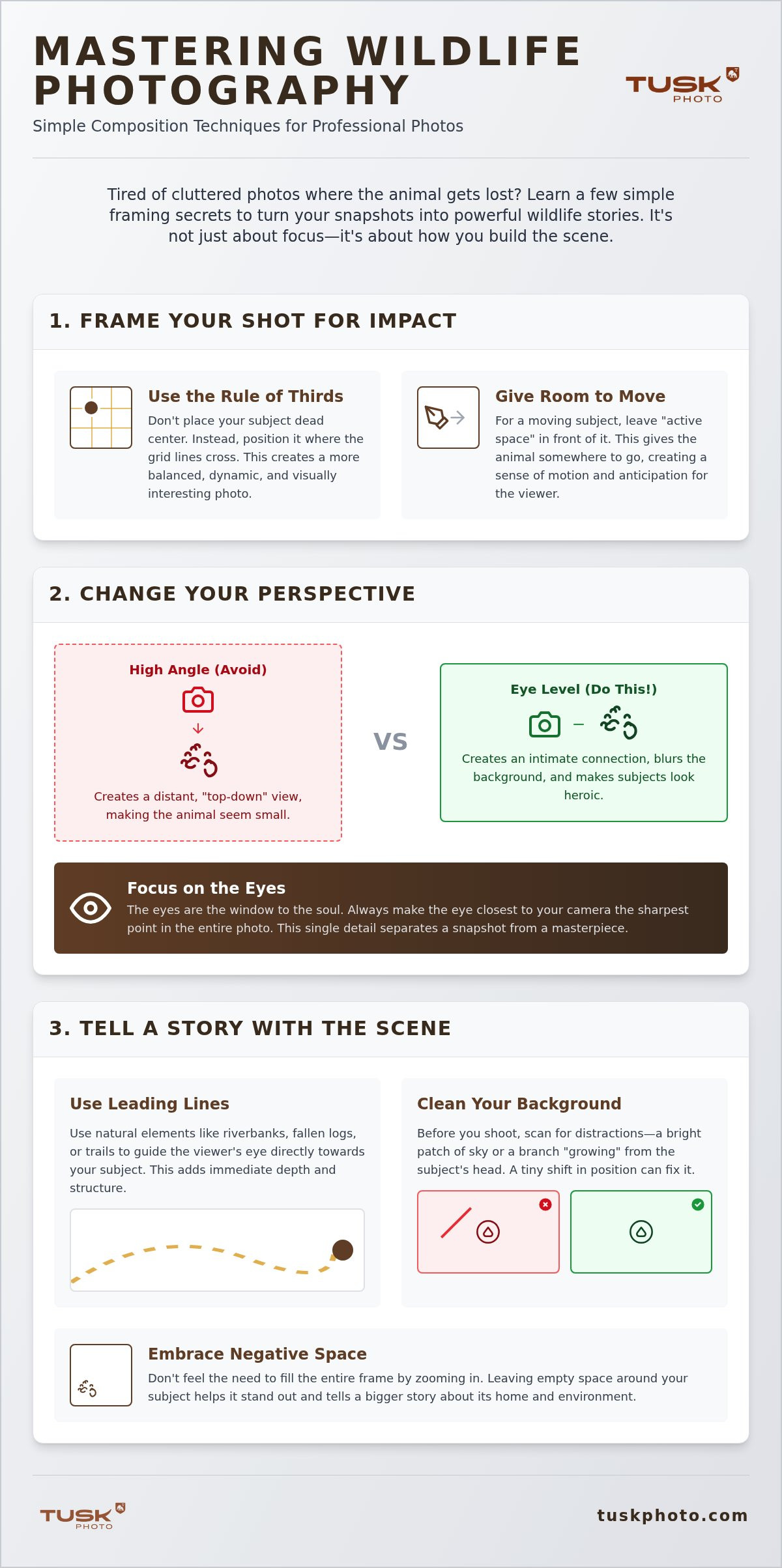
Backgrounds are just as important as the animal itself. They provide context and help tell a story about where the subject lives. One effective way to guide a viewer's gaze is by using leading lines. These are natural elements like a curved riverbank, a fallen log, or even a trail through the grass that points directly toward your subject. It's a simple trick among wildlife photography composition techniques that adds immediate depth to your work.
Cleaning up your frame is the next step. Before you press the shutter, do a quick scan for distractions. A bright patch of sky or a stray branch "growing" out of a leopard's head can ruin an otherwise perfect shot. On our Tailor Made Tours, you have the luxury of time. You can wait for the animal to move or adjust your position until the background is clean and supportive of the story you want to tell.
Sometimes a tiny shift is all it takes. Moving your camera just a few inches to the left can hide a distracting tree behind your subject or open up a better view. You can also look for a "frame within a frame." This happens when you shoot through an archway of trees or between tall grasses, naturally highlighting the animal in the center. Learning these wildlife photography composition techniques helps you see the bush in a whole new way.
For more help with your gear before you head out, check out our wildlife photography tips for beginners. These small changes in how you see the landscape will turn a simple animal portrait into a powerful story that captures the true essence of the wild.
Capturing a professional image is about more than just having the right gear. It's about how you see the world through your lens. By using wildlife photography composition techniques like the rule of thirds and giving your subject enough looking room, you transform a simple snapshot into a story. Remember to get down to eye level to create that deep, emotional connection with the animal. Always scan your background for distractions to ensure your subject remains the star of the show.
Putting these rules into practice is the best way to improve. We invite you to explore our upcoming wildlife photography tours and practice these techniques in the field! Every trip features expert photography hosts and small groups for better access to world-class destinations. You'll have the support you need to master these skills while surrounded by incredible nature. The wild is waiting for you to tell its story.
The rule of thirds is a simple grid system that helps you place your subject for a more balanced look. Imagine two horizontal and two vertical lines dividing your frame into nine equal parts. By placing the animal's eye or body where these lines intersect, you create a more natural and engaging image. It's one of the most reliable wildlife photography composition techniques for everyone.
You can improve your photos instantly by focusing on storytelling rather than just the animal. Try checking your background for distracting branches or bright spots before you click. Getting lower to the ground also adds a high-end feel. Our expert guides often help guests spot these small framing opportunities during our tours, showing that a good eye is more important than expensive equipment.
No, centering the animal can often make a photo feel static or boring. While it works for some portraits, off-center placement usually creates more energy. Leave space in the direction the animal is looking or moving to give the image "breathing room." This simple shift in framing helps your audience feel like they're watching a moment in time rather than a posed shot.
Shooting at eye level creates an intimate connection between the viewer and the animal. When you get down low, you enter their world instead of looking down on it. This perspective makes the subject look more powerful and helps blur the background for a cleaner look. It's a great way to use wildlife photography composition techniques to turn a simple snap into a professional story.


