
Wildlife Hide Photo Tours: Expectation & Preparation
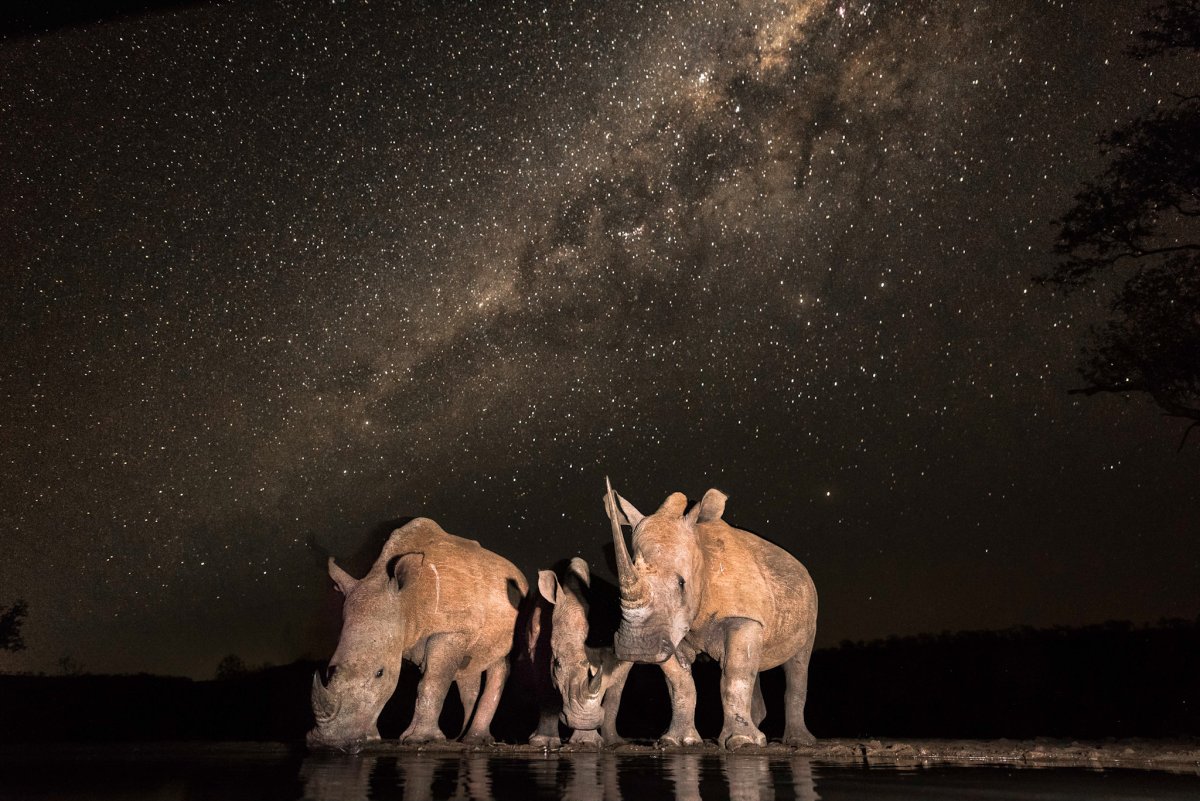

What if the most rewarding moment on a wildlife hide photography tour comes after an hour of stillness? That quiet pause can feel unfamiliar if you’re unsure what happens inside a hide, whether your camera skills or equipment are ready, or how likely wildlife is to appear. Animals move on their own terms, so sightings and photographs can’t be guaranteed.
A hide offers a way to watch wildlife with less disturbance and notice natural behaviour as it unfolds. On a guided wildlife photography journey, experienced guides support photographers at different skill levels in the field. This guide explains what a hide session is like, how to prepare for a patient and comfortable outing, and how scheduled, tailor-made, and on-demand journeys can suit different interests and plans. You’ll know what to expect, what to bring, and how to make the most of each field session.
A wildlife hide is a screened observation point where you can watch and photograph animals while making your presence less noticeable. It may be a simple structure or a more permanent shelter, but the purpose is the same: to give you a steady place to observe without moving closer to wildlife.
A wildlife hide photography tour is focused and mostly stationary. You settle into one viewpoint, scan the surroundings, and wait. If an animal appears, stillness may give you time to notice its behaviour, the light, and the setting before deciding whether to take a photograph. Wildlife follows its own rhythms, though. An animal may arrive, remain out of sight, or not appear during your session, so sightings and images can’t be promised.
Quiet observation is part of both the craft and the responsibility. Sudden movement and noise can disturb animals, so follow your guide’s instructions, move calmly, and give wildlife space. The goal isn’t to make an animal perform for the camera. It’s to observe patiently and photograph only when the moment allows.
A slower pace can help you look beyond a close-up. Notice how an animal moves through its surroundings, how the light changes, and how the background affects your frame. There may be long pauses. Treat them as part of the session, not a sign that it has failed.
Experienced guides lead guided wildlife photography tours for photographers at different experience levels, helping guests learn in the field while exploring wildlife destinations. Whether you’re new to photography or already comfortable with your camera, a hide gives you time to practise observation and make thoughtful choices without putting the image ahead of the animal.
A little preparation can help you spend less time searching through camera menus and more time noticing what’s happening around you. Before a wildlife hide photography tour, practise using your camera’s basic controls, including focus, exposure, and image review. You don’t need advanced skills to begin. Knowing how to make simple adjustments is a useful first step.
Practise changing settings before you arrive, so you can do it quietly without taking your attention from the scene. Pack only equipment you can manage comfortably, and check that your camera and chosen accessories are ready to use. Preparation isn’t about predicting the perfect shot. It’s about staying attentive when the moment changes.
Good preparation keeps your attention on the wildlife, not on figuring out your camera. Once settled, work with the view the hide gives you. Look at what’s behind the animal as well as the subject itself. A busy background can distract, while open space may suggest movement. Notice where the light falls, and leave room in the frame in the direction an animal is moving. Watch for patterns in its behaviour, then be ready to respond without rushing.
• Practise focusing and adjusting exposure before the session.
• Keep your camera and chosen accessories within easy reach.
• Check the background, available light, and animal movement before composing.
• Pause between frames and keep watching instead of photographing every moment.
If you’re building confidence, explore these wildlife photography tips for beginners for helpful foundations. If you want a guided journey shaped around your interests, custom wildlife photography tours can be planned around the experience you’re looking for.
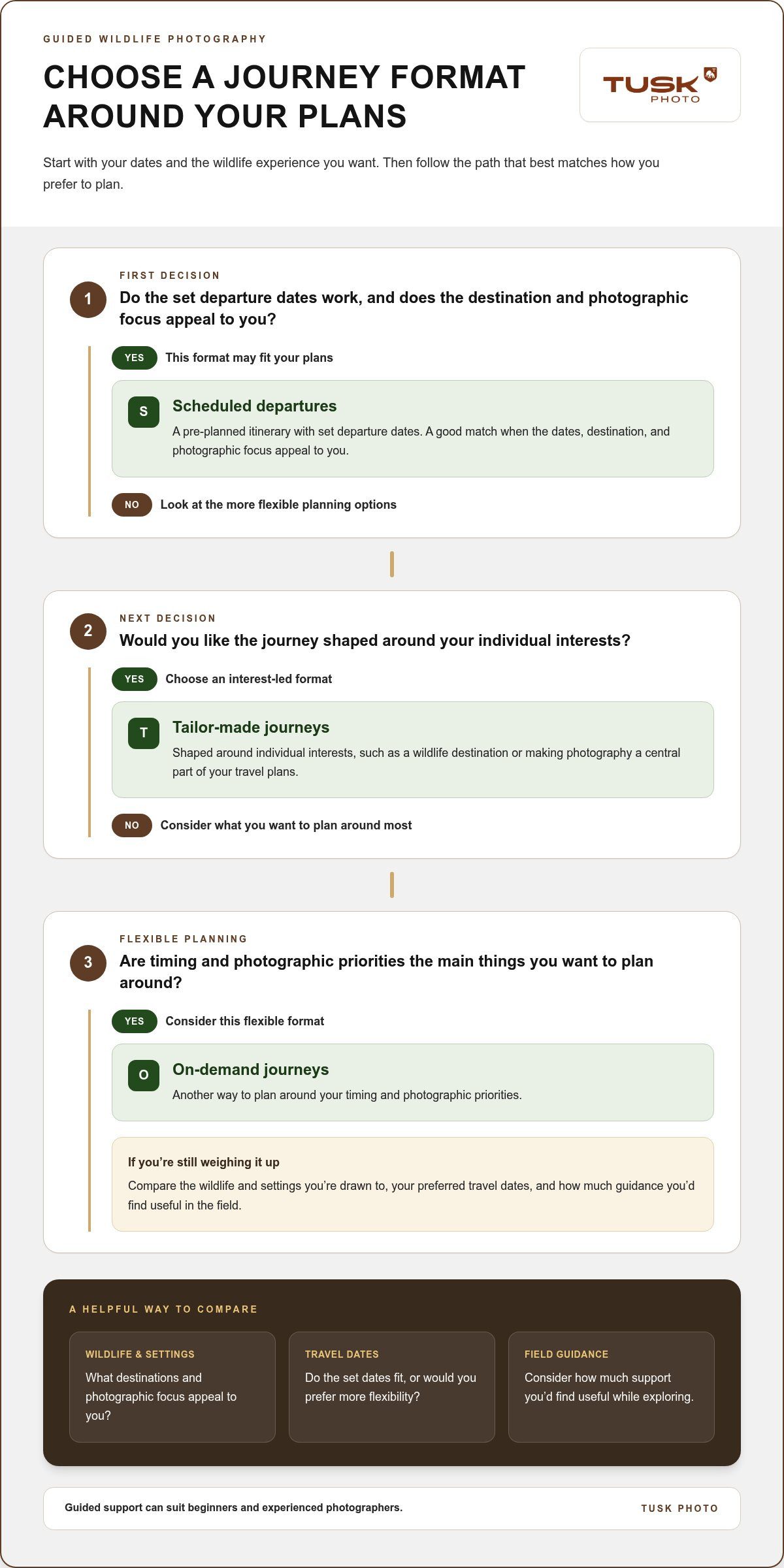
The right journey depends on what you want to photograph and how you prefer to plan. A hide session may be part of a broader guided expedition, where experienced guides help you learn in the field while exploring wildlife destinations. For travelers looking to pair hide photography with broader game drives across Kenya, ketsafaris.com organizes structured Big Five wildlife safaris. Such guided support can suit beginners finding their feet as well as experienced photographers developing their approach.
Scheduled departures follow a pre-planned itinerary with set departure dates. They can suit you if the destination and photographic focus appeal to you and the dates fit your plans. Explore Tusk Photo’s scheduled tours to compare this format with your travel plans.
Tailor-made journeys are shaped around individual interests. On-demand journeys offer another way to plan around your timing and photographic priorities. You might want to focus on a particular wildlife destination or make photography a central part of your travel plans. Tailor-made photography journeys can align the experience with what you hope to explore.
As you compare options, consider the wildlife and settings you’re most drawn to, your preferred travel dates, and how much guidance you’d find useful in the field. Look at scheduled tour dates first if you have set travel plans. If the dates or focus don’t suit you, a tailor-made or on-demand journey offers a more flexible way to shape the experience around your interests.
Choose a journey that fits your interests and planning style, then bring curiosity and patience along for the experience. For travelers looking to explore East Africa, regional specialists like BLS safaris can design tailor-made itineraries that give you time and space for memorable wildlife encounters.
Before you go, decide what you hope to bring home beyond a photograph: a better feel for the place, a clearer eye for animal behaviour, or a moment you’ll remember without a camera. That intention can help shape your journey and keep each session meaningful, even when wildlife stays out of view. A hide rewards attention in its own way. Give yourself room to observe, adjust your approach, and let the experience unfold at its own pace.
When you’re ready to turn that interest into a plan, explore Tusk Photo’s guided wildlife photography journeys. Consider a wildlife hide photography tour alongside the destinations and photographic experiences that appeal to you, then choose from scheduled, tailor-made, and on-demand journeys to suit your plans. Each field session offers a chance to deepen your connection to the wild. Start exploring and see where your curiosity leads.
Yes. Beginners can join without extensive field experience. Start by getting comfortable with a few basic camera controls, then focus on observing before taking a photo. For example, notice how the light changes across the scene and wait for a moment that feels worth capturing. Experienced guides offer support in the field, so you can learn while exploring at a pace that feels manageable.
No, wildlife sightings can’t be guaranteed. Animals may be active, distant, or out of view during your session, and conditions can change. Use quieter stretches to study the setting: notice shifts in light, listen to the sounds around you, and watch for movement at the edges of the scene. These details can make the time meaningful, even if a particular animal doesn’t appear.
Wear comfortable clothing suited to the destination and expected conditions. Practical layers can help you stay comfortable while sitting still, and easy-to-reach pockets or a small, organised bag can keep essentials close without frequent movement. Choose clothing you can wear comfortably throughout the session, and plan for the setting and season of your journey rather than assuming every hide will have the same conditions.


