
Why Africa is a Safe Safari Destination: Your 2026 Travel Guide

Did you know that Rwanda maintained a 99% security rating for tourists heading into 2026? It's natural to worry about political shifts, wildlife, or keeping your expensive camera gear from being damaged or stolen. You want to focus on capturing the perfect lion's mane in the morning light, not looking over your shoulder. This guide explains why Africa is a safe safari destination and how modern logistics have turned these wild landscapes into some of the most secure travel spots on the planet.
We will walk through the latest safety ratings for countries like Tanzania and South Africa so you can plan with facts. You'll learn how expert guides act as both creative mentors and safety specialists to keep you protected. From understanding park patrols to gear security, we are covering everything you need to feel confident about booking your next journey.
Many people view Africa as one giant, unpredictable country. That's simply not true. It's a vast continent with incredibly diverse regions. Major hubs like Botswana, Kenya, and South Africa have spent decades building world-class tourism infrastructures. These areas aren't just wild spaces. They are carefully managed ecosystems designed for your security. This high level of organization is exactly why Africa is a safe safari destination, even for those traveling with high-end camera equipment.
Modern safari travel is more connected than ever. In 2026, satellite tracking and real-time monitoring are standard for reputable operators. You'll find that safari safety is a sophisticated blend of controlled environments and deep expert knowledge. It's an adventure, but one backed by a massive invisible safety net.
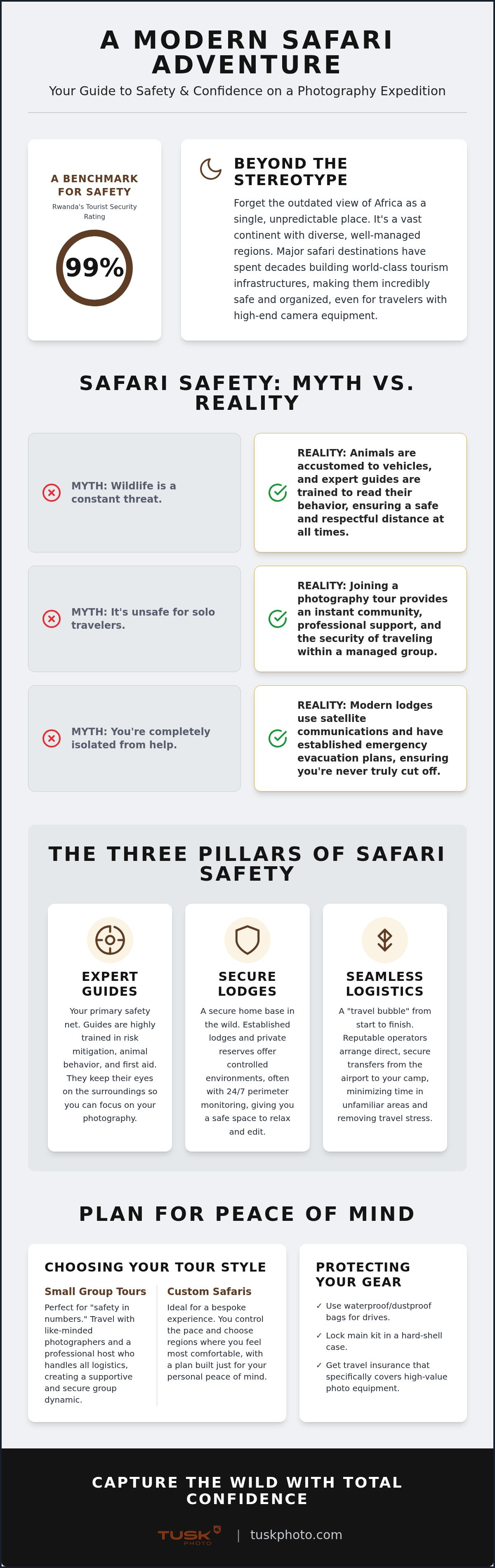
Misconceptions often fuel travel anxiety. Let's look at the facts behind the most common worries:
Animals in major reserves have grown up seeing safari vehicles. They don't view them as food or a threat. Your guides are trained to read animal behavior, ensuring you stay at a respectful and safe distance.
Traveling alone can feel daunting, but you don't have to be isolated. Joining a scheduled departure photography tour provides an instant community of like-minded people and professional support.
Even in the most remote corners of the Okavango Delta, you're never truly cut off. Modern lodges use satellite communications and have established emergency evacuation plans ready to go at a moment's notice.
Safety on a modern safari isn't left to chance. It's a carefully built system designed to let you enjoy the wild without worry. This structure is exactly why Africa is a safe safari destination for travelers in 2026. We look at this through three main pillars: professional guides, established lodges, and seamless logistics.
Professional guides are your primary safety net. They don't just find animals; they act as your constant eyes and ears in the bush. When you're following wildlife photography tips for beginners, you'll notice that field safety is always the first step. Established lodges provide a secure home base. Many private reserves offer a gated, controlled environment where staff monitor the perimeter 24/7. Finally, logistical planning ensures you aren't left wandering. From the moment you land, seamless transfers move you directly from the airport to your camp. This travel bubble minimizes any time spent in unfamiliar urban areas and keeps your focus on the landscape. It's a door-to-door service that removes the stress of navigating local transport.
A guide's most important job is risk mitigation, not just finding lions. While they want you to see the Big Five, their priority is keeping everyone safe. They are trained to read subtle animal body language. This means they know when an elephant is just curious and when it's time to move the vehicle back. Tusk Photo hosts also manage the group dynamic for you. They watch the horizon and keep an eye on surroundings so you can focus entirely on your camera settings. If you're looking for a stress-free way to explore, our scheduled tours offer the perfect balance of expert oversight and adventure.
Planning your trip involves more than just picking a destination. It's about matching your travel style to your comfort level. This personalized approach is another reason why Africa is a safe safari destination. You can choose between tailor made photography safaris or group tours, depending on how much support you want. Both options provide a secure environment, but they offer different types of peace of mind.
Small group tours are fantastic for "safety in numbers." You travel with like-minded photographers and a professional host who handles all the logistics. If you prefer a bespoke experience, custom or on demand photography expeditions let you set the pace. You choose the regions where you feel most comfortable. For a personalized safety briefing and a plan built just for you, feel free to explore our custom tours.
Your gear is your most valuable asset, so treat it that way. Use high-quality waterproof and dustproof bags to protect your cameras from the elements during game drives. Most reputable lodges provide in-room safes for your smaller valuables, but keeping your main kit in a locked, hard-shell case is always a smart move. Don't forget travel insurance. Make sure your policy specifically covers professional photography equipment. Standard plans often have low limits for electronics, so check the fine print before you fly. Ready to start? Take a look at our upcoming tour dates to find the perfect 2026 adventure that fits your schedule and gives you the confidence to shoot without worry.
A safari is about more than just seeing wildlife; it's about feeling secure while you capture those once-in-a-lifetime shots. You now know that the combination of expert guides, secure lodges, and smart logistics is why Africa is a safe safari destination for your next trip. By choosing a tour that focuses on your specific needs as a photographer, you can protect both your gear and your peace of mind. We bring decades of field experience and small group sizes to every journey, ensuring you have a mentor by your side at all times. Our expert hosts are ready to help you navigate the wild safely while you focus on your creative portfolio. Don't let old myths hold you back from the experience of a lifetime.
Explore our safe and professional 2026 photography tours and start planning your dream journey today.
Yes, it's very safe to bring your professional equipment. When you travel on a dedicated tour, your gear stays in a private vehicle or a secure lodge room. Most theft risks occur in busy urban airports rather than in the remote bush. By staying within the managed safari environment and using provided room safes, you can focus on your photography without worry.
If an emergency occurs, lodges and guides use satellite communication to coordinate a fast response. Most high end safari regions are covered by emergency evacuation services that can fly you to a world class hospital in a major city. This is why it's vital to have travel insurance that includes medical air evacuation, as help is often just a short flight away.
Rwanda is a top choice for safety in 2026, holding a 99% security rating for international tourists. Other excellent options include Botswana and the private reserves of South Africa, like Sabi Sands. Beyond the traditional southern and eastern circuits, you can also explore Wyprawy 4x4 Maroko to discover how professional safety protocols are implemented in North African adventure travel. While some countries have travel advisories for specific border areas, the main safari circuits in Tanzania and Kenya remain very secure and are well patrolled by dedicated tourism police.
You should always consult a travel doctor at least two months before you leave. Requirements vary by country; you might need a Yellow Fever certificate or malaria medication for certain regions. Staying healthy is a big part of why Africa is a safe safari destination, so we recommend following professional medical advice on vaccinations and keeping your routine health needs in mind.


