
What to Pack for a Photo Safari: Your Friendly 2026 Checklist
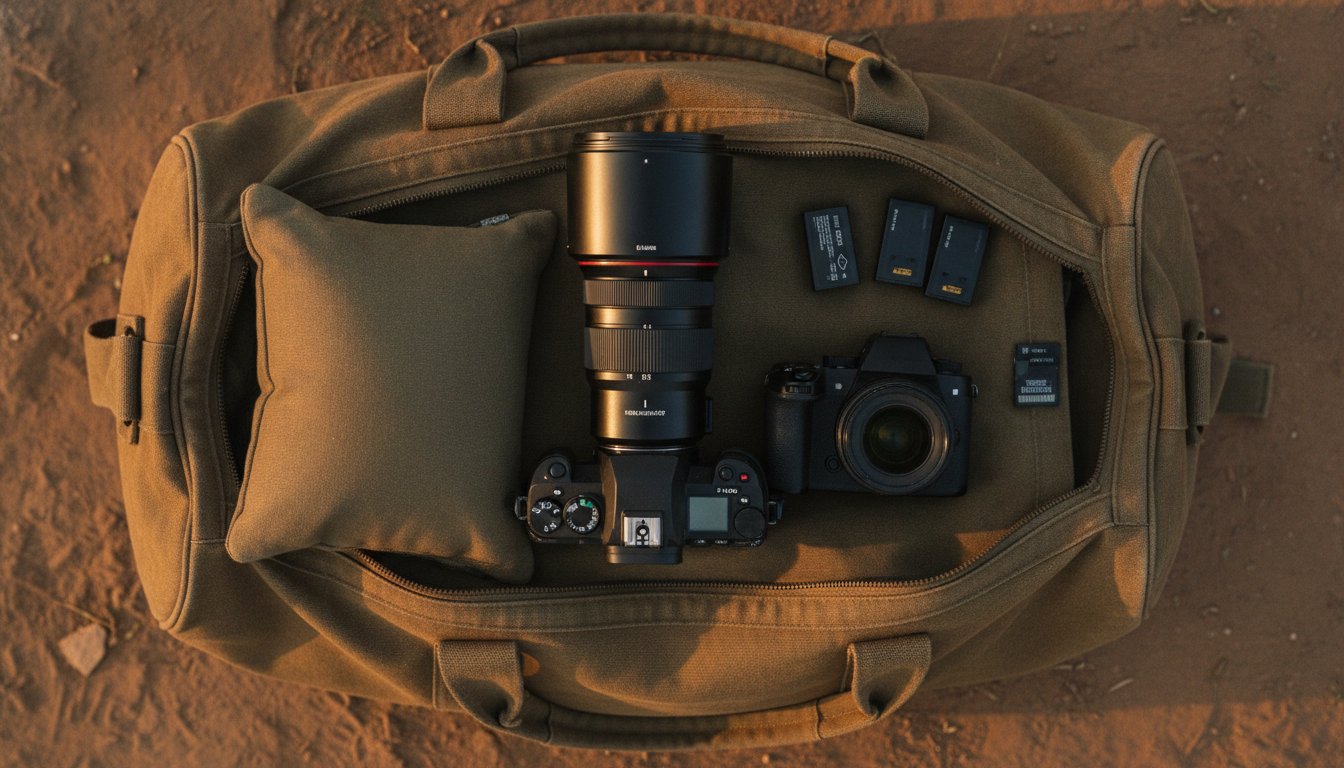

The most expensive camera in the world won't help you if it's buried at the bottom of a bag that's too heavy to lift. You've likely spent months dreaming of that perfect lion shot, only to worry that a dusty trail or a strict weight limit on a small bush plane will ruin the moment. It's a common fear, especially when you're trying to figure out what to pack for a photo safari without overdoing it.
We want to take that stress away by showing you exactly what to bring to keep your gear safe and your spirits high. In this 2026 checklist, we'll walk through the essential lenses, protective gear, and clothing layers that our expert guides recommend for every expedition. You'll gain the confidence to pack light while ensuring you never miss a once-in-a-lifetime shot.
Deciding what to pack for a photo safari often feels like a balancing act. You want the best shots, but small bush planes have strict weight limits. Start with a versatile 100-400mm zoom lens. It lets you capture a lion’s whiskers or a distant elephant without moving an inch. This range is the gold standard for most wildlife encounters because it offers incredible flexibility.
Bring a second camera body if you can. It's not just about having a backup. Swapping lenses in the dusty African bush is a recipe for sensor spots. Keeping a wide lens on one body and a telephoto on the other means you're always ready for any scene. Here are a few more gear essentials to tuck into your bag:
Wildlife photography relies on "burst" shooting. You'll take hundreds of photos in minutes when the action starts, so bring more storage than you think you'll need.
Skip the heavy tripod. A beanbag is much easier to use from a vehicle and provides a steady base for those long-distance shots.
Long days in the field mean you won't always be near a charger. Always have at least two fully charged spares.
If you're just starting out, don't feel pressured to carry a massive bag of heavy glass. A single high-quality zoom lens is often better than multiple heavy primes. It’s lighter, easier to handle, and keeps you focused on the wildlife instead of your equipment. These wildlife photography tips for beginners can help you master your gear before you land. Our guides are also right there in the field to help you with any settings or gear questions that pop up during the journey.
Choosing the right clothing is about more than just looking the part. It's about staying invisible to the wildlife and comfortable in a shifting climate. When you're deciding what to pack for a photo safari, prioritize neutral colors like khaki, olive, and brown. These shades help you blend into the bush. This simple choice makes a huge difference in how close you can get to the action. Avoid bright whites or dark blues. They can startle animals or attract unwanted insects like tsetse flies.
Your footwear should be practical. Closed-toe shoes are a must to protect your feet from dust and the occasional thorny brush. Since you'll spend a lot of time in the vehicle, pick something that’s easy to slip on and off. Don't forget a wide-brimmed hat with a chin strap. The African sun is intense, and you'll need the protection. A strap ensures your hat stays on your head when the vehicle picks up speed between sightings.
Mornings in the wilderness are surprisingly cold. We recommend a three-layer system to keep you focused on your camera instead of the chill. Start with a moisture-wicking base, add a warm fleece, and finish with a windproof jacket. On our scheduled departure photography tours, we head out before sunrise to catch the softest light. As the sun rises and the heat builds, you can simply peel these layers away. If you have specific comfort needs, our tailor made tours offer even more flexibility for your adventure.
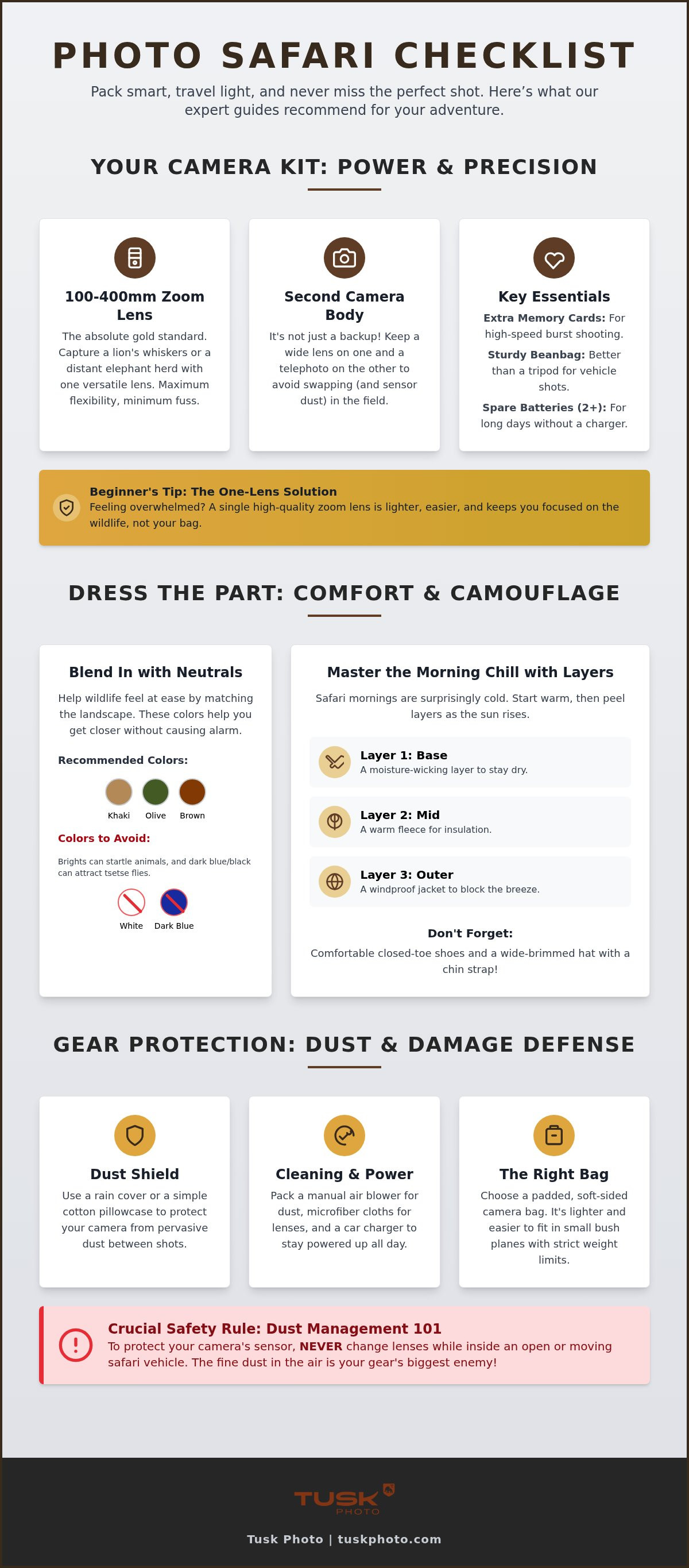
Dust is everywhere on the plains. It’s fine, persistent, and loves to settle on your camera sensor. To keep your gear safe between sightings, use a dedicated rain cover or even a simple cotton pillowcase. It’s a cheap, lightweight way to shield your kit from the elements while keeping it ready for action. Knowing what to pack for a photo safari includes these small, practical hacks that the pros use every day.
Pack a basic cleaning kit too. A manual air blower and a few microfiber cloths are your best friends. Give your glass a quick puff of air and a gentle wipe whenever you have a quiet moment. Power is just as vital. Long days in the field drain batteries fast. Bring a car charger and at least two spares so you aren't left with a dead screen when the light is perfect.
Finally, choose a high-quality, padded camera bag. It needs to be tough enough to handle the ride but light enough for small bush planes. These flights often have strict weight limits, so every ounce counts. A soft-sided bag is usually better than a hard case because it’s easier to fit into tight cargo holds and meets the requirements of most regional carriers.
Fine dust is the single biggest threat to your camera's internal sensor when you're on a safari. To keep things clean, never change your lenses while you're inside the safari vehicle. The moving air and dry conditions make it far too easy for grit to get inside. If you have specialized gear needs or want a trip built around your specific kit, our tailor made tours offer the perfect bespoke solution. Our guides are always on hand to help with gear questions, ensuring your focus remains on the wildlife.
Preparing for the wilderness doesn't have to be overwhelming. By focusing on a versatile zoom lens, packing neutral layers for shifting temperatures, and keeping a simple dust cover handy, you're already ahead of the game. Knowing exactly what to pack for a photo safari means you can spend less time worrying about your bag and more time watching the horizon for that perfect moment.
Our expeditions are led by professional photography hosts who provide expert guidance on every trip. We handle the big logistics so you can focus entirely on your craft. Whether it's your first time or your tenth, we're here to help you capture the magic of the wild in its purest form. View our 2026 photography tour dates and start your adventure. The plains are waiting, and we can't wait to see the incredible shots you'll bring home.
Anything that pushes you past the strict weight limits of a small bush plane is too much. Stick to two camera bodies and a maximum of three lenses. Carrying more makes it harder to move quickly when an animal appears. Our expert guides can help you decide what to pack for a photo safari based on your specific tour destination and its unique terrain.
You usually don't need a tripod inside a safari vehicle. They are bulky and hard to set up in tight spaces. Instead, use a beanbag or a window mount to steady your shots. These options are much lighter and easier to adjust. If you plan on doing night sky photography at the camp, a lightweight travel tripod might be worth bringing along.
Use a portable external hard drive or a laptop to save your images every evening. Internet in remote camps can be slow, so don't rely on cloud storage to keep your files safe. Many photographers also use cameras with dual card slots to create an instant backup. This ensures your once-in-a-lifetime shots are protected even if a memory card fails during the trip.
Your smartphone is great for wide landscapes and behind-the-scenes video, but it isn't a replacement for a zoom lens. Most wildlife will be too far away for a phone's digital zoom to capture clearly. Use your phone for quick social media updates and keep your main camera ready for the action. It's a handy tool to have in your pocket for capturing the camp atmosphere.


