
Top Destinations to Photograph Big Cats Worldwide

What if the secret to that award-winning tiger shot isn't your expensive lens, but the exact week you decide to fly to India? It's a common worry for photographers. You spend thousands on a dream trip, only to stare at empty bushes because the timing was off or the location was wrong. We know how frustrating it is to sort through conflicting advice about the Pantanal or the Serengeti.
Finding the best destinations to photograph all the big cats of the world shouldn't feel like a guessing game. We've simplified the journey. In this guide, you'll discover the ultimate global hotspots and professional tips for capturing stunning images of lions, tigers, leopards, and jaguars. We'll break down the best time of year to visit each location and show you how to get professional shots even if you're just starting out.
Africa is arguably the most iconic region when searching for the best destinations to photograph all the big cats of the world. The vast landscapes provide a perfect stage, and the visibility is often better than anywhere else. If you're looking for diversity, our scheduled tours focus on these high-activity zones.
In Kenya, the Masai Mara is a dream for capturing lion prides. Wide-open plains mean you won't have thick brush hiding the animals. Between July and October, the Great Migration brings millions of wildebeest, creating high-intensity action shots as lions take advantage of the herds. It's the best time to see the raw power of a hunt in person.
For leopard lovers, Sabi Sands in South Africa is the gold standard. These cats are unusually comfortable around vehicles, allowing for intimate, up-close portraits. Because it's a private concession, guides can go off-road to follow them through the bush. If you want something unique, the Okavango Delta in Botswana shows lions swimming across channels or hunting in shallow water.
The dry season, typically from June to October, is your best bet for consistent sightings. As water sources dry up, cats stay close to the remaining pools, making their behavior predictable. The short grass also ensures you won't lose your subject in the vegetation. This is a reliable way to find the best destinations to photograph all the big cats of the world without the frustration of empty sightings.
The Golden Hour in the savanna is that brief window of soft, amber light just after sunrise or before sunset that adds a professional, warm glow to every cat portrait.
Looking beyond Africa, Central India stands out as one of the best destinations to photograph all the big cats of the world, specifically the Bengal Tiger. India is home to 75% of the world's wild tigers, with 3,682 individuals recorded in the 2025 census. Parks like Bandhavgarh and Ranthambore offer your best chance at a sighting. In Ranthambore, you can actually frame a tiger against 10th-century fortress ruins. It's a surreal sight that you won't find anywhere else.
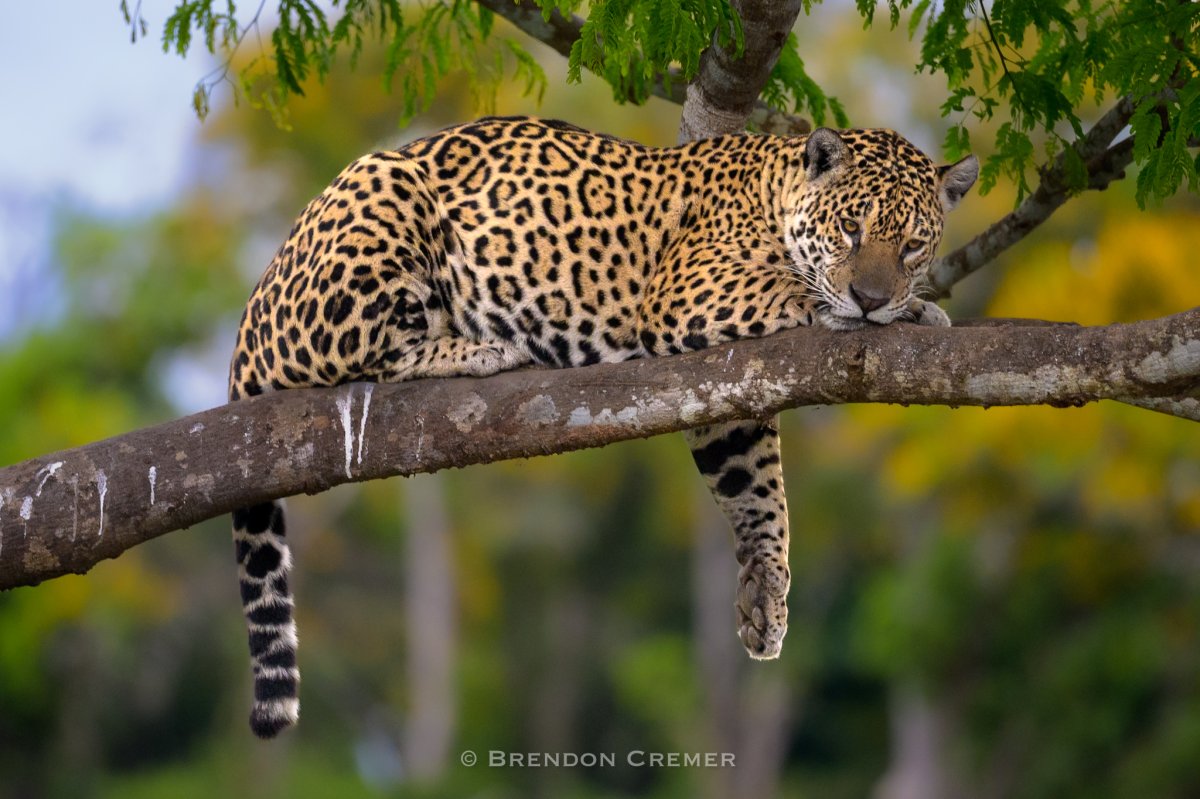
If you're after the elusive jaguar, the Pantanal in Brazil is the place to be. This isn't your typical safari. Instead of a jeep, you'll spend your days on a boat. This allows you to get incredibly close to jaguars as they hunt caiman along the riverbanks. It's a specialized type of photography that requires patience and a steady hand on the water.
Planning these trips is much harder than a standard holiday. You have to deal with complex park zones in India or remote river logistics in Brazil. Getting it wrong can mean missing the cats entirely. That's why many photographers choose a tailor-made photography safari to ensure they're in the right spot at the right time.
Choosing between these two depends on your style. India is about the thrill of the jungle track. Brazil is about the flow of the river. Both share a similar peak season. May to October is the sweet spot for both regions. In India, the heat makes tigers visit water holes more often. In the Pantanal, the dry weather brings jaguars to the river's edge. This makes them two of the best destinations to photograph all the big cats of the world if you're looking for something beyond the typical savanna.
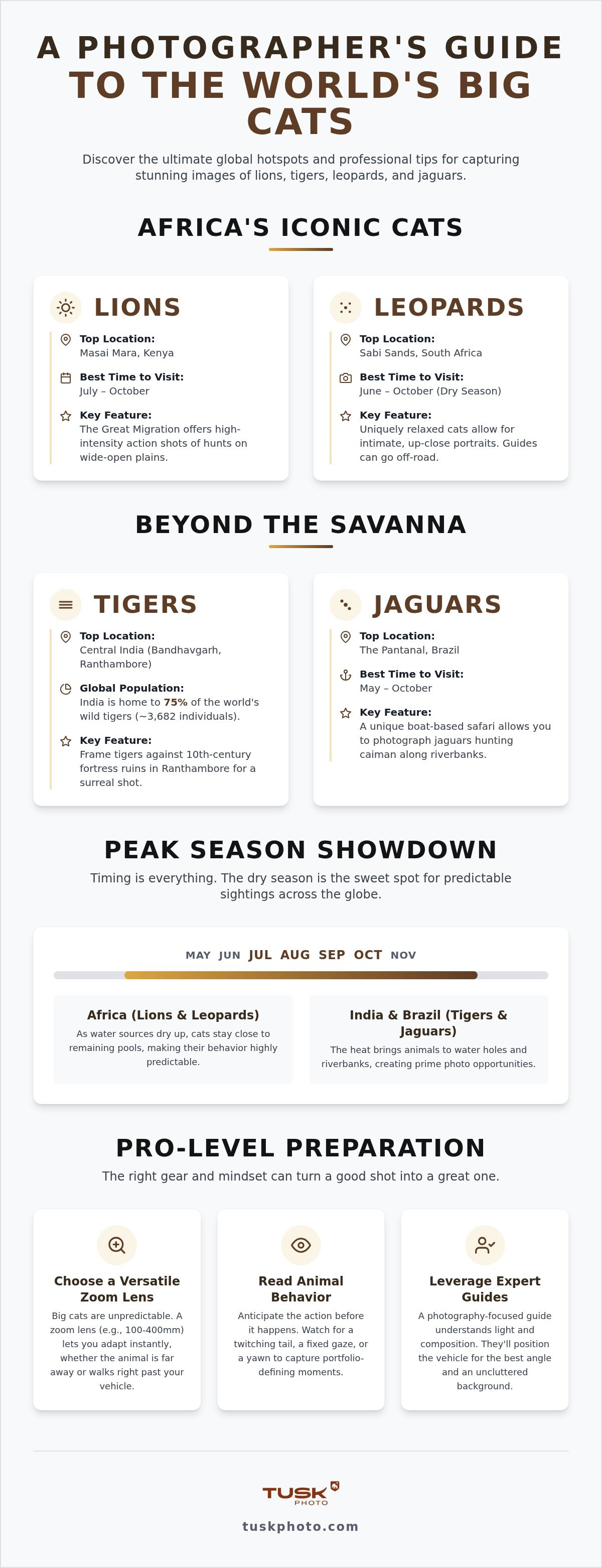
Preparing for a trip to the best destinations to photograph all the big cats of the world requires more than just packing a bag. Your gear choice is the first step. While a big prime lens looks professional, a versatile zoom lens is often better for these trips. Big cats are unpredictable. They might lounge 50 yards away or suddenly walk right past your vehicle. A zoom lets you adjust your frame instantly so you don't miss a fleeting moment.
Learning to read animal behavior is just as vital as your equipment. You'll want to anticipate a yawn, a stretch, or the start of a hunt before it actually happens. Watch for small signs like a twitching tail or a sudden, fixed change in their gaze. Being an ethical photographer is part of the craft, too. Always respect the animal's space. Getting the shot is never more important than the cat's well-being or local conservation efforts.
A great guide is your secret weapon. Unlike standard safari drivers, a photography-focused guide understands light and composition. They'll position the vehicle specifically so the sun hits the cat's face while keeping the background uncluttered. This specialized knowledge turns a simple photo into a portfolio piece. Traveling in a small group of like-minded photographers also ensures everyone has a clear line of sight without fighting for an angle. Check out our scheduled departure photography tours to see where we are heading in 2026. Having an expert mentor by your side makes visiting the best destinations to photograph all the big cats of the world a much more rewarding experience.
To help elevate your work and refine your professional creative direction, you can find out more about the coaching and consultancy services provided by Christine Saunders.
Photographing the planet's most powerful predators is about more than just showing up. It's about being in the right place at the perfect time. From the lion prides of the Masai Mara to the river-hunting jaguars of the Pantanal, we've explored the best destinations to photograph all the big cats of the world. Remember that successful field work relies on understanding animal behavior and using versatile gear that keeps up with the action.
We're here to help you turn these dream sightings into stunning reality. Whether you want to join one of our expert-led expeditions or prefer custom itineraries designed just for you, we prioritize small group sizes for maximum field time. Ready to take the next step? Explore our upcoming 2026 wildlife photography tours and book your spot today! Your next great adventure is waiting, and we can't wait to see the shots you'll bring home.
Sabi Sands in South Africa is widely considered the top spot for leopard sightings. These cats are very relaxed around vehicles here, allowing you to get the close-up shots that are much harder to find elsewhere. Because it's a private reserve, your guide can drive off-road to follow them through the bush, ensuring you never miss a moment.
The peak season for tiger photography in India runs from October to March, but the dry months of April to June are often better for sightings. During this time, the vegetation thins out and tigers visit water holes more frequently. It's one of the best destinations to photograph all the big cats of the world if you can handle the heat.
You don't need the most expensive camera body, but a high-quality zoom lens is a must. Modern entry-level cameras have great sensors that can handle most situations. Focus your budget on a lens with a good reach, like a 100-400mm or 200-600mm. This gear will help you capture stunning details without needing a professional-grade price tag.
Yes, it's very safe as long as you're with an experienced guide in the Pantanal. Jaguars are excellent swimmers, but they generally ignore the boats because they don't see them as a threat or food. Boat-based photography actually gives you a stable platform and a unique, low-angle perspective that makes your jaguar images look much more professional.
The 'Big Cat Slam' is an informal challenge for photographers to capture the four core big cats: the lion, leopard, tiger, and jaguar. Some enthusiasts also include the cheetah or the elusive snow leopard to complete the set. It's a rewarding goal that takes you to the best destinations to photograph all the big cats of the world across three different continents.
A dedicated photography trip should last between 10 and 14 days. This gives you enough time to account for travel, weather changes, and the unpredictable nature of wildlife. Spending more time in one location increases your chances of witnessing rare behaviors, like a hunt or a mother with cubs, which usually leads to much better photos.


