
Top 10 Bird Species to Photograph in the Pantanal: A 2026 Guide
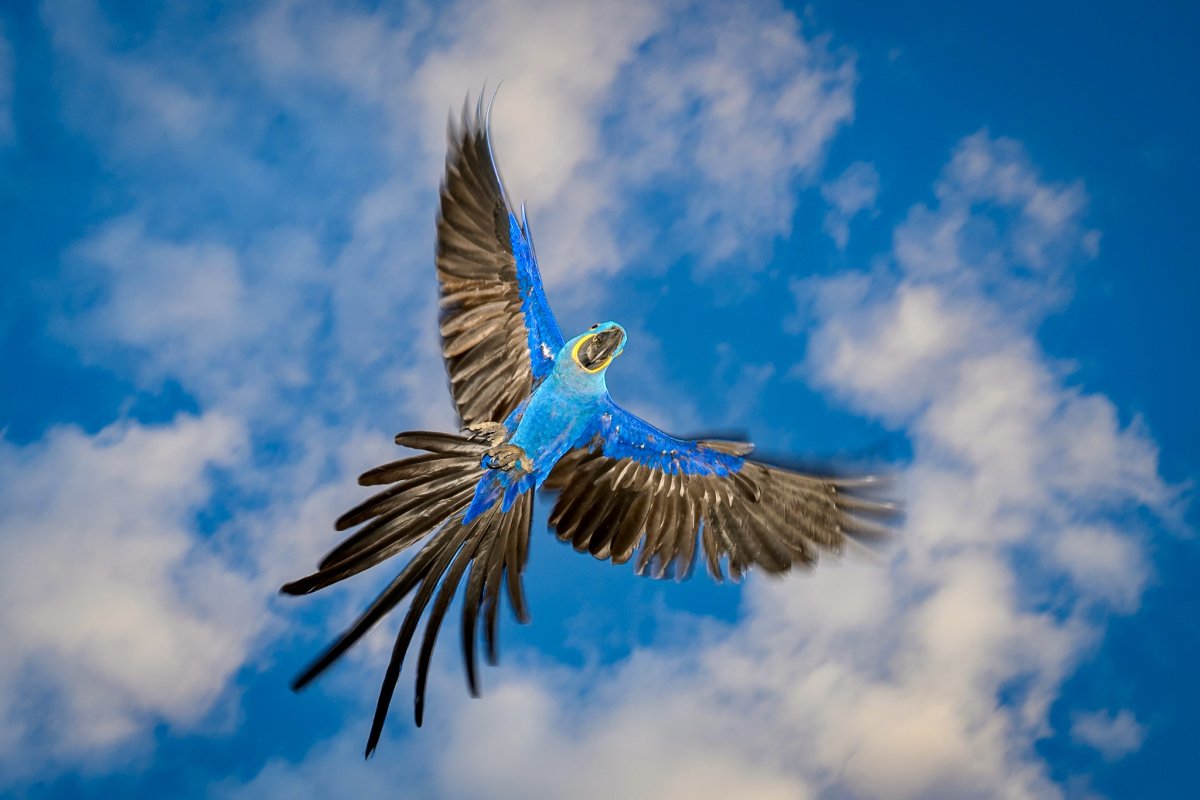

Your strongest Pantanal bird photographs may come not from chasing the rarest sighting, but from spending time with birds you can see clearly. With estimates reaching more than 650 species, it can be hard to know where to begin. This guide to the Top 10 Bird Species to Photograph in the Pantanal gives you a focused list and practical ways to make the most of each encounter. The wetland’s open landscapes and vivid birds offer plenty of opportunities to build a varied portfolio without trying to photograph everything.
You’ll also find tips on timing, protecting your gear, and preparing for shoots along routes such as the Transpantaneira and Cuiabá River. Tusk Photo’s scheduled and tailor-made expeditions pair wildlife photography with expert field guidance, helping you plan around the species and images that interest you.
The Pantanal’s open floodplains, grasslands, and waterways can make birds easier to see and follow than in dense forest. You may be able to track a stork crossing the sky or a heron moving along the water’s edge without branches blocking the view. Look for uncluttered backgrounds that let a bird’s shape, color, and details stand out.
Light can shape the mood of a photograph, too. Around golden hour, softer, warmer light can bring out feather colors and create reflections on the water. When you’re working through the Top 10 Bird Species to Photograph in the Pantanal, try changing your angle or waiting for the light to shift. Small changes can give you a more distinctive frame than simply taking another portrait from the same position.
A 400mm to 600mm lens can help you frame distant birds, including large storks, without approaching too closely. This range works well for tight portraits and gives you flexibility when a bird changes position. Keep your camera ready during quiet moments, since birds can take flight quickly.
Midday sun can create harsh contrast. Look for shade to soften the light, or use water reflections to brighten a subject while watching for highlights that lose detail. Along the Transpantaneira, dust can settle on equipment. Cover or stow your gear when you aren’t using it, then clean it carefully before shooting again. An experienced guide can help you choose a position that gives you a clear view while keeping a respectful distance from wildlife.
Use this list to plan a varied portfolio, from bold portraits to fast-moving action. The Top 10 Bird Species to Photograph in the Pantanal reward patience and careful framing as much as a quick shutter finger.
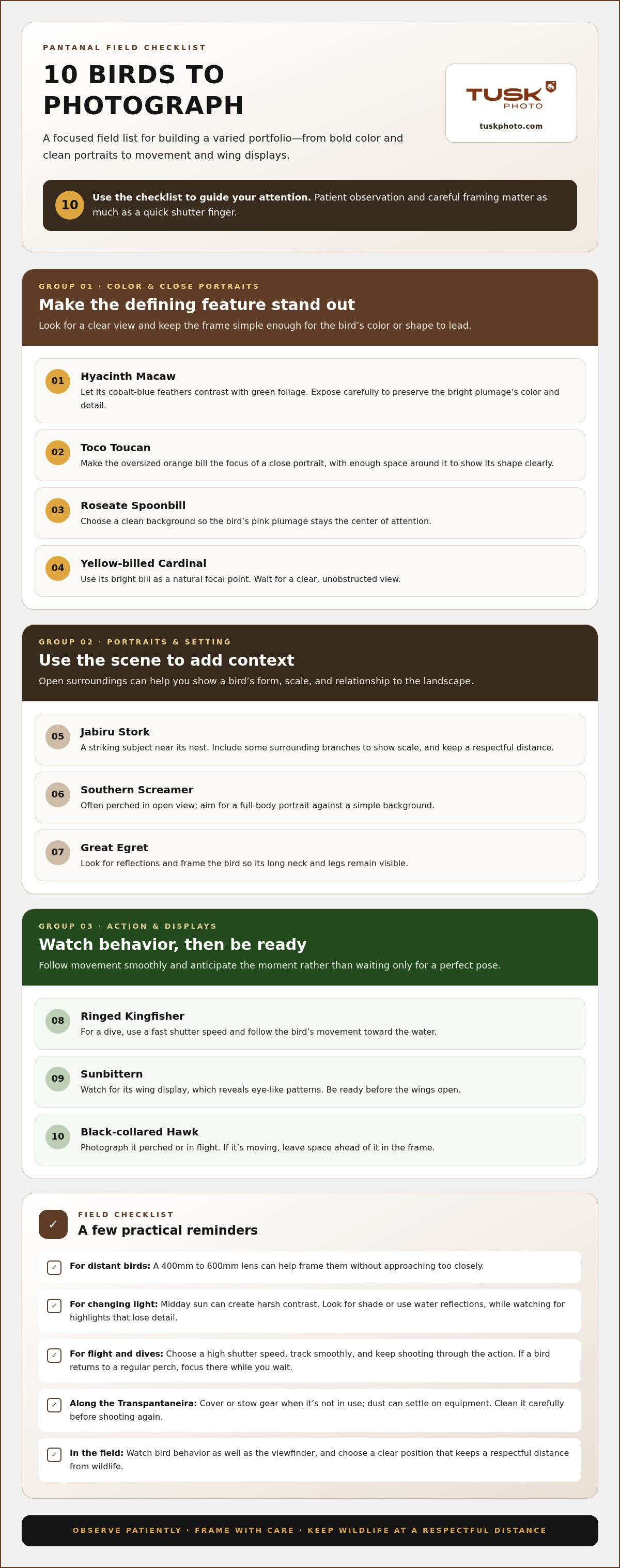
Its cobalt-blue feathers stand out against green foliage. Expose carefully for the bright plumage to preserve its color and detail.
This iconic, large stork makes a striking subject near its nest. Include some of the surrounding branches to show scale, and keep a respectful distance.
Make its oversized orange bill the focus of a close portrait. Leave space around the bill so its shape is easy to see.
Often perched in open view, it’s a good subject for a full-body portrait against a simple background.
For a dive, use a fast shutter speed and follow the bird’s movement toward the water.
Choose a clean background to keep attention on the bird’s pink plumage.
Watch for its wing display, which reveals striking eye-like patterns. Be ready to take the shot before it opens its wings.
Look for reflections and frame the bird so its long neck and legs remain visible.
Photograph it perched or in flight. If it’s moving, leave space ahead of it in the frame.
Its bright bill makes a natural focal point for a close portrait. Wait for a clear, unobstructed view.
For fast dives and flight, choose a high shutter speed, track the bird smoothly, and keep shooting through the action. If it returns to a regular perch, focus there while you wait. Watch the bird’s behavior as well as the viewfinder so you can anticipate movement. Tusk Photo’s expert guides provide field guidance to help you find a safe position for the shot. If you have particular bird targets in mind, explore tailor-made Pantanal tours.
Plan around the season and the birds you hope to photograph. The dry season, generally from May or June through September or October, is a popular time for wildlife photography. Conditions can vary from July to October, so build flexibility into your plans. Patient observation is more useful than expecting a particular species to appear on cue.
A lodge along the Transpantaneira can make early starts more practical when you’re exploring this well-known wildlife route. First light offers softer color and active birds, so reducing travel time before a shoot can leave more time to watch and compose your images. A photography-focused guide can also help you anticipate movement, choose a safe position, and adapt when sightings differ from your plans.
A scheduled departure gives you a planned itinerary and the chance to share the experience with other photographers. It can suit travelers who want to photograph a range of Pantanal wildlife, including several species from the Top 10 Bird Species to Photograph in the Pantanal. Browse scheduled photography tours to explore the planned approach.
If one bird or region is your main priority, a tailor-made journey can give that goal more focus. Tusk Photo can shape a photographic journey around your interests, with room to adapt to wildlife encounters along the way. Explore custom Pantanal tours for a more targeted trip. As you plan your travel and time in the field, review the photography tour dates.
The Pantanal offers a memorable mix of vivid portraits and fast-moving wildlife. Focus your bird list, choose your season with care, and use light and behavior to shape each frame. A well-planned trip helps, too: an experienced guide can offer field support and help you prepare for wildlife encounters.
Bring your photography goals to the field with Tusk Photo. Its expeditions are led by professional photography hosts, with expert guidance for photographers at different experience levels. Whether you’re building a broad portfolio or hoping to photograph a particular species, the Top 10 Bird Species to Photograph in the Pantanal can help you decide what to watch for.
Explore Tusk Photo’s photography expeditions and plan your Pantanal bird photography trip.
The dry season, generally from May or June through September or October, is a popular time for bird and wildlife photography. July to October falls within this period. Conditions and sightings can vary, so plan with flexibility and focus on observing bird behavior rather than expecting a particular encounter on a set schedule. A knowledgeable guide can help you make the most of your time in the field.
No. A professional-grade camera isn’t essential for making enjoyable bird photographs. Learn to use the camera you have, pay attention to light and background, and be ready to capture a moment when it happens. A telephoto lens can help you frame distant birds, but technique and patience matter, too. The Top 10 Bird Species to Photograph in the Pantanal offer subjects for both portraits and action shots.
You may see jaguars in the Pantanal, but a sighting can’t be guaranteed, even during a bird-focused trip. The region is known for both birdlife and jaguar viewing, and wildlife encounters depend on changing conditions. Keep your attention on the birds you came to photograph while staying ready for an unexpected sighting. A guide familiar with local wildlife can help you observe animals safely.
Solo travel calls for careful planning in a large wetland where wildlife viewing often involves lodge-organized boat or vehicle outings. Rather than setting out alone to approach birds or other animals, follow your guide’s directions and keep a safe distance from wildlife. Tusk Photo’s photography expeditions are led by experienced guides who understand animal behavior, helping photographers focus on their images while exploring with expert support.


