
The Ultimate Gorilla Trekking Photography Tour Guide
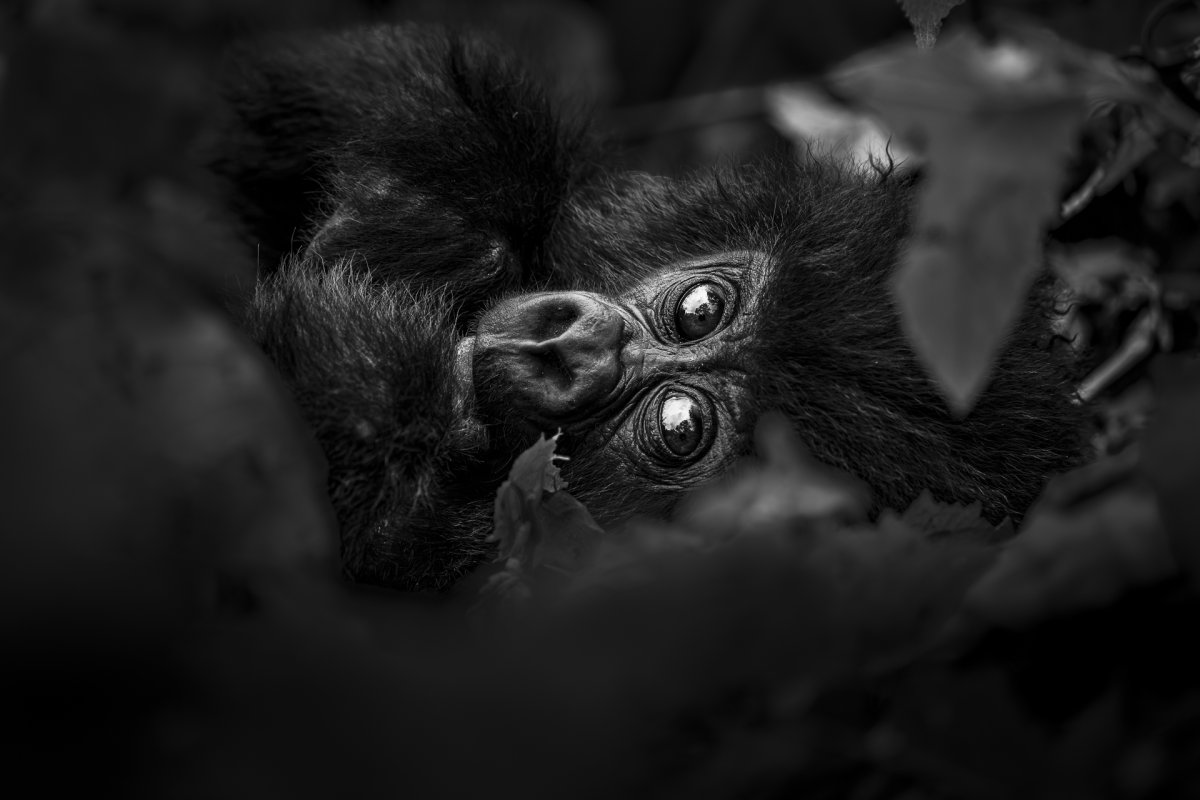

What if your once-in-a-lifetime encounter with a 400-pound silverback ends with nothing but a gallery of blurry, green smudges? It is a stressful thought, especially when you have traveled thousands of miles into the heart of the African rainforest. You want that perfect, intimate portrait, but the dim light under the thick canopy and the constant threat of rain can make even the best photographers feel a bit nervous. It is completely normal to worry about your gear getting soaked or whether you have the fitness to handle the steep, muddy trails.
That is exactly why choosing the right gorilla trekking photography tour is so important. In this guide, I will show you how to prepare for an expedition that guarantees professional-grade images without the logistical headaches. We will explore the best ways to handle tricky lighting on-site and look at the gear you actually need to keep your camera safe and dry. From permit prices in Uganda and Rwanda to expert tips for sharp shots, you will learn everything you need to make your 2026 trek a massive creative success.
A gorilla trekking photography tour is much more than a simple walk in the woods. It is a focused mission. While standard tourists might be happy with a quick phone snap, you are there for a portfolio-worthy portrait. You only get 60 minutes with these incredible animals once you find them. That is the strict rule in both Uganda and Rwanda for 2026. Because time is so short, every second counts. You need to be ready before you even see a single leaf move. A photography-specific trek prioritizes your line of sight and the quality of light, rather than just getting you to the gorillas as fast as possible.
It is easy to get overwhelmed when you first see a massive silverback. Your heart races, and your first instinct is to start clicking immediately. Don't do it. Try to spend the first five minutes just watching. See how the family moves and how the light hits their dark fur. This helps you stay calm and think about your composition. Talk to your porters and guides quietly. They can often help you find a better angle or point out a specific behavior before it happens. A little communication goes a long way when you are trying to capture a truly intimate moment.
The rainforest is dark. Even on a sunny day, the thick canopy blocks out most of the light. This is where a scheduled tour with an expert host really pays off. They stay right next to you to suggest the best ISO and shutter speed settings in real-time. Our Tusk Photo hosts have a knack for seeing the "shot within the shot." They help you look past the obvious and find those small, powerful moments that others might miss. If you want a more personalized pace or want to visit specific gorilla families, you can even look into tailor made tours that are built around your creative goals.
Deciding where to book your gorilla trekking photography tour often comes down to the kind of light and background you want for your portraits. While both countries offer incredible encounters, the visual "vibe" of the forest is quite different. Rwanda is famous for its bright bamboo forests and open volcanic slopes. In contrast, Uganda offers a deep, moody jungle feel with thick, tangled vines and ancient trees. Your choice will change how you set up your camera and the story your photos tell.
Rwanda is often the top pick for photographers who want cleaner backgrounds. The bamboo stalks in Volcanoes National Park grow straight and thin, which lets more natural light reach the forest floor. This "bamboo light" is softer and easier to work with than the dappled sunlight of a dense canopy. Because the foliage is thinner, you often have a clearer line of sight to the gorillas. Treks here also tend to be a bit shorter. This is a huge plus because you arrive at the gorilla family with more energy to focus on your creative framing.
If you want photos that look like they were taken in a prehistoric world, Uganda is the place. Bwindi Impenetrable Forest lives up to its name. It is thick, green, and wonderfully dark. This creates a challenging but rewarding environment for moody, authentic shots. The 2026 permit price in Uganda is $800, which is significantly lower than Rwanda’s $1,500. For many photographers, this makes Uganda the better value. You could potentially book two separate treks in Uganda for nearly the same price as one in Rwanda, giving you twice the time to perfect your portfolio. You can see how we balance these locations by looking at our Tusk Photo Scheduled Tours which are designed specifically for the best photographic results.
The terrain in Uganda is steeper and the vines are more tangled, but the reward is a sense of true wilderness. While the minimum distance in Uganda is 10 meters compared to Rwanda’s 7 meters, the dense greenery often makes the encounter feel even more intimate. It is the perfect setting for photographers who love playing with shadows and deep textures. If you are looking for a bespoke experience tailored to your specific fitness level or gear, our tailor made tours can help you navigate these wilder trails at your own pace.
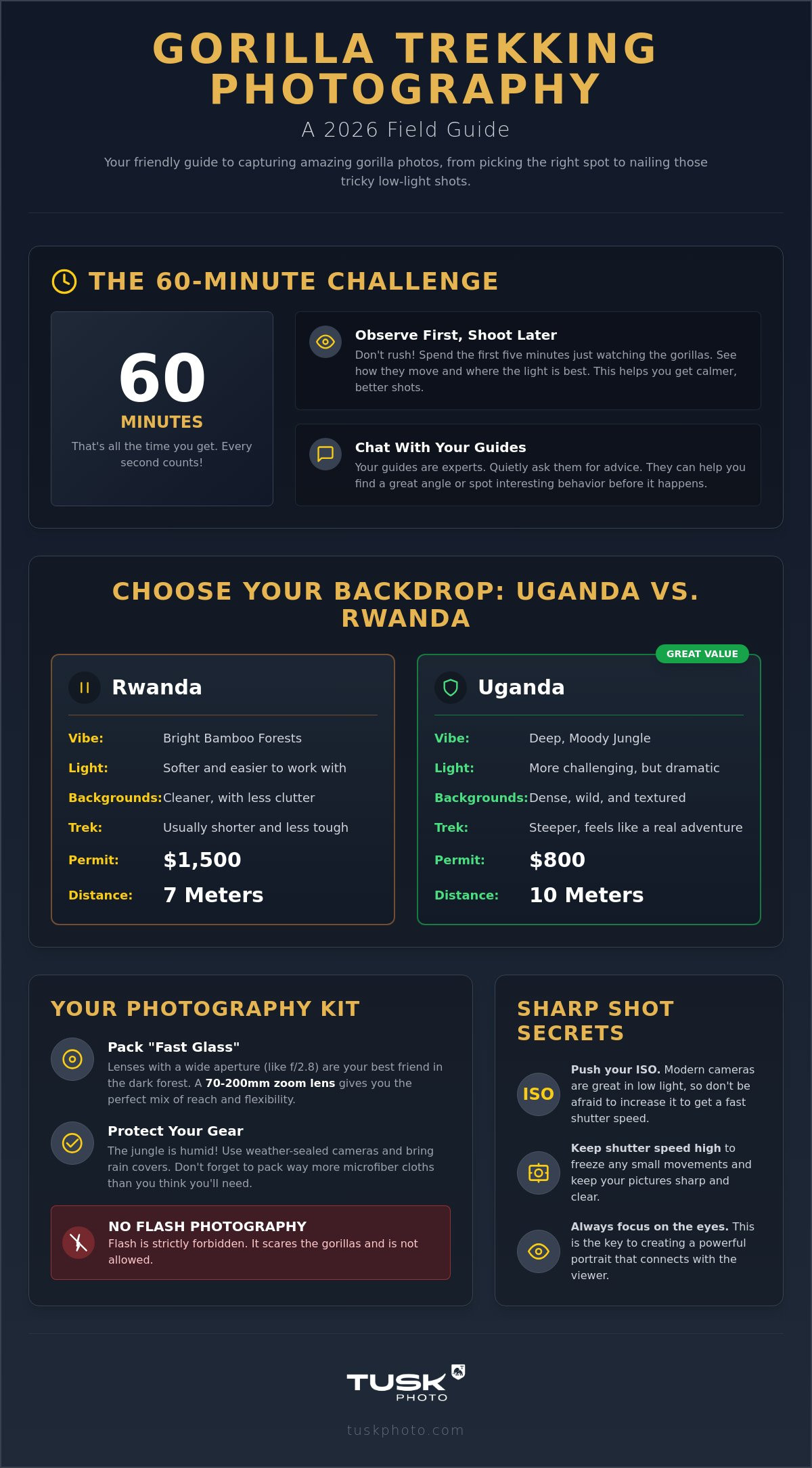
Packing for a gorilla trekking photography tour is a bit like preparing for a high-stakes mission. The rainforest is dark, humid, and unpredictable. Since flash photography is strictly prohibited to keep the gorillas calm, you need what pros call "fast glass." Lenses with a wide aperture, like f/2.8, are your best friends in the shade. They let in much more light, which is crucial under that thick forest canopy. A 70-200mm zoom lens is often the perfect choice. It gives you the reach for a distant silverback but still lets you pull back for a wider family shot when they wander closer.
Tropical environments are notoriously tough on electronics. Even if it isn't pouring, the humidity is constant. It is smart to use weather-sealed camera bodies and lenses whenever you can. For extra safety, bring dedicated rain covers or even simple heavy-duty plastic bags and rubber bands. They work wonders for keeping gear dry. Don't forget the "Microfiber Rule." You will need way more lens cloths than you think. Moisture and fog can ruin a shot in seconds, so keep a few dry cloths tucked in different pockets. If you want to spend more time testing specific gear in the field, our custom photography tours offer the flexible schedule you need.
To get those professional shots in the dark, you have to push your ISO. Modern cameras handle high ISO settings much better than they used to, so don't be afraid to go higher to keep your shutter speed up. A fast shutter speed is vital to freeze the subtle movements of a gorilla's face or a youngster playing. Always focus on the eyes. A sharp, clear eye is what makes a wildlife portrait feel emotionally powerful and connected. It is the difference between a simple record of your trip and a genuine piece of art.
You don't have to navigate these wild trails on your own. When you Join Tusk Photo for a 2026 Gorilla Photography Expedition, you get the support of expert photography hosts who know exactly how to handle the pressure of the trek. We keep our groups small to ensure you always have the best sightlines, and we offer bespoke itineraries designed specifically to help you build an incredible portfolio. A gorilla trekking photography tour is a major investment in your craft, and we are here to make sure every second counts. Get your gear ready; the silverbacks are waiting for you.
The dry seasons from June to September and December to February are the best times for a gorilla trekking photography tour. You'll find less rain and firmer ground, which makes the hike much easier on you and your gear. If you are looking for softer, more atmospheric light, the rainy months can offer beautiful results. Just be ready to protect your camera from the extra moisture under the canopy.
Tripods are rarely practical or allowed during the actual encounter. The terrain is often too steep and the space too tight to set up three legs safely. A monopod is a much better choice if you need extra stability. Most photographers find that shooting handheld with a fast lens and good image stabilization is the best way to stay mobile and capture the gorillas as they move.
You should be fit enough to hike for several hours on steep, slippery trails. Some treks are short, but others can take most of the day depending on where the gorilla family has moved. It's a good idea to do some hill walking or cardio exercise before your trip. Hiring a porter is a fantastic way to handle the weight of your gear so you stay fresh for the shoot.
The "one person per row" rule is a standard for safari vehicles to ensure everyone has a window seat. It doesn't apply to the trek itself since you'll be on foot. However, on a dedicated gorilla trekking photography tour, we keep groups small and focus on positioning. Your host will help manage the group so that everyone gets a clear, unobstructed view of the gorillas without getting in each other's way.
Yes, carrying two camera bodies is highly recommended for serious photographers. It lets you switch between a wide lens and a telephoto zoom instantly without exposing your sensor to the humid forest air. This is a huge advantage when a silverback suddenly moves closer. Just make sure your bag is comfortable, as you'll be carrying that extra weight over uneven ground throughout the day.
Rwanda is usually the easier choice for beginners because the bamboo forests are brighter and the terrain is often less dense. This makes it simpler to get a clear shot with a clean background. Uganda offers a more rugged, "deep jungle" experience that can be trickier to light. If you want a more straightforward introduction to primate photography, Rwanda's lighter canopy is a great place to start.


