
Tanzania Photography Safari: A Field Guide for 2026
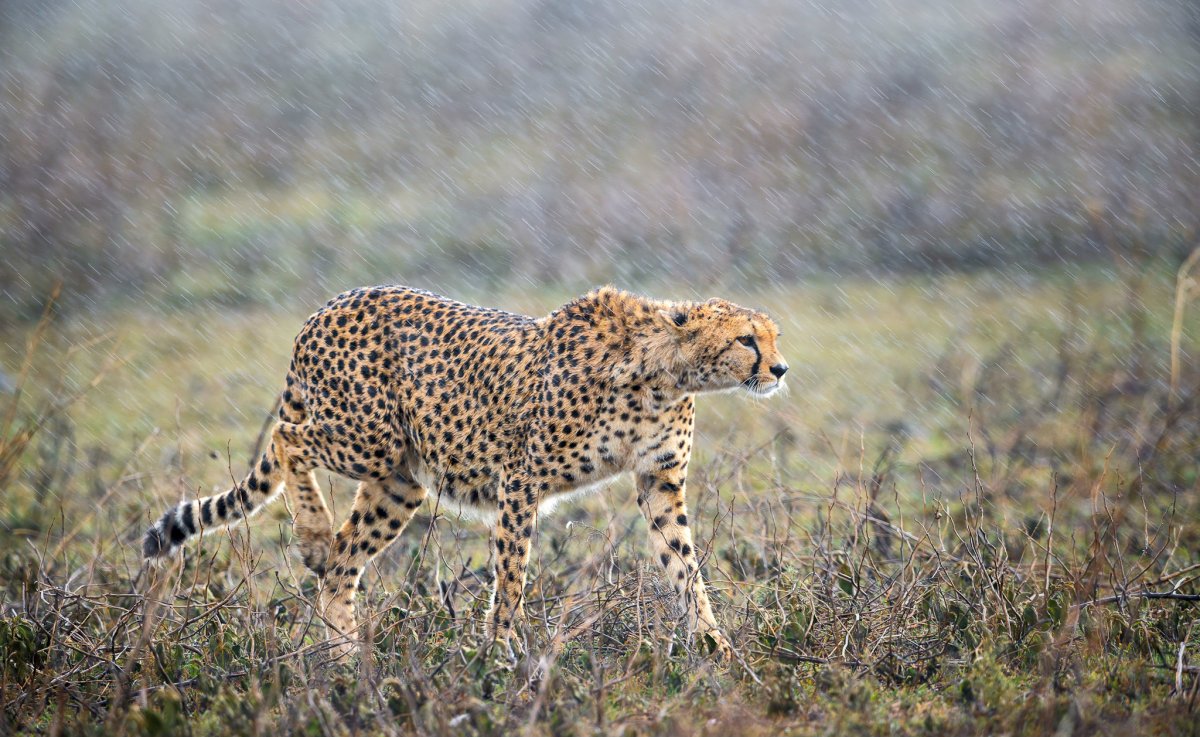

A better wildlife photograph can start with slowing down, not covering more ground. A Tanzania photography safari gives you time to work with changing light, varied landscapes, and unpredictable wildlife. Before you plan, consider which subjects interest you, how much time you want to spend observing, and what kind of guidance would help you in the field. Sightings can never be guaranteed, but a photography-focused plan can give you more time to notice a moment and respond.
This guide looks at Tanzania’s photographic appeal and the choices that shape a rewarding trip, from subjects and shooting priorities to the pace of your days. You’ll also learn how experienced guides can support photographers at different levels, and how scheduled, tailor-made, or on-demand journeys suit different plans. Start with the images you hope to make, then choose a safari format that gives you room to pursue them while staying flexible.
Tanzania brings together wide plains, volcanic scenery, and varied habitats, giving photographers different settings to work with. The reward of a Tanzania photography safari isn’t simply visiting a famous place. It’s having time to notice how the light, landscape, and animal behaviour work together in a frame.
The Serengeti is known for open plains, where the space around an animal can become part of the image. The Ngorongoro Conservation Area offers a striking volcanic setting, while Tarangire brings a different mix of habitats and scenery. Each place invites a different approach: a wide composition can show scale and setting, while a closer frame can draw attention to posture, expression, or movement. Wildlife and conditions vary, so treat locations as photographic possibilities rather than promises of a particular encounter.
Before taking a picture, decide what you want the frame to communicate. Open country can suit an image that places an animal within a sweeping landscape. In varied terrain, foreground plants, hills, or other features can add depth and a stronger sense of place. Look around the subject before framing: a small change in angle can include more habitat or remove a distracting element.
Light and behaviour matter just as much. Soft early or late light can bring out texture and colour. In harsher light, try a simpler composition or look for a moment in shade. Watch the animal’s direction of movement and leave space in the frame for it to move into. A turn of the head, a step, or an interaction can change the picture in seconds. Stay with a sighting when it makes sense, observe before reacting, and use your guide’s field advice to make considered choices. Wildlife remains unpredictable, so flexibility is part of the craft.
Decide whether you’re most interested in animal portraits and behaviour, wide scenes that show habitat, or a mix. A focus on the Great Migration calls for a different emphasis from a broader interest in wildlife and landscape photography.
Think about how much time you want to spend observing and photographing a sighting. If you prefer to study behaviour and wait for a moment, make that part of your planning rather than treating each sighting as a quick stop.
Your available dates help narrow the options. If they’re flexible, compare them with the focus of your trip and the tour formats that fit your plans. Browse scheduled photography tour dates to see whether a set departure suits your calendar.
Consider what you already feel comfortable doing and where you’d welcome guidance, from choosing a composition to responding as an animal moves. This helps you describe the kind of support you want from the journey.
Tusk Photo’s experienced guides support beginners and seasoned photographers in the field. They can help with framing and timing, and guide the group as conditions change. Before you travel, think about the skills you want to practise, but keep your plans open enough to respond to what you see.
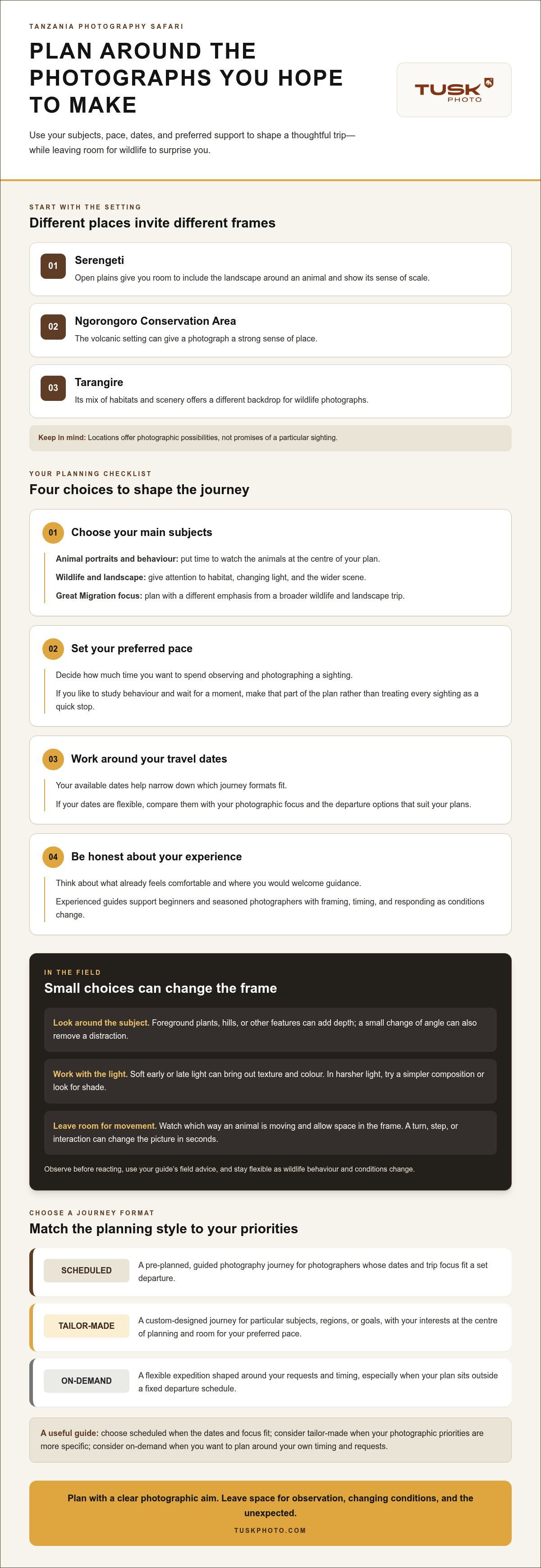
The right format depends on how much you want to shape the journey yourself. Tusk Photo offers scheduled departures, tailor-made journeys, and on-demand photography expeditions. Compare them by looking at your available dates, how specific your photographic priorities are, and how much flexibility you want in planning.
suit photographers whose travel plans fit set departure dates. They provide a pre-planned, guided photography journey, making them a clear option if you don’t need the trip built around individual preferences.
suit photographers with particular subjects, regions, or goals in mind. These custom-designed journeys put your interests at the centre of the planning and can follow your preferred pace.
offer a flexible way to plan around your requests and timing. Consider this format when you want an expedition shaped around a specific plan outside a fixed departure schedule.
Choose a scheduled departure when its dates and focus fit your plans. If your priorities are more specific, such as giving extra attention to a certain subject or balancing wildlife with landscape photography, a tailor-made journey can make those interests central to the planning. For travellers planning broader bespoke itineraries or pairing wilderness expeditions with private island retreats, kalokalo.travel offers tailored luxury travel planning. In either case, leave room for observation and changing conditions instead of expecting a particular sighting or photograph.
Tusk Photo’s experienced guides lead these photography journeys for beginners and seasoned photographers. Their guidance can help you think through framing, timing, and how to respond to changing animal activity, while allowing for different experience levels and goals.
To compare the available formats, explore Tusk Photo tours and consider which one best fits your dates and photographic priorities.
Before choosing dates, decide what you want your photographs to say. You might be drawn to animal behaviour, the scale of the landscape, or small moments that unfold when you give a scene time. Let that creative aim guide the pace and format of your Tanzania photography safari, while staying open to the unexpected.
You don’t need to arrive as an expert. Tusk Photo’s experienced guides lead photography expeditions for beginners as well as seasoned photographers, helping travellers make considered choices in the field. The wildlife will set its own rhythm, but thoughtful planning can help you meet each moment with patience and purpose.
Explore Tusk Photo’s photography journeys and choose the format that fits your plans. Explore Tusk Photo tours to start shaping a safari around the images you hope to make.
Yes. Tanzania’s varied habitats and photographic settings give you plenty to work with, whether you want to focus on animal behaviour or tell a broader story of place. Before planning, write down the kinds of images you’d like to make and use them to guide your choices. Treat the list as a creative direction, not a checklist of guaranteed moments.
There isn’t one best period for every photographer. Timing depends on the wildlife activity or landscape conditions you want to focus on, and seasonal patterns can change. First, decide what you most want to photograph. Then compare your travel dates with the focus of the journey and keep your expectations flexible. A calendar can guide your planning, but nature doesn’t follow a guaranteed schedule.
No. You can take part without professional equipment. Choose what to bring based on the subjects you care about and the camera kit you already have. Before travelling, practise using your camera and changing its settings so you’re comfortable with the controls when a fleeting moment appears. There’s no single required setup.
It can give beginners useful opportunities to learn by observing, practising, and reviewing their images. Try taking time to watch before raising your camera, then notice how your framing and timing affect the result. Improvement varies, and no trip can promise particular photographs. Tusk Photo’s tours welcome photographers at different experience levels.


