
Tanzania Photography Safari: 2026 Adventure Guide
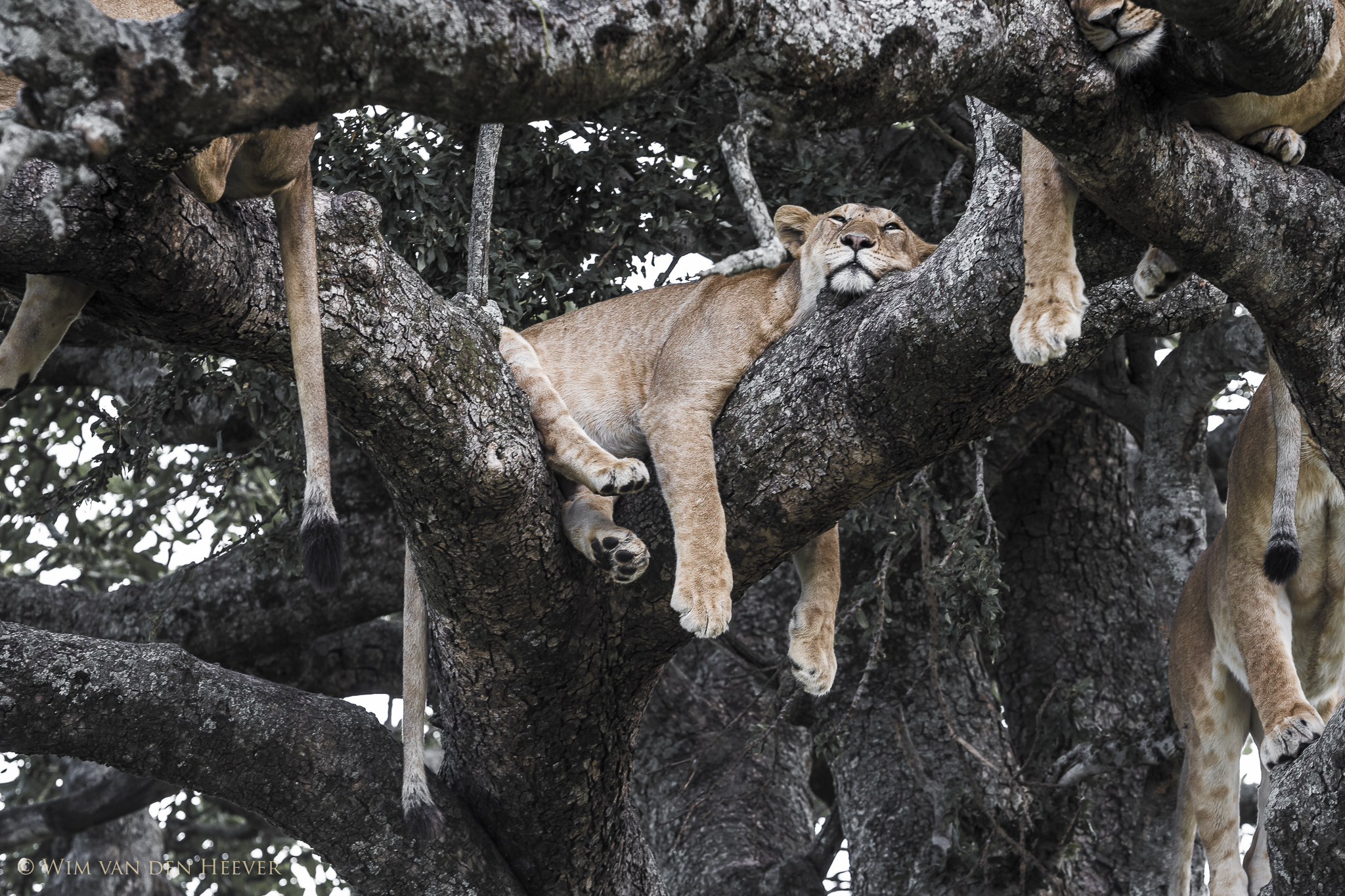

What if you could stop worrying about your camera settings and simply focus on the lion walking through the tall grass toward your lens? Many photographers dream of a Tanzania photography safari, but it's easy to feel overwhelmed by travel planning or the fear of missing the Great Migration. We know you want to come home with a portfolio of sharp, beautiful animal photos without the stress of carrying the wrong gear. This guide shows you exactly how to be in the right place at the right time in 2026. You'll discover simple tips for choosing equipment, the best seasonal timings for the Big Five, and how expert-led tours turn a complex journey into a seamless adventure. Focus on the craft. From the calving season in Ndutu to the high-action river crossings, we're here to help you capture the shots of a lifetime.
Tanzania is a place where nature feels truly big. From the endless golden plains to the massive herds of the Great Migration, every corner offers a new chance for a stunning shot. A Tanzania photography safari is famous for the 'Big Five', which include the lion, leopard, rhino, elephant, and buffalo. You don't need to be a seasoned professional to get great results, either. If you are just starting out, checking some wildlife photography tips for beginners can help you feel ready before you even step off the plane.
The Serengeti National Park is the crown jewel for action photography. With over 1.5 million wildebeest on the move in 2026, you'll see hunts and crossings that most people only watch on TV. The light here is soft and golden. It makes it easy to capture the textures of a lion's mane or a cheetah's spots against the vast horizon.
In the Ngorongoro Crater, the wildlife is contained in a massive natural bowl. This makes animals easier to find and provides a unique backdrop for your frames. Keep in mind that game drives here are capped at 6 hours. Every minute counts when you're lining up that perfect rhino shot against the crater walls.
Tarangire National Park offers a different look for your portfolio. It's known for its ancient, giant baobab trees and huge elephant herds. These trees add a sense of scale and history to your photos. It is a fantastic spot for environmental portraits where the landscape is just as important as the animal itself.
Timing is everything on a Tanzania photography safari. The Great Migration moves in a massive clockwise loop, so your results depend on being in the right place at the right time. For 2026, the dry season from June to October is usually your best bet. During these months, the vegetation thins out and animals gather around the remaining water holes. This makes it much easier to spot predators and prey in one frame, giving you clear sightlines for your shots.
You don't need a bag full of expensive gadgets to succeed. Often, a high-quality zoom lens is more important than a fancy camera body. A lens with a long reach lets you capture the details of a leopard's whiskers without disturbing its rest, which is vital for ethical wildlife viewing. If the logistics feel daunting, remember that a scheduled departure photography tour takes the guesswork out of the calendar and lets you focus on your craft.
Great photos often come down to a few simple habits. First, always focus on the eyes. When an animal's eyes are sharp, the viewer feels a real connection to the subject. Second, watch the light. The 'Golden Hour' just after sunrise offers a soft, warm glow that makes every coat and feather look magical. Finally, be patient. The most dramatic shots happen when you wait for a behavior to unfold, like a lion yawning or a cub playing. If you're ready to start planning your journey, you can look at our Scheduled Tours to find a window that fits your creative goals.
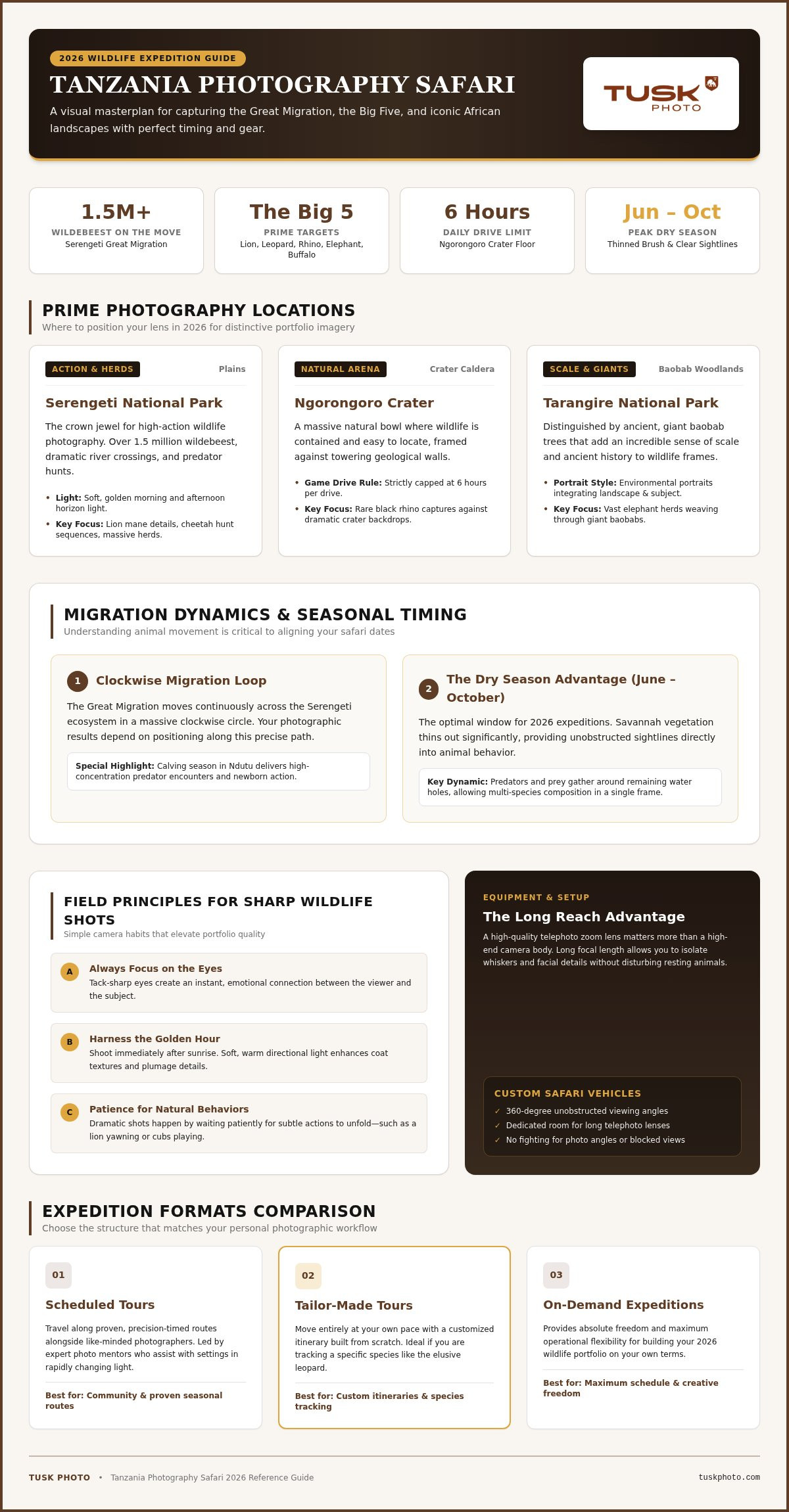
Finding the right way to see the savannah is just as important as the gear in your bag. At Tusk Photo, we believe a Tanzania photography safari should be about more than just driving around. It's about having an expert by your side who can help you adjust your camera settings when the light changes suddenly. Our vehicles are specially designed to give you the best seat for every sighting. You won't have to fight for a view or worry about someone else blocking your shot. This layout ensures you have 360-degree views and enough space for your longest lenses. Take a look at our Tanzania photography expedition options to see which style of travel feels right for you.
Choosing between a group or a private trip depends on your personal goals. Our Scheduled Tours are a fantastic choice if you want to travel a proven route and meet other people who love the craft as much as you do. These trips are led by mentors who know the land and the animals intimately. You can browse our upcoming tour dates to find a window that works for your schedule.
If you have a specific species in mind, like the elusive leopard, or just want to move at your own speed, our Tailor-Made Tours are the way to go. You can learn more about these custom tours to start building your dream itinerary from scratch. For those who need absolute freedom for their 2026 portfolio, we also offer On-Demand options. These on demand photography expeditions provide the total flexibility you need to capture the wild on your own terms. Whether you choose a group or a private path, your Tanzania photography safari will be supported by a team that cares about your creative success.
Your journey through the heart of Africa is about more than just seeing animals; it's about being in the right spot at the right time to tell a story with your lens. By focusing on simple gear and picking the best seasonal windows, you'll create a portfolio that you'll be proud to share. A Tanzania photography safari is a life-changing event, and having the right team by your side makes every moment easier. With our expert photography hosts and small, photographer-friendly groups, we bring decades of African safari experience to every game drive. We take care of the planning so you can stay focused on the light and the movement of the wild. Find your perfect 2026 Tanzania photography tour here and get ready for an adventure. We can't wait to see the shots you bring home!
The dry season from June to October is generally the best time for your 2026 trip. During these months, animals gather around water holes, making them easier to find and frame. If you're interested in the Great Migration calving season, consider visiting in January or February. Our Tanzania photography safari options are carefully timed to put you in the right place for these incredible events.
You definitely don't need a professional camera to have a great experience. While a decent zoom lens helps capture distant animals, we welcome photographers at every level. Our expert hosts are there to act as mentors. They'll help you with your settings in the moment, ensuring you come home with beautiful photos regardless of the gear you own.
It is very safe for solo photographers, especially when you join an organized tour. Our Scheduled Tours are perfect for individuals because they offer a secure, friendly environment where you can meet other enthusiasts. We take care of all the travel details and park fees. This lets you relax and focus on your creative work while being part of a small, supportive group.
We suggest planning for at least 7 to 10 days to get the most out of your journey. This gives you enough time to explore different parks and wait for the best light. Wildlife can be unpredictable, so a longer stay increases your chances of seeing the Big Five on your Tanzania photography safari. It also ensures you don't feel rushed.


