
Swakopmund Photographic Safari: Capturing the Magic of the Namib Desert


Imagine you're kneeling in the soft, copper sand of the Namib, searching for a creature no bigger than your thumb. You know it's there, but without a trained eye, the desert can look like a vast, empty space. Many photographers feel this same frustration when they first arrive. It's easy to feel overwhelmed by the bright sun or worried that the fine sand will ruin your expensive lenses. A swakopmund photographic safari is designed to solve these exact problems by putting you in the right place at the right time with expert support.
In this guide, you'll learn how to find and photograph the famous "Little Five" while keeping your gear safe from the elements. We'll also share professional tips for capturing the moment where the orange dunes meet the blue Atlantic ocean. You'll discover how expert guidance can help you master harsh lighting and turn these dramatic landscapes into professional-grade macro shots.
Most people think of safaris as green plains and tall grass. A swakopmund photographic safari offers a completely different experience. It's a world of stark, artistic contrasts where the oldest desert on Earth meets the cold Atlantic. This isn't just a place for adventure sports; it's a paradise for photographers. The shifting dunes create deep shadows and sharp lines that change every hour, giving you endless ways to frame a unique shot.
One of the best secrets of this region is the morning fog. It rolls in from the ocean and acts like a giant, natural lightbox. This soft, even light is perfect for capturing the fine textures of the sand without any harsh glares or deep shadows. It's the ideal time to explore the "Living Desert" before the sun gets too high. If you're looking for a specific experience, our tailor made tours can be designed around these perfect lighting windows.
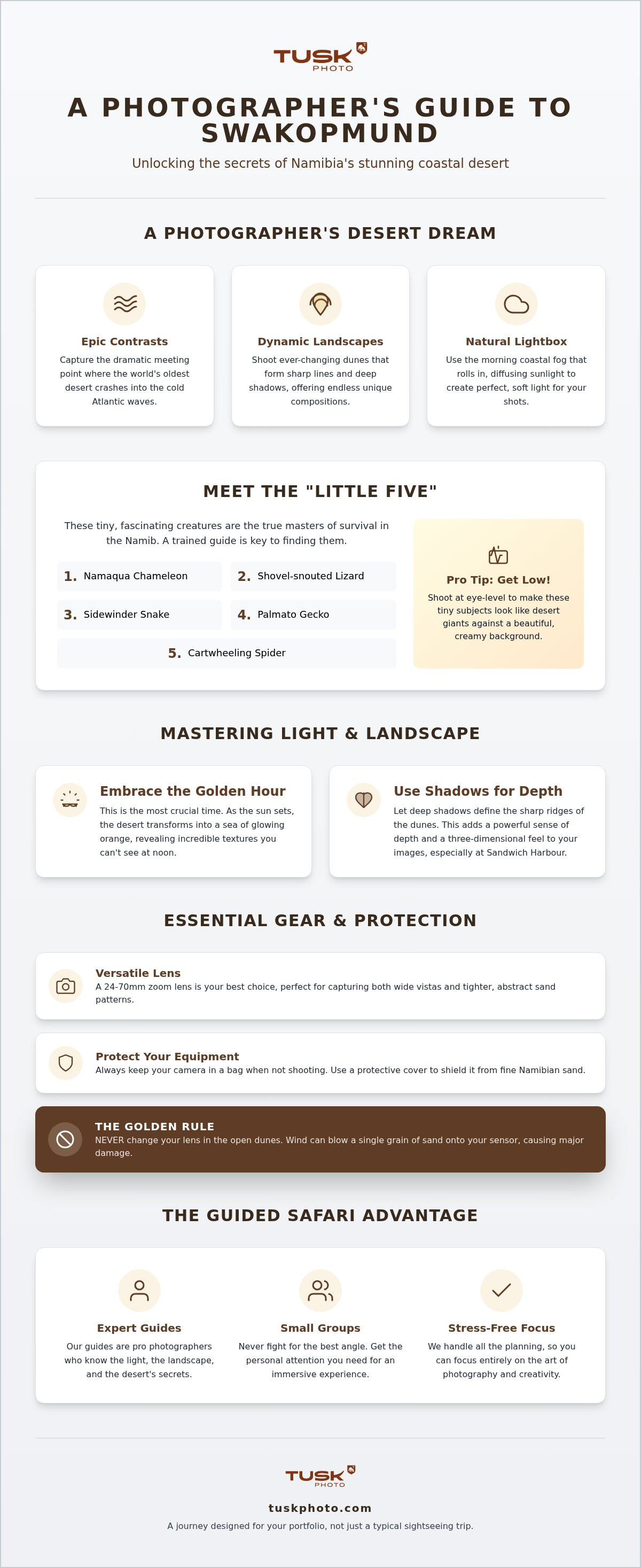
The "Little Five" are the small, fascinating stars of the desert that often go unnoticed by the casual traveler. This group includes the colorful Namaqua Chameleon, the Shovel-snouted Lizard, the Sidewinder Snake, the Palmato Gecko, and the Cartwheeling Spider. These tiny creatures are the true masters of survival in the Namib.
To get professional-grade shots, you need to get low to the ground. Try lying flat on the sand to meet these creatures at eye level. This perspective makes a tiny gecko look like a desert dragon and creates a beautiful, creamy background. Our expert guides act as mentors to help you spot these "unfindable" subjects in the vast dunes. It takes a trained eye to see a track in the sand, but once you find your subject, the results are breathtaking.
A swakopmund photographic safari often reaches its peak at Sandwich Harbour. This is where the massive Namib dunes meet the crashing Atlantic waves. It's a dramatic landscape that requires a bit of strategy to capture properly. Use the deep shadows to create depth in your photos. These shadows define the sharp ridges of the dunes and give your images a three-dimensional feel. Many of the same skills mentioned in our wildlife photography tips for beginners apply here, especially when it's about being patient and waiting for the right moment.
The Golden Hour is the most important time on a swakopmund photographic safari. As the sun begins to set, the desert transforms into a sea of glowing orange and fiery red. This soft light brings out the incredible textures of the sand that you simply can't see at noon. It's a short window of time, so it helps to have a guide who knows exactly where the light hits best. You can check our tour dates to see when the next expedition sets off.
Using a standard zoom lens, like a 24-70mm, is usually your best choice in the dunes. It's versatile enough to capture wide vistas and tighter, abstract patterns. Protecting your equipment from the fine Namibian sand is a top priority. Always keep your camera in a bag when you're not shooting, and consider using a protective cover. Most importantly, never change your lens while standing in the middle of a dune field. The wind is always moving, and even a tiny grain of sand on your sensor can cause a major headache later.
Planning a trip to Namibia can feel like a lot of work. When you book a swakopmund photographic safari with a professional host, that stress disappears. Our guides aren't just drivers; they're professional photographers who understand exactly where the light will fall on a specific dune. They know that waiting ten extra minutes for a cloud to move can make the difference between a good shot and a masterpiece.
We keep our groups small so you never have to fight for the best angle. This ensures your swakopmund photographic safari is an immersive experience where the focus is entirely on the art of photography. You can explore our scheduled departure photography tours to see what fits your calendar. It's a journey designed for your portfolio, not just a typical sightseeing trip.
Picking the right trip depends on your personal goals. Our scheduled tours are perfect for meeting like-minded people and following a route that we've perfected over many years. However, if you have a specific list of desert creatures you want to capture, a tailor-made photography safari might be the better choice. This allows you to spend as much time as you need on a single subject without feeling rushed. You can view our full range of photography tours to compare the options and find the one that speaks to you.
The Namib Desert is a place of incredible contrast and hidden beauty. From the tiny details of the "Little Five" to the massive ridges of Sandwich Harbour, there's always something new to capture. By choosing a swakopmund photographic safari, you gain more than just a trip. You get the guidance of expert photography hosts who know the desert's secrets. Our small group sizes ensure you get personal attention, and we even offer bespoke itineraries for those with specific artistic goals. It's about more than just taking pictures; it's about telling a story through your lens. Explore our upcoming Swakopmund and Namibia tour dates here! We're excited to help you capture the magic of this ancient landscape.
The best time for your swakopmund photographic safari is typically between May and September. These months offer much cooler temperatures, making it easier to stay out in the sun for longer periods. You'll still experience the famous coastal fog that provides beautiful, soft lighting for your shots. It's a great time for clear, crisp afternoon landscapes once the mist clears away.
While a macro lens is fantastic for tiny creatures, it's not an absolute requirement. A standard zoom lens often does a great job of capturing desert life if it can focus relatively close. If your goal is to see every tiny detail on a Namaqua Chameleon, then a macro lens is a helpful tool. Our guides will help you make the most of whatever gear you bring.
The main safety concern for your equipment isn't theft, but the fine Namibian sand. It's incredibly light and can blow into your camera's buttons or sensor very easily. We suggest using a protective cover or simply keeping your gear in a bag until you're ready to shoot. Being careful about where you change your lenses will keep your equipment working perfectly throughout the trip.
You won't need to be an athlete, as most of the walking happens near our 4x4 vehicles. We usually take short walks over the dunes to find the best angles or track small animals. Walking in soft sand takes a little more effort than a flat path, but we always keep a relaxed pace. We can also customize the activity level on our tailor-made journeys.


