
Species You Can Expect to Photograph in the Okavango, Savute and Chobe Areas

Have you ever stood on the edge of a vast, golden plain and worried that your 400mm lens was the wrong choice for the moment? It's a common fear for photographers heading to Botswana, but knowing the species you can expect to photograph in the Okavango, Savute and Chobe areas is the first step to capturing those portfolio-defining shots. We understand that planning a high-stakes photography trip can feel a bit overwhelming. You want to be sure you won't miss a leopard in a tree or a pride of lions hunting in the marsh just because you didn't know what to look for or which gear to prioritize.
This guide will clear up that uncertainty by showing you exactly what wildlife waits for your lens in Botswana’s most iconic hotspots. We'll break down the regional specialties of the Okavango Delta, the legendary predators of Savute, and the massive elephant herds of Chobe. By the end, you'll know exactly what to look for and which regions align with your creative goals, helping you feel completely ready to book your next photography-focused tour with confidence.
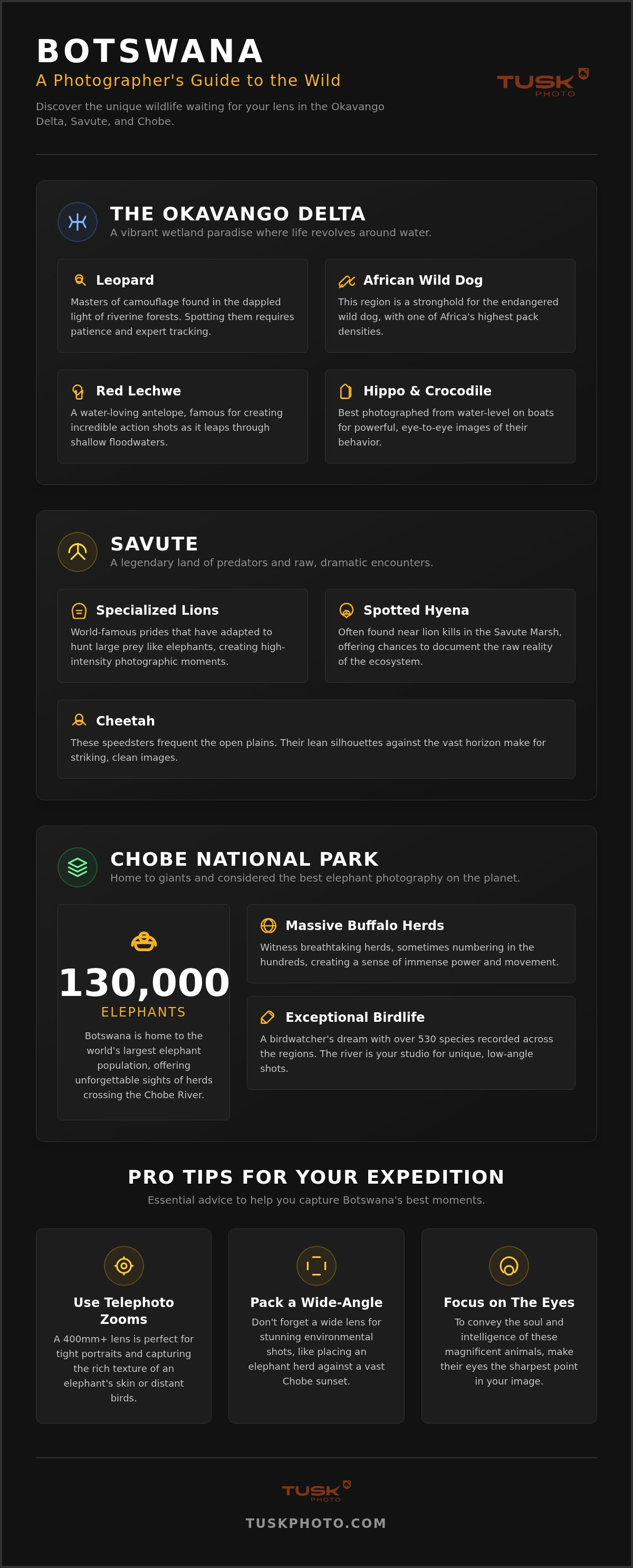
The Savute region is home to lions that are world-famous for their specialized hunting skills. These prides have adapted to hunt large prey, including elephants, creating high-intensity photographic opportunities. In the Okavango, we focus on the riverine forests where leopards thrive. These cats are masters of camouflage, but with Tusk Photo’s expert tracking, you'll have the best chance to spot them in the dappled light of the trees. Tracking a leopard requires patience and a deep understanding of the bush. Our guides specialize in reading the subtle signs of the forest to put you in the right position before the light fades. For those who love speed, cheetahs frequent the open plains of the northern regions. Their lean silhouettes against the vast, open horizon make for striking, clean images.
Chobe National Park offers what many consider the best elephant photography on the planet. Botswana holds the world's largest elephant population, estimated at roughly 130,000 animals. Capturing these giants as they cross the Chobe River or dust-bathe on the floodplains is a bucket-list experience. You'll also encounter massive herds of buffalo. These animals are often surrounded by birds like oxpeckers and egrets, which adds a wonderful layer of detail to your shots. Whether you're on one of our scheduled tours or a private journey, these giants are a constant, majestic presence. To make the most of these encounters, consider these tips:
• Use wide-angle lenses for environmental shots of large herds.
• Pack telephoto zooms to capture the texture of elephant skin.
• Focus on the eyes to convey the intelligence of these gentle giants.
The scale of the buffalo herds in Chobe is truly breath-taking. Sometimes numbering in the hundreds, they create a sense of movement and power that is hard to find elsewhere. Watching them interact with the landscape provides endless opportunities for both wide-angle environmental portraits and tight, detailed close-ups.
Beyond the famous big cats and elephants, the true magic of Botswana lies in its regional specialists. The species you can expect to photograph in the Okavango, Savute and Chobe areas include unique animals that have adapted perfectly to their specific environments. In the Okavango Delta, life revolves around the water. You'll often find the Red Lechwe, a water-loving antelope, leaping through shallow floodwaters. These moments offer incredible action shots, especially when the golden hour light hits the splashing spray.
The delta is a vibrant world of color. Look for the tiny Malachite Kingfisher perched on reeds; its bright blue and orange feathers pop against the green backdrop. For a different perspective, we often use boats to get down to water level. This is the best way to photograph hippos and crocodiles. Seeing a hippo yawn from a low angle creates a much more powerful image than looking down from a high riverbank. It’s all about getting eye-to-eye with your subject.
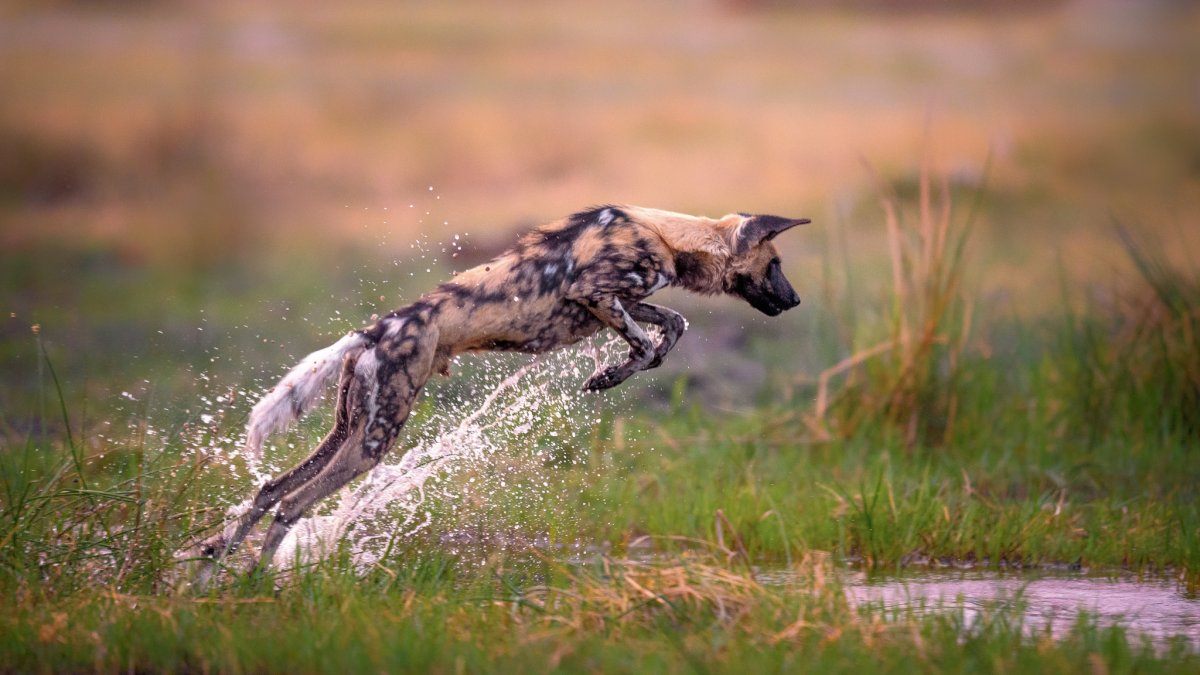
Savute offers a stark contrast to the lush delta. The Savute Marsh is a prime spot for scavengers like Spotted Hyenas and Black-backed Jackals. These animals are often found lingering near lion kills, providing endless opportunities to document the raw reality of the bush. If you're looking for something truly special, the Okavango is a known stronghold for the endangered African Wild Dog. They have one of the highest pack densities in Africa here, making it a top location for tracking these colorful, social predators.
In Chobe, the river becomes your studio. Photographing from a custom boat allows for unique low-angles of animals coming down to drink. It's also a birdwatcher’s dream, with over 530 species recorded across the delta and surrounding regions. If you have a specific list of animals you want to capture, our tailor made tours can be designed to focus on these regional rarities, including the tough-as-nails Honey Badger or the elusive Pel's Fishing Owl.
Capturing the spirit of Botswana requires more than just a good eye. Knowing the species you can expect to photograph in the Okavango, Savute and Chobe areas is only half the battle; the other half is being ready when the moment happens. The light in the Delta is often filtered through lush canopy or reflected off water, while Savute offers a harsher, more dramatic glow. Preparing for the species you can expect to photograph in the Okavango, Savute and Chobe areas means thinking about the unique light and weather of each region well before you press the shutter.
You'll want a versatile kit to handle these diverse landscapes. A long telephoto lens, ideally 400mm or more, is perfect for those tight portraits of leopards or distant birds. However, don't forget a wide-angle lens for environmental shots that show an elephant herd against a massive Chobe sunset. Dust and heat are constant challenges in the bush, so we recommend bringing a reliable cleaning kit and protective covers for your camera body. If you're just starting out, our wildlife photography tips for beginners can help you dial in your settings before you arrive.
A photography-specific guide makes a massive difference to your final portfolio. Our guides understand animal behavior, which means they can predict where a predator might move before it actually happens. This foresight puts you in the perfect position for the shot. We also keep our group sizes small. This ensures you have plenty of room on the vehicle to move your tripod or beanbag without bumping into other guests. You get the angle you need without the crowd.
If you have a specific vision in mind, our tailor-made photography safaris allow you to spend more time in remote areas where rare species thrive. Whether you are chasing the perfect shot of a wild dog pack or waiting for a Pel’s fishing owl to wake up, we provide the logistical support and expert knowledge to make it happen. We focus on the details so you can focus on the craft.
Botswana is a place where every sunrise brings a new chance for a world-class photo. Whether you're watching a leopard slip through the shadows of the Okavango or capturing the raw power of a lion pride in Savute, the opportunities are truly endless. We've explored how each region offers its own unique cast of characters, from the water-dwelling lechwe to the massive elephant herds of Chobe. Now that you're familiar with the species you can expect to photograph in the Okavango, Savute and Chobe areas, it's time to turn those dreams into a reality.
At Tusk Photo, we use our decades of experience in Botswana’s wilderness to put you exactly where the action is. Our trips feature expert photography hosts who help you master your craft in the field, and we use specialized vehicles designed specifically for photographers to ensure you always have the best angle. Don’t let these bucket-list moments pass you by. View our 2026 Botswana tour dates and book your spot! We can't wait to help you capture the incredible wildlife shots you've always wanted to see in your portfolio.
The best time to photograph wildlife in Botswana is during the dry season, which usually runs from May to October. As the bush dries out, animals gather in massive numbers around the permanent water of the Okavango Delta and Chobe River. This makes it much easier to find the species you can expect to photograph in the Okavango, Savute and Chobe areas because the thinning vegetation won't hide them from your lens.
You have an excellent chance of seeing the African Wild Dog in the Okavango Delta. This region is a vital stronghold for this endangered species, featuring some of the richest pack densities on the continent. Their social nature and high-speed hunts make them a favorite for photographers. Our guides use their deep knowledge of pack territories to help you find these social predators during their most active times.
You don't need to pack a heavy tripod for your daily game drives. Most photography in Botswana happens from our specialized vehicles, where beanbags or window mounts are much more effective for stabilizing long lenses. A tripod is only necessary if you plan on capturing the stunning night skies or wide-angle landscapes around your camp. For the majority of your wildlife shots, a simple beanbag provides the best support.
It is perfectly safe to photograph predators from an open vehicle as long as you stay seated and quiet. Wildlife in these areas usually perceives the vehicle as one large, harmless object. This allows us to get remarkably close to the species you can expect to photograph in the Okavango, Savute and Chobe areas without causing them stress. Our expert guides are trained to read animal behavior, ensuring every encounter is secure.


