
South Luangwa Photo Safari: Expert Tour Guide
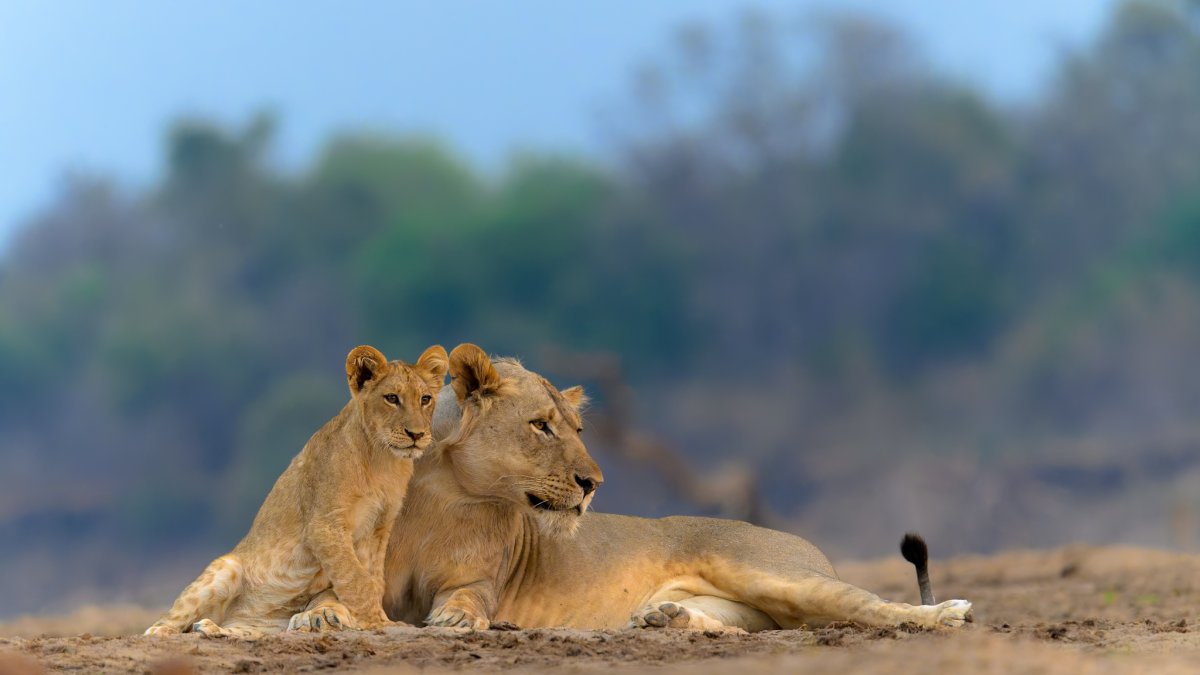

A day of photography doesn’t end when the vehicle returns to camp. A South Luangwa Photo Safari typically includes activities twice daily, with time between outings to rest, sort images, and prepare for the next drive. This rhythm shapes both your wildlife experience and the photographs you bring home.
Season and light influence what you see, but camp style, group size, and departure dates also matter when choosing a trip. This guide explains how seasonal bush camp stays shape the experience, what to consider when comparing group sizes and dates, and how image review can fit into a day in the bush.
From morning and afternoon drives to quieter hours in camp, these practical details can help you picture the journey and decide whether it suits your photography goals.
Group size affects how much room each photographer has to work from the vehicle. Some South Luangwa departures use open game viewers with four guests per vehicle, while listed trip groups range from five to twelve travelers; another departure is limited to six guests. Compare group size with the vehicle setup, since these figures describe different parts of the experience.
Dates shape the bush camp experience, wildlife sightings, and travel arrangements. A departure was scheduled for 25 September to 2 October 2026, while another is scheduled for 5 June to 12 June 2027. The September 2026 dates have passed, so they’re useful as an example of a spring itinerary, not a future booking option. Before choosing a date, compare the season, camp stay, international flights, and time available for photography.
Prices are provided after a quote request and depend on factors such as departure date, camp, flights, trip length, and room-sharing arrangements. These details help explain why itineraries to the same destination can differ. Compare the full itinerary, rather than relying on the destination name alone.
For photography, South Luangwa stands out among Zambia’s safari destinations for its mix of wildlife and birdlife. The Zambia Department of National Parks and Wildlife reports more than 400 recorded bird species in the park, giving photographers subjects beyond large mammals.
Night drives and walking safaris follow park and operator rules, so the itinerary and guide determine which activities are available. The Centers for Disease Control and Prevention notes that wild animals are unpredictable. Follow your guide’s instructions and keep a safe distance during sightings.
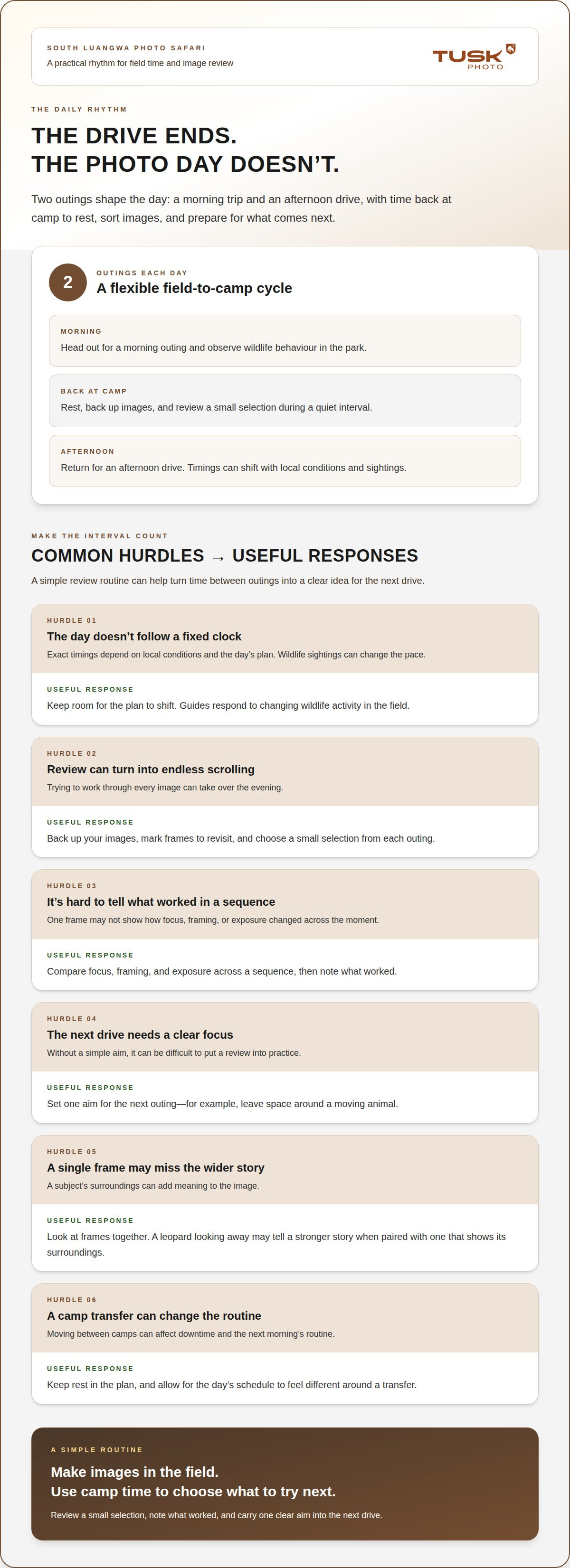
South Luangwa’s safari rhythm is built around activities in the national park twice daily. A morning outing and an afternoon drive offer two opportunities to observe animal behaviour, from elephants moving through woodland to a leopard resting in shade. Exact timings depend on local conditions and the day’s plan, so the pace may shift with sightings rather than follow a fixed schedule.
Make your time back at camp part of the photography day. After an outing, back up your images and mark the frames you want to review. During a quiet interval, compare focus, framing, and exposure across a sequence. For example, a frame of a leopard looking away may tell a stronger story when paired with one that shows its surroundings.
Keep image review focused: choose a small selection from each outing, note what worked, then set one clear aim for the next drive, such as leaving space around a moving animal. This makes review practical instead of an evening spent scrolling through every image. Rest matters, too; a transfer between camps can change your downtime and the next morning’s routine.
Leave room for spontaneity. A private review routine can help you spot patterns in your images, while guides respond to changing wildlife activity in the field. To compare departure plans and their travel structure, explore scheduled safari dates. The clearest takeaway: make images during the drives, then use camp intervals to choose what you’ll try next.
The 2027 Zambia Forest Secrets safari was scheduled for 19-27 July and was fully booked. The 2028 Zambia Forest Secrets safari is scheduled for 24 May-1 June, with space for one photographer. These dates can help photographers plan around the daily drive-and-review rhythm and set aside time to work through their images.
South Luangwa National Park in Zambia has recorded more than 400 bird species, according to Zambia Department of National Parks and Wildlife. That variety gives photographers plenty to explore beyond large mammals. Look for changing backgrounds near water and woodland, and watch how birds move before choosing a frame.
The park’s mammals include elephants, lions, leopards, hippos, and African wild dogs. South Luangwa is also known for Thornicroft’s giraffe, which occurs only in the South Luangwa Valley. Its distinctive local setting makes it a compelling subject. Look out for Crawshay’s zebra as well: its stripes are narrower than those of other plains zebras.
Water brings its own photographic possibilities. The Luangwa River is known for hippos, and reported estimates place the population above 13,000. Along the river, a photographer can look for interactions between animals, reflections, and groups moving through the frame. African wild dogs add a different subject, with pack movement and changing positions calling for patience and attention.
Build variety into your image collection. Start with wide scenes that place animals in their habitat, then look for portraits and behaviour. With leopards, observe posture and gaze; with elephants, watch how individuals relate within the group. Birds reward close attention, too, as shape, colour, and movement can distinguish one frame from another. South Luangwa’s mix of species lets you practise different approaches, from quiet bird studies to dramatic mammal encounters. Keep the surroundings in view and let each sighting guide your composition.
Tusk Photo offers Scheduled Tours for photographers who want a planned wildlife journey with expert guidance. Its experienced guides support beginners and seasoned photographers in finding strong opportunities to observe and photograph wildlife, including during a South Luangwa safari.
A scheduled departure may suit you if its dates and itinerary fit your travel plans. If you have different priorities, Tusk Photo also offers Tailor Made Tours and On Demand Tours, with other ways to shape a photographic journey. Consider what matters most: a set departure, a particular destination, or a trip designed around your interests.
Use the details covered above to compare the safari rhythm, group arrangements, and wildlife you hope to photograph. Then explore Tusk Photo’s scheduled photography tours and choose a next step that fits your plans.
Planning a South Luangwa Photo Safari starts with deciding how you want to spend your time in the field. You may prefer a set itinerary, a journey shaped around your photography interests, or an on-demand expedition. Tusk Photo offers Scheduled Tours, Tailor Made Tours, and On Demand Tours to suit these different travel styles.
Consider the subjects you most want to photograph, the pace you enjoy, and how much structure helps you focus. These priorities can guide your choice of journey and make the experience more personal. A thoughtful plan leaves room to be present when wildlife appears and ready to create with intention.
Contact Tusk Photo to plan your safari, and take the next step toward a rewarding photography journey.
A South Luangwa photo safari is a guided wildlife journey where photography shapes your time in the field. Rather than simply travelling through the landscape, you observe animal behaviour, consider light and composition, and choose moments to photograph. You might frame an animal in its habitat, then turn to a closer portrait when its behaviour offers a natural opportunity.
The best timing depends on the photographs you hope to create and the camp itinerary that suits you. Compare departure dates with the season, accommodation, and the time you want to spend in the park. If bird photography is a priority, consider how you’ll balance bird subjects with mammals and wider landscape images during your stay.
The price depends on the itinerary, accommodation, flights, trip length, and room-sharing arrangements, and is provided after a quote request. Compare the full trip details, including the travel route and planned camp stays, rather than judging by the per-person figure alone. These factors shape the cost and how the journey fits your plans.
From Lusaka, travel by air to Mfuwe; the flight takes about 1 hour. From Mfuwe, continue by transfer to your camp in the South Luangwa area. If your international arrival is in Lusaka, allow for the onward flight connection in your itinerary. Confirm your arrival details align with the planned camp transfer.
A telephoto lens with a reach greater than 400 mm is recommended for wildlife photography.


