
South Georgia Photo Tour: Wildlife Expedition Guide


South Georgia’s wildlife makes a South Georgia Photo Tour a chance to photograph king penguins, fur seals, elephant seals and wandering albatrosses. The island has approximately 500,000 nesting pairs of king penguins, while wandering albatrosses can reach a wingspan of 3.5 metres. Expect close encounters with remarkable wildlife, set against a rugged, remote landscape.
It’s natural to focus on which animals you might see, but the way a photography expedition is guided and the size of its group can shape the experience, too. This guide covers the wildlife to look for and what guided photography and group sizes can mean in the field. You’ll also get a clear overview of the conditions and practical considerations that help you plan for time with your camera on South Georgia.
Look for fur seals, elephant seals and a rich variety of birds across the island. South Georgia has around five million fur seals, and elephant seal bulls begin arriving from late August to early September. The island also has 78 known bird species, creating varied opportunities to photograph wildlife against a striking landscape.
A small expedition vessel serves as a base between shore landings. Zodiac boats take visitors from ship to shore, where each landing brings different nature and photography opportunities. Cabins have power points for recharging camera equipment between landings. Shackleton’s name is closely associated with South Georgia’s expedition history, adding a human story to the island’s remote setting.
A South Georgia expedition focuses on the island’s wildlife and landing sites, while a broader Antarctic itinerary may combine South Georgia with other destinations. The route determines the balance of wildlife encounters and landscapes, so compare itineraries against the subjects you most want to photograph.
Follow the expedition team’s instructions at each landing and photograph from the areas they direct visitors to use. South Georgia is accessible only by sea, according to the Government of South Georgia & the South Sandwich Islands. Drone use must follow the applicable visitor rules.
Travel is by vessel, and the route and departure point shape the length of the sea journey. The same remoteness makes weather and sea conditions important considerations. Summer temperatures usually range from 0°C to 5.5°C, and changeable weather can affect conditions during an expedition.
Photography-focused trips may build in guided time ashore. One expedition has three instructors for twenty photographers, while a small-group itinerary can offer a different pace. Compare the route, planned landings and photography guidance when choosing between a South Georgia-focused trip and a broader Antarctica voyage.
A South Georgia Photo Tour can bring wildlife portraits and sweeping landscapes together, from penguins to mountain backdrops. Plan for both kinds of images, while leaving room to respond to the conditions and wildlife you encounter ashore.
Build variety into your approach: photograph animals at their level, then include the island’s mountains and coastline. South Georgia’s ranges reach nearly 3,000 metres, adding scale to wildlife scenes. A zoom lens reaching at least 250 mm is recommended for photographing animals. Wider views can show how wildlife, shore and rugged landscape meet.
South Georgia has approximately 500,000 nesting pairs of king penguins. Their colonies offer chances to frame individual birds or show the scale of a gathering. Look for contrasting details, such as one penguin against a dense group. On a South Georgia Photo Tour, pause to observe movement before choosing a frame, rather than photographing every moment from the same position.
November and March are popular photography months: the sun sits lower, the light can be softer, and weather is more changeable. These conditions may suit atmospheric landscapes and wildlife portraits. Seasonal timing also affects which subjects are active at the places you visit. Compare departure dates with your priorities, such as softer light or particular wildlife moments.
At Salisbury Plain and St Andrews Bay, use time ashore to make both close and wide compositions. Frame penguins or elephant seals against the coast, then include mountains to establish a sense of place. Changing your viewpoint can add depth to a busy wildlife scene. An onboard photography workshop can help you refine your composition during the journey.
Hundreds of thousands of birds can gather in South Georgia’s King Penguin colonies, giving photographers opportunities to vary the frame from individual portraits to the scale and pattern of the colony.
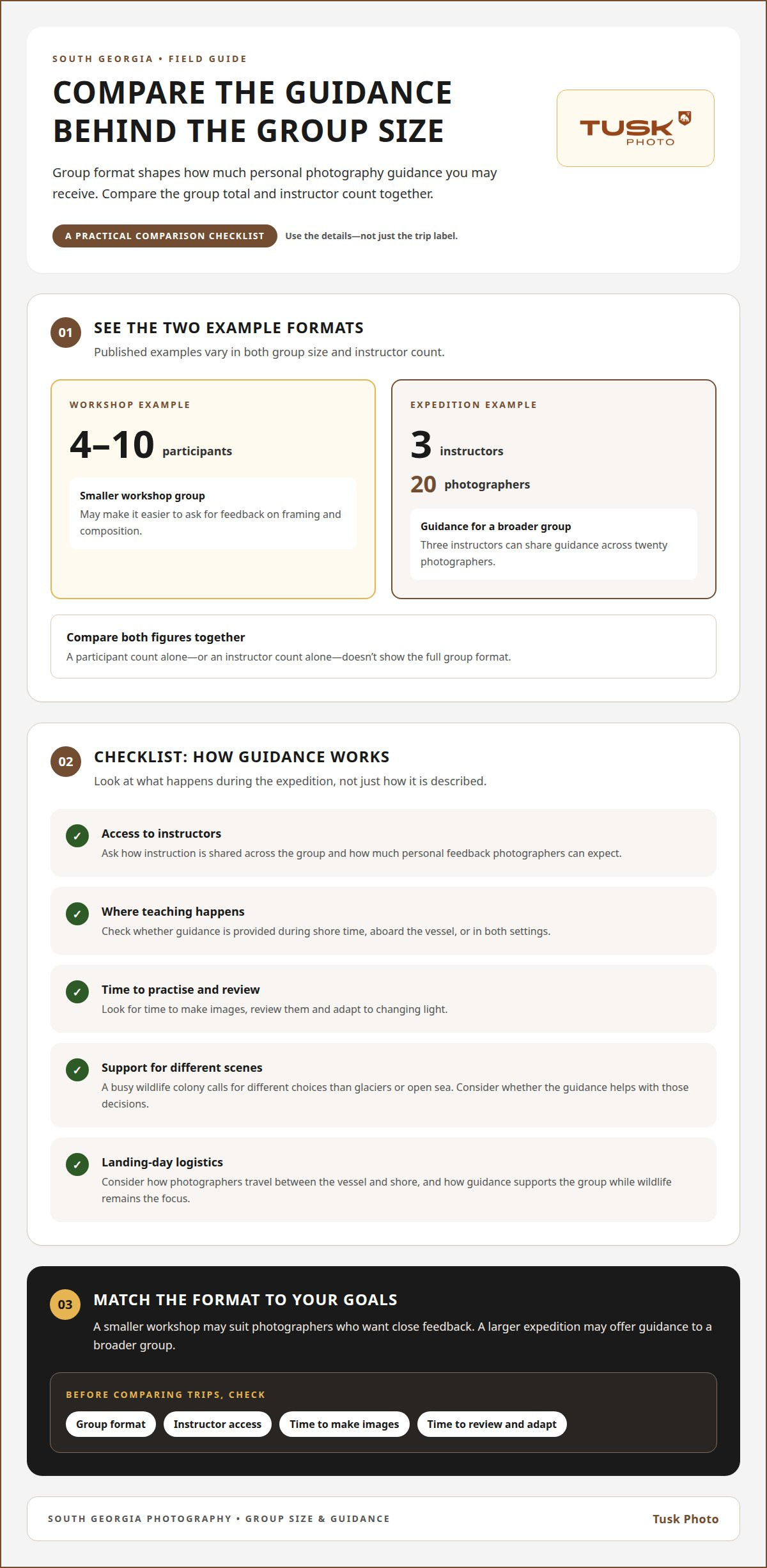
Group size shapes how much personal guidance photographers receive during a South Georgia expedition. Published examples range from workshops with 4-10 participants to an expedition with three instructors guiding twenty photographers. These are different formats, so compare the group total and instructor count together, rather than judging a trip by either figure alone.
A smaller workshop group may make it easier to ask for feedback on framing an albatross in flight or balancing an elephant seal portrait against the landscape. On a larger expedition, three instructors can share guidance across twenty photographers. Ask how instruction works during shore time and whether sessions also happen aboard the vessel. Those details show how teaching fits into the adventure.
Look beyond the headline group size. Consider whether the itinerary allows time to practise, review images and adapt to changing light. Photographing animals in a busy colony calls for different choices than framing glaciers or open sea. Useful guidance helps photographers make those decisions, whether they are building confidence or refining an established approach.
South Georgia is remote, and group logistics shape each landing. Consider how photographers travel between vessel and shore, and how guidance supports the group while wildlife remains the focus. Then match the format to your goals: a smaller workshop may suit close feedback, while a larger expedition may provide guidance to a broader group.
When comparing guided wildlife photography journeys, look at group format, access to instructors and time for image-making. Those practical details matter more than the trip’s label.
Tusk Photo offers Scheduled Tours for photographers who prefer a planned departure and a shared expedition itinerary. Use the details covered above to compare a tour’s wildlife focus, landing plans, photography guidance and group format with your priorities. The right fit depends on the kind of images and travel experience you want.
If you have a specific route or photographic focus in mind, Tusk Photo’s Custom Tours and On-Demand Tours offer other ways to shape a journey. Consider how destination, timing and photography interests fit together when choosing a format.
Explore Tusk Photo’s scheduled photography tours to see the available itineraries, or visit Tusk Photo to learn more.
Before choosing a departure, decide what you want your time in South Georgia to feel like: patient observation, focused image-making or a broader journey through remote landscapes. That preference can guide your choices, from itinerary pace to the kind of photographic support you want. With clear priorities, you can explore the South Georgia Photo Safari that best fits your plans.
Whether you’re beginning to plan or refining an idea, take the next step at a pace that feels right. Contact Tusk Photo about your South Georgia Photo Tour and share what you hope to photograph. Your expedition can start with that simple conversation.
How close you get to wildlife depends on animal behavior, terrain and guidance at each landing. Stay with your group and follow instructions about where to stand; never approach an animal to fill the frame. A longer lens can help you photograph a subject without moving closer, while patience gives you time to capture natural behavior.
Time ashore depends on the itinerary, landing conditions and the time available at each site. Sea and shore conditions affect how landings proceed, so make the most of each visit rather than expecting a fixed schedule. Before going ashore, prepare your camera settings and decide which subjects or compositions to prioritize.
There’s no single best time for every photographer. Choose dates around your main subject and preferred conditions. If wildlife behavior matters most, consider the seasonal stages you hope to photograph. If atmosphere is your priority, think about how changing light and weather can shape your images. Let your photographic goals guide your timing.
A specialist photographic voyage puts image-making at the heart of the journey, with wildlife encounters and photography guidance as key elements. It can suit photographers who want more than general sightseeing. Before choosing, consider the itinerary, planned shore visits and how guidance is offered in the field, so the format matches your experience and aims.
Pack layers you can add or remove as conditions change. A warm base layer, insulating mid-layer and waterproof, windproof outer layer are a practical starting point. Bring gloves and a warm hat for time outdoors, as well as clothing that stays comfortable when damp. Keep spare layers accessible aboard the vessel for quick changes.


