
South Africa Sardine Run Small Group Ocean Photography Expedition
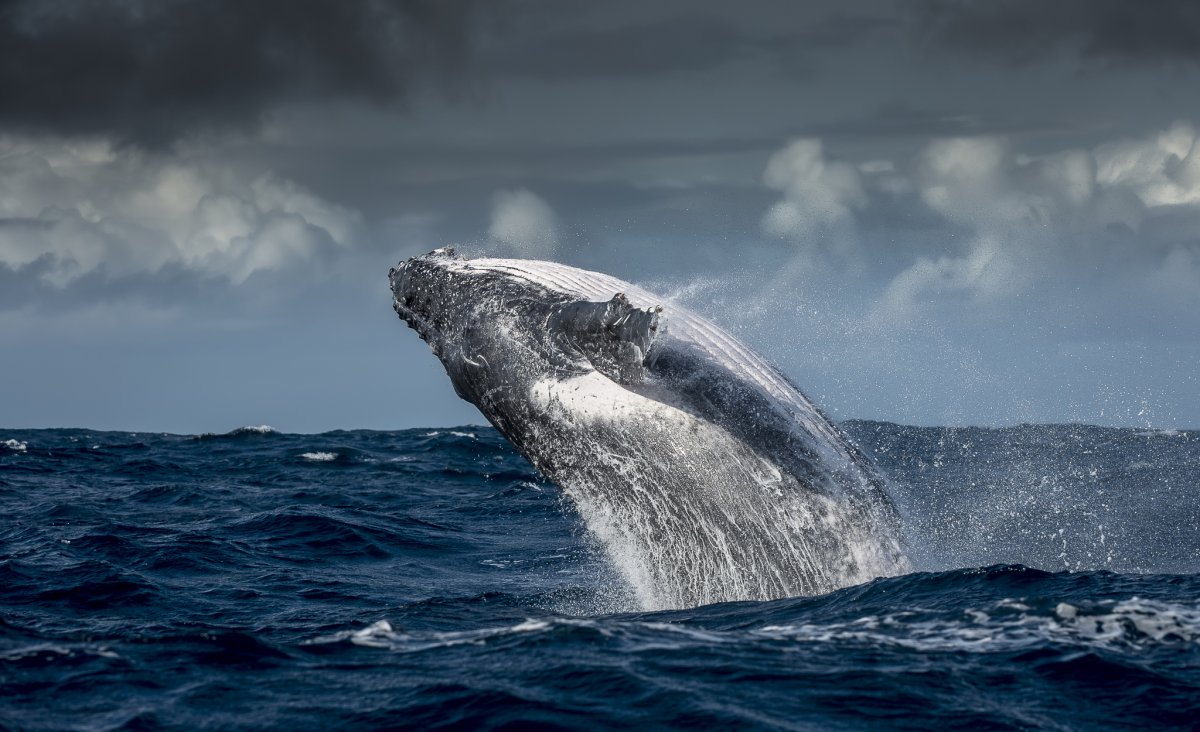

The best moments on a South Africa sardine run ocean photography expedition come from reading the action, not chasing it. A typical day at sea lasts six to eight hours, while guides coordinate the group as wildlife activity unfolds and the skipper signals when it is safe to enter the water.
It is natural to wonder how much of the trip is spent on the water and how the team keeps everyone together when encounters move quickly. The Sardine Run takes place between May and July, and a listed itinerary runs for seven nights, including six days at sea.
Here, you will learn what a day’s schedule can involve, how seasonal timing and trip duration shape the experience, and how experienced guides coordinate small-group wildlife encounters. You will also see what to expect from a guided expedition, from searching for sardine shoals to photographing the action.
Guides coordinate the search, manage water entries, and keep photographers together. Wildlife sightings happen on the animals’ terms.
Look for guides with direct experience around large marine life and clear roles on the water. Jacques de Vos has worked with large marine life for nearly two decades, while a Sardine Run expedition leader has led trips for more than 16 years. The skipper signals when to enter the water; the dive master, or group leader, guides everyone. Follow their instructions and stay together.
Sardines can draw sharks, seabirds, and Bryde’s whales to feed. Bryde’s whales can reach forty feet long, with tail fins described as twelve feet long; seven shark species may join the feeding frenzy. The action and location can change, so guides search for activity rather than promise a particular encounter. For underwater photography, one example setup used a Sony a7R V with a 16-35mm f/2.8 GM II lens in a waterproof camera case. A 200-400mm lens is suggested for photos taken above the water.
For boat and diving safety, the skipper decides when participants enter the water, and the dive master, or group leader, guides everyone. Wait for the skipper’s signal, follow instructions, and stay together. Keep clear of the boat’s stern while its engines are running, as propellers pose a serious risk. Plan permits before departure; the crew directs safety on the water, not individual photographers.
Plan around the seasonal run, then compare departure dates with the time available for searching at sea. A bait ball can draw wildlife into fast-moving action, but sightings vary.
A listed departure runs June 30 to July 10. A listed itinerary lasts 7 nights and includes 6 days at sea, so compare the dates and sea days when planning travel. Risks include changing sea conditions and wildlife activity that cannot be scheduled. Cancellation and refund terms depend on the written booking conditions, including what happens if plans change.
The Sardine Run takes place between May and July along South Africa’s east coast. According to the South African National Biodiversity Institute (SANBI), sardines move from the Agulhas Bank to the east coast in late May or early June. This timing helps define the search period, but cannot guarantee a bait ball on a particular day.
Unlike broader South African marine wildlife tours, a Sardine Run trip focuses on seasonal sardine shoals and the predators they attract. When choosing between these experiences, consider whether you prefer a concentrated, changing search or a wider focus on marine wildlife. Review the written cancellation terms for details on weather interruptions and operator changes.
Before committing, check that the departure window fits your travel plans and that the itinerary leaves enough time for the sea search. The South African Sardine Run expedition listing stated that 4 spots were available, so verify current availability directly before making arrangements; a listing may not reflect later booking changes.
Check the itinerary and confirm the schedule and booking conditions with the operator. Leave enough time for arrival, departure and any extra time around the trip.
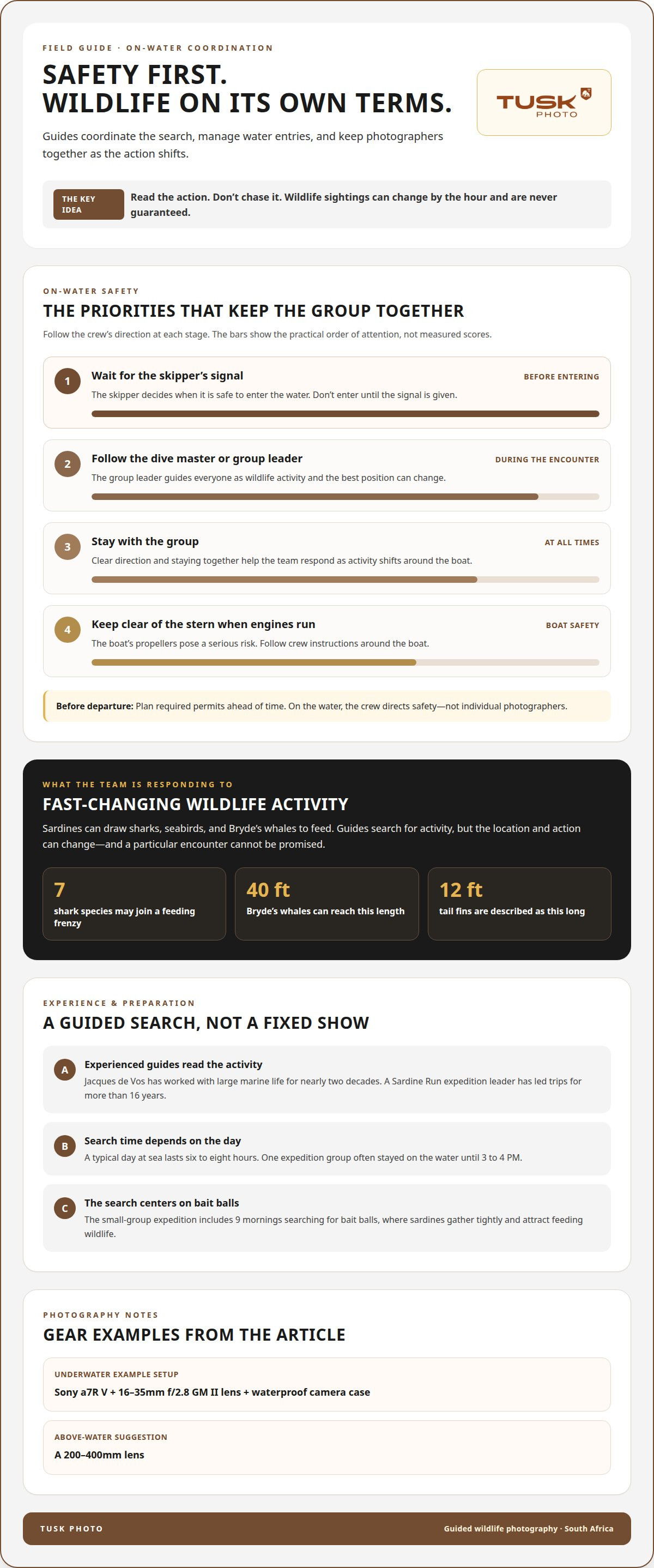
A small group helps guides coordinate photographers as activity shifts around the boat. The expedition includes 9 mornings searching for bait balls, where sardines gather tightly and attract feeding wildlife. That search calls for patience and clear direction, not a fixed sequence of encounters.
Guide experience matters when dolphins, whales, and fast-moving shoals appear in changing conditions. One Sardine Run expedition leader says he has led expeditions for more than 16 years. That experience can help the team read activity and guide photographers toward suitable opportunities while keeping the group’s attention on the unfolding scene.
Encounters can include dolphins near the surface, feeding whales, and predators gathering around bait balls. Animal movements shape each photographic opportunity, so guides may adjust the group’s position as the action changes. A small-group trip is organized around responsive wildlife viewing, not guaranteed sightings.
Are these trips suitable for beginners, snorkelers, or divers? Beginners can benefit from experienced guidance, but participants need Open Water certification, an entry-level scuba diving qualification, and good buoyancy skills, the ability to control their position in the water. The team often starts with snorkel-only entries, meaning participants enter the water with a snorkel but no scuba gear, for fast-moving activity. This does not replace the certification requirement. The format suits divers who can follow instructions and stay with the group.
The expedition group often stayed on the water until 3 to 4 PM. Sardine Run participants should follow the skipper and dive master and stay together, helping the team respond as activity shifts.
Tusk Photo helps photographers plan wildlife journeys around their interests and travel preferences. For a South Africa sardine run ocean photography expedition, choose a trip format that suits your schedule and the kind of guided experience you want. Consider your preferred dates, whether you want a planned departure, and how much you want the itinerary tailored to you.
Scheduled Tours suit travelers who can join a planned departure and want a set expedition to plan around. This makes it easier to weigh dates and trip length against your wider travel plans. The Sardine Run’s seasonal timing also makes departure dates an important part of planning.
Tailor Made Tours suit photographers looking for a journey designed around their interests. You can discuss the experience you want, such as a focus on marine wildlife photography, and shape a trip accordingly. On Demand Tours offer another option for arranging an expedition around a particular travel need.
Consider what matters most: fixed dates, a more personal itinerary, or an expedition arranged around your plans. Tusk Photo offers all three formats, giving you a clear starting point for planning a wildlife photography journey.
Contact Tusk Photo to discuss which trip format best fits your plans.
A typical expedition day begins early: the group wakes at 5:00 AM and leaves by boat at 6:30 AM. Time at sea is shaped by wildlife activity, with the team searching for changing opportunities to photograph. The boat often returns in the afternoon, leaving time to review images, prepare equipment, and rest before the next early start.
The South African Sardine Run is known for immense seasonal sardine aggregations, rather than one fixed shoal with a set boundary. A shoal is a group of sardines moving together; a bait ball forms when fish gather tightly, often as predators approach. For photographers, the distinction matters: a shoal may signal activity, while a bait ball can create a more concentrated scene.
Plan a South Africa sardine run ocean photography expedition around the Sardine Run season, which takes place between May and July, then match a departure to your travel schedule. A listed itinerary runs June 30 to July 10, so allow enough time around the expedition for international travel. Check trip length and sea days to see how the dates fit your plans.
Tusk Photo specializes in guided wildlife photography expeditions and offers Scheduled Tours, Tailor Made Tours, and On Demand Tours. A scheduled departure suits photographers whose plans fit set dates. A tailor-made journey can reflect personal photography interests, while an on-demand tour offers another format for a specific timing or travel request.
The price depends on the trip and is provided after a quote request. Cost factors include the itinerary, trip duration, accommodation, transfers, and time at sea. For a South Africa sardine run ocean photography expedition, review the itinerary’s inclusions alongside the dates before making plans. There is no single price for every expedition or travel arrangement.


