
Savute in Dry Season: Ultimate Botswana Safari Guide

The best time to visit Savute Marsh depends on the kind of dry-season safari you want. For Savute, Botswana, in the dry season, the main window is May to October, when wildlife gathers around water as the landscape dries. Early and late dry season bring different conditions, so timing can shape what you see and how you explore.
It’s easy to picture the dry season as one long stretch of clear skies and reliable sightings. In Savute, conditions change as the season progresses, and the marsh can dry up or flood regardless of local rainfall. This guide explains when to visit, what wildlife to look for, and how game drives and walks shift through the months, helping you choose a safari that fits your interests.
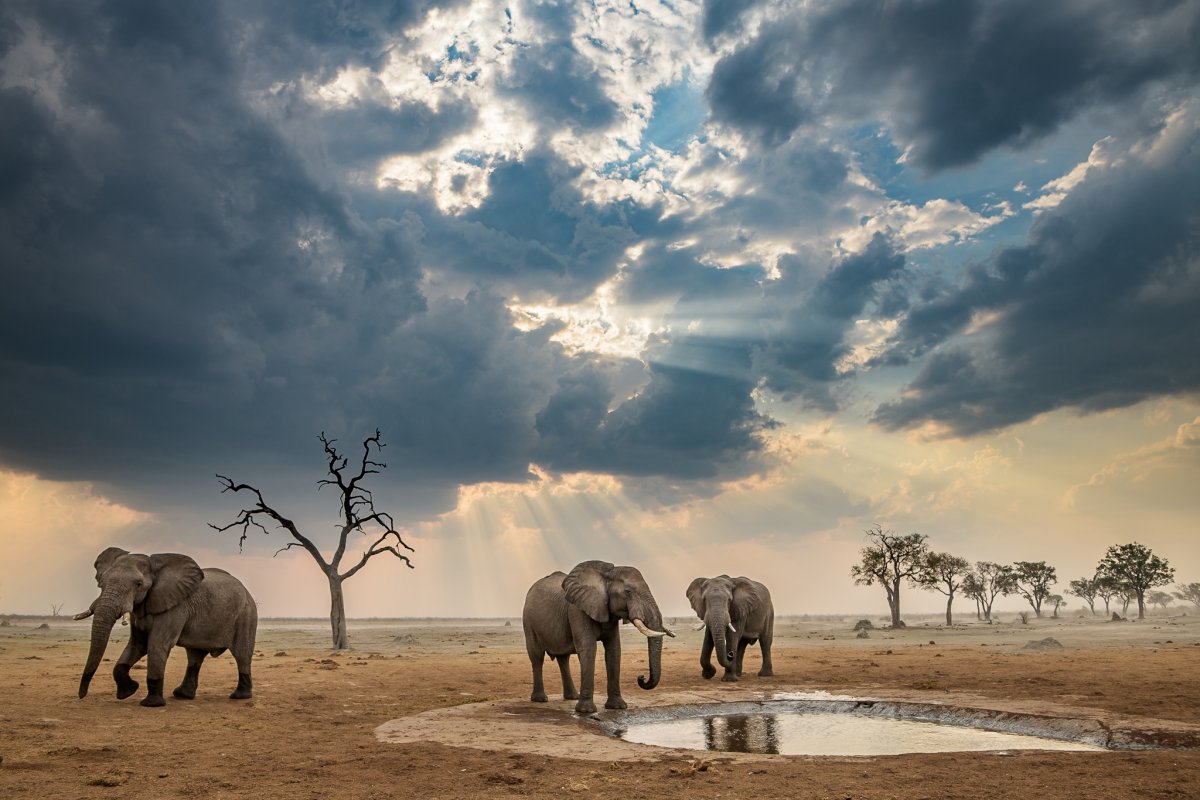
In the dry season, elephants, zebras and other wildlife gather at dependable water sources. They visit Savute’s three artificial waterholes and natural pans that still hold water. The marsh itself can dry up or flood regardless of local rainfall.
Dry-season conditions shift from cooler months to greater heat and more concentrated wildlife, helping shape when and where sightings happen. Early dry season runs from May to July, followed by the mid dry season in August and September. October is late dry season, and daytime temperatures can exceed 35°C. November brings summer rains, while zebra migration peaks around November and December. In February, migrating zebras turn back and continue seeking the best grazing. These shoulder-season changes mean animal movement can matter as much as the calendar month.
As water becomes scarce, animals gather around sources that remain available, making waterholes key places to watch wildlife. Savute’s three artificial waterholes help sustain animals, while natural pans may dry at different times. The Chobe River retains deeper waterways into dry months, but Savute Marsh’s water levels don’t follow local rainfall in a simple way. Elephants, zebras and predators such as lions and spotted hyenas are among the wildlife visitors may witness. The reserve also offers birdlife, with more than 300 species recorded.
Getting there and moving around also affect a Savute safari. The drive from Kasane is around 200 km and can take 5-7 hours, depending on road conditions. Savute’s roads may have soft sand, so a 4x4 is needed. Light aircraft also connect Savute with Maun or Kasane. During Botswana’s rainy season, from November to April, road conditions can become difficult. That seasonal contrast matters: dry-season routes may be sandy, while rain can make access more challenging.
Dry-season game drives follow tracks and water sources across Savute’s open plains. Elephants and predators may share the same landscape, giving photographers varied subjects on one outing. For a safari in Savute, Botswana, in the dry season, a 4x4 is useful on roads that can include soft sand. Guided drives help visitors read animal movement and choose where to pause.
Walking safaris draw attention to smaller details. In dry conditions, guides can interpret tracks, droppings and signs of overnight activity. Walks take place when available, offering a different perspective from a vehicle. Early mornings from June through September can feel close to freezing, so warm layers make the start more comfortable.
Guided vehicle safaris and walks suit different interests. A vehicle-based Botswana safari can cover broad areas, while a walk focuses on a smaller stretch of bush. Photographers visiting Savute during the dry season can consider whether they’d rather frame wide plains or study animal signs at closer range. The Okavango Delta and Linyanti offer different settings, including waterways and varied habitats.
Pack for cold starts and strong sun. A wide-brimmed hat, sunglasses and a light scarf or buff help protect you from sun and dust; warm layers are useful at dawn and in the evening. Keep your camera ready during drives, and use pauses to compose animals against the landscape.
Accommodation costs depend on camp style, length of stay and what’s included. Savute is within Chobe National Park, so factor park access and activities into your plans. Vehicle drives and walks follow a guided format. Review your itinerary’s access arrangements and rules before travel, and plan your photography around the landscape and activities you prefer.
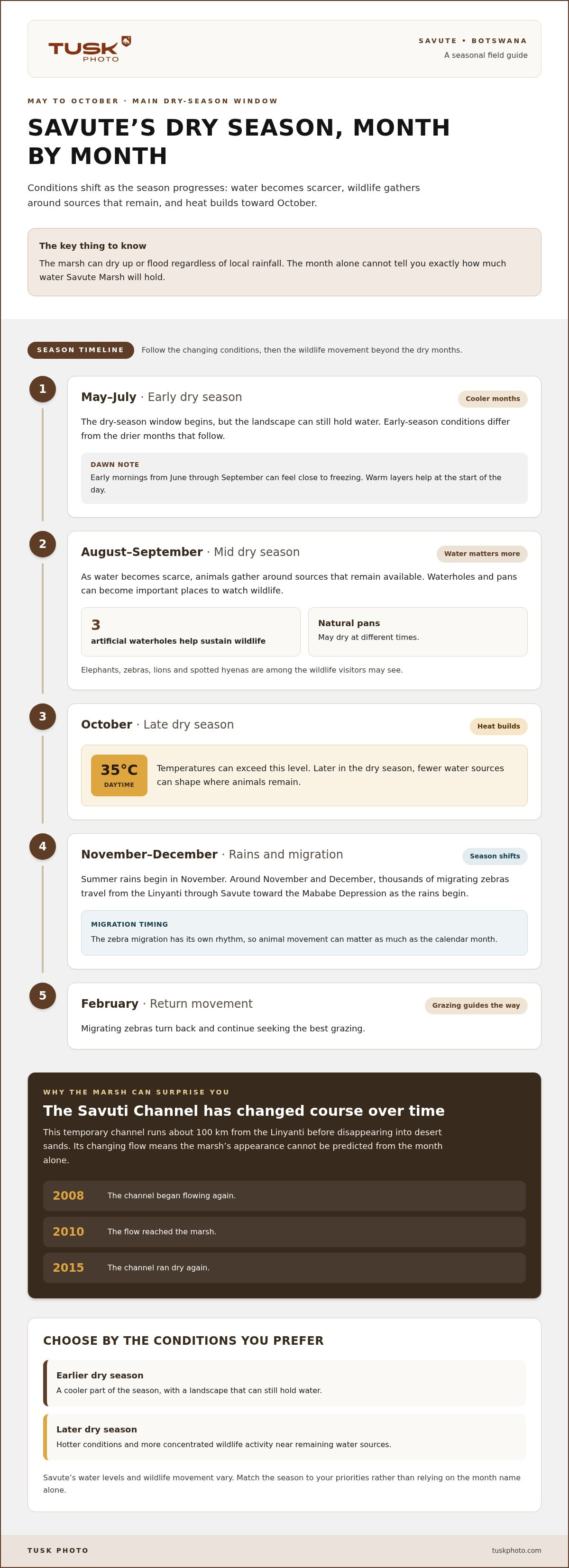
In northern Botswana, May to October brings a gradual shift in viewing conditions, not one fixed pattern. Early in the dry season, landscapes can still hold water; later, fewer water sources shape animal movement. In Chobe National Park, this progression can help you decide whether to prioritize cooler travel or more concentrated activity near waterholes.
The Savuti Channel adds an important wrinkle. This temporary channel runs about 100 km from the Linyanti before disappearing into desert sands, and its flow has changed over time. It began flowing again in 2008 and reached the marsh by 2010, then ran dry again in 2015. Its changing water levels mean the marsh’s appearance can’t be predicted from the month alone.
As the dry season advances, water sources may become more important for wildlife viewing, while heat increases toward the late season. This shift can influence where animals remain and how guides plan drives. The zebra migration follows its own rhythm: thousands travel from the Linyanti through Savuti toward the Mababe Depression around November or December, as the rains begin.
For trip planning, match the season to your priorities rather than choosing a month by name alone. Earlier dry-season travel offers a different landscape from the hot, late-season months, and the Savuti Channel’s variable flow adds another factor. Southern Botswana has a different recommended travel window, so northern and southern itineraries aren’t interchangeable. Savute’s appeal lies in its changing mix of open country, water and wildlife movement.
Tusk Photo’s Scheduled Photo Safaris give photographers a clear itinerary and experienced guidance in the field. In Savute, changing water levels and seasonal wildlife movement can shape each day’s photographic opportunities, so a guided journey can help you make the most of your time there.
Prefer to shape the journey around your own interests? Tusk Photo’s Custom Tours and On-Demand Tours offer other ways to plan a photographic safari. The tours welcome beginners and seasoned professionals, with experiences suited to different levels of experience.
If you’re ready to explore a planned departure, view scheduled tour dates or contact Tusk Photo to discuss your safari.
Let your photographic priorities guide your next step. Studying animal behavior up close calls for a different pace than capturing wide scenes across the landscape. If you’re planning a dry-season trip to Savute, consider which moments you most want to observe and how you’d like to travel.
Tusk Photo offers Scheduled Photo Safaris, Custom Tours and On-Demand Tours for wildlife photography journeys. Each gives you a way to shape a trip around your interests, whether you prefer a planned departure or a journey designed around your goals.
Bring your ideas together and explore the options that suit your vision. Plan a Savute safari with Tusk Photo, and take the first step toward a thoughtful journey in the wild.
May to October is the main dry-season window for visiting Savute Marsh. Choose the earlier months if cooler conditions matter most; later months bring greater heat and drier surroundings. The best fit depends on whether you value more comfortable daytime exploration or the changing wildlife patterns that develop as water becomes scarcer. November marks the transition toward summer rains.
The Savuti Channel is unusual because its flow can change over time, and local rainfall alone doesn’t explain those changes. Historical records describe flow from 1957 to 1982, with a one-year break. This shifting pattern has shaped the channel’s reputation: its water and the marsh it feeds can transform, making the landscape different across visits.
Yes, Savute is known for a lion pride that has been recorded killing elephants, but this is not a predictable safari sighting. Such a hunt is not a predictable safari sighting; a visit may bring sightings of lions or elephants separately, and wildlife behaviour varies. A visit may bring sightings of lions or elephants separately; witnessing a hunt depends on wildlife behaviour and timing.
A Savute safari budget depends on accommodation style, length of stay, transport and activities. A lodge stay and a self-planned trip can have different cost components, so compare what each arrangement covers, such as meals, drinks and game viewing. Decide on your preferred camp style and travel logistics first to build a realistic overall budget.
Botswana’s dry season typically runs from May to October. It begins with cooler months, then becomes increasingly hot and dry. As surface water declines, animals may depend more on remaining sources. In Savute, marsh water levels can change independently of local rainfall, so the calendar doesn’t tell the whole story.


