
Puma Photography Tour in Patagonia with Tracking Access


Puma photography in Patagonia can involve observing animal movements, though sightings and conditions vary. A puma photography tour in Patagonia can combine tracking in Torres del Paine National Park with nearby private land, offering different landscapes to search for pumas. Accommodation connects these outings with time in the field.
It’s natural to wonder how a trip moves between the park and private land, and where you’ll stay along the way. The route shapes how you reach tracking areas and how each day of wildlife photography fits together.
Learn how tracking across these neighboring landscapes works, what to consider when comparing accommodation options, and how a guided itinerary can bring the details together. This overview can help you decide what kind of Patagonia experience suits your photography plans.
Compared with tours elsewhere in Patagonia, Torres del Paine combines puma tracking with a dramatic park landscape and neighboring private ranchland. The setting matters: park outings and ranchland walks offer different ground for searching and framing wildlife. A puma photography tour in Patagonia can include at least three days of tracking in the park and surrounding areas.
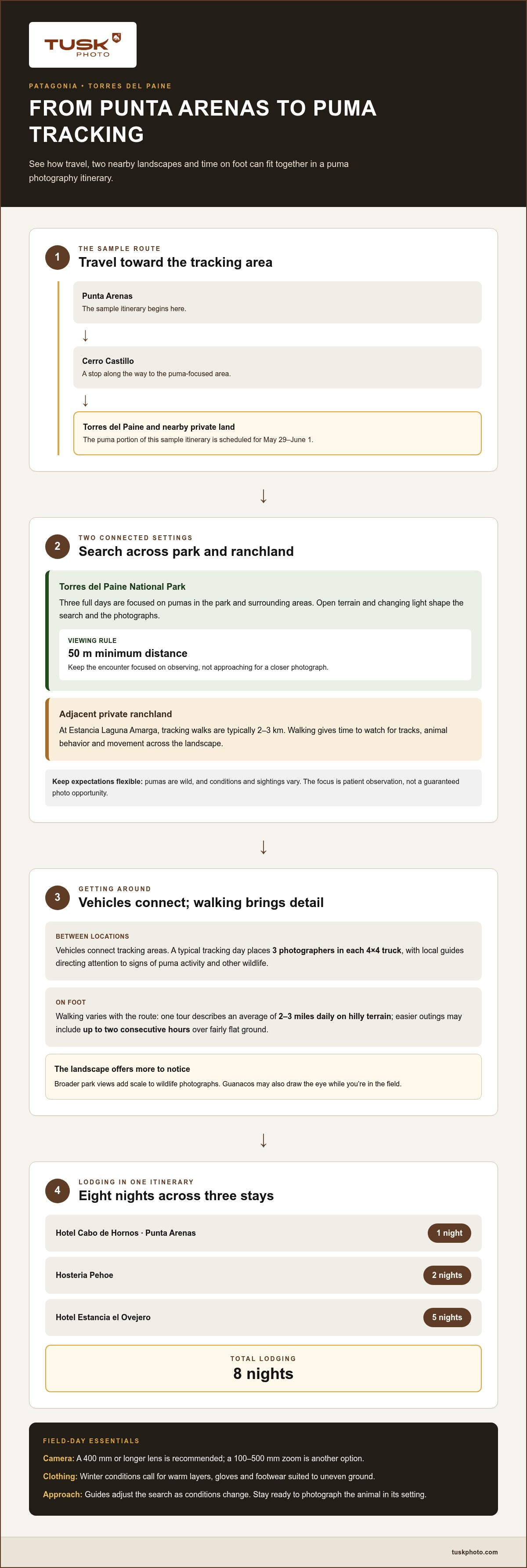
A sample itinerary begins in Punta Arenas, then travels to Cerro Castillo before reaching the puma-focused area. Its schedule places the puma portion from May 29 to June 1, linking southern Patagonia’s main travel point with field days near Torres del Paine.
Private ranchland near the park adds another setting for tracking. At Estancia Laguna Amarga, puma-tracking walks are typically 2-3 km long, so photographers can cover ground on foot while watching the landscape for movement. Conditions and sightings vary, so the focus is patient observation rather than a fixed photo opportunity.
In Torres del Paine National Park, tracking can involve searching across open terrain and changing light. The program includes three full days focused on pumas in the park and surrounding areas. Park viewing follows a 50-meter minimum-distance rule, which shapes how photographers approach a sighting and compose images.
Vehicles connect locations across the route, while walking brings photographers closer to the details of each area. On ranchland, shorter walks can keep attention on tracks and animal behavior; in the park, broader views add scale to wildlife photographs. Daily plans may also leave room for meals, including dinner, after time in the field.
Accommodation affects how easily each day reaches the tracking areas. One Patagonia itinerary includes 8 nights of lodging, while El Ovejero Patagonico sits about 40 minutes from the entrance to Estancia Laguna Amarga and Torres del Paine National Park. That location can make it a useful base for outings near both park and private ranchland.
Access differs between Torres del Paine National Park and private ranchland, so the itinerary must account for each setting. In the park, puma viewing follows a 50-meter minimum-distance rule. Respecting that distance helps keep wildlife encounters focused on observation rather than approaching an animal for a closer photograph.
For group size, a typical tracking day places three photographers in each 4×4 truck. The vehicles connect tracking areas, while local guides help direct attention to signs of puma activity and other wildlife. Guanacos may also draw the eye across the landscape, adding another subject during time in the field.
Walking demands vary with the route. One tour describes an average of 2-3 miles daily on hilly terrain; easier outings may involve up to two consecutive hours of walking over fairly flat ground. Winter temperatures in the Patagonian Andes range from -2ºC to 6ºC, so layered clothing and footwear suited to uneven trails matter. Breakfast and field departures should fit the day’s tracking plan.
To shape lodging and access around your preferred pace, explore tailor-made photography itineraries for Patagonia.
During puma-tracking outings in Patagonia, guests travel in two 4x4 vehicles, with a maximum of 3 clients per car. For a group of 3 people, the tour uses a single vehicle. The lodging plan includes 1 night at Hotel Cabo de Hornos in Punta Arenas, 2 nights at Hosteria Pehoe, and 5 nights at Hotel Estancia el Ovejero.
A focused itinerary brings travel, field time and camera preparation together. Season, weather and time spent tracking all shape the photography experience.
Winter is a practical choice for a dedicated puma trip, with a scheduled puma-focused itinerary running May 29 to June 1. Winter daylight can shape the morning and afternoon field windows. Choose dates by weighing daylight, cold-weather comfort and how much time you want devoted to tracking.
For a camera setup, a 400 mm or longer lens is recommended; a 100-500 mm zoom is another option for changing distances and framing. Winter tour temperatures average from -5°C to 6°C, so bring warm layers, gloves and clothing suited to wind and changing weather. Comfortable footwear also matters when tracking takes you onto uneven ground.
A tour’s photography opportunity depends on field time and the ground covered, not a promised number of sightings. One itinerary includes five full days of puma searching, allowing repeated tracking across the landscape. Guides read signs and adjust the search as conditions change. Pumas are wild, so patience and readiness matter: keep your camera accessible and compose for the animal’s setting as well as its presence.
Compare scheduled Patagonia photography tour dates to find an itinerary that fits your preferred season.
Five days of guided puma photography are included in the Patagonia puma photography tour, which is described as a one-week trip in Chile. The tour offers five spots for one departure and lists 5 available spaces, giving travelers a clear way to check availability before planning.
The Pumas of Patagonia Photo Tour is scheduled for 25 February - 05 March 2027. The Pumas of Patagonia Photo Tour in Chile lasts 9 days, providing a defined timeframe for arranging travel and photography plans.
Tusk Photo designs wildlife photography journeys around field time, access and your photography priorities. Scheduled Photo Safaris suit travelers whose dates align with a set itinerary. Custom Tours let you shape a journey around your interests, while On-Demand Tours offer another way to plan a wildlife expedition.
Choose the format that fits your travel plans: a scheduled departure with a pre-planned itinerary, or a custom journey shaped around your photography priorities. Each offers a clear starting point for planning time in the field.
Explore Tusk Photo’s tour options or get in touch to discuss your Patagonia photography plans.
Before you set out, consider what you most want from the experience: time to observe, room to work on your compositions, or a journey shaped around a particular photographic goal. Clear priorities can help turn the idea of a puma photography tour in Patagonia into a plan that feels right for you.
When you’re ready to talk through your plans, contact Tusk Photo about your tour. Take the next step toward a thoughtful adventure in Patagonia.
A Patagonia trip can focus on tracking in Torres del Paine, nearby private ranchland, or both. When comparing itineraries, consider how the route balances time in each setting and whether the photography focus matches your interests. If you hope to photograph pumas against varied scenery, for example, look for an itinerary that includes both park landscapes and ranchland.
The price depends on the itinerary and is provided after a quote request. Compare what each trip covers, including accommodation, meals, transport, guiding, and field activities. These details can shape the overall value as much as the route itself. Review the itinerary inclusions together so you can understand which practical arrangements are part of the trip.
Tour length varies, so compare the total travel period with the time devoted to tracking. A longer itinerary may include transfer and accommodation time alongside field outings. Note where travel days fall and how much time remains for photography to judge whether the pace suits your plans.
In Torres del Paine, puma viewing follows a 50-meter minimum-distance rule. Focus on observation rather than approaching wildlife for a closer photograph.
On a typical tracking day, three photographers ride in each 4×4 truck, which can carry up to three passengers. Group caps vary by tour; examples include five guests or a maximum of 10 guests with two photo hosts.


