
Private Wildlife Photography Guide: How to Find the Right Mentor

A strong wildlife photograph often starts with a decision you make before lifting your camera. A private wildlife photography guide should do more than lead you to an animal. The right mentor helps you read the moment, choose an approach, and understand how your choices shape the image.
It’s natural to wonder whether a guide will suit your experience level or focus more on sightings than on learning. A well-planned photography expedition gives you time to practise in the field, ask questions, and build skills as you photograph wildlife.
This guide explains what makes a helpful photography mentor, how scheduled, tailor-made, and on-demand expeditions suit different preferences, and what to discuss and practise in the field. Whether you’re new to wildlife photography or refining your approach, you’ll have a clearer idea of what to look for.
A wildlife photography mentor is more than someone who knows where animals are likely to appear. A private wildlife photography guide can help you notice what’s happening around you, decide what kind of image you want, and respond with confidence as the scene changes. The aim isn’t only to come away with photographs. It’s to understand how your choices helped shape them.
Finding wildlife and photographing it well are connected, but they call for different skills. Spotting an animal creates an opportunity. Light, background, distance, timing, and your position all affect how that moment looks in a photograph. Useful guidance helps you think through those choices, rather than focusing only on reaching the next sighting.
Your starting point depends on your experience. Beginners may want help choosing a clear subject, focusing, and being patient. More experienced photographers might want to try new ways of framing a scene or learn to anticipate animal behaviour. In either case, guidance should meet you where you are and give you a specific skill to practise.
Field coaching happens in small moments. A guide might point out how the light is falling, suggest watching for a behaviour before raising your camera, or help you decide whether to wait or make the image now. Afterward, useful feedback connects your choices to the result: what worked, what distracted from the subject, and what to try next time. For a foundation in the basics, explore these wildlife photography tips for beginners. Guided expeditions give you a chance to practise those skills as wildlife unfolds in front of you.
The right guide is a good match for your photography goals and the way you like to learn. Before choosing a private wildlife photography guide, decide what you most want to improve. Is it recognising animal behaviour, building stronger compositions, practising patience, or feeling more confident in the field? A clear priority helps you make better use of your time.
Use this checklist to identify the kind of guidance that would suit you:
Look for clear explanations and useful feedback, not a stream of instructions. Think about whether you learn best from a quick suggestion in the moment or a discussion afterward.
Understanding animal behaviour can help you anticipate what may happen and make informed choices about when to photograph.
Consider whether the guide’s field experience connects with the images and skills you hope to develop.
Decide whether you prefer regular guidance, quiet time to practise, or a balance of both.
Beginners don’t need to master a long list of camera terms before they can learn. Helpful instruction can start with simple decisions, such as where to position yourself or when to wait, then bring in camera settings when they’re useful. More experienced photographers may prefer to focus on a specific challenge, such as simplifying a busy background or anticipating movement.
As you plan your experience, share your goals and explain your level of experience. Talk about how you’d like to balance explanations with time to practise, and what kind of feedback helps you learn. You could also name a skill you want to work on, such as composing against changing backgrounds or waiting for a meaningful behaviour. Tusk Photo’s tailor-made wildlife photography tours are designed around individual interests and preferences, making them a way to shape a journey around your priorities.
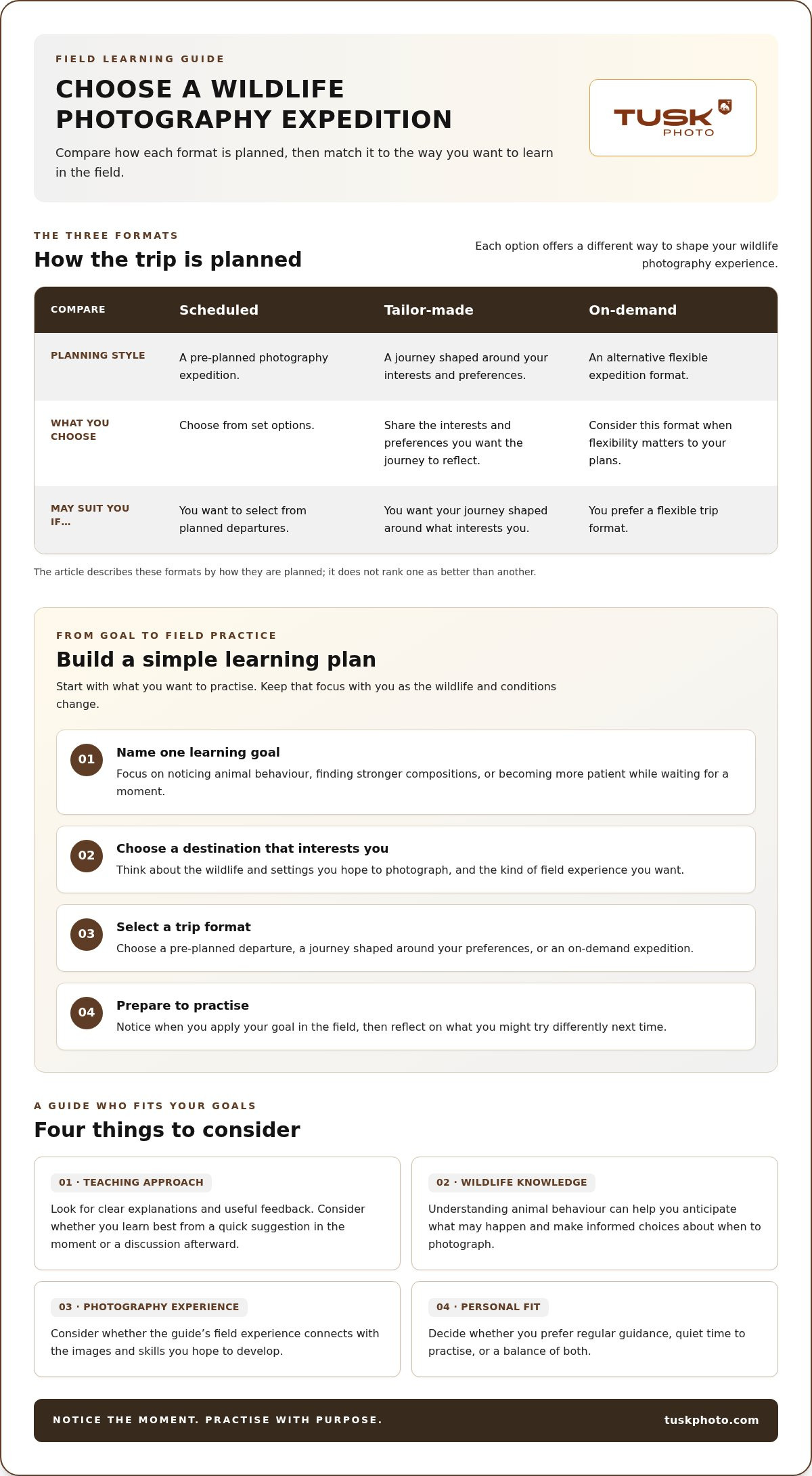
Once you know what you want to learn, turn that goal into a practical plan. A private wildlife photography guide can help you practise in the field, but your destination and trip format also shape the experience. Use these steps to make your priorities clear:
For example, focus on noticing animal behaviour, finding stronger compositions, or becoming more patient while waiting for a moment.
Think about the wildlife and settings you hope to photograph, along with the kind of field experience you want.
Choose between a pre-planned departure, a journey shaped around your preferences, or an on-demand expedition.
Keep your goal in mind in the field. Notice when you apply it, and reflect on what you might try differently next time.
Scheduled departures are pre-planned photography expeditions, which suit travellers who want to choose from set options. Compare scheduled photography expedition dates as you consider what fits your plans. A tailor-made photography journey can be built around your interests and preferences. On-demand expeditions offer another flexible format. If you are travelling solo and hoping to connect with like-minded companions or explore local guide profiles, resources such as travelcompanionhub.com can help you plan your journey.
Tusk Photo’s wildlife photography expeditions are led by experienced guides. Scheduled, tailor-made, and on-demand formats give you different ways to plan a field experience around your interests and travel preferences. Explore wildlife photography tours to compare the options.
Choose one skill to practise on your next wildlife photography journey. It could be noticing changes in light, waiting for a meaningful moment, or making a clearer composition. Keeping that goal in mind gives you something useful to focus on, even when wildlife behaves unexpectedly. A private wildlife photography guide can help turn your intention into practical learning in the field.
Let curiosity lead. Some of the most useful lessons come from paying close attention, trying an idea, and reflecting on what you see through the camera. You don’t need to have everything figured out before you begin. Start with a goal that matters to you, then build your confidence one moment at a time.
Explore Tusk Photo’s guided wildlife photography tours to plan your next field learning experience. Choose a scheduled, tailor-made, or on-demand expedition and take the next step toward seeing wildlife with fresh eyes and growing as a photographer.
Yes. A beginner can benefit from help setting a realistic starting point. Before an expedition, note what you already feel comfortable doing with your camera and what still feels unfamiliar. Then choose one small goal, such as making a clear photograph of a single animal. A private wildlife photography guide can help you keep that goal manageable and practise it in the field.
No. A camera you already know how to use is a good place to start. Before the trip, practise finding the controls you use most, checking your battery, and reviewing a photo on the screen. That preparation can help you feel ready in the field. Equipment alone can’t ensure a strong photograph, so choose gear you can handle comfortably.
After each outing, make a few notes about what you hoped to photograph and what happened. Over time, you may spot patterns, such as being more prepared for a subject to move or choosing a simpler scene. Those notes help you see progress across different encounters, even if a particular day doesn’t produce the image you imagined.
Not necessarily. A wildlife guide’s main role is to support the experience of observing animals in their surroundings; a photography instructor focuses on developing photography skills. On an expedition, these roles can overlap, but the balance can vary. Before you go, decide whether your main priority is understanding wildlife, strengthening your photography, or combining both.


