
Primate Photography Tour: How to Prepare and Photograph Wildlife
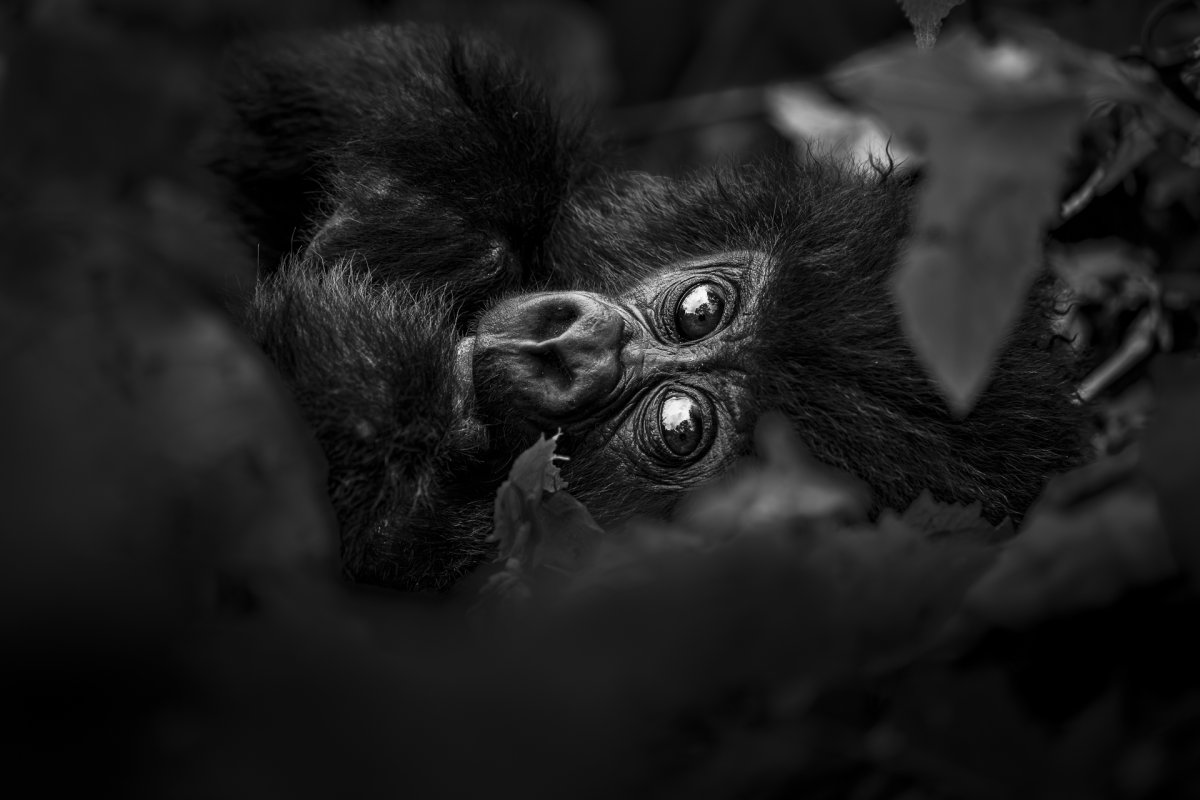

Rushing closer rarely makes a stronger wildlife photograph. On a primate photography tour, the forest can be dense, the light can change quickly, and the best moments often come when you pause and watch. A little preparation can help you focus on the encounter instead of sorting out your camera.
With patience and a flexible approach, you can make more thoughtful images without rushing wildlife. This guide covers what to consider before you go, how observation can shape your photographs in the field, and how to choose a guided journey that fits your interests and experience. You’ll also learn how scheduled, tailor-made, and on-demand tours can help you focus on a species, region, or travel style, with experienced guides supporting beginners and seasoned photographers.
Watching primates move through their natural surroundings can be absorbing. A quiet moment in the canopy may become a brief glimpse through leaves, then disappear as the group moves on. Every encounter is different, so a particular photograph can’t be guaranteed. Stay quiet, observe carefully, and follow your guide’s directions. Their experience can help you read the scene while keeping the animals’ space in mind.
You don’t need to get unusually close to make a thoughtful image. Look for expressions, movement, and the way an animal fits into its habitat. A frame that includes branches, leaves, or forest around the subject can tell a fuller story than a tight portrait. Keep a respectful distance, and be ready to lower your camera if your guide asks.
Wildlife photography means responding to a scene that keeps changing. A monkey may move behind foliage, a shaft of light may cross the forest floor, or a different angle may reveal behavior you couldn’t see before. Instead of shooting as soon as you spot an animal, take a moment to watch how it moves and interacts with its surroundings. Notice where the light falls and whether a clear view might open up without you moving closer.
Patient observation helps you choose a moment that respects the animal and shows more than a fleeting glimpse. It’s a useful starting point for beginners and experienced photographers alike. For guidance as you practise these field habits, scheduled wildlife photography tours offer a guided way to explore.
Give the encounter time. You may get a clear view, or the animal may stay partly screened by leaves or appear only briefly. Both are part of photographing wildlife, and neither calls for forcing the moment.
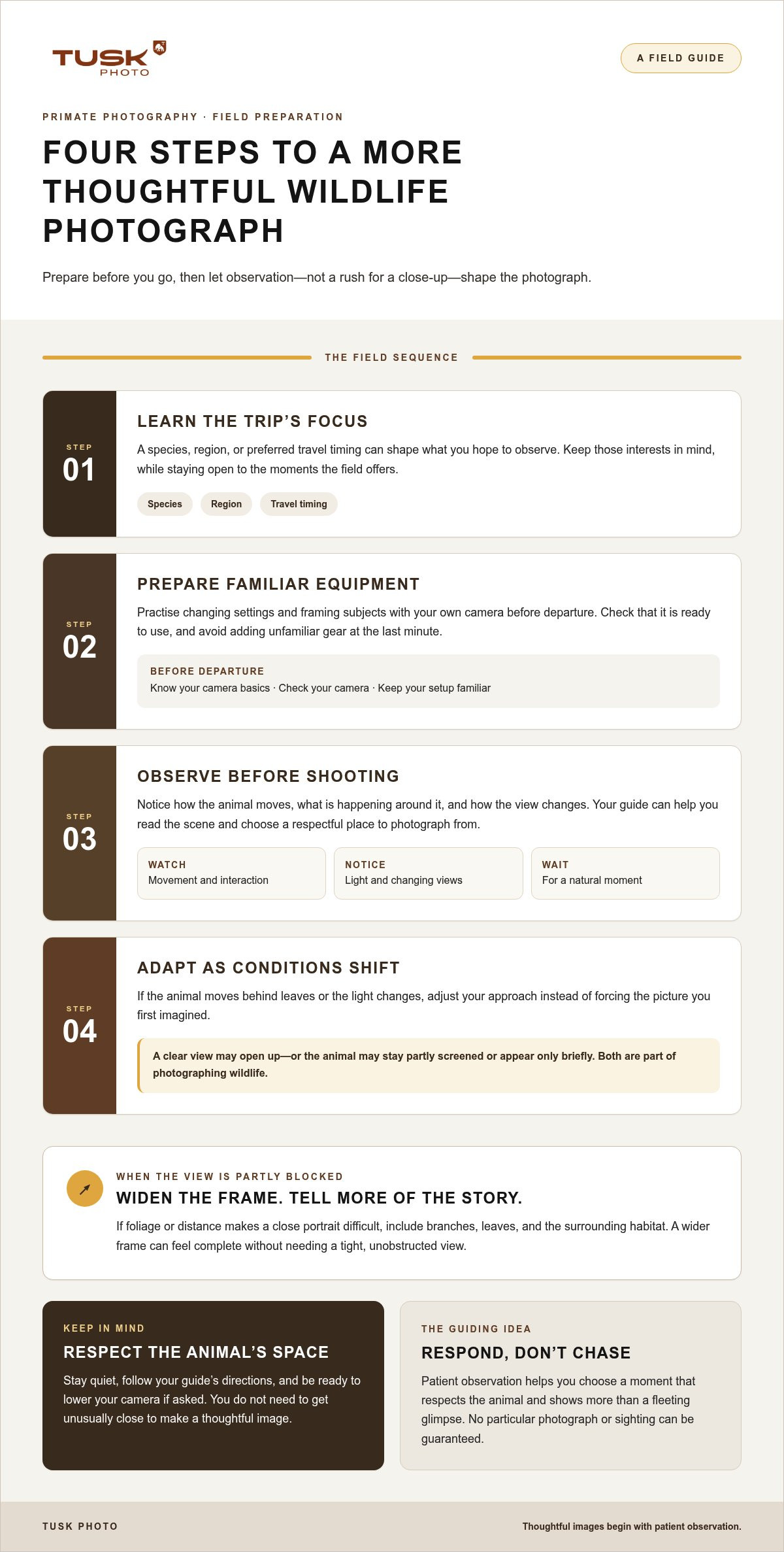
Preparing in advance means less time sorting out your camera and more time paying attention to the encounter. Before a primate photography tour, learn what the journey focuses on, practise with equipment you already know, and be ready to adapt once you’re in the forest.
Use this simple sequence:
A species, region, or preferred travel timing can shape what you hope to observe. Keep those interests in mind, but stay open to the moments the field offers.
Practise changing settings and framing subjects with your own camera before departure. Check that your camera is ready to use, and avoid adding unfamiliar gear at the last minute.
Notice how the animal moves, what’s happening around it, and how the view changes. Your guide can help you understand the scene and choose a respectful place to photograph from.
If the animal moves behind leaves or the light changes, adjust your approach rather than forcing the picture you first imagined.
Start by watching the animal and its surroundings. Wait for a natural moment, such as a pause, a turn, or an interaction, rather than trying to direct the scene. If foliage or distance makes a close portrait difficult, widen your framing to include branches, leaves, and habitat. This can make the image feel complete without needing a clear, tight view.
Good fieldcraft means responding to the encounter, not chasing a photograph. Experienced guides support beginners and seasoned photographers, offering practical guidance as conditions change. If a particular species or region shapes your plans, tailor-made photography tours can be built around that focus.
The right journey depends on what you want to photograph, where you hope to go, and how much flexibility you need. Scheduled Tours have set departure dates, making them a good fit if you can plan around a pre-planned journey. If a particular species or region is central to your plans, a tailor-made photography journey can be designed around that focus. On-demand expeditions offer a flexible format shaped around your requests and timing.
Consider your experience, too. You don’t need to be a seasoned wildlife photographer to take part. Tusk Photo’s experienced guides lead journeys for beginners as well as professionals, supporting photographers as they learn in the field. Guidance can help you respond as conditions change, but it can’t promise a particular sighting. Set a clear goal, and keep your expectations open.
Start with your main priority. If you’re set on photographing gorillas, consider a species-focused journey and learn about the practical demands of gorilla trekking photography. If you’re more interested in exploring a region or developing your field skills, compare journeys by their focus and timing. For those wanting to combine primate tracking with wider wildlife exploration, wtsafaris.com arranges private, tailor-made safaris across Kenya and Tanzania. Ask yourself whether fixed dates work for you or whether you’d prefer a trip shaped around a particular interest.
A primate photography tour is most rewarding when its focus fits your goals while leaving room for the unpredictability of wildlife. Take a relaxed look at Tusk Photo’s photography tours and consider which format suits your plans.
Begin with a clear intention: the species or region you’re curious about, the photographs you hope to make, and the kind of journey that suits you. A primate photography tour can be a chance to grow as a field photographer, not just to come home with images. Keep your plans flexible. Wildlife encounters unfold on their own terms, and a meaningful day may hold moments you didn’t expect.
Tusk Photo’s experienced guides lead journeys for beginners and seasoned photographers, supporting each person as they learn in the field. Choose a trip format that fits your interests and timing, then leave room for discovery along the way.
Explore Tusk Photo’s guided photography tours and start planning a journey that feels right for you. Bring your curiosity, stay open to what you encounter, and let the experience shape the photographs you make.
Yes. You can join without a long wildlife photography background. Start with a simple goal, such as capturing an animal’s expression or a moment of interaction, rather than trying to master every camera setting at once. Tusk Photo’s experienced guides support photographers at different levels, so beginners can build confidence while learning from each encounter.
There isn’t one best time for every primate or rainforest. Conditions vary by region and can affect travel, forest visibility, and the experience of being in the field. First choose the species or place that interests you, then consider which departure dates fit your plans. A tailor-made or on-demand journey can help align timing with your priorities.
Keep the distance required for the species and location, and follow your guide’s instructions rather than moving closer for a photograph. Guidance for primate viewing in Uganda and Rwanda calls for a distance of 7 to 10 meters, about 23 to 32 feet. These limits help protect both people and wildlife, so use your camera’s framing options instead of approaching.
Stay with your guide and let the session unfold without calling, following, or trying to draw animals out. Use the time to notice forest details, such as how light falls across leaves or signs of movement in the canopy. Your guide can point out other details worth observing nearby. Wildlife is unpredictable, and a quiet stretch is part of the experience.


