
Planning Your First African Photo Safari: 2026 Guide
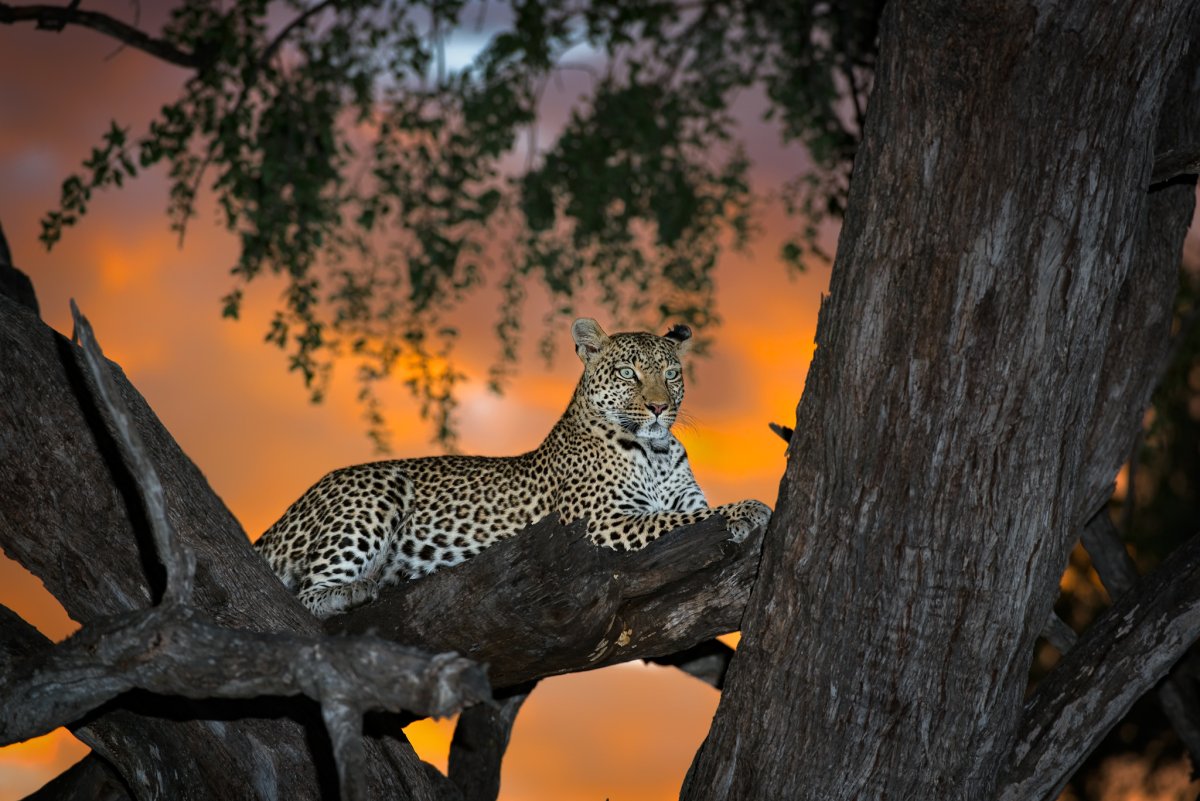

A world-class wildlife photograph starts months before you even reach for your camera bag. We all dream of that perfect moment when a leopard locks eyes with your lens; however, planning your first african photo safari can feel overwhelming. You might worry about picking the wrong month or wonder if your gear will fit on those tiny bush planes. It's normal to feel lost when looking at maps of Kenya or Botswana for the first time.
This 2026 guide turns that uncertainty into a clear plan. You'll learn how to choose the right season, what gear is essential, and how to pick a tour that puts you in the right spot. We'll walk through a simple booking timeline and a gear list that respects those strict weight limits. By the end, you'll have the confidence to stop worrying about logistics and start focusing on your creative vision.
A photo safari isn't a standard sightseeing trip. It's a journey paced specifically for your lens. While tourists might rush to see the Big Five in an hour, we focus on waiting for the light to hit a lion's mane or a leopard to descend from a tree. Planning your first african photo safari means choosing a destination that matches your creative style and patience levels.
Timing is everything in the bush. The Dry Season, which runs from June to October, is the classic choice for many. Water is scarce, so animals crowd around the remaining holes. This makes sightings predictable and easy to capture. If you prefer vivid colors, the Green Season between November and April offers dramatic storm clouds and newborn animals. The backgrounds are lush and green; this often looks much better in a professional portfolio than dry, brown grass.
For 2026, the Great Migration remains a top priority for most travelers. In Kenya's Maasai Mara and Tanzania's Serengeti, millions of wildebeest move across the plains. This creates endless action shots. You also need to consider the light quality. Winter air is dusty, creating those iconic, hazy orange sunsets. Summer air is crisp and clear after rain, making your colors pop and your images look sharp.
Location choice depends on your specific goals. The Maasai Mara is world-famous for large lion prides and open plains. If you want to photograph leopards in a labyrinth of water, the Okavango Delta in Botswana is unmatched. Tusk Photo offers Scheduled Tours and Tailor Made Tours to these legendary spots. We act as your mentor, handling the logistics so you can focus entirely on the shot.
Packing for a trip like this is a balancing act. You need enough reach to capture a distant cheetah, but you also have to carry your own bag. Planning your first african photo safari means remembering that less is often more. If you can't lift your bag comfortably, you've probably brought too much. Most small bush planes have strict weight limits; you'll typically find a cap of around 15 to 20kg for all your luggage. This includes your camera gear, so every gram counts.
Stability matters just as much as focal length. While you might love your tripod at home, it's often useless inside a safari vehicle. A simple beanbag is a much better tool for the job. It rests easily on the window sill or the roof of the car, giving you a steady base for long shots without taking up precious space. You also need to think about dust protection. The African bush is incredibly dry. Fine dust gets into every gap, so keep your gear covered with a simple cloth or dry bag whenever you aren't shooting.
A 100-400mm lens is usually the workhorse of the trip. It's flexible enough for close-up portraits and distant action.
This is a lifesaver. It lets you keep a wide lens on one and a telephoto on the other, so you don't have to swap lenses in dusty conditions.
Bring plenty of cloths and a blower to keep your sensor clean.
If you're just starting out, check out these wildlife photography tips for beginners to help you prepare. If the logistics still feel a bit heavy, our Scheduled Tours handle the heavy lifting, from managing luggage transfers to finding the best angles in the field.
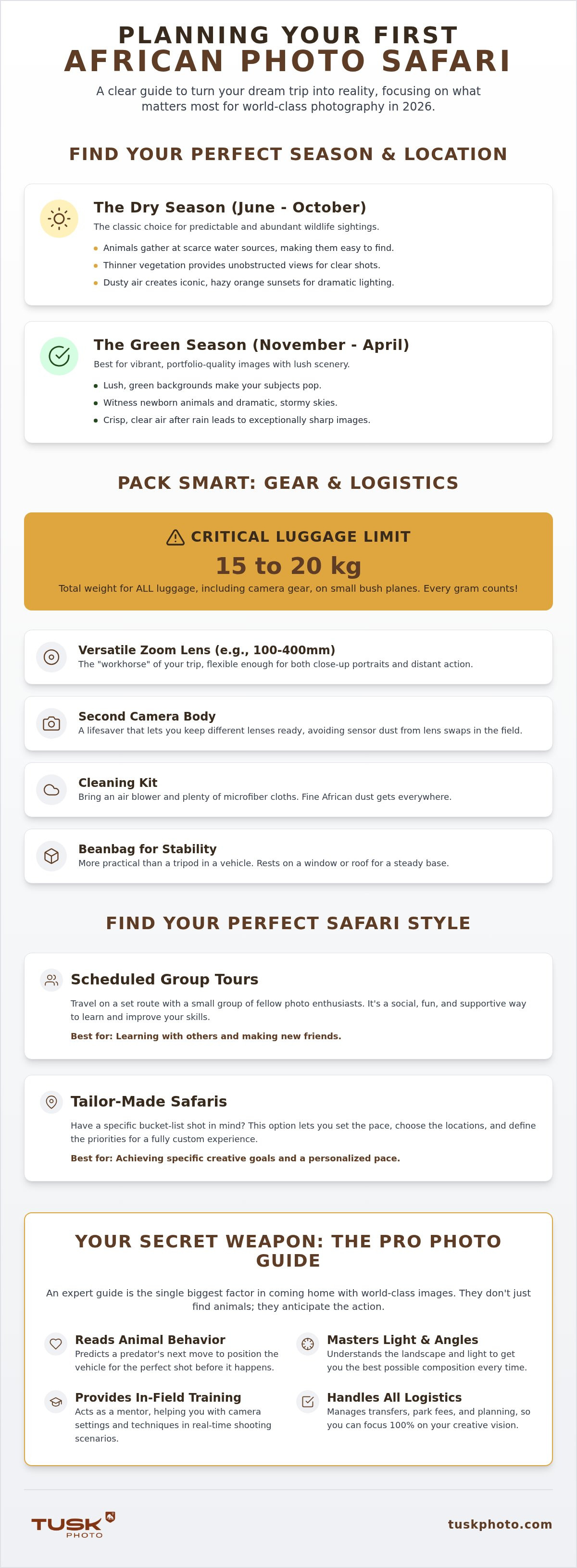
Deciding how to travel is a huge part of planning your first african photo safari. You generally have three main paths to take. Scheduled departure photography tours are fantastic if you want to meet people who love the craft as much as you do. These trips follow a set route and date, bringing together a small group of enthusiasts. It's a social way to learn and often leads to lifelong friendships born from shared sunrises.
If you have a specific bucket-list goal, like capturing a leopard in the Okavango, tailor-made photography safaris are the better choice. You pick the pace. You set the priority. For those with busy 2026 schedules, on-demand tours offer the ultimate freedom. You don't have to wait for a group; you simply go when your calendar allows. This flexibility makes planning your first african photo safari much easier for people with limited time who still want a bespoke experience.
While many photo safaris focus on East Africa or Botswana, those looking for adventure in South Africa can find specialized guided tours with African Endeavors, which offers professional motorcycle safaris through the country's most scenic routes.
A professional photography guide is truly your secret weapon in the wild. They don't just find animals; they "read" behavior to predict where a predator might move next. This allows them to position the vehicle for the best light and angle before the action even starts. It's essentially a classroom in the field. You'll learn the best camera settings while you're actually shooting, which is much more effective than reading a manual at home. Having a mentor by your side helps you navigate tricky lighting or fast-moving subjects with ease. This expert guidance is the single best way to ensure you come home with world-class images rather than just snapshots.
Planning your first african photo safari is the start of an incredible creative adventure that will change how you see the world through your lens. Remember to match your destination to the season that fits your vision, whether that is the dusty drama of the dry months or the lush greens of summer. Keep your gear simple and focused on reach, and never underestimate the value of having a mentor by your side in the field.
At Tusk Photo, our award-winning photography hosts provide expert guidance for all skill levels. We handle the difficult logistics and planning so you can focus entirely on your portfolio. Whether you prefer our bespoke itineraries or a group setting, we are here to help you get the perfect shot. Explore our 2026 Scheduled Tour Dates and start your journey today. Africa is waiting for you.
The best camera is a mirrorless or DSLR body that you already know how to use well. Don't buy a brand new system right before your trip; you want a camera that feels natural in your hands. A "crop sensor" camera is often better for beginners because it gives your lenses extra reach for distant wildlife without the extra weight.
Yes, it's very safe to travel alone, especially when you join a scheduled group tour. When planning your first african photo safari as a solo traveler, these groups provide a built-in community of like-minded people. Your guides handle all the logistics and transfers, so you can enjoy the experience without worrying about navigating the bush by yourself.
No, you don't need the most expensive lenses to capture world-class images. Modern zoom lenses are incredibly sharp and much easier to handle than heavy professional gear. While pros often use fixed lenses, a good zoom is more versatile for a first-timer. Your success depends more on your timing and the guidance of your host than the price of your equipment.
Layers in neutral colors like khaki, grey, or sage are the best choice for the bush. Mornings are often freezing, but the temperature can rise by 20 degrees by lunchtime. Wear a light jacket over a breathable shirt and choose sturdy, closed-toe shoes. Planning your first african photo safari means being prepared for dusty conditions and shifting weather every single day.


