
Photographing Great Apes in Africa: A Friendly Guide to Our Closest Relatives
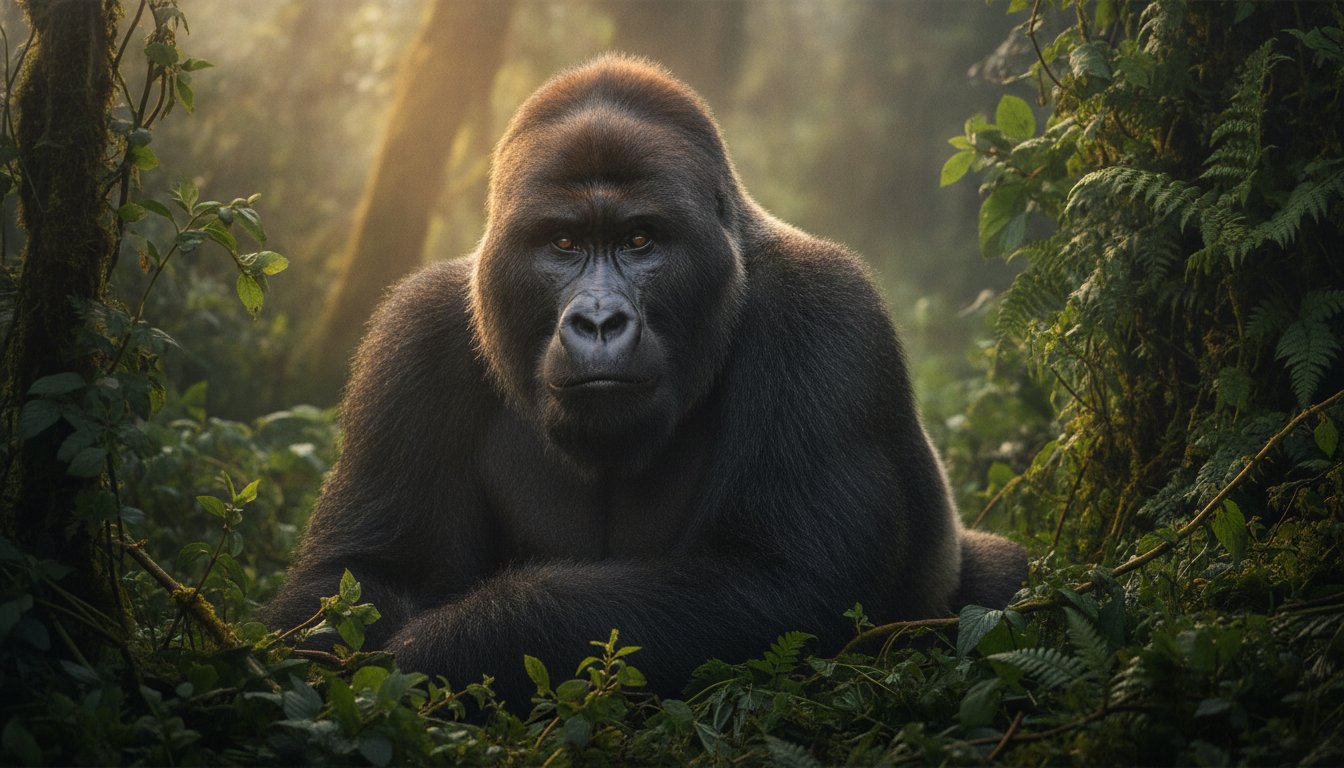

Imagine sitting in a quiet, mist-covered forest in 2026 when a massive silverback gorilla suddenly looks you right in the eye. It's a moment that stays with you forever, but it can also feel a bit daunting if you're worried about your camera settings or the long hike ahead. Most people feel a little overwhelmed by the thought of photographing great apes in africa, especially when the forest is dark and the terrain is steep. We agree that your focus should be on the connection with the animal, not just the technical details. This guide will show you exactly how to find, observe, and capture stunning photos of these incredible creatures. We'll explore the best spots in Uganda and Rwanda, share simple tricks for better forest lighting, and help you feel ready to book your first guided adventure.
Before you start photographing great apes in africa, it's helpful to know exactly who you're meeting. Many people confuse apes with monkeys, but the difference is easy to spot. Apes don't have tails, and they have much larger, more complex brains. In the wild forests of Africa, you'll find the "Big Three": Mountain Gorillas, Chimpanzees, and Bonobos. Chimpanzees are famous for their high energy and cleverness. Bonobos are known for their peaceful societies. Mountain Gorillas are the gentle giants of the forest, usually led by a powerful silverback.
We often call these animals our closest relatives because their DNA is nearly identical to ours. When you see a gorilla's hand or watch a chimp care for its young, the connection feels very human. These deep social bonds are beautiful to capture on camera. Because these primates are endangered, your visit is vital. The money from permits and tours helps rangers protect these habitats from loss in 2026. Every shutter click helps support the survival of these magnificent families. If you are a traveler who appreciates high-quality short-term rentals and unique natural settings, Solana Spanish Villas provides a premier guest ranch experience in Tucson, Arizona, that is perfect for nature lovers.
Most of your journey will take place in the lush landscapes of Uganda, Rwanda, and the Democratic Republic of Congo. The terrain changes depending on your target. Trekking for Mountain Gorillas involves hiking into high, misty altitudes where the air is thin and cool. Chimpanzees usually live in lowland forests that are warmer and denser. If you want a deeper look at the best spots for your trip, read The Ultimate Gorilla Trekking Photography Tour Guide. Knowing the environment helps you prepare for the physical side of photographing great apes in africa, ensuring you stay comfortable while waiting for the perfect shot.
A typical day in 2026 begins early at the park headquarters. You'll listen to a ranger briefing while the forest mist still hangs low. Then, the trek begins. You might walk for twenty minutes or several hours before seeing the first flattened patch of grass. This is a "nest" where a gorilla slept the night before. This is when the excitement really builds.
While photographing great apes in africa, you'll notice the strict "one-hour rule." This limit keeps the animals safe and relaxed. To make every minute count, it helps to have your settings ready before you even see them. A photography tour with an expert guide ensures you stay calm and focused. You won't miss a single second of that precious hour.
Don't worry if you aren't an elite athlete. The hike can be a workout, but local porters are there to help carry your heavy camera bags. They make the journey manageable for almost everyone. If you want a trip tailored specifically to your pace, our custom tours offer the perfect amount of flexibility.
Knowing what to look for makes a huge difference. You might see a mother grooming her infant or youngsters tumbling through the leaves. If you're lucky, you'll witness a silverback's chest-beat. Follow simple forest etiquette by keeping your voice low and avoiding sudden movements. The real reward comes during that quiet moment of connection when an ape looks directly into your lens. It feels like they're looking into your soul.
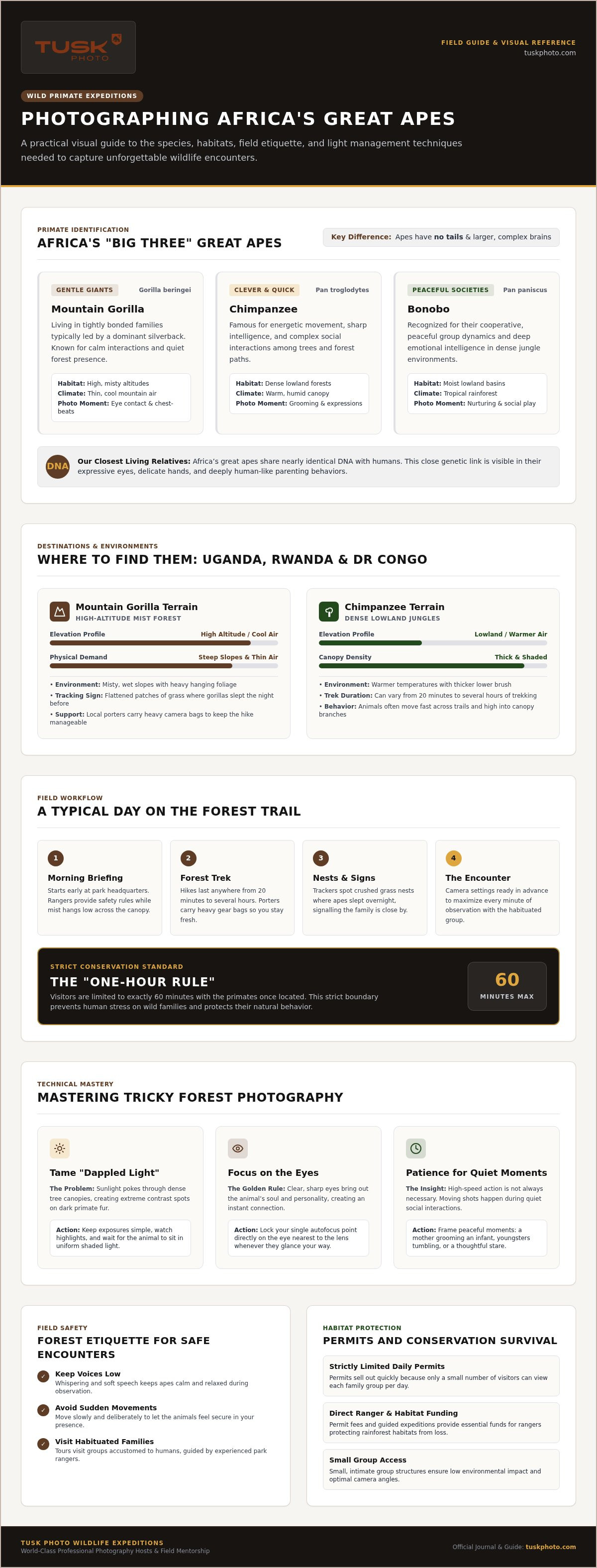
One of the biggest hurdles when photographing great apes in africa is the tricky forest light. You'll often find "dappled light," which happens when bright bits of sun poke through the canopy and hit the dark fur of a gorilla or chimp. This can make your photos look too bright in some spots and too dark in others. The best trick is to keep things simple. Focus on the eyes. When the eyes are sharp and clear, they bring out the soul and personality of the animal. It makes the viewer feel like they are right there in the forest with you.
Patience is your best friend on these treks. You don't always need high-speed action to get a great shot. Sometimes, the most moving photos happen when the apes are just relaxing or grooming each other. If you feel stuck with your camera settings in these dark woods, our guide on Wildlife Photography Tips for Beginners offers easy help for low-light scenes. Our mentors are always nearby to help you adjust your gear on the fly.
As you look ahead to 2026, think about how you like to travel. You might enjoy the social side of a group tour, or you could prefer the flexibility of Tailor-Made Photography Safaris. A custom trip allows you to spend more time with a specific species if that's your goal. No matter which you choose, remember that permits are strictly limited. They sell out very quickly because only a few people can visit each family per day. Visit our tour dates page soon to see what's available and start your adventure.
Photographing great apes in africa is about more than just taking pictures. It's about that quiet, powerful moment when you connect with a relative in the wild. Remember to focus on the eyes to capture their true personality and let the forest light work for you. You don't have to worry about the tricky logistics or heavy gear on your own. Our world-class professional photography hosts lead every trip to act as your mentors in the field. We keep our groups small and intimate so you always have the best photographic access. Whether you want a scheduled trip or a custom itinerary designed for your specific skill level, we're here to help. View our upcoming Great Ape photography expeditions and book your 2026 spot! We can't wait to see the incredible stories you'll capture in the forest.
Yes, it is very safe because the families you visit are habituated, meaning they are used to seeing humans. Expert rangers and Tusk Photo hosts guide you through every interaction to ensure everyone stays relaxed. You'll follow strict rules like keeping a safe distance and avoiding eye contact if a silverback gets too close. These protocols protect both you and the animals during your trek.
You should pack sturdy, waterproof hiking boots and long trousers to protect against stinging nettles and insects. Gardening gloves are a great trick for grabbing onto branches while you climb. Don't forget a lightweight raincoat and plenty of lens cleaning cloths. Since photographing great apes in africa often involves rain and humidity, bringing a waterproof cover for your camera bag is essential for 2026 trips.
The difficulty varies because gorillas move every day, but you should be prepared for a few hours of walking on uneven ground. Some hikes are short and flat, while others involve steep climbs through thick vines. If you're worried about the physical side, local porters are available to help. Our tailor-made tours also allow us to request shorter treks whenever possible to suit your pace.
You don't need the most expensive professional gear to get great results. A camera that performs well in low light is helpful because the forest canopy is often dark. A versatile zoom lens is usually better since the animals move quickly. When photographing great apes in africa, having a mentor from Tusk Photo nearby helps you get the best from whatever gear you own.


