
Photographing Big Cats at Namiri Plains
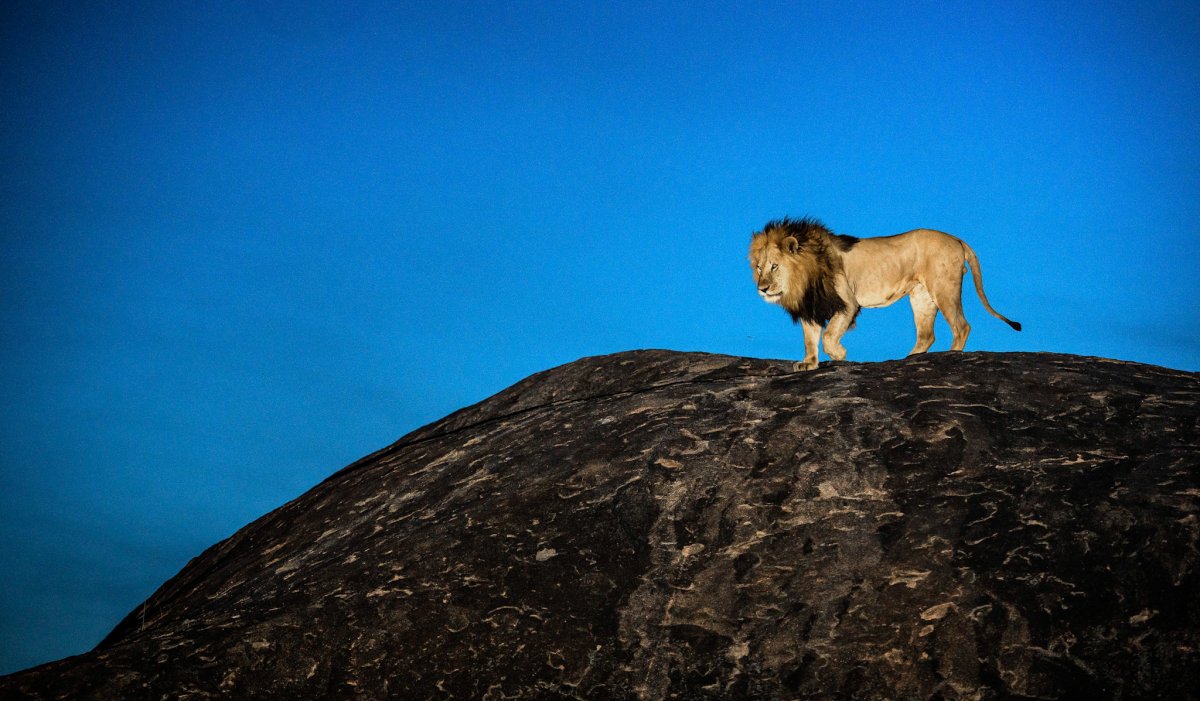

Four to five lion or cheetah sightings a day have been reported at Namiri Plains. That makes the combination of big cats and granite kopjes especially compelling for wildlife photographers: the rocks create striking backdrops as cats rest, watch, or move across the plains. Sightings vary, but the landscape gives each encounter its own character.
It’s easy to picture the perfect lion portrait. The harder part is waiting for a cat to settle into just the right pose. This article explores what big-cat sightings can look like, how lions and cheetahs use the kopjes, and what patience in the field involves. You’ll also learn how a carefully planned photographic journey can help you make the most of time in these remarkable landscapes.
Big-cat sightings at Namiri Plains can come in quick succession. Visitors have reported four to five lion or cheetah sightings per day, while one photographer recorded four lion sightings and three cheetah sightings within two hours.
That outing offers a useful example. Several cats appeared in a short period, giving the photographer multiple chances to observe their movement and behaviour. Each sighting can bring a different scene, from a resting lion to a cheetah crossing open ground.
How does Namiri Plains compare with other Serengeti camps for big-cat viewing? Reports suggest strong viewing potential at Namiri Plains, but they don’t provide a like-for-like comparison with other camps.
What safari activities and game-drive rules apply at Namiri Plains? Game drives are where these sightings take place. Follow your guide’s directions, keep a respectful distance from wildlife, and avoid disturbing the animals.
Where is Namiri Plains Camp located in the Serengeti? It’s in the central Serengeti, amid open plains and granite kopjes.
When is the best time to visit Namiri Plains for big-cat sightings? Plan around the cats’ presence and visibility rather than expecting a fixed daily schedule. Reported sightings show that encounters can vary, even during a single outing.
How do visitors reach Namiri Plains from Arusha or Seronera? The onward journey depends on your departure point and safari itinerary. Plan transport to the camp as part of your wider trip through Tanzania.
What are the risks, safety rules, and conservation considerations on safari at Namiri Plains? Wildlife can behave unpredictably, so follow your guide’s instructions and give animals space. Quiet observation helps limit disturbance as you watch lions and cheetahs in their habitat.
A granite kopje lifts a cat above the surrounding grass. From its uneven surface, a lion or cheetah can pause, scan the plains, or rest between movements. For photographers, the rock gives the frame a clear sense of place: textured stone beneath the animal, with open grassland beyond.
One male lion left a rock at around 16h30. That change turns a still portrait into a movement opportunity. Follow the lion’s path with your lens as it steps down, but keep the kopje in view. The rock can give the image context, even after the animal moves away from its highest point.
Cheetahs can use raised ground to survey open terrain. A cat on a kopje may form a clean silhouette against the sky, while a lower viewpoint can set its body against the plains. Watch its head and posture: a lifted gaze creates a different frame from a resting pose.
Build the composition around the animal’s position. If a lion rests near the summit, leave space above its head and include the rock’s outline. If it sits lower, use the stone’s lines to draw attention towards its face. Small framing adjustments can show the kopje as more than a backdrop.
Light also changes how granite appears in a photograph. In soft light, the rock’s texture can remain visible beside a cat’s coat. Strong contrast may make the animal stand out, but can hide detail in dark stone. Watch the scene, adjust your framing as the cat moves, and let the kopje connect the subject to the Serengeti landscape.
The migrating herds stretched for many dozens of kilometres from Ndutu to Zebra Kopjes, revealing a vast landscape beyond the rocky outcrops. Nick Brandt created his “Lion with Monolith” work more than a decade before the photographer’s visit.
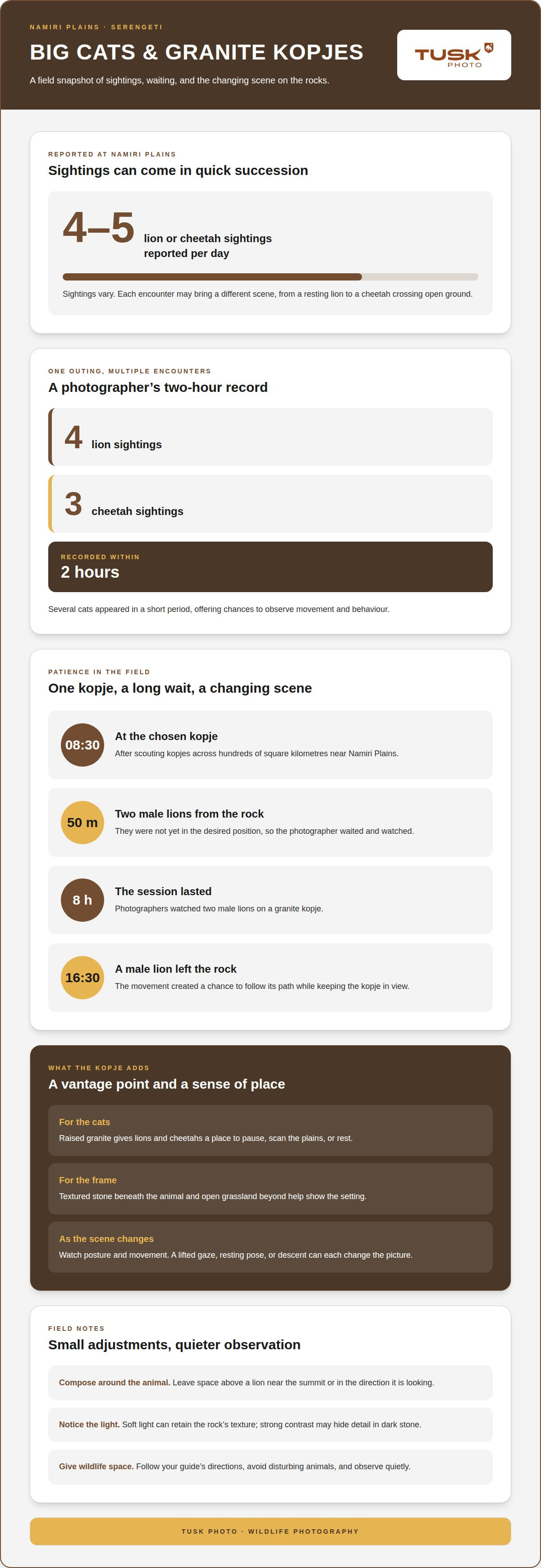
Reaching a promising rock is only the start. A photographer scouted kopjes across hundreds of square kilometres near Namiri Plains, then arrived at a chosen kopje at 08h30. The search helped identify a useful position before the lions appeared. From there, patience mattered more than moving quickly between rocks.
At one point, two male lions were 50 metres from the chosen rock. They weren’t yet in the desired position, so the photographer had to wait and watch. A lion may sit, lie down, turn its head, or move across the stone. Each change can alter the portrait, the background, and the direction of its gaze.
The session eventually lasted eight hours as photographers watched two male lions on a granite kopje. That long wait shows why a striking pose can’t be rushed. Keep your camera ready, but follow the animals’ behaviour rather than trying to prompt movement. A resting lion can still make a powerful image when its face, body, and the rock’s shape align.
Use the waiting time to refine your frame. Check whether the kopje’s outline separates the lion from the plains, and leave space in the direction it’s looking. When the lion shifts position, adjust carefully rather than changing your viewpoint abruptly. If it stands or descends, follow its movement through the frame and keep the granite visible. The result may be a quiet portrait, a profile against open sky, or a sequence showing the lion’s changing posture. On a kopje, the best photograph often comes from noticing a small change and being ready for it.
Tusk Photo’s Scheduled Tours give photographers a guided wildlife photography journey. Experienced guides support beginners and seasoned photographers alike, helping them make the most of wildlife encounters, changing light, animal movement, and the patience needed for a considered image.
If photographing lions on granite kopjes is your goal, use these insights to shape your trip. A Tailor Made Tour can be designed around your photographic interests, while an On Demand Tour offers another way to plan a wildlife photography expedition. Choose the format that suits how much you want to shape the journey and what you hope to photograph.
For a considered next step, contact Tusk Photo to discuss a wildlife photography journey.
Let your interest in Namiri Plains’ big cats and granite kopjes shape your next wildlife photography journey. Consider the images you want to make, the pace that suits you, and how much you’d like to shape the itinerary. These choices can help you decide what kind of trip feels right.
Tusk Photo offers Scheduled Tours, Tailor Made Tours, and On Demand Tours for wildlife photography journeys. Each provides a different starting point, whether you prefer a planned departure or want to shape the experience around your interests.
Take the next step and share what you hope to photograph. Contact Tusk Photo about safari photography, and start planning a journey shaped by your curiosity.
Lions and cheetahs are the big cats featured in sightings around Namiri Plains. For a useful photographic record, note each animal’s markings, posture, and direction of travel. These details can help distinguish individuals in your images and build a sequence that shows more than a single moment. Keep your attention on the cats’ behaviour as well as your camera settings.
Namiri Plains combines open grassland with scattered granite kopjes, giving cats varied places to move and pause. In open areas, you can frame an animal against the plains; near the rocks, the image gains a stronger sense of place. This mix offers different compositions to watch for on a game drive, from a wide landscape view to a closer portrait.
Granite kopjes are rocky outcrops rising above the surrounding plains. Lions and cheetahs use them to rest or look across the grassland. In your photographs, notice how the rock’s shape frames the animal, then check the background for distracting lines or bright patches. A slight change in framing can bring the cat and its rocky setting together clearly.
Visitors have reported four to five lion or cheetah sightings per day at Namiri Plains, but there’s no like-for-like comparison with other Serengeti camps.


