
Photo Safari Gear Checklist: Must-Have Camera Equipment
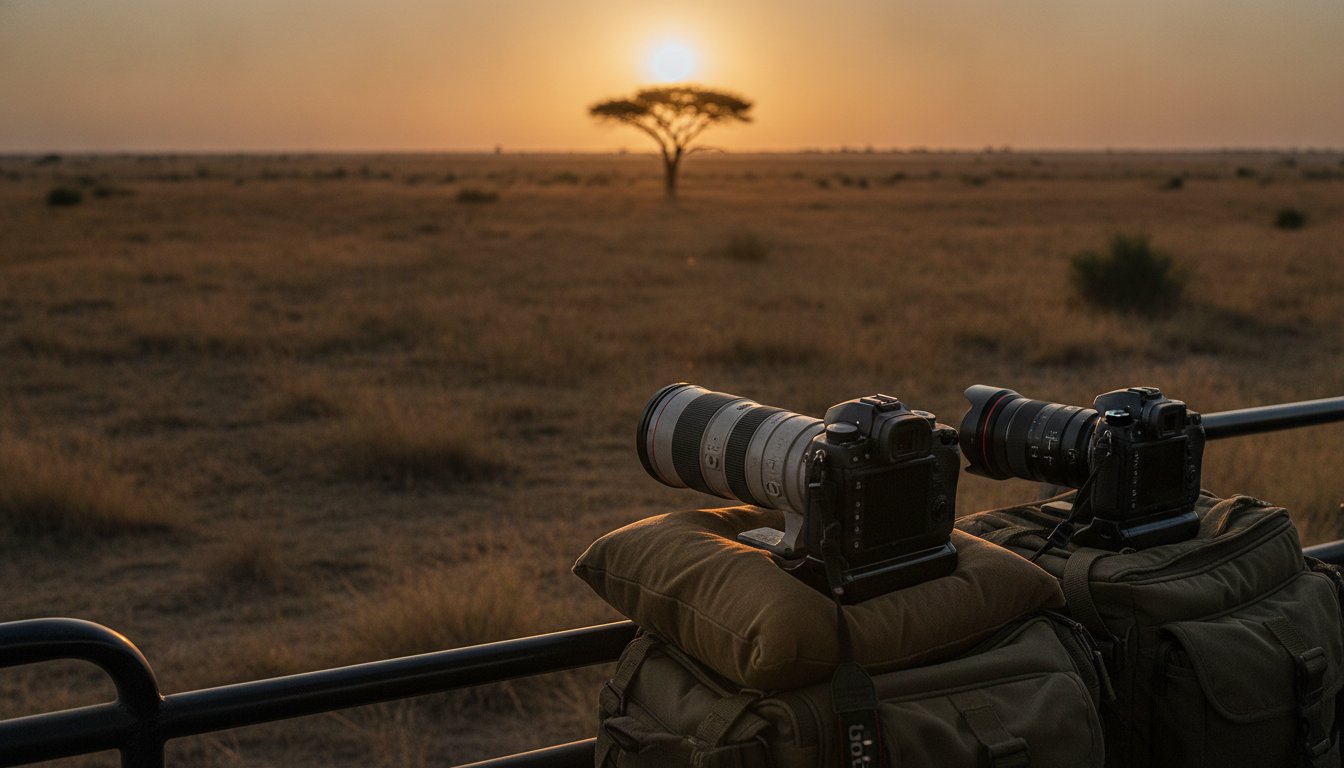

The most expensive camera in the world won't help you if you're too busy fumbling with a heavy bag to notice the leopard in the tree right above you. Many photographers arrive in the bush burdened by every lens they own, driven by the fear of missing a rare shot. It's completely natural to feel anxious about choosing the right camera gear for a photo Safari; especially when you're worried about dust or complex settings. You deserve to feel confident and focused when a lion walks past your vehicle.
This guide simplifies the process by highlighting the essential equipment you need to capture sharp, breathtaking wildlife images. We'll cover the best lens ranges for close encounters and the practical tools that keep your kit safe, ensuring you spend your time looking through the viewfinder instead of digging through your heavy backpack. For those needing a better storage solution, the gear guide from Tak-tical can help you find a pack designed for organization and durability.
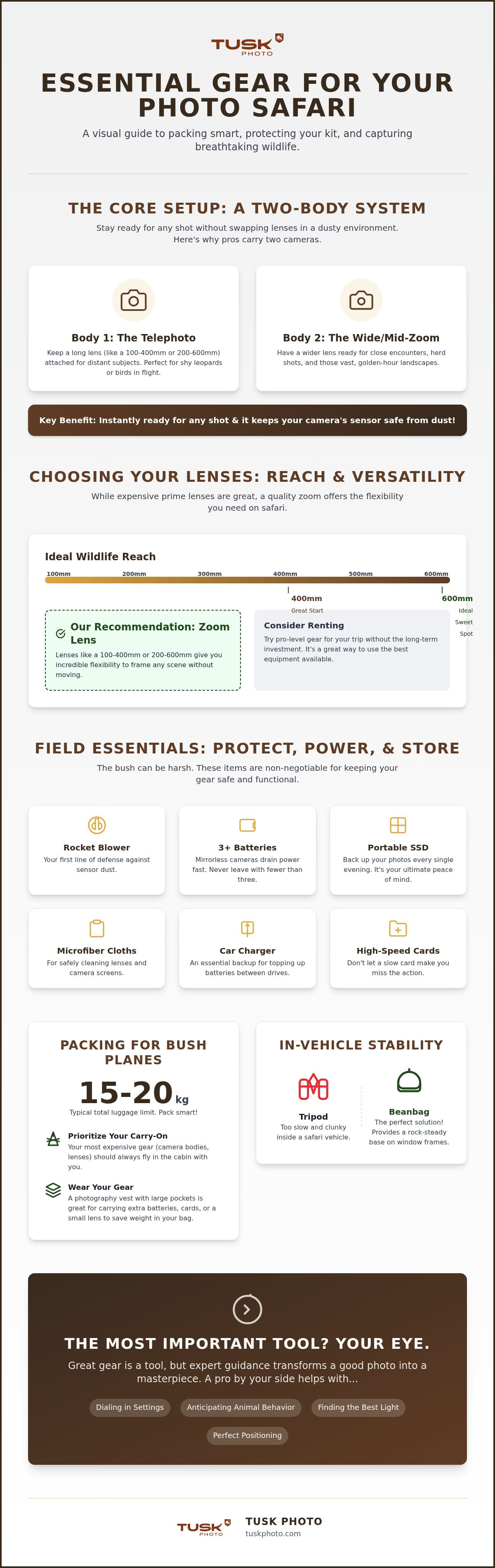
Selecting the right camera gear for a photo Safari doesn't have to be overwhelming. Most professionals swear by the "two-body system" for a very practical reason. By carrying two camera bodies, you can keep a long telephoto lens on one and a wider lens on the other. This setup lets you react instantly to a nearby elephant or a distant bird without fumbling to swap lenses in a dusty environment. Dust is the enemy of your camera's sensor; keeping your lenses attached is the best way to protect your investment.
For wildlife photography, reach is everything. You'll generally want a lens that can get you to at least 400mm, though 600mm is the sweet spot for those intimate, tight portraits. While older DSLRs are still capable, mirrorless cameras are the clear winners for 2026. They are much lighter to carry and offer silent shutters. This allows you to snap away during a quiet encounter without the loud "click" of a traditional shutter startling a nervous animal.
While professional "prime" lenses are beautiful, they are often heavy and very expensive. For most travelers, a high-quality zoom lens like a 100-400mm or 200-600mm is a better choice. These lenses give you the flexibility to frame a wide herd or zoom in on a single lion's eyes without moving the vehicle. Don't forget to pack a wide-angle lens too; you'll want it for those glowing African sunsets and massive landscapes. If the price of pro-level glass feels steep, consider renting. It's a fantastic way to use world-class equipment on one of our scheduled tours without the permanent investment.
Protecting your camera gear for a photo Safari is just as vital as picking the right lens. The African bush is beautiful, but it's also incredibly dusty. Fine silt can easily find its way into your camera's delicate parts. Keep a rocket blower and microfiber cloths in your bag for quick cleans. Many pros also use simple rain covers or wrap their cameras in a light cloth between sightings. This small step keeps the grit out of your dials and buttons.
Power and storage are your next priorities. You'll often be out in the field for hours, and modern cameras drain power fast. Carry at least three batteries and bring a car charger for emergencies. For your photos, stick to high-speed memory cards that won't lag during a burst of action. Make it a habit to back up your work to a portable SSD every evening. It's the only way to sleep soundly. You'll know your captures are safe.
Getting to remote locations often involves small bush planes. These aircraft have very strict weight limits, typically between 15kg and 20kg for all your luggage. If you have a lot of equipment, our Tailor-Made Photography Safaris can be designed to help navigate these tricky logistics. Use this quick checklist to prioritize your packing:
Place your most expensive lenses and camera bodies in your hand luggage.
Use a photography vest with large pockets to "wear" extra batteries or small lenses if your bag is over the limit.
Keep heavy tripods or chargers in your checked bag, but only if they are well-padded.
Having the best camera gear for a photo Safari is only half the battle. When a leopard suddenly appears in the dappled light, you don't want to be guessing your shutter speed or ISO. Our Tusk Photo guides are seasoned pros who help you dial in your settings before the action even starts. They understand animal behavior and how the light moves through the bush. This expert help ensures you're ready the moment a predator begins its hunt.
Respecting the wild is just as important as getting the shot. Good safari etiquette means keeping your gear quiet. Silence any camera beeps or loud focus sounds that could disturb the animals or your fellow travelers. You should also reconsider your support system. While tripods are great for landscapes, they're often too clunky for a vehicle. A simple beanbag is usually more useful. It rests perfectly on the window frame, giving you a rock-steady base for those heavy telephoto lenses.
A high-end lens is a tool, but your eye and your timing are what create art. If you're new to the craft, check our Wildlife Photography Tips for Beginners. Our Scheduled Tours ensure you are in the right position at the right time, regardless of the camera gear for a photo Safari you own. Reach out to us for personalized gear advice for your 2026 trip.
Our expeditions are guided by professional photographers who ensure you get the most out of every sighting. We keep our group sizes small for better shooting angles and include immersive field workshops to sharpen your skills. View our 2026 Scheduled Photography Tours and start your adventure! We can't wait to see the world through your lens.
Having two camera bodies is a game-changer because it allows you to keep different lenses attached at all times. You can have a long telephoto on one and a zoom on the other. This setup means you won't miss a sudden close-up while you're focused on the horizon. It also keeps your sensor safe from the harsh African dust.
For birds, you need as much reach as possible; a lens that hits 600mm is usually the best choice. Birds are often small and distant, making a long focal length essential for sharp details. A 200-600mm zoom lens is a popular pick for camera gear for a photo Safari because it offers flexibility without the extreme weight of a prime lens.
Protect your equipment by keeping it covered with a simple cloth or a dedicated rain cover when you aren't shooting. Use a rocket blower and a microfiber cloth every evening to gently remove any grit. Avoiding lens changes in the vehicle is the most effective way to keep your sensor clean. Our guides can show you safe cleaning techniques during your trip.
Most photographers find that a beanbag is much more useful than a tripod inside a safari vehicle. Tripods are often too bulky and difficult to set up quickly in a cramped space. If you plan to shoot landscapes at camp or stars at night, a lightweight tripod is okay. However, for active wildlife viewing, a sturdy beanbag provides the best support.


