
Okavango Delta Photo Safari: Wildlife You May See
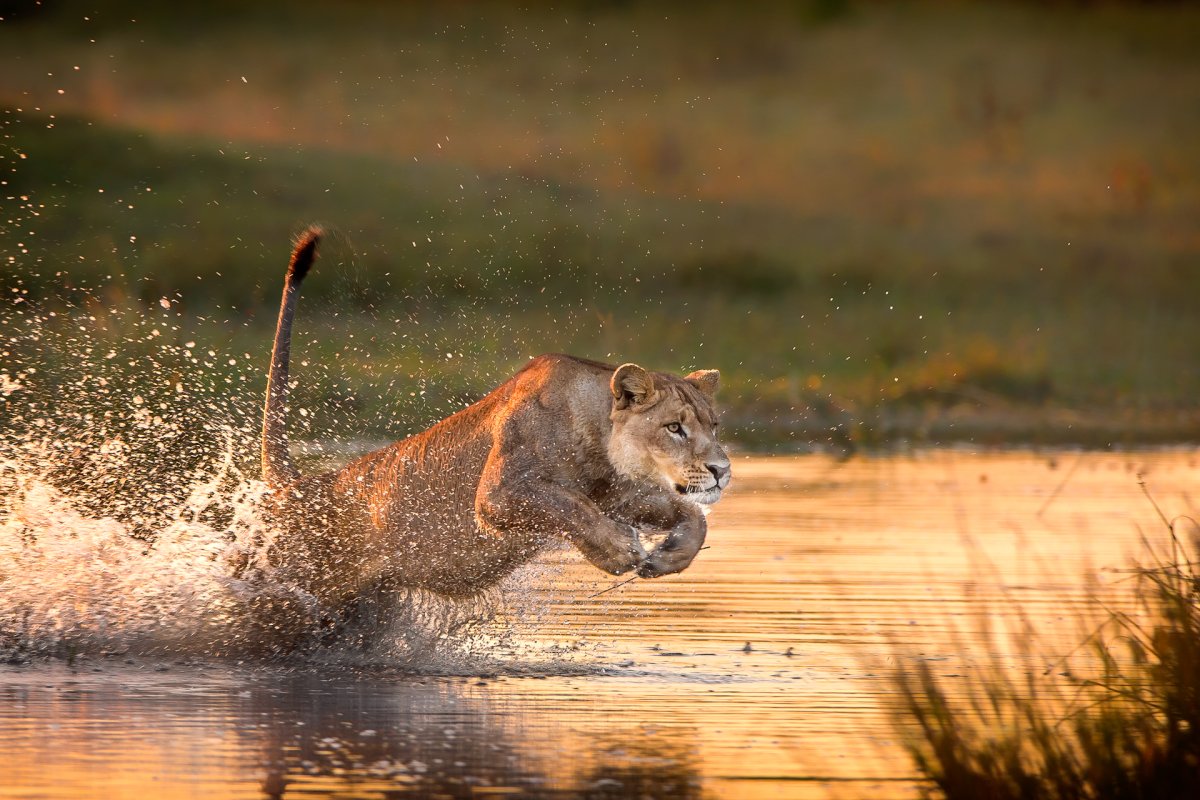

An Okavango Delta photo safari can bring you close to varied birdlife and mammals, including buffalo. The Delta is home to 130 mammal species and 482 bird species, according to UNESCO, though the wildlife you encounter depends on the season and habitat.
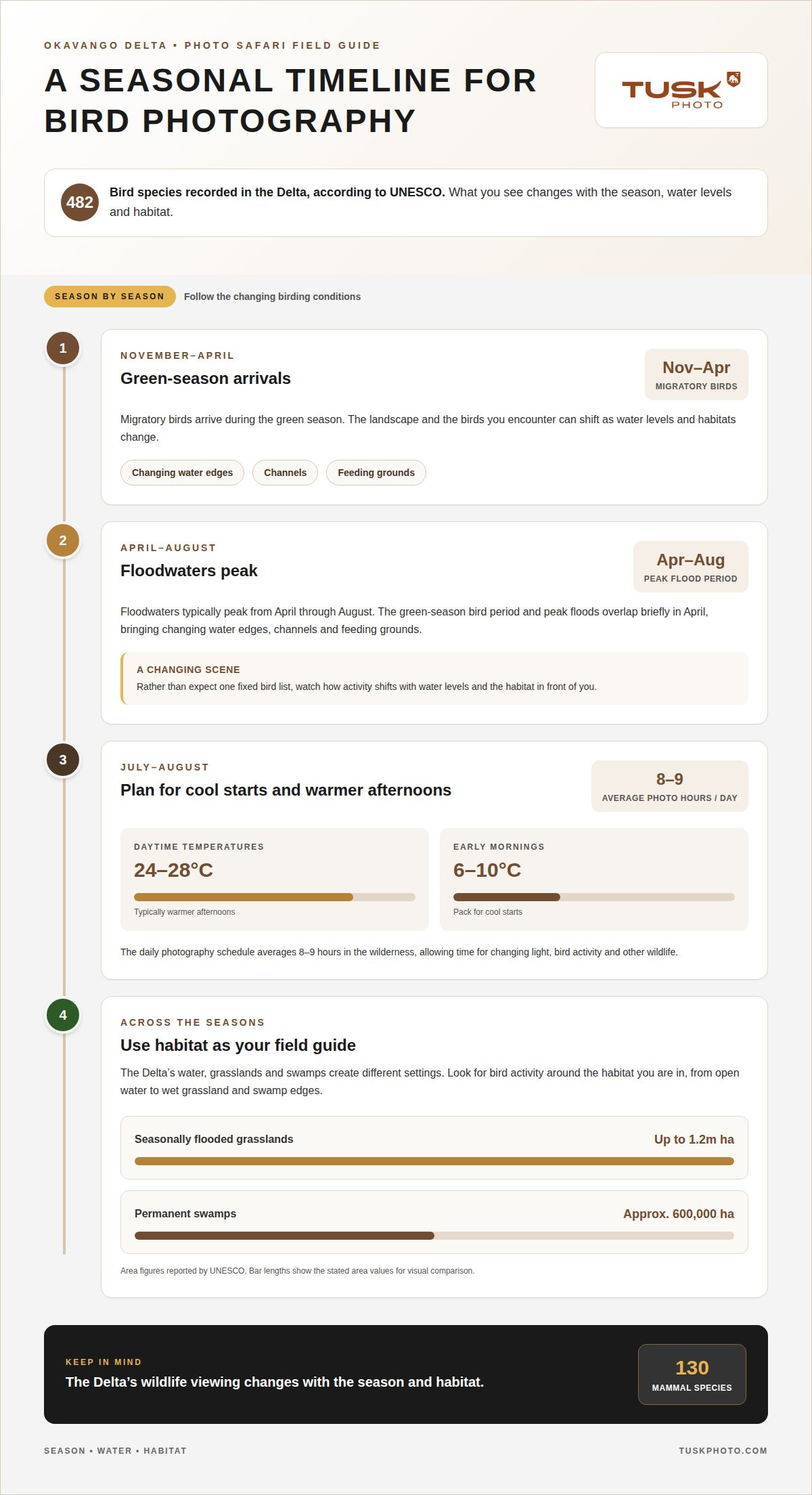
The mix of water, grasslands and changing flood levels makes the Okavango Delta a distinctive safari destination. Floodwaters typically peak from April through August, while migratory birds arrive during the green season, between November and April.
This guide covers wildlife you might photograph, how seasonal shifts affect bird viewing, and the opportunities created by the Delta’s varied landscapes. It also explains how to plan a photography journey around the wildlife and experiences that interest you most.
The Okavango Delta supports 482 bird species, according to UNESCO, but the best season depends on what you hope to photograph. Floodwaters peak around April through to August, while green-season migratory birds arrive between November and April. These periods overlap briefly, bringing changing water edges, channels and feeding grounds. The birds you encounter can shift as water levels and habitats change.
UNESCO reports that seasonally flooded grasslands cover up to 1.2m ha. Permanent swamps cover approximately 600,000 ha, creating distinct settings for wildlife photography. Rather than expecting one fixed bird list, look for activity around the habitat in front of you: open water, wet grassland or swamp edges. These varied scenes also shape conservation priorities across the Delta.
Season affects the feel of each safari day. In July and August, daytime temperatures are typically 24°C to 28°C, while early mornings are usually 6°C to 10°C. The schedule allows an average of 8-9 hours a day photographing in the wilderness. That creates time for changing light, bird activity and other wildlife, including elephants and wild dogs. Pack for cool starts and warmer afternoons.
Green-season travel brings a different photographic rhythm, with migratory birds arriving between November and April. A Mashatu green-season extension can form a distinct part of a wider journey, rather than simply adding another Delta birding day. This helps set expectations for landscapes and wildlife, from wetland birds to mammals such as wild dogs. Contrasting wetland and desert scenery can make the journey especially rewarding, while adding nights away from the Delta.
UNESCO describes the Delta’s habitats as species rich, with 1061 plants belonging to 134 families and 530 genera, 89 fish, 64 reptiles, 482 species of birds and 130 species of mammals. That range gives wildlife photography a remarkable variety of possible subjects, from birds near water to large mammals crossing open grassland.
For wildlife photography, Khwai Community Concession and the Delta’s changing floodplains offer varied landscapes. Chobe’s floodplains add another setting, where animals gather near the river. Buffalo herds can exceed 1000 individuals. Elephants, leopards and African wild dogs may also make compelling subjects, while birdlife offers quieter moments for a camera focused on detail.
There is no universally best camp location. Khwai Community Concession is one area to consider, but the habitat around each camp shapes the scenes available to photograph. Seasonal changes in water levels can also shift wildlife activity between wetland edges and drier ground.
Pack camera equipment for both close wildlife and broad landscapes. Drone use differs from ordinary photography: follow local rules and never assume you can fly a drone during safari activities. For safety, follow your guide’s directions, keep a respectful distance from animals and secure your gear during outings.
Vehicle drives and boat trips offer distinct viewpoints for photographing wildlife in the Okavango and Chobe. Mokoro outings are seasonal and depend on water levels. Photography on foot requires you to follow your guide’s instructions and stay alert to wildlife around you. Together, these outings offer varied views of animals and habitat across Africa’s wilderness.
Botswana’s Okavango Delta offers a different safari landscape from the surrounding Kalahari. UNESCO says seasonally flooded grasslands cover up to 1.2m ha. Across the wider Delta, the terrain changes very gently, so water can spread through broad plains and channels. The result is a mosaic of wetland, grassland and dry ground, rather than one continuous river or open plain.
The shifting landscape is central to the destination’s appeal. A useful itinerary combines time in different habitats, such as the Delta and Chobe National Park. Each setting offers another perspective, from water-edge scenes to animals moving across open ground. Morning and afternoon outings bring different light, transforming the same landscape throughout the day.
For camera gear, choose equipment suited to both wildlife and wide landscapes. A camera body with at least 24 megapixels is recommended for this safari. A telephoto lens helps frame distant animals, while a wide-angle lens can capture the scale of plains and sky.
Most journeys reach the Delta through Maun, then continue by small aircraft to a safari camp. The flight into the Delta camp takes 20 minutes; the return flight to Maun takes 30 minutes. Charter luggage limits depend on the aircraft and route, so pack camera gear and clothing compactly and keep essential equipment together.
The takeaway: plan for contrast, not just a single camp view. Choose an itinerary that pairs Delta wetlands with another landscape, such as Chobe, and allows time for both morning and afternoon viewing. This balance reveals why Botswana’s Okavango is more than a wildlife stop: it is a vast, changing wilderness shaped by water, season and open space. For travelers interested in expanding their journey to take in other renowned continental spectacles, Lights on Africa Destinations & Safaris provides curated wildlife adventures and bespoke safari itineraries across East and Southern Africa.
Tusk Photo helps photographers turn their wildlife interests into a considered journey, with experienced guides creating photographic opportunities for beginners and seasoned photographers alike. If you’re drawn to the Okavango Delta’s changing wetlands, birdlife and mammals, choose a trip format that suits your plans and photography goals.
Scheduled Tours have set departures, while Tailor Made Tours are shaped around your interests. On Demand Tours offer another way to plan a wildlife photography expedition. Each format can help you focus on the landscapes and wildlife experiences that matter most to you.
Share what you hope to photograph and how you’d like to travel. Contact Tusk Photo to discuss your Okavango Delta photography plans.
Let your photographic priorities guide your next decision. You might want to focus on a particular landscape, allow time for patient observation, or balance wildlife encounters with quieter moments in the field. Knowing what matters most can help shape an Okavango Delta photo safari around your interests.
Consider the pace and style of travel that suit you, then share the images you hope to create. Tusk Photo can help you explore a journey shaped around those priorities.
Contact Tusk Photo about your safari to start planning a photographic journey of your own. The Delta is waiting to be explored.
May through October is rated the best time for this safari. November and December are rated good months, while January through April are rated fair. Choose a period that matches your photography priorities and travel plans. If you’re deciding between seasons, consider whether you prefer peak floodwater scenes or green-season birdlife.
Expect opportunities to photograph a variety of birds and mammals, though sightings depend on where you travel and which wildlife is active. Look beyond portraits: watch for movement, feeding, flight and interactions. These moments can make engaging images even when an animal is distant or partly hidden.
The price depends on the trip and is provided after a quote request. Cost factors include the itinerary, accommodation, travel arrangements and planned photography experience. A journey focused on particular subjects may need a different design from one covering several locations. Sharing your travel preferences and photographic priorities helps shape a suitable proposal.
Tusk Photo offers wildlife photography expeditions in Botswana, led by experienced guides. Its photography-focused approach suits travelers seeking guidance in the field and opportunities to work on their images during a wildlife journey. When choosing an operator, look for an itinerary built around photography rather than general sightseeing, and consider whether the guided format suits your experience level.
Flood levels and seasonal conditions can change the scenes available at a location. Water can create reflective surfaces, while changing vegetation alters backgrounds and sightlines. Prepare a flexible shot list with options for wide landscapes, close details and animal behavior, then adapt your framing to the conditions you find in the field.


