
Namibia Photo Safari: Landscapes & Wildlife Tour Guide

Namibia’s most striking photo opportunities come from the contrast between vast desert scenery and wildlife. A Namibia landscapes and wildlife photo safari can include three nights exploring the upper Hoanib River in Damaraland, among granite peaks and desert-adapted animals. Some itineraries also include a night beneath the stars near towering rock formations.
If you’re drawn to dramatic landscapes as much as wildlife, the route matters. This guide covers what a photo safari can include, when departures run, how long trips last, what affects the price, and which Damaraland landscapes and animals you may encounter.
Compare the time an itinerary spends in Damaraland with its other destinations to see how each part supports your photography goals. Trip length, departure dates, and inclusions vary by itinerary. The price depends on the trip and is provided after a quote request.
Damaraland combines rugged desert scenery with wildlife adapted to scarce water. Compare it with Etosha, Sossusvlei, and the Skeleton Coast to match each stop to your photography interests.
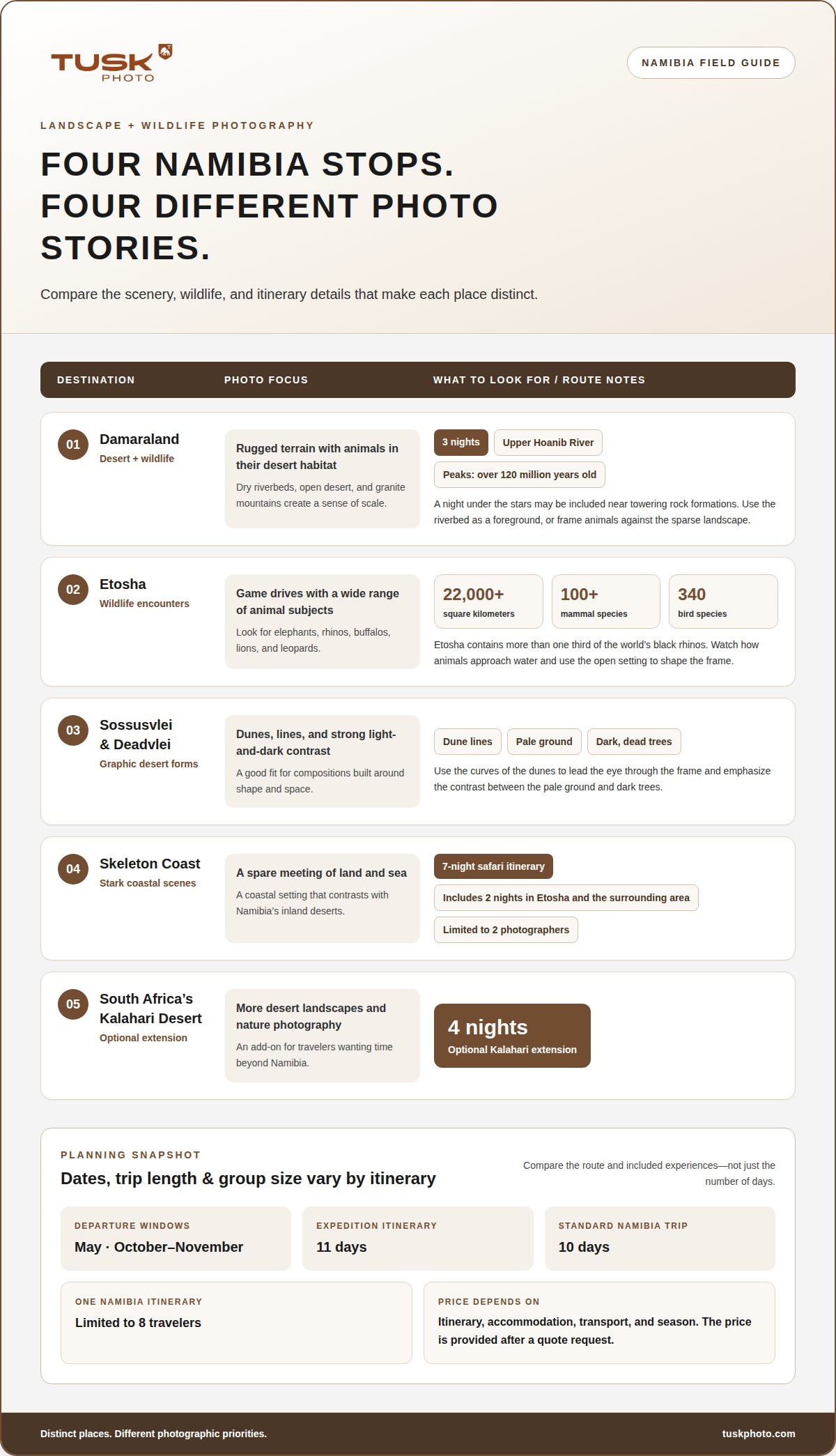
The itinerary’s upper Hoanib River section includes three nights among dry riverbeds, open desert, and granite mountains. These peaks date back over 120 million years, giving the landscape a deep sense of time and scale. A night under the stars adds another way to photograph the region: frame the rock formations against the open sky, or use the riverbed as a foreground.
For landscape photography, look for changes in light across stone and sparse vegetation. Etosha National Park is better known for wildlife encounters, while Damaraland offers a rugged mix of terrain and animals. The Skeleton Coast adds a stark coastal setting to the itinerary.
Desert-adapted elephants are distinctive subjects around Hoanib Skeleton Coast. Watch how they move through dry riverbeds and surrounding terrain, then compose images that show their scale against the sparse landscape. Give the animals room in the frame. Mountains or riverbed textures can help tell the story of their desert habitat.
Etosha offers a different wildlife focus. Game drives include elephants, rhinos, buffalos, lions, and leopards. Researchers captured springbok in Etosha National Park during May-July 2011, according to the Centers for Disease Control and Prevention.
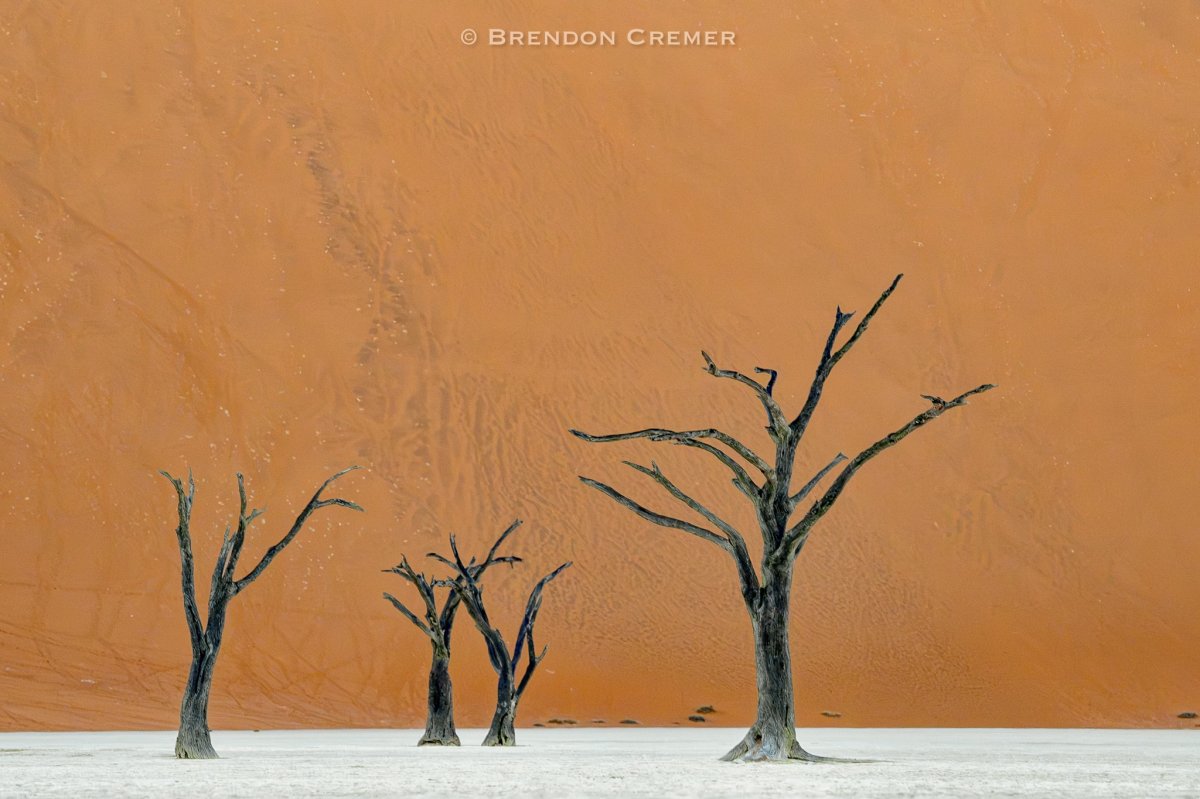
At Sossusvlei and Deadvlei, focus on dune lines, open desert, and the contrast between pale ground and dark, dead trees. These locations suit graphic compositions, especially when the dune shapes lead the eye through the frame.
An optional extension to South Africa’s Kalahari Desert adds four nights for travelers who want more desert landscapes and nature photography beyond Namibia.
Scheduled, tailor-made, and on-demand tours offer different ways to plan a Namibia trip, while self-drive is another travel format. Compare dates, route length, group size, and inclusions before choosing.
Departures are offered in May and October-November, and one expedition itinerary lasts 11 days. These seasonal options help shape the timing of your photography adventure, while the route determines how much time you spend in each setting. Review the scheduled safari departure dates alongside your preferred travel window. A morning wildlife drive and an afternoon transfer, for example, create different opportunities for images.
One Namibia itinerary is limited to 8 travelers, a useful detail when comparing group size and time for photography. Guided tours and self-drive journeys differ in how transport and daily drives are arranged. For self-drive planning, weigh distance, road surface, and driving time between stops, then leave room for rest and changing conditions. National park fees and permits depend on the route and locations visited; photography rules can also vary by site, so follow local instructions.
The price depends on the itinerary, accommodation, transport, and season, and is given after a quote request. Compare what each option includes, such as lodging, transfers, and planned activities, rather than judging by trip length alone. For distant wildlife, a 500mm lens is described as suitable; choose camera gear around your subjects and travel style. A self-drive adventure may also involve different transport and accommodation choices than a guided tour.
Namibia Skeleton Coast safari itinerary lasts 7 nights, including two nights in Etosha National Park and the surrounding area. The expedition itinerary allocates 4 nights to Etosha; the standard Namibia trip lasts 10 days. The Namibia Skeleton Coast safari is limited to 2 photographers.
A Namibia landscapes and wildlife photo safari works best when the route balances distinct settings rather than treating every stop as the same kind of subject. Namibia’s oldest desert, Etosha’s wildlife reserve landscapes, and the Skeleton Coast each offer a different visual story. Plan around the images you want to capture: broad desert forms, animal encounters, or stark coastal scenes.
Etosha National Park covers over 22,000 square kilometers and supports more than 100 mammal species and 340 bird species. Those numbers point to varied opportunities, but the strongest photographs still depend on patience and observation. During a drive, watch how animals approach water and how the open setting shapes the frame. Etosha also contains more than one third of the world’s black rhinos, making it a notable destination for wildlife photography.
Damaraland brings towering rock formations and dry river landscapes together with desert-adapted wildlife. Its appeal lies in the relationship between animals and their rugged surroundings: include the landscape to show scale, or frame more closely to focus on behavior. Along the Skeleton Coast, turn your attention to the spare meeting of land and sea. Each location calls for a different pace and composition.
Choose a route around your photographic priorities. Wildlife drives suit travelers seeking animal subjects, while desert and coastal stops favor shape, texture, and space. Make time for both, and let the light guide each day’s activities. Namibia’s varied settings make the journey itself part of the image.
Tusk Photo offers Scheduled Tours for photographers who want a planned wildlife journey, as well as Tailor Made Tours and On Demand Tours for travelers seeking a route shaped around their interests. If Namibia’s desert landscapes, Etosha wildlife, or the Skeleton Coast are central to your plans, compare the tour format with the places and photographic opportunities you want to prioritize.
Choose a scheduled departure when its itinerary suits your plans. A tailor-made or on-demand journey may suit you better if you want a more individual route or have specific photographic interests. Experienced guides support photographic opportunities for beginners and seasoned photographers, helping travelers make considered choices in the field.
Explore Tusk Photo’s tour options and get in touch to discuss your Namibia plans.
Before choosing a departure, decide what you want your photographs to say. Do you picture wildlife in its natural setting, sweeping desert forms, or a balance of both? That creative priority can guide how you compare routes and decide where to focus.
A Namibia landscapes and wildlife photo safari is more than a sequence of stops. It’s an opportunity to notice how light, terrain, and animal behavior shape each frame. Stay open to unexpected subjects: a quiet landscape can be as memorable as a close wildlife encounter.
If you’re ready to turn those ideas into a travel plan, contact Tusk Photo about a Namibia safari. Share the scenes you hope to capture and explore a journey that fits your photographic interests. Your next great image can begin with a thoughtful plan.
Listed departure periods for a Namibia photo expedition include May and October to November. The best fit depends on what you want to photograph and which itinerary suits your plans. Before choosing, compare the time the route spends in wildlife areas with its landscape stops. This helps you decide whether to prioritize animal behavior, broad desert scenes, or a mix of both.
The price depends on the trip and is provided after a quote request. It can vary with the itinerary, accommodation, transport, and travel dates, so compare what each option covers rather than looking at duration alone. Consider whether you prefer a set departure or a journey shaped around your interests. This helps you weigh the route and experience against your photography priorities.
Let the animals set the pace. Follow your guide’s instructions, give wildlife space, and wait quietly rather than trying to change an animal’s behavior for a photograph. In Etosha, for example, keep your camera ready during a drive, but don’t crowd a sighting or block other vehicles. Patient observation can capture natural movement while keeping the animals’ needs ahead of the image.
A 500mm lens is described as suitable for distant wildlife. Choose other camera gear to match your subjects and travel style.


