
Mastering Wildlife Silhouettes: A Pro Photography Guide
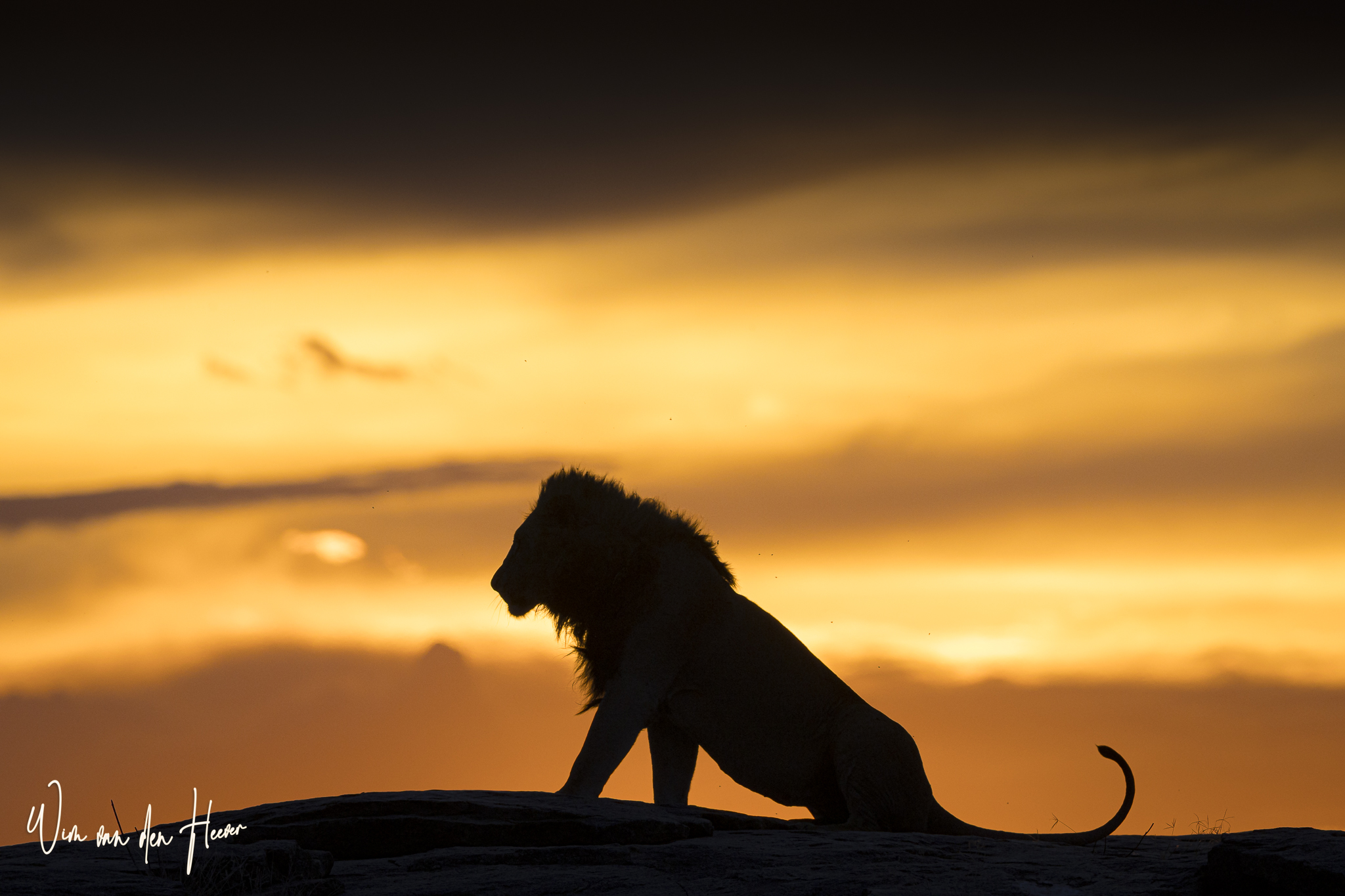

The most striking wildlife photographs aren't defined by the fine details of fur or feathers, but by the bold shadows you choose to keep. It's a common frustration to stand before a breathtaking sunset, watching a giraffe crest a ridge, only to miss the shot because you aren't sure how to photograph a wildlife silhouette properly. You want to capture that perfect, ink-black outline against a burning sky, yet the results often come out too bright or blurry. We understand that feeling of watching a once in a lifetime moment slip away while you're still fiddling with a dial.
Mastering this technique is really about shifting your perspective from what the animal looks like to the shape it creates. This guide will teach you how to use your exposure settings with confidence, helping you turn those fleeting golden hour moments into professional, wall-worthy art. We'll walk you through selecting the best subjects, simplifying exposure compensation, and positioning yourself for the ultimate shot. By the end, you'll feel ready to step into the field and let your creativity lead the way.
A silhouette is one of the most powerful tools in a photographer's kit. It strips away the distractions of color and texture, leaving only the raw essence of the animal. When you learn how to photograph a wildlife silhouette, you're not just taking a picture; you're creating a piece of art that tells a story through shape alone. A silhouette is the artistic contrast between a dark subject and a vibrant light source like a sunset. It works because it forces the viewer to focus on the animal's form and the overall mood of the scene rather than the fine details of fur or feathers.
If you are inspired by this artistic approach to capturing nature, you can discover Cairngorm Artists and their original artworks that celebrate wildlife through a similar focus on form and atmosphere.
Capturing these images is a core part of what we teach during our field coaching. It is a fantastic way to turn a standard animal encounter into a sophisticated, professional-looking portfolio piece. While it might seem complicated, it's actually about understanding light and positioning. On our Scheduled Tours, our guides act as your secret weapon, expertly positioning the vehicle to ensure the light is exactly where you need it to be for that perfect, high-contrast look.
Timing is everything when you want to master how to photograph a wildlife silhouette. The "Golden Hour," which occurs just after sunrise or right before sunset, is your best friend. During these brief windows, the sun sits low on the horizon. This low angle provides the intense backlighting required to wash out the foreground and leave your subject in deep, rich shadow. The sky becomes a canvas of oranges, reds, and purples, providing the ideal backdrop for your subject's outline.
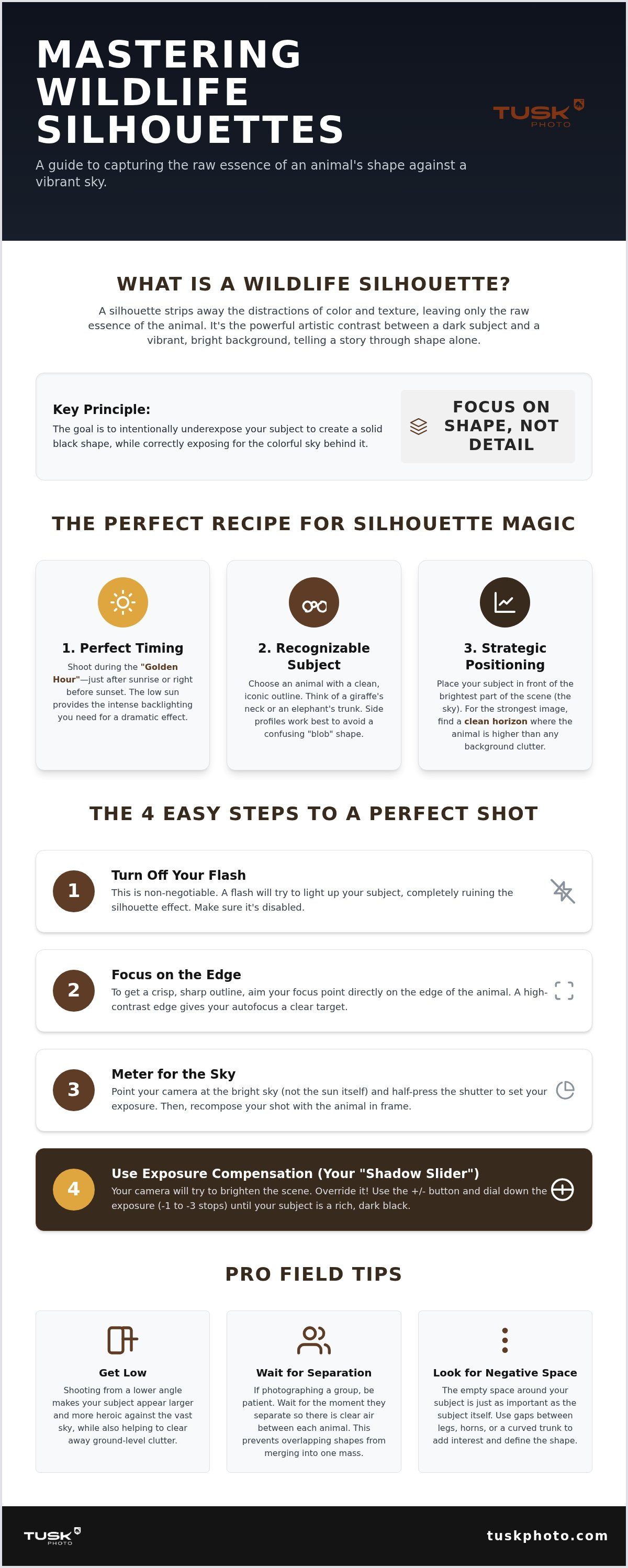
Learning how to photograph a wildlife silhouette doesn't have to be a technical headache. It is really just a series of simple moves that help your camera see what your eyes see. First, find a bright background, like the glowing horizon at dawn, and place your subject directly in front of it. This creates the high contrast you need. Next, make sure your flash is turned off. You want the animal to be a dark shadow, and a flash will ruin that effect by lighting up the details you're trying to hide.
The real magic happens when you focus on the animal but "trick" your camera into seeing the scene differently. Most modern cameras try to brighten up dark areas, which makes a silhouette look gray and washed out. To fix this, use the Exposure Compensation button. It is the little plus/minus sign on your camera body. Press it and move the setting toward the minus side. This tells the camera to darken the image, turning your subject into a crisp, black outline against the vibrant sky.
Think of Exposure Compensation as your "Shadow Slider." It is your most important tool for this style of photography. By sliding it toward the minus, you take control of the light. The best part? You don't need a $10,000 lens to get this right. Even a basic kit lens works beautifully because silhouettes rely on shapes and light rather than extreme zoom or expensive glass. If you're looking for more ways to improve your shots, check out these wildlife photography tips for beginners.
A great silhouette needs a crisp edge to look professional. Focus specifically on the edge of the animal, like the top of a lion's mane or the curve of a bird's wing. If the animal is moving, use a slightly higher shutter speed to avoid any blur. This ensures the shape remains sharp and recognizable. On our Scheduled Tours, our experts provide hands-on coaching to help you nail these settings in the moment, ensuring you never miss a beat when the light is perfect.
On a safari, getting the perfect shot often depends on where you are standing, or rather, where your vehicle is parked. Our expert guides help you find the perfect ridge line for a sunset silhouette by anticipating where the animal will move next. This careful positioning ensures you are aligned perfectly with the sun, which is the most critical step when learning how to photograph a wildlife silhouette in the wild. It is about being in the right place before the light reaches its peak.
Always look for a "Clean Horizon." This means you want your subject to be higher than anything in the background, ideally cresting a hill or standing on a ridge. If the animal is on level ground with trees or bushes behind it, the shapes will blend together and lose their impact. Similarly, if you are photographing a group of animals, patience is your best tool. Wait for them to separate so there is clear air between each individual. You want to avoid overlapping shapes that turn a majestic herd into one confusing mass.
Changing your height can completely transform the mood of your photo. By getting as low as possible, even down to the floor of the vehicle, the animal appears much larger and more heroic against the vast sky. This simple shift in perspective is a staple technique we practice on our tailor-made photography safaris. It allows you to clear away ground-level clutter and place your subject entirely against the colorful canvas of the sky.
Don't pack your gear away just because the sun has dipped below the horizon. The "Blue Hour" provides a soft, cool glow that is perfect for capturing peaceful and moody images. While you still need to underexpose the scene, the colors will shift from fiery oranges to deep indigos and violets. These late-day shots often feel more intimate and quiet, offering a beautiful, sophisticated end to your portfolio's story.
Capturing a perfect silhouette is about more than just settings; it's about learning to see the world in bold shapes and vibrant shadows. You now have the tools to identify the right subjects, simplify your camera's exposure, and find those clean horizon lines that make an image pop. Knowing how to photograph a wildlife silhouette is a skill that will stay with you for a lifetime, turning every sunset into a new creative opportunity.
While the theory is simple, nothing compares to practicing these techniques in the world's most iconic wildlife destinations. Our expeditions are led by award-winning photography hosts who provide personalized field coaching in small groups, ensuring you get the maximum amount of time behind the lens. We focus on immersive experiences that help you move beyond the basics and start creating wall-worthy art.
Ready to capture your own masterpieces? Explore our 2026 Tour Dates
The wild is waiting for you to tell its story through light and shadow. Grab your camera, head out into the field, and enjoy the thrill of discovering your next great shot.
You don't need expensive professional gear to achieve stunning results. Since this technique relies on light and shape rather than fine detail, even a basic DSLR or a modern smartphone can work beautifully. The key is having a device that allows you to adjust exposure settings manually or through a simple slider. Focus on your composition and let the natural light do the heavy lifting.
The best animals are those with iconic, easily recognizable outlines that stand out from a distance. Giraffes with their long necks, elephants with their trunks, or an oryx with its sharp, straight horns are perfect choices. When learning how to photograph a wildlife silhouette, look for a subject that clearly communicates its identity through its shape alone. This ensures the final image feels intentional and powerful.
Your silhouette is likely coming out grey because your camera is trying to fix the dark areas by adding light. It sees the shadow and assumes it's an underexposed part of the photo that needs brightening. To achieve a deep, ink-black look, use your exposure compensation button and move it toward the minus side. This overrides the camera's automatic settings and ensures the subject remains a true shadow.
It's much harder to capture a silhouette on a cloudy day because you need a strong, bright light source directly behind your subject. A thick, grey sky often lacks the necessary contrast to turn the foreground into a dark shadow. However, if the sun breaks through the clouds at sunset, you can get incredible, moody results. Mastering how to photograph a wildlife silhouette usually requires that direct, low-angle light found during the golden hour.


