
Mashatu Photo Safari Guide: Botswana's Best Tours
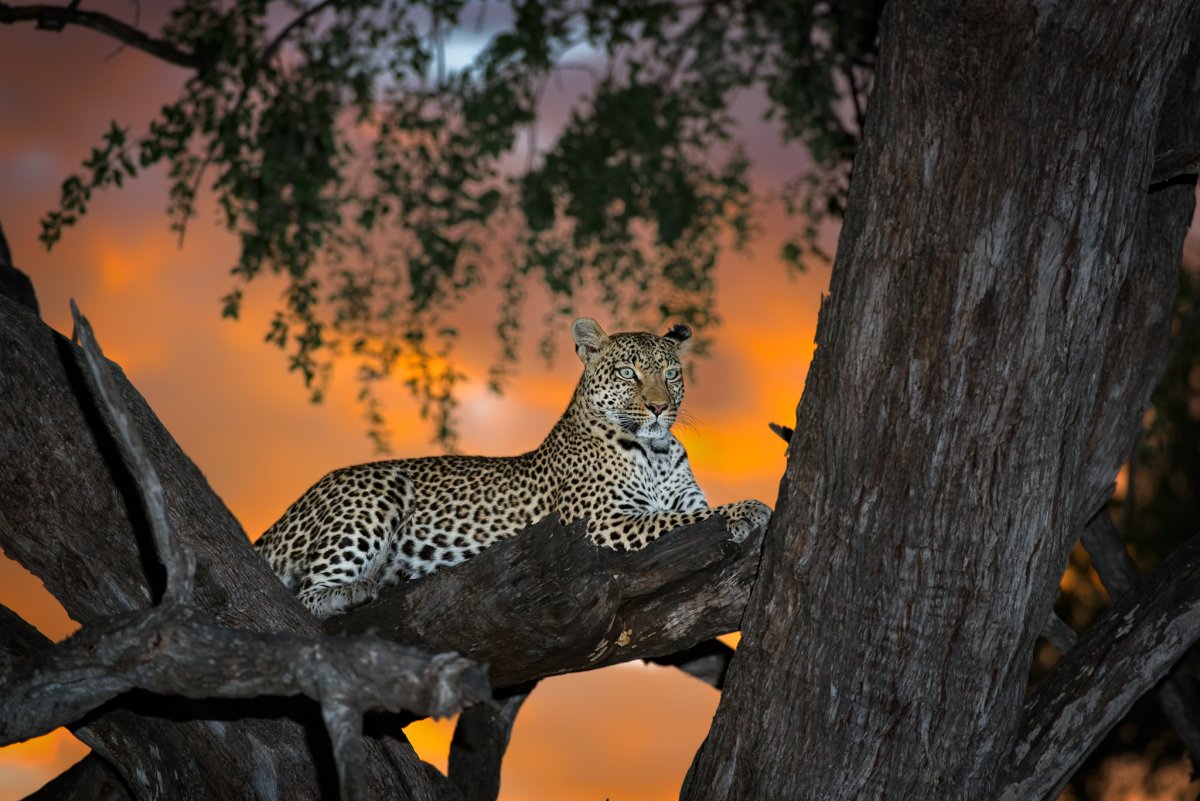

Eight nights at Mashatu can include two different camp stays. One June 2025 Mashatu photo safari split the trip evenly: four nights at Tuli Safari Lodge Mashatu and four at Mashatu Lodge.
That gives you more than one base from which to explore the reserve’s photographic settings. The waterhole hide also offers a quieter way to photograph wildlife as it comes to drink.
If you’re considering a trip, the details matter: where you’ll spend time, what to expect at the hide, and how the itinerary is arranged. This guide explores Mashatu’s photographic habitats, describes the waterhole hide, and outlines an eight-night safari example so you can picture the experience before choosing a journey.
Mashatu Game Reserve is situated in the Tuli Game Reserve, in southeastern Botswana. Its photographic appeal includes wildlife and rich birdlife, with more than 350 bird species recorded in the reserve. A waterhole adds a distinct setting: animals gather there to drink, creating opportunities for close observation.
Getting to Mashatu depends on your starting point and itinerary, which shape the transfer arrangements. The reserve’s location in southeastern Botswana is the key detail when planning the journey. Mashatu safari itineraries place the reserve within the wider trip plan.
Photo vehicles aren’t a source of camera equipment, so plan to bring the kit you want to use. A versatile setup can include a 24-120 mm or 24-105 mm lens, while a 70-200 mm lens covers mid-range subjects. Longer lenses above 200 mm can help frame distant wildlife. At the hide, a 15-35 mm wide-angle lens can capture the waterhole setting.
Vehicle capacity and private-vehicle arrangements depend on the specific safari. For example, the Mashatu Exclusive Photo Safari with Isak Pretorius has a maximum group size of four. That limit applies to this safari, not every Mashatu vehicle.
Season affects photographic conditions. December to March is the rainy season, while June to October is the dry season. Choose based on the scenes you hope to photograph: in the dry season, wildlife gathers at waterholes to drink, while rainy-season conditions offer a different landscape. For softer light, plan photography for early morning or late afternoon.
Mashatu’s photographic hide sits beside a waterhole where wildlife comes to drink. From this fixed viewpoint, you can observe animals approaching, drinking, and leaving. One visit may bring a single animal; another may reveal several sharing the water. Patience and careful framing help you make the most of this changing activity.
The hide is mainly bookable during the winter months, from April to November. It closes from December 1 and reopens on March 1. Those dates shape trip planning. During the closure, hide sessions aren’t part of the itinerary. In open months, plan time around waterhole photography.
Observe before raising your camera. Notice where animals enter, how they turn, and whether others follow. Then choose a frame that shows the waterhole setting or isolates an animal at the edge. Watch for pauses between drinking and movement, when natural behavior may be easier to capture. As the light changes, so do contrast and background, so keep reviewing the scene rather than relying on a single composition.
A Mashatu photo safari with hide time adds a slower rhythm to wildlife viewing. To shape a trip around photographic priorities, explore custom Mashatu journeys. That planning can make the hide one part of a wider photography itinerary.
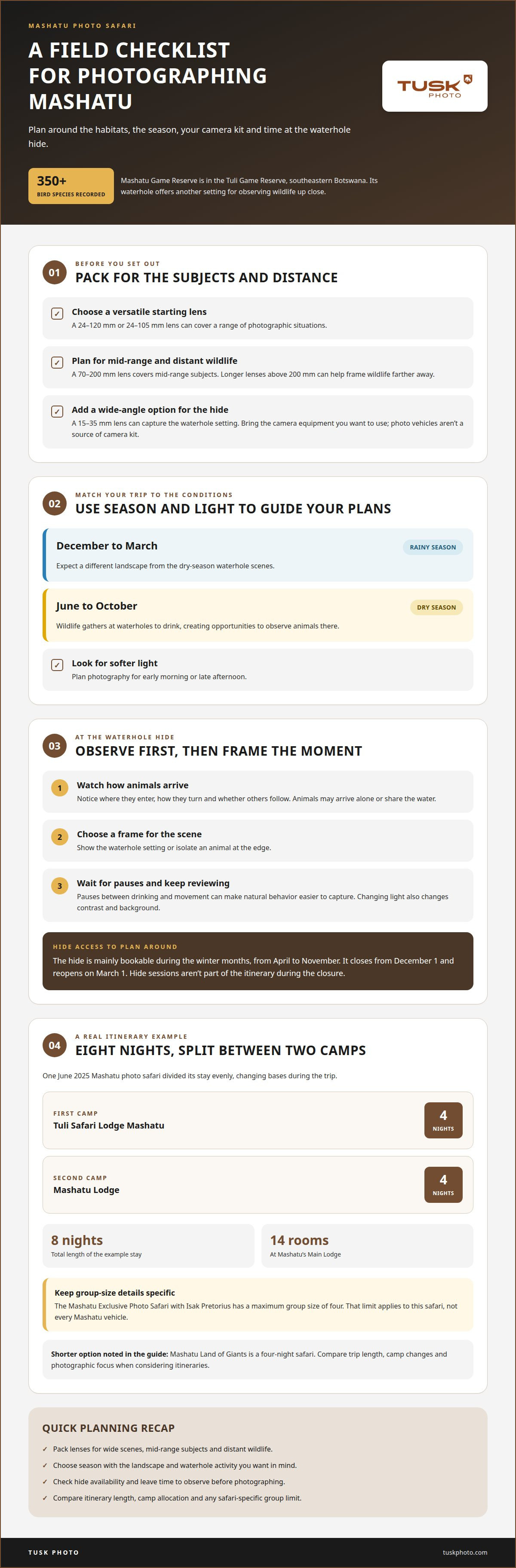
A June 2025 Mashatu photo safari shows how an eight-night stay can work. The itinerary split nights evenly between two camps: four at Tuli Safari Lodge Mashatu and four at Mashatu Lodge. That means changing bases during the trip, rather than spending all eight nights at one camp.
Mashatu’s Main Lodge has 14 rooms. The eight-night example names Mashatu Lodge and Tuli Safari Lodge Mashatu, giving photographers two places to stay. To compare it with other Botswana photography safaris, consider trip length, camp changes, and photographic focus. Here, the defining detail is the two-camp split.
Age limits and safety arrangements can differ by camp and activity. Follow your guide’s directions during wildlife outings and respect boundaries around animals. Accommodation and activity details in the itinerary determine what applies at each stay.
For a shorter alternative, the Mashatu Land of Giants itinerary is a four-night safari. The eight-night example offers a longer stay with two camps, while the right choice depends on how much time you want at each base. Booking follows the selected itinerary and departure; cancellation terms relate to that booking, not simply its length. Explore Mashatu departure dates to compare itinerary timing and structure.
The June 2025 Mashatu photo safari lasted 8 nights, with the 8 nights split equally between two camps. The itinerary included 4 nights at Tuli Safari Lodge Mashatu and 4 nights at Mashatu Lodge. Together, those allocations describe the full stay and make the camp change part of the itinerary’s structure. When comparing options, the length of the stay and the nights assigned to each camp can be considered alongside the departure details.
Its schedule and starting price provide another Mashatu photo-safari option to consider alongside the June 2025 itinerary. The two offerings can be compared by their stated dates, trip length, camp allocation, and listed price, without assuming that their arrangements are the same.
Tusk Photo helps photographers plan wildlife photography expeditions around their interests and preferred travel style. Experienced guides support photographic opportunities for beginners and seasoned professionals, while the itinerary shapes the journey. If you want to combine Mashatu’s habitats and waterhole viewing with a wider wildlife photography trip, explore Tusk Photo’s scheduled, tailor-made, and on-demand tour options.
Choose among Scheduled Tours, Tailor Made Tours, and On Demand Tours based on how you want to plan. A scheduled departure suits travelers whose dates fit an existing itinerary. A tailor-made journey can reflect specific photographic priorities, while an on-demand tour offers a flexible way to plan a wildlife photography trip.
Before deciding, consider what matters most: time at Mashatu, other wildlife destinations, your preferred pace, and whether you want a scheduled departure or a more individual plan. These priorities can help you connect the reserve’s waterhole hide, varied habitats, and camp stays with the wider journey you have in mind.
Tusk Photo can help you consider how Mashatu fits into a photographic expedition, whether you’re focused on one reserve or a broader itinerary. Share your destination, travel style, and photographic priorities to shape a conversation about the right tour format. Each option offers a different way to plan a journey around your interests.
To discuss a Mashatu photography journey, contact Tusk Photo.
The right Mashatu photo safari starts with your priorities: the wildlife you hope to photograph, the pace you enjoy, and how much structure you want in your plans. Clarify these before choosing a journey. They can guide decisions about the itinerary and the experience you want from your time in the reserve.
Tusk Photo offers Scheduled Tours, Tailor Made Tours, and On Demand Tours, giving you different ways to plan a wildlife photography journey. A set departure, a more personal itinerary, or an on-demand trip can suit different travel preferences.
If you’re ready to explore what could work for your plans, contact Tusk Photo about your safari. Start with the images and experiences you’re hoping to bring home, then take the next step toward a journey shaped around them.
Mashatu’s habitats offer varied photographic subjects, including birds and waterhole scenes. On a Mashatu photo safari, try a wide frame to place an animal in its setting, then move closer to capture behavior or detail. Take time to watch a scene develop before choosing the moment and framing that best tell its story.
Compare trip length, camp changes, and photographic focus. One eight-night example split the stay evenly between Tuli Safari Lodge Mashatu and Mashatu Lodge, with waterhole hide photography as one possible focus.
Age limits and safety arrangements vary by camp and activity. Follow your guide’s directions during wildlife outings and respect boundaries around animals.
The Mashatu Exclusive Photo Safari with Isak Pretorius has a maximum group size of four. Vehicle capacity and private-vehicle arrangements depend on the specific safari.


