
Learn About the Great Apes of Africa: A Simple Guide to Our Closest Relatives
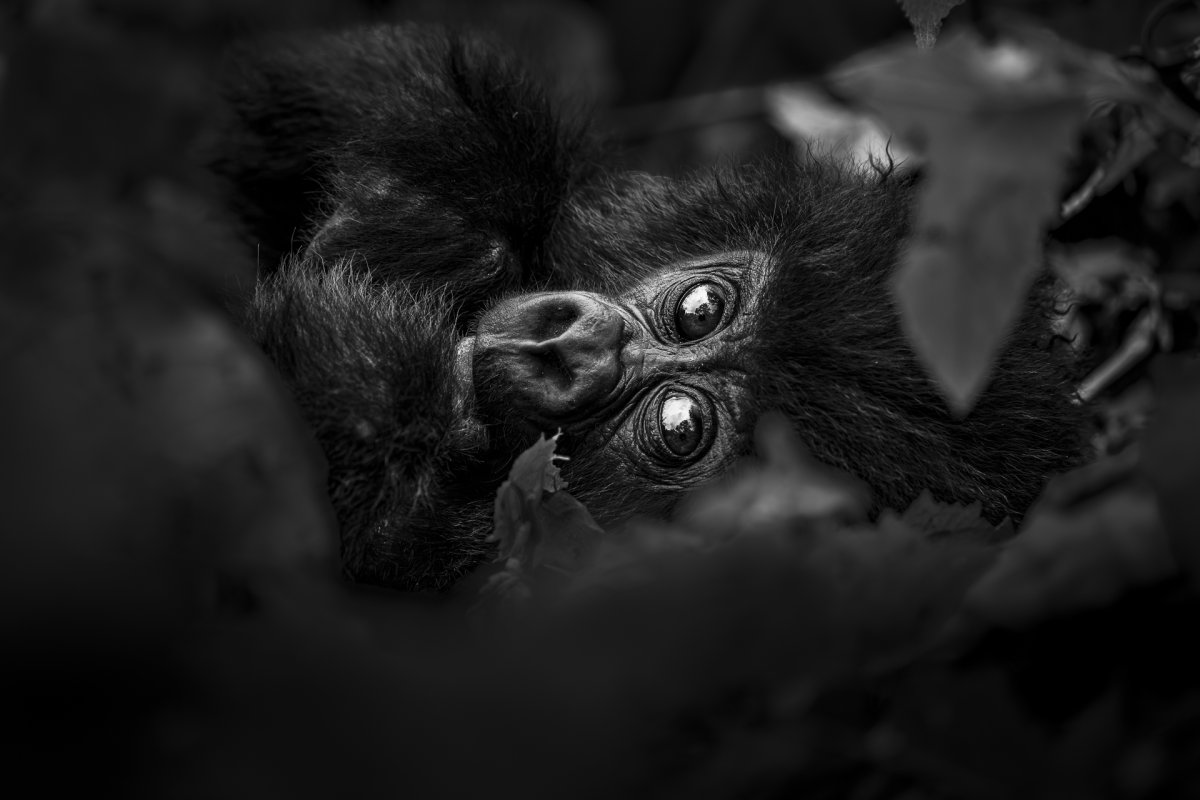

What if the key to understanding our own history was waiting for you in the heart of a tropical forest? Looking into the eyes of a creature that shares nearly 99 percent of your DNA is a moment that stays with you forever. To truly appreciate these animals, you first need to learn about The Great Apes of Africa without getting lost in confusing scientific terms. You likely already know that apes aren't just large monkeys, but it's easy to feel overwhelmed when trying to figure out which species lives where.
We want to make that journey of discovery simple and approachable. This guide identifies our four closest relatives and explains exactly where they live in the wild. You'll also find out how you can experience these gentle giants in person through a carefully planned, respectful tour that brings you closer to nature than ever before.
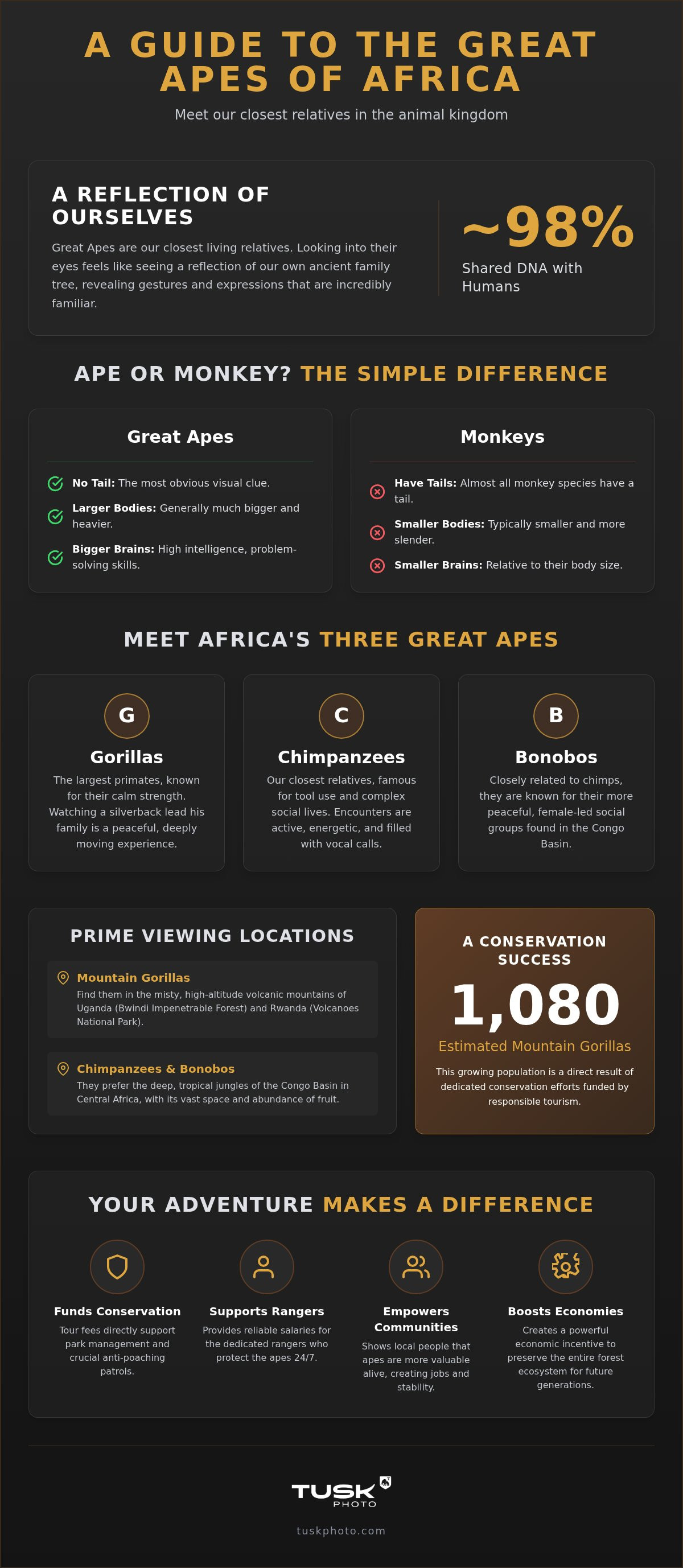
Meeting a Great Ape feels like seeing a reflection of ourselves. These incredible animals are our closest relatives in the animal kingdom. We share roughly 98 percent of our DNA with them, which explains why their gestures and expressions often feel so familiar. When you take the time to learn about The Great Apes of Africa, you're really discovering the story of our own ancient family tree.
There are four main types you should know when you learn about The Great Apes of Africa. This family includes Gorillas, Chimpanzees, Bonobos, and Orangutans, though Orangutans specifically live in Asia while the others are found across Africa. To put it simply, a Great Ape is a large, tail-less primate that possesses high intelligence.
It's a common mistake to use the words monkey and ape as if they mean the same thing. However, they are quite different groups of animals. The easiest trick to tell them apart is to look for a tail. Apes don't have tails, while almost all monkeys do. Apes also tend to be much larger and have bigger brains relative to their body size, which allows them to interact with the world in complex ways.
Beyond these physical traits, there is a special kind of wisdom in an ape's eyes. They solve problems, use tools, and express deep emotions in ways that feel very human. Seeing them in their natural home through one of our scheduled tours is the best way to witness this connection firsthand. Our expert guides help you understand these nuances without using complicated jargon, ensuring you feel comfortable and informed throughout your adventure.
Finding these magnificent animals takes you into some of the most beautiful landscapes on Earth. Most of Africa's Great Apes live in the lush, green forests of Central and East Africa. When you learn about The Great Apes of Africa, you'll discover that each species has its own favorite neighborhood. Mountain Gorillas are famous residents of the misty volcanic mountains in Uganda and Rwanda. They enjoy the cooler air at high altitudes where the forest is thick and verdant.
In contrast, Chimpanzees and Bonobos usually prefer the deep, tropical jungles of the Congo Basin. These areas are vast and provide plenty of fruit and space for their active social groups. While these locations might seem far away or difficult to reach, visiting them is easier than you might think with the right help. We act as your friendly mentors, taking care of the complicated logistics so you can enjoy a stress-free journey.
If you're planning a trip to learn about The Great Apes of Africa, two countries stand out as the top choices. Uganda’s Bwindi Impenetrable Forest is a legendary spot for seeing families of Mountain Gorillas. It's a place of incredible biodiversity where every hike feels like a true discovery. Rwanda offers a slightly different, high-end experience in the stunning Volcanoes National Park, where the scenery is just as breathtaking as the wildlife encounters themselves.
Both countries provide safe and well-managed trekking opportunities that directly support conservation. These efforts have helped the mountain gorilla population grow to an estimated 1,063 to 1,080 individuals as of 2025. For a deeper look at what to pack and how to prepare, check out The Ultimate Gorilla Trekking Photography Tour Guide. If you're ready to start your own journey, you can browse our scheduled tour dates to find the perfect time to go.
Sitting quietly near a gorilla family is a peaceful and deeply moving experience. There is a sense of calm that settles over the forest as you watch a silverback protect his group or see young ones playing in the leaves. When you learn about The Great Apes of Africa, you realize these moments are rare and precious. Chimpanzees offer a different kind of thrill. They are more active and vocal, making for an exciting and energetic encounter that often includes loud hooting calls echoing through the trees.
You might wonder how it's possible to get so close to wild animals. These groups are "habituated," which means they're used to people and stay calm during visits. This careful process takes years of patient work by experts to ensure the apes don't feel threatened by your presence. Being respectful and quiet is the key to a great visit. It allows the animals to behave naturally while you enjoy the privilege of being in their world.
Your journey does more than just fulfill a personal dream. Tourism provides the money needed to pay for dedicated rangers who keep the apes safe from poachers. These professionals work around the clock to protect the forest and its inhabitants from harm. When you visit, you are showing local communities that these animals are worth more alive than not. This creates a powerful incentive for conservation that protects the entire ecosystem.
We pride ourselves on being your friendly mentors through these sensitive environments. If you want to learn about The Great Apes of Africa firsthand, we handle all the logistics to ensure a respectful and immersive experience. You can check out our scheduled tours or see our upcoming tour dates to start your own journey today.
You've discovered how to tell apes and monkeys apart and where these incredible creatures live in the wild. When you learn about The Great Apes of Africa, you start to see the natural world through a different lens. Whether it's the quiet strength of a mountain gorilla or the lively energy of a chimpanzee, these encounters change you. We make this dream a reality with small groups that ensure a personal feel. Our trips are led by award-winning photography hosts and include expert local trackers who know these forests best. It's time to step away from the screen. See these gentle giants for yourself. The forest is waiting, and we'd love to help you find your way there.
Start your Great Ape adventure by browsing our 2026 tour dates
The four main types of great apes are gorillas, chimpanzees, bonobos, and orangutans. While orangutans live in Asia, the other three call Africa home. You'll find mountain gorillas in the high volcanic forests of Rwanda and Uganda. Chimps and bonobos prefer the lush jungle basins of Central Africa. When you learn about The Great Apes of Africa, you'll see how each one is unique.
Yes, it's very safe because the groups you visit are habituated to human presence. This means they've spent years getting used to people. They don't see us as a threat. You'll always be with expert local trackers who understand their behavior perfectly. As long as you follow the simple rules and stay quiet, these gentle giants will just carry on with their daily lives.
The best time to visit is usually during the dry seasons from June to September or December to February. During these months, the forest trails are easier to navigate. There's also less rain to deal with. Since they live in tropical forests, you should expect some moisture year-round. These drier windows offer the most comfortable conditions for a day of trekking.
You don't need any professional experience or fancy gear to join our tours. We welcome everyone. You can learn about The Great Apes of Africa and capture great memories regardless of your skill level. Our award-winning photography hosts are there to help you, whether you're using a high-end camera or a simple phone. We keep our groups small for a personal feel.


