
Kruger National Park Photo Safari Extension: Maximize Your 2026 Adventure

What if the most impactful part of your 2026 African adventure happens after your main tour ends? Many photographers worry that adding a short Kruger National Park photo safari extension won't leave enough time to capture truly professional shots. You might feel stressed about the logistics of moving between regions or confused by the differences between the public park and private reserves like the Sabi Sands. It's a common concern, especially when you want every minute in the field to count toward your portfolio.
We're here to show you that adding a world-class photography experience to your journey is much easier than you think. By choosing a plan that fits your specific schedule, you can move from your main trip into the heart of big cat country without any of the typical travel headaches. In this article, we'll explain how to bridge the gap between locations and why expert guidance is the secret to finding elusive species like leopards. You'll learn how to maximize your time in the bush so that even a brief extension feels like a deep immersion into the wild.
Kruger isn't just another stop on a map. It's the perfect way to wrap up a trip. This region offers some of the most reliable wildlife sightings in Africa, making it a safe bet for shorter visits. If you've spent your main tour looking for a specific animal without luck, this is your chance to find it. The park is home to an incredible variety of species, including approximately 1,000 leopards and 17,000 elephants as of late 2025. It's a high density environment where something is always happening.
The atmosphere here is also unique for your lens. The "Lowveld" light creates a warm, golden glow that differs from the vast, open plains of East Africa. This soft light helps you capture textures and colors that give your photos a professional, polished look. Plus, getting there is simple. You can catch a quick domestic flight from major hubs like Johannesburg or Cape Town and be in the bush by lunchtime. It's a low stress way to add a lot of value to your journey.
Think of a three to four day Kruger National Park photo safari extension as the final piece of your creative puzzle. It's all about filling the gaps in your wildlife collection. For many photographers, this means focusing on specific targets like the famous leopards of the Sabi Sands. While these cats are usually quite shy, the ones in this area are often more relaxed around vehicles. This gives you the time and space to work on your composition and capture that perfect, close up shot that might have been missing from your portfolio.
Moving between different regions can feel overwhelming, but we've made it simple. In 2026, travel into the park is more streamlined than ever. You can fly directly into smaller airports like Skukuza or Hoedspruit to save time. Our Tailor Made Tours are designed to handle these transitions for you. We manage the timing and transport so you can stay focused on your camera. Whether you choose a custom schedule or one of our On Demand Tours, we make sure the jump from your main trip to the park is smooth and easy.
Choosing where to spend your time is the most important decision you'll make for your Kruger National Park photo safari extension. While the main park is beautiful and offers stunning landscapes, it has strict rules. You must stay on the tarred or gravel roads at all times. This can be frustrating when a lion is resting just behind a thicket, out of sight. You're stuck on the road, unable to get the angle you need for a clean shot.
Private reserves in the Greater Kruger area offer a different experience. Here, guides can drive off-road to follow animals through the bush. This access is the single biggest factor for a successful photo trip. It allows you to get the right angle and the perfect light without a road in your way. You also get to experience night drives and walking safaris, which aren't typically allowed in the main park. These extra hours in the field can make the difference between a good trip and a great one.
The Sabi Sands is world-famous for its leopard sightings. These cats are usually hard to find, but here, the population is dense and the animals are remarkably relaxed around vehicles. It's a place where you can spend hours watching a single leopard as it hunts or rests. If you're serious about big cats, check out this Sabi Sands photography tour for more details on tracking them.
It might be tempting to rent a car and explore on your own, but we recommend avoiding this for a short extension. When you only have a few days, you can't afford to spend hours searching for wildlife. A professional photo host knows the territory and communicates with other rangers to find subjects quickly. They also help with camera settings and composition in the moment. Our Scheduled Tours ensure you spend your time taking photos, not looking at a map.
While we emphasize professional guiding for the bush, we recognize that some destinations are perfect for independent exploration; for those planning a trip to Hawaii, using a specialized service like Bext Oahu ensures you have a high-performance vehicle ready for any adventure.
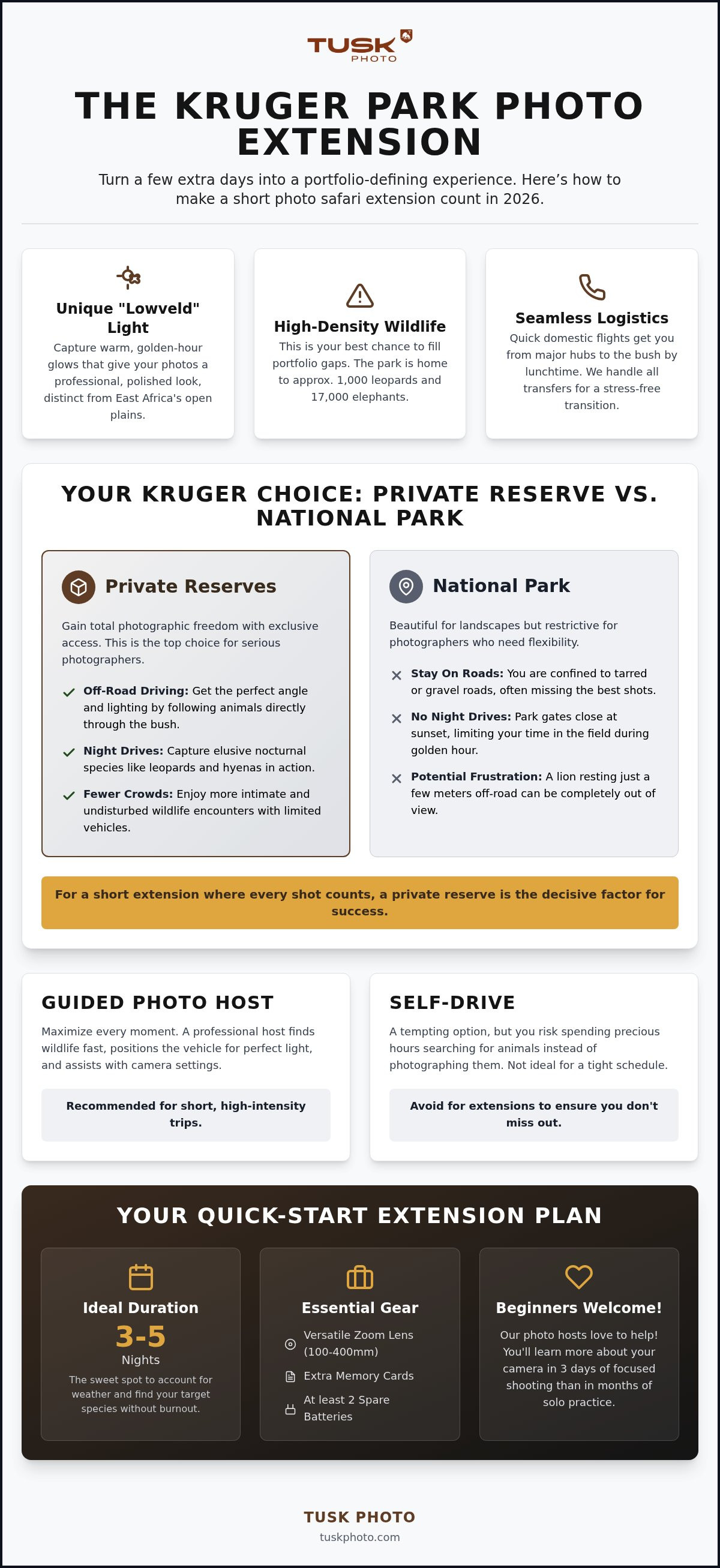
Building your dream trip doesn't have to be complicated. The best way to start is by looking into a tailor-made photography safari that fits your existing travel dates. Most photographers find that staying for 3 to 5 nights is the perfect "sweet spot." This timeframe is long enough to account for changing weather or quiet animal days, but short enough to keep your energy and focus high. If your schedule is tight, our on-demand photography expeditions offer the ultimate flexibility for your 2026 portfolio.
For a high-intensity Kruger National Park photo safari extension, your packing list should be lean and effective. Focus on a versatile zoom lens, like a 100-400mm or 200-600mm, which handles everything from close-up portraits to distant birds. Don't forget extra memory cards and at least two spare batteries. You'll be surprised how quickly you fill up storage when the action starts happening right next to your vehicle.
Our guides are seasoned experts who act as your personal photo hosts. They don't just find the animals; they position the vehicle to ensure you have the best possible light and background. They're also there to help with camera settings if you're struggling with a tricky scene. We love welcoming beginners on these trips. You'll likely learn more about your camera in three days of focused shooting than you would in months of solo practice. We make sure you feel confident and capable behind the lens from the very first drive.
Space at the top lodges in the Greater Kruger area is limited, especially for peak 2026 seasons. To get the best experience, we recommend booking as early as possible. This ensures you get the right lodge and the right guide for your specific goals. You can easily check our upcoming tour dates to see what fits your calendar. If you have a specific vision in mind, feel free to request a custom-tour, and we'll help you build the perfect extension to your African adventure.
Your 2026 African journey deserves a grand finale that brings your wildlife portfolio to life. By choosing a Kruger National Park photo safari extension, you're not just adding more days to your trip; you're giving yourself the best chance to capture world-class images. We've seen how specialized off-road access in private reserves changes the game. It's the secret to getting those clean, close-up shots of iconic species like leopards without a road in your way.
With over a decade of experience in African wildlife photography, we make every minute count. Every trip includes expert photography hosts who know exactly how to position the vehicle for the perfect light. Whether you're a seasoned pro or just starting out, we're here to guide you. It's your time to shine behind the lens.
Plan your custom Kruger extension with Tusk Photo today and get ready for an unforgettable experience in the bush. We can't wait to see the incredible images you'll create.
Three to five nights is the ideal length for a Kruger National Park photo safari extension. This timeframe gives you enough drives to find the Big Five and get used to the local light conditions without feeling rushed. It also provides a small buffer in case of bad weather or quiet wildlife activity during one of your sessions.
The dry winter months from May to September are excellent for visibility because the bush is thin and animals gather at waterholes. However, the summer months from October to March offer lush green backgrounds and migratory birds. If you visit during the summer, remember that park gates open earlier at 05:30 to help you catch the very first light of the day.
Yes, you can catch direct flights from Cape Town to airports like Skukuza or Hoedspruit. These flights usually take about two and a half hours and land you right near the main safari areas. Using these direct routes is the most efficient way to connect different parts of your South African journey without losing a full day to road travel. For help coordinating these logistics, Major Travel SA provides expert custom itinerary planning and comprehensive travel booking services.
You don't need a permit for casual, personal photography. However, a formal permit is required if you're filming for commercial purposes, using professional equipment like heavy tripods, or creating paid promotional content. Most guests on a Kruger National Park photo safari extension are shooting for personal portfolios and won't need to worry about this extra paperwork.


