
Immersive Wildlife Photography Experience: The Art of Deep Field Connection


What if the secret to a world-class portfolio isn't a longer lens, but the ability to become invisible within the landscape? Most photographers find themselves trapped in a cycle of generic snapshots, feeling rushed by standard tour groups that prioritize quantity over quality. You recognize the frustration of returning home with images that look exactly like everyone else's. It's a common hurdle, yet the most profound images are born from patience and a true immersive wildlife photography experience.
You're ready to transition from a casual observer to a master storyteller who understands the rhythm of the wild. This guide explores how to achieve that shift through refined fieldcraft and expert-led expeditions that prioritize your creative growth. We'll examine the technical mastery of harsh field conditions, the impact of recent regulatory changes like the EXPLORE Act on wilderness access, and the specific techniques used to forge a deep emotional connection with your subjects. Prepare to discover a path toward a portfolio-worthy collection that reflects the visceral reality of the natural world.
Article Summary
• Learn to transition from a passive observer to an active part of the natural narrative by prioritizing patient fieldcraft over the standard tourist checklist.
• Master the essential pillars of professional wildlife photography, including light-centric vehicle positioning and the visceral intimacy of low-angle perspectives.
• Understand how a true immersive wildlife photography experience bypasses common safari constraints, such as overcrowded vehicles that hinder technical execution.
• Identify the strategic advantages of Scheduled, Tailor Made, and On Demand Tours to align your next expedition with your specific artistic vision.
True immersion isn't found in a checklist. It's found in the stillness of a dawn patrol when the world is just waking up. A truly immersive wildlife photography experience requires a fundamental shift in perspective. You aren't just a visitor looking through a window; you're a participant in a living, breathing narrative. While standard safaris often favor a "drive-by" approach, racing from one sighting to the next to tick off a list, the patient methodology of an expedition operates on a different frequency. We call this quiet intensity. It is the ability to sit in silence, allowing the animal to accept your presence until its behavior becomes uninhibited and raw.
Capturing these authentic moments relies on more than just high-end gear. It requires a deep engagement with the sensory elements of the wilderness. Expert guides provide a "sixth sense" that elevates every session. They don't just find the animal; they read the wind, anticipate the light, and interpret the subtle cues of the bush. They hear the distant alarm call of a plover or smell the faint, copper scent of a kill on the breeze. In the world of Wildlife photography, these sensory details dictate whether you capture a generic snapshot or a masterpiece that resonates with visceral emotion.
Don't click the shutter immediately. The first five minutes of any encounter belong to observation. By watching how a subject moves, you begin to understand its temperament and anticipate the peak action moment before it happens. This patience allows you to capture the tension in a predator's shoulders or the tender bond between a mother and her cub. Photographic immersion is the precise intersection of deep biological knowledge and sharpened technical reflex.
Logistical friction is the enemy of creativity. When you're worried about seat rotation or a crowded vehicle, your focus isn't on the frame. Small group sizes are essential to maintaining a low environmental footprint and providing the physical space needed for long lenses. True immersion means staying with a single subject for hours, watching the light change and the story unfold. Whether you're on Scheduled Tours or bespoke Tailor Made Tours, the goal is to remove the noise of the modern world. This allows you to enter a flow state where the camera becomes an extension of your eye, and the wilderness becomes your only reality.
Fieldcraft is the bridge between witnessing a moment and immortalizing it as art. Within an immersive wildlife photography experience, the mastery of patience, position, and perspective becomes the defining factor of your portfolio. While a novice might prioritize proximity above all else, the seasoned artist understands that a subject’s distance is secondary to the quality of the light and the geometry of the frame. Positioning is a precise science. Our guides don't simply pull up to a sighting; they calculate the sun’s trajectory and the animal’s likely path to place the vehicle exactly where the light will illuminate the texture of fur or the glint in a predator's eye.
Perspective transforms the viewer’s relationship with the subject. Shooting from the roof of a vehicle creates a detached, clinical view. Conversely, dropping to eye level creates an immediate, visceral intimacy. This low-angle approach allows you to see the world as the animal sees it, fostering a sense of shared space. This commitment to ethical wildlife photography ensures that we achieve these intimate results without disturbing the natural behavior of the species we document. It's about being a ghost in the landscape, present but unnoticed.
Light is the photographer’s primary medium. During the golden hour, the low sun provides a warmth that softens the most chaotic scenes. However, true immersion means working through the challenges of the midday Savannah sun. We teach you to leverage harsh light by seeking high-contrast shadows or focusing on dramatic rim-lit silhouettes that emphasize form over detail. In the Arctic, we pivot to the "Blue Hour," where the ethereal, cool tones of the twilight create a hauntingly beautiful atmosphere that defines the region’s character.
A guide with a photographic eye is your most valuable asset in the field. They act as a tactical partner, communicating in whispers to adjust the vehicle’s angle by mere inches to clear a distracting branch. They anticipate movement before it happens, recognizing the subtle twitch of a leopard's tail that signals a hunt is imminent. This synergy is what allows you to learn how to capture sharp wildlife images on expedition even during the most frantic action.
Patience is the final pillar. The most extraordinary frames often materialize long after the standard tour groups have grown bored and moved on. By remaining on site, you witness the subtle transitions of the wild, from the tension of the hunt to the quiet grooming of a pride at rest. If you're looking for this level of depth, our Scheduled Tours provide the structure and expertise needed to elevate your craft. Technical mastery involves adapting to shifting conditions like swirling dust or the fading light of dusk, ensuring every frame remains technically sound and emotionally resonant.
Standard safaris often operate on a rigid schedule designed for the casual observer. For those seeking an immersive wildlife photography experience, this structure is a fundamental barrier. The casual tourist typically seeks a checklist, moving rapidly from one species to the next once a sighting is confirmed. In contrast, the photographer knows that the first glimpse is merely the beginning. You need the freedom to ignore the lodge's dinner bell when a leopard hunt begins to unfold in the fading light. This flexibility is the difference between a generic record and a masterpiece; it's the ability to prioritize the light over the itinerary. For those who appreciate bold, vibrant experiences both in the field and at the table, you can learn more about Tacoverse and their modern take on flavorful Tex-Mex.
Ethical considerations are paramount during these extended encounters. Immersion must never cross into animal harassment or unethical baiting. We adhere to strict standards of ethical bird photography and mammalian observation, ensuring our presence remains non-intrusive. We prioritize the welfare of the subject, understanding that authentic behavior only occurs when the animal feels secure. An immersive wildlife photography experience is defined by this respect, allowing you to capture the visceral reality of nature without leaving a footprint.
Equipment management is often the first casualty of a standard tour. Standard nine-seater vehicles are a logistical nightmare for anyone carrying long lenses and multiple bodies. We solve this by enforcing a strict "one person per row" policy. This guarantees 360-degree views and the physical space required to swing a 600mm lens without obstruction. Our vehicles are equipped with specialized beanbag supports, allowing for steady shots even in challenging terrain. This focus on logistical excellence is why Small Group Wildlife Photography Tours: Why Size Matters when building a professional-grade portfolio.
True growth happens in the field through real-time feedback. Our expeditions help you move beyond "Auto" mode, adjusting settings for shifting dust or high-contrast shadows on the fly. In the evenings, we gather for critique sessions to review the day's work. These sessions are not about finding faults; they are about refining your personal style. We look at composition, narrative, and technical execution to ensure your collection reflects a unique artistic voice. This mentorship transforms a trip into a significant life event, providing the tools to build a portfolio that stands apart from the generic crowds.
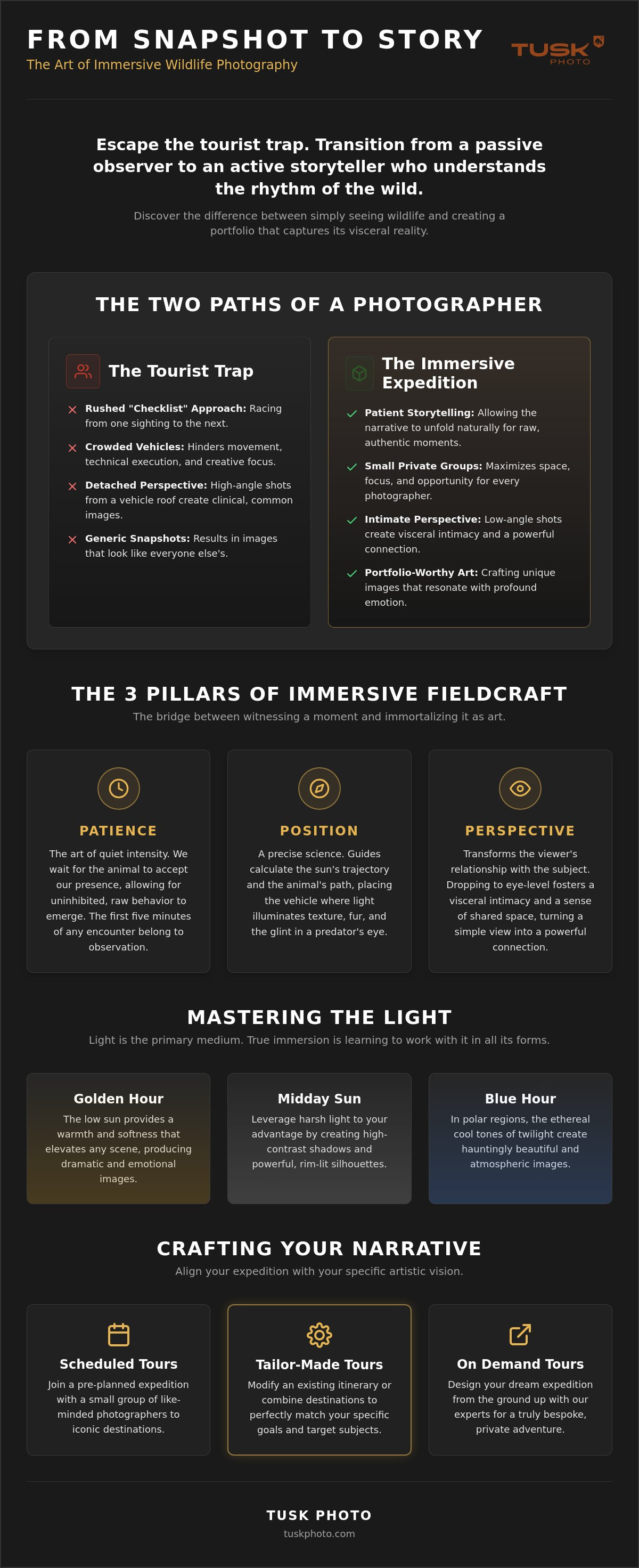
Chart your course toward the world's most evocative wildernesses. For the discerning photographer, the choice of destination is about more than species density; it is about the specific environmental conditions that facilitate a deep field connection. An immersive wildlife photography experience in the Okavango Delta, Botswana, provides a rare, water-level vantage point. Navigating these labyrinthine channels by boat allows you to witness predator-prey dynamics from a perspective that land-based vehicles simply cannot reach. This aquatic immersion reveals the visceral reality of the delta, from elephants crossing deep lagoons to leopards patrolling the riverine fringe.
In contrast, the Sabi Sands of South Africa remains the premier location for intimate leopard encounters. The habituated nature of the predators here, combined with the expert off-road capabilities of our guides, ensures you can stay with a single subject as it moves through its territory. To plan your timing perfectly, consult our Best African Photo Safari Tours: A Seasonal Guide to align your expedition with the most dramatic environmental shifts. Whether you seek the lush greens of the summer or the stark clarity of the dry season, the Sabi Sands offers unparalleled access to the world's most elusive big cat.
Witness the raw power of the Great Migration in the Maasai Mara. Capturing the chaos and scale of a river crossing requires intense focus and the ability to anticipate the lead wildebeest’s first plunge. For those seeking ground-level immersion, Mana Pools in Zimbabwe offers the unique opportunity of walking safaris. Here, you can sit on the earth and photograph the valley’s famous "standing" elephants from a truly humbling perspective. In 2026, the seasonal light of the Kalahari casts a profound, amber glow across the salt pans, transforming the arid landscape into a canvas of stark, minimalist beauty.
The Arctic Frontier presents a different set of technical challenges. Navigating the ice floes of Svalbard allows you to track the "Kings of the Ice" against a backdrop of crumbling glaciers and sapphire water. This changing climate demands a specialized approach to exposure and composition to reflect the fragility of the environment. In the humid jungles of India, we track the Bengal Tiger through ancient ruins, where the interplay of history and nature creates a hauntingly beautiful narrative. For a more minimalist aesthetic, the snow-covered landscapes of Hokkaido, Japan, offer the chance to capture the elegant dances of red-crowned cranes and the piercing gaze of Steller’s sea eagles. Explore our Scheduled Tours to secure your place in these rare environments.
The Pantanal of Brazil provides the most reliable immersion into the world of the Jaguar. Unlike the dense rainforests elsewhere, the open riverbanks of the Pantanal allow for clear, unobstructed views of these powerful cats as they hunt caiman along the water’s edge. Each of these destinations is selected for its ability to provide high-level curation and exclusive access, ensuring your journey is a significant life event rather than a mere activity.
Beyond temporary expeditions, some enthusiasts choose to secure their own private piece of the wild. If you're looking for land that offers a permanent connection to nature, Coulee Land Company specializes in property sales across Western Wisconsin, helping you find the perfect backdrop for your photographic pursuits.
Choosing the right structure for your journey is as vital as the glass in your camera bag. An immersive wildlife photography experience is never a generic affair; it's a deliberate alignment of your artistic goals with the realities of the field. Scheduled Tours offer a refined entry into this world. You join a tribe of like-minded enthusiasts, following proven itineraries that have been honed over years of field expertise. It's an environment of shared discovery, where the passion of your peers often fuels your own creative fire. These departures are ideal for those who value a structured path led by a master of the craft.
If your portfolio requires a narrower focus, Tailor-Made Journeys offer a bespoke alternative. These are designed for the photographer with a singular mission, perhaps a specific species or a unique environmental phenomenon. On-Demand Expeditions provide the highest level of logistical agility. They are built for those who wish to chase the unpredictable, such as a sudden shift in predator activity or a rare atmospheric event. Choosing between these formats depends on your technical maturity and the specific gaps in your current body of work. Each path is a commitment to quality over quantity, ensuring you return with more than just a record of a trip.
The luxury of time is the greatest gift a photographer can receive. A custom itinerary facilitates "Slow Photography," a methodology that rejects the frantic pace of traditional tourism. You have the freedom to stay at a single waterhole for three days, watching the light cycle and waiting for the exact moment of tension. There's no pressure to move on because a group has grown restless. This allows for a deeper study of behavior and a more nuanced understanding of the environment. Discover how Tailor Made Tours: Your Bespoke Photography Journey can transform your creative process into a steady, methodical progression toward art.
Preparation is the silent partner of luck. As you look toward your 2026 expedition, mental fortitude is as important as physical stamina. You must embrace the unpredictability of the wild, setting realistic expectations for encounters that are earned, not guaranteed. Nature operates on its own clock. Physical readiness ensures you can handle the rigors of the terrain, whether it's the intense heat of the Kalahari or the uneven ground of a walking safari in Mana Pools. When you're prepared, the camera becomes a natural extension of your intent, and the logistical noise of travel fades into the background. The path to your next great image is clear. View our 2026 Scheduled Departures and take the first step toward a profound, lasting connection with the natural world.
True artistry in the field is born from the intersection of technical discipline and a profound respect for the wild. You've learned how the shift from passive sightseeing to active storytelling transforms a simple image into a visceral record of life. By mastering the pillars of positioning and perspective, and by prioritizing the quiet intensity of the moment over the rigid schedules of standard tours, you unlock a level of creativity that few ever reach. An immersive wildlife photography experience isn't just a journey; it's a commitment to your craft and a tribute to the subjects you document.
We invite you to join an elite community of photographers who demand more from their time in the wilderness. Our expeditions are led by award-winning professional hosts who act as both logistical partners and creative mentors. With our exclusive 1-person-per-row vehicle policy and access to 15+ premier wildlife destinations globally, we ensure you have the physical space and the expert guidance needed to capture the extraordinary. Explore our 2026 Wildlife Photography Expeditions and discover the difference that deep field connection makes. The wilderness is waiting for your unique perspective. It's time to capture it with soul and precision.
An immersive journey prioritizes the quality of light and the depth of animal behavior over a simple checklist of sightings. Unlike standard safaris that move quickly between different animals, these expeditions involve sitting with a single subject for extended periods. This patience allows you to witness authentic narratives and subtle interactions that casual tourists often miss. It's about becoming a quiet part of the environment rather than just observing it from the periphery.
You don't need the latest flagship camera to benefit from an immersive wildlife photography experience. While high-end telephoto lenses are helpful for specific reach, our focus is on teaching you how to maximize the potential of your current kit. We emphasize composition, fieldcraft, and the nuances of light, which are skills that transcend equipment. Many participants find that their storytelling improves significantly regardless of the specific gear they carry in their bag.
We maximize your field time by selecting camps located within or very near prime wildlife areas to minimize transit. Most of your day is spent behind the lens, often starting before dawn and ending after the last light of dusk. We prioritize the Golden Hour and Blue Hour for active shooting, ensuring that travel between sites occurs during the harsh midday sun. This approach keeps the focus on creative output rather than logistical movement.
Beginners are welcome and often find these expeditions are the fastest way to accelerate their technical and creative learning. Our professional hosts provide real-time mentorship in the bush, helping you move away from automatic settings and toward intentional manual control. Because group sizes are small, you receive personalized attention tailored to your specific skill level. Whether you're a novice or a seasoned pro, the goal is to refine your unique artistic voice.
Our standard expeditions typically limit group sizes to ensure every photographer has ample physical space and dedicated time with the guide. We strictly enforce a one-person-per-row policy in our vehicles, which usually means no more than three or four photographers per vehicle. This configuration is essential for gear access and unobstructed 360-degree views, allowing everyone to capture the action without compromise or physical obstruction from other participants.
Most of our tours are vehicle-based and aren't excessively demanding, though some destinations may involve light walking or boat transfers. We cater to photographers of all ages and fitness levels, ensuring that logistical arrangements are both comfortable and safe. If an itinerary involves more strenuous activity, such as a walking safari in Mana Pools, we clearly outline these requirements in the pre-trip briefing so you can prepare for the terrain accordingly.
While wildlife is unpredictable, our guides use their deep field expertise and biological knowledge to maximize the probability of every sighting. If a specific subject is elusive, we pivot our focus to other compelling narratives unfolding within the ecosystem. The wild always offers something extraordinary. Part of the immersive wildlife photography experience is learning to appreciate and document the unexpected beauty of the natural world as it happens, rather than forcing a specific result.
Expert guides act as creative facilitators by positioning the vehicle for optimal light and anticipating animal movement before it happens. They provide technical advice on settings and composition while you're in the heat of the moment. In the evenings, they lead image review sessions to analyze your work, providing the professional feedback necessary to turn good shots into portfolio-worthy art. This mentorship ensures you grow technically and artistically throughout the journey.


