
How to Photograph Moving Animals: Expert Wildlife Tips
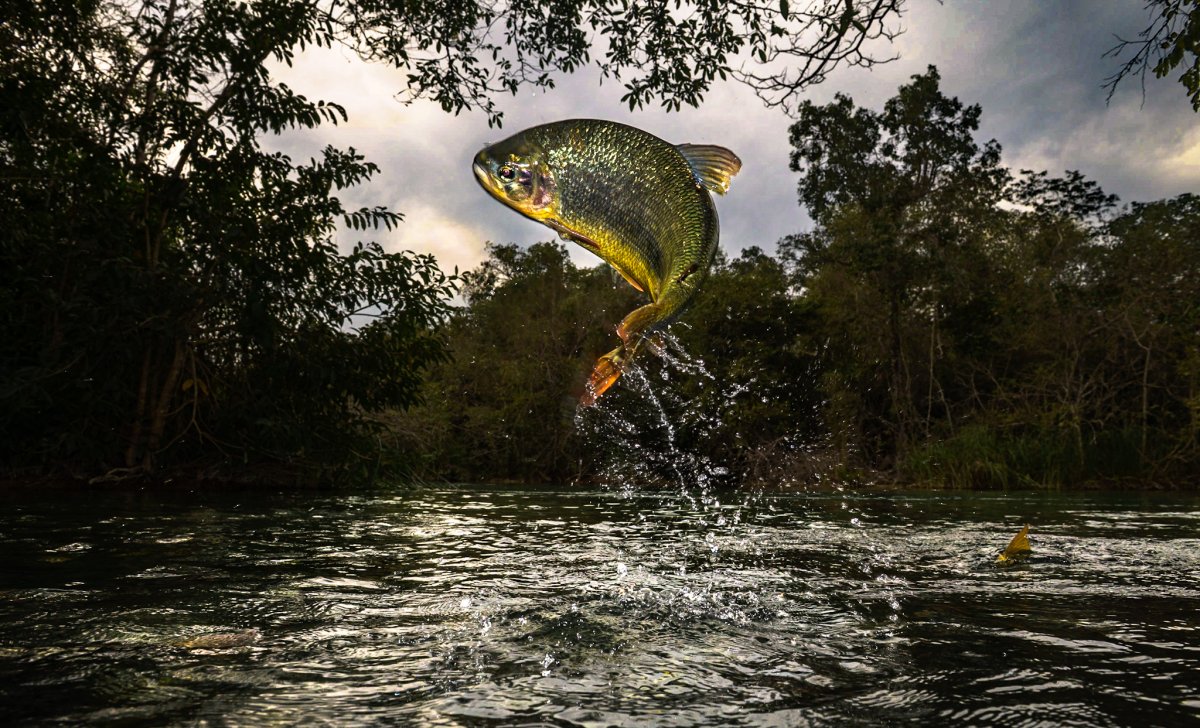

Imagine a leopard leaping from a branch, its muscles tensed and eyes locked on a target. You press the shutter, heart racing, only to find a smudge of yellow where a masterpiece should be. It's a common frustration for every nature lover. Learning how to photograph moving animals often feels like a race against time. You aren't alone if you've felt overwhelmed by complex menus or missed a shot because your focus was a second too slow.
The wild doesn't offer second chances. This guide will turn those blurry frustrations into sharp, professional images by sharing the secrets used on our Scheduled Tours. We'll walk you through essential settings for action, explain how to master autofocus, and show you how to read animal behavior to anticipate the perfect moment. You'll soon have the confidence to capture the thrill of the wild with total clarity.
Capturing the wild requires more than just luck. Most photographers struggle because of two main issues: motion blur and missed focus. Motion blur happens when your shutter stays open too long, turning a running cheetah into a streak of light. Missed focus is different. It happens when your camera locks onto the background instead of the subject. Using "Auto" mode usually causes these problems because the camera doesn't understand the sudden speed of a bird in flight. It tries to balance the light rather than prioritizing the action. To truly master how to photograph moving animals, you need to be in the "ready position." This means having your technical settings dialed in before the animal even enters the frame.
Learning to control your gear is the first step toward professional results. On a Tusk Photo Scheduled Tour, our guides act as mentors to help you master these three pillars of action photography in real time:
Treat 1/1000th of a second as your baseline. It's fast enough to freeze most movement, ensuring every feather or hair remains crisp. For very fast birds, you might even push this to 1/2500th.
Switch your camera to AF-C or AI Servo mode. This setting allows the lens to track the animal constantly as it moves across the landscape, maintaining a sharp lock on the eyes.
High-speed shooting is vital. Many modern mirrorless cameras can hit 15 to 20 frames per second. Capturing a quick series of shots significantly increases your chances of finding that one perfect, mid-air pose.
By preparing your camera early, you can focus on the artistic side of the shot. This disciplined approach is the secret to mastering how to photograph moving animals, ensuring you are ready when nature finally delivers its most spectacular moments.
Mastering how to photograph moving animals requires a shift from reacting to predicting. Expert photographers watch for "the tell" in an animal's behavior. For example, a raptor will often lean forward or look intensely at a specific spot just before taking flight. By recognizing these subtle cues, you can start your burst just as the action explodes. It's about being proactive rather than chasing the moment after it has already passed.
Positioning is equally vital. Try to place yourself so the light is behind you, illuminating the animal's face, while predicting its likely path. If a lion is walking toward a watering hole, don't just focus on where it is now; focus on where it will be in ten seconds. For a sense of dynamic speed, try panning. Move your camera at the exact same speed as the animal while using a slightly slower shutter speed. This keeps the eye sharp while the background blurs into beautiful, horizontal streaks that convey a sense of power.
Perspective changes everything. Getting low to the ground, often at the animal's eye level, creates an intimate connection that feels far more professional than looking down from a high seat. A clean background is also essential to make your subject stand out. Move your body slightly to ensure there aren't distracting branches or bright spots behind your subject. Always remember to leave negative space, which is the breathing room an animal needs to move into within your frame. Developing this artistic "eye" is a core part of the experience on a Tusk Photo Scheduled Tour, where our mentors help you see the shot before you even press the button.
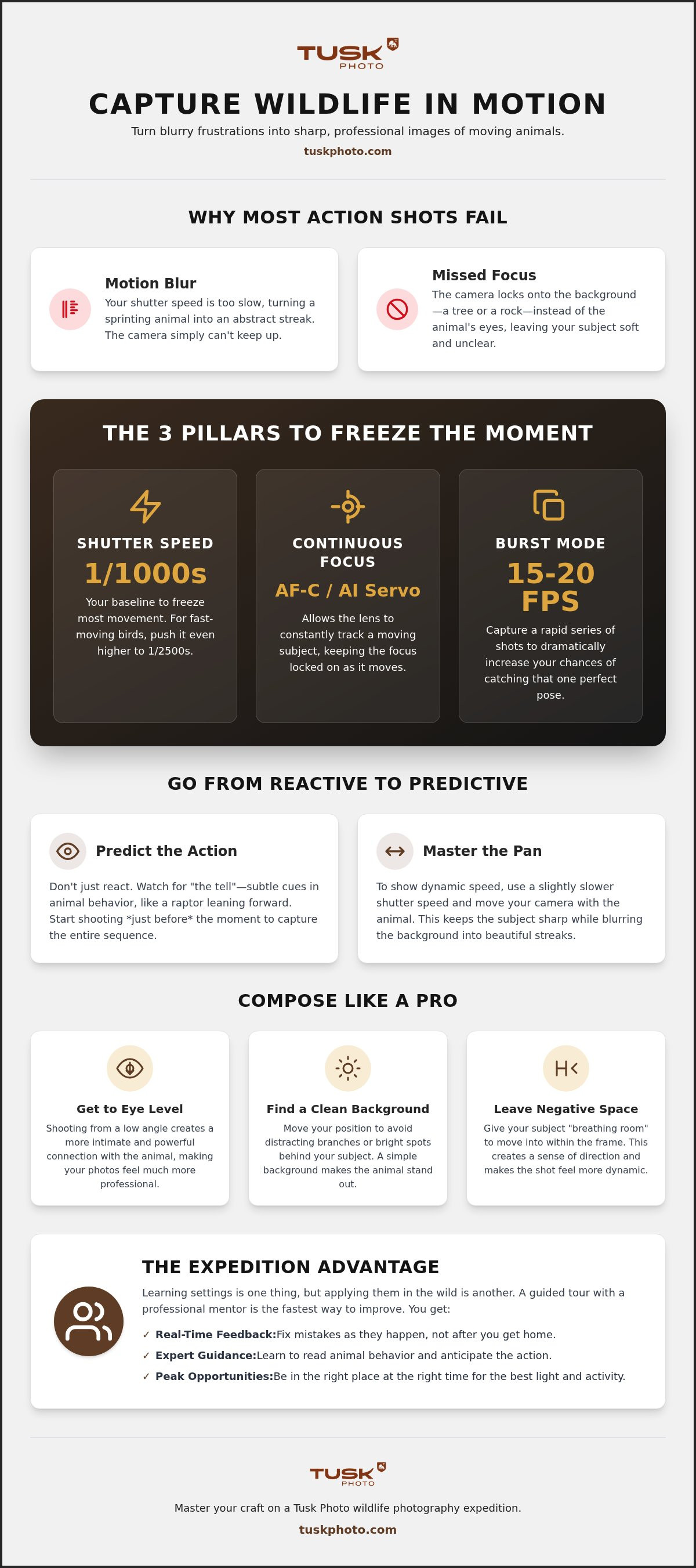
Learning about shutter speeds in a manual is helpful, but applying them while a leopard stalks through tall grass is a completely different challenge. This is where the "Expedition Advantage" truly shines. Having a professional host by your side speeds up your learning curve because they've spent thousands of hours in these wild environments. They don't just teach you the technical side; they help you develop the intuition needed for how to photograph moving animals effectively. Our Scheduled Tours are carefully planned around the best light and peak animal activity, ensuring you're in the right place at exactly the right time.
Working with a mentor allows you to see the landscape differently. You'll learn to spot the subtle ripples in the water or the twitch of an ear that signals a sudden burst of movement. This expert planning means you spend less time guessing and more time capturing world-class images. It's about moving beyond the menus and into a state of creative flow where you can anticipate the action before it happens.
The bush is the ultimate classroom. Real-time feedback is the fastest way to improve, as it allows you to fix mistakes as they happen. Instead of going home with a memory card full of blurry shots, you can adjust your technique immediately while the subject is still in front of you. The personal feel of our small group tours provides the perfect environment for one-on-one camera coaching. Your guide can help you dial in your settings for a specific lighting situation or suggest a better angle for a moving subject. It's a journey that builds your confidence behind the lens and ensures you leave with photos you're proud to share. If you're ready to take your skills to the next level, check our upcoming tour dates to find your next adventure.
Capturing the perfect action shot is a journey that starts with the right settings and ends with a deep understanding of nature. You now know that freezing a moment requires a fast shutter speed and the patience to wait for the right "tell" in an animal's behavior. By focusing on low angles and leaving room for the subject to move, you'll create images that truly feel alive. Mastering how to photograph moving animals takes practice, but you don't have to do it alone. Our small group journeys offer expert photography hosts who help you dial in your settings at world-class destinations chosen for peak activity. Join an upcoming Tusk Photo expedition to master your skills in the field and turn those missed moments into lasting memories. The wild is waiting for you to tell its story.
A shutter speed of 1/1000th of a second is the ideal baseline for most wildlife. It's fast enough to freeze a walking predator or a grazing herd. If you're aiming for faster subjects like birds in flight, you'll likely need to push it to 1/2500th. Using these speeds helps you master how to photograph moving animals with professional clarity and zero blur.
Switch your camera to Continuous Focus mode, often called AF-C or AI Servo. This setting tells your lens to keep tracking the subject as it moves across your frame. Many modern mirrorless cameras also feature animal eye-tracking, which prevents the focus from jumping to branches in the background. It's a simple change that makes a massive difference in your hit rate.
You don't need the most expensive gear to capture stunning action. While high-end lenses are great, many modern zoom lenses are surprisingly capable in bright daylight. Focus on mastering your camera's burst mode and understanding light instead. A sharp photo of a common bird is better than a blurry shot of a rare leopard taken with a lens you don't know how to use.


