
How to Become a National Geographic Photographer: Lessons from a Namibia Photo Safari
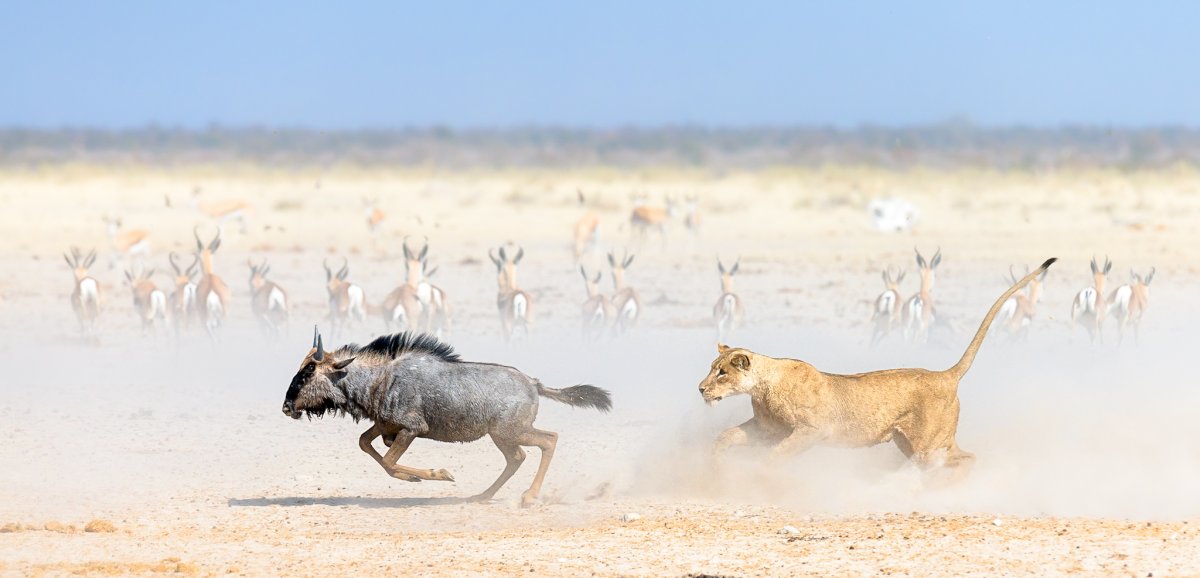

A striking wildlife photograph can open a door, but it won’t make you a National Geographic photographer on its own. A Namibia photo safari gives you the chance to practise in changing light, respond to unpredictable animal behavior, and make thoughtful choices in the field. The challenge is turning those moments into more than a collection of beautiful frames.
Building a photography career takes skill, patience, and a clear point of view. Field experience can help you shape a distinctive portfolio and learn to tell a story through images. Neither a single trip nor an expensive camera guarantees professional success. Here’s how to use a guided expedition to practise, develop your work, and choose a practical next step as a wildlife photographer.
A National Geographic photographer does more than capture a dramatic moment. The work is visual storytelling: building a clear account of a subject and its surroundings through images. That takes preparation, sound decisions in the field, and the ability to make strong photographs consistently. Many photographers who work with the publication are freelancers with a particular area of focus. Editors look for a strong body of work and a compelling story idea, not simply an impressive camera or a memorable destination.
No single trip guarantees an editorial photography career. A Namibia photo safari gives you valuable time to practise, but a wildlife encounter becomes meaningful editorial work when you place it within a thoughtful visual story.
Start with a question about the subject, not just the image you hope to capture. A story might show an animal in its habitat, its behavior, and the wider conditions shaping its life. Each frame should add something: a sense of place, a detail, a change in action, or useful context. A collection of dramatic close-ups may be striking, but it may not help viewers understand the subject.
Good coverage calls for research and patience. Learn about the subject before arriving, watch without rushing, and adapt as the scene changes. Respect wildlife by allowing animals to behave naturally rather than disturbing them for a photograph. On a guided expedition, experienced photography guides can help you practise observation and decision-making in the field. The goal isn’t to come home with the most images. It’s to make a considered set that holds together and gives the viewer a reason to look closer.
A Namibia photo safari can give you rich material to work with, but its value depends on how you use your time in the field. Treat each outing as a chance to practise, review your choices, and build a consistent way of seeing. Instead of trying to photograph everything, aim to create a small group of images that shows how you think about a subject.
At places such as Sossusvlei and the Skeleton Coast, dunes, open spaces, and shifting light can challenge you to make deliberate choices. Desert-adapted wildlife may offer another subject, but sightings are never guaranteed. An experienced guide can share field knowledge and help you notice opportunities. Your job is to decide what to photograph and how to frame it.
Use this simple process to turn field time into learning:
Pick a subject or question, such as how an animal uses its habitat.
Watch before raising your camera. Notice behavior, surroundings, and changes in the scene.
Vary your distance and composition so each image adds something to the story.
Look for gaps, repeated images, and moments where the setting or behavior gives useful context.
Use what you learned to guide your next session. Select images that work together rather than compete for attention.
Before you go, strengthen your basics with these wildlife photography tips for beginners. Tusk Photo’s guided photography expeditions give you structured field practice with experienced guides. Explore wildlife photography tours to find an expedition that fits your plans.
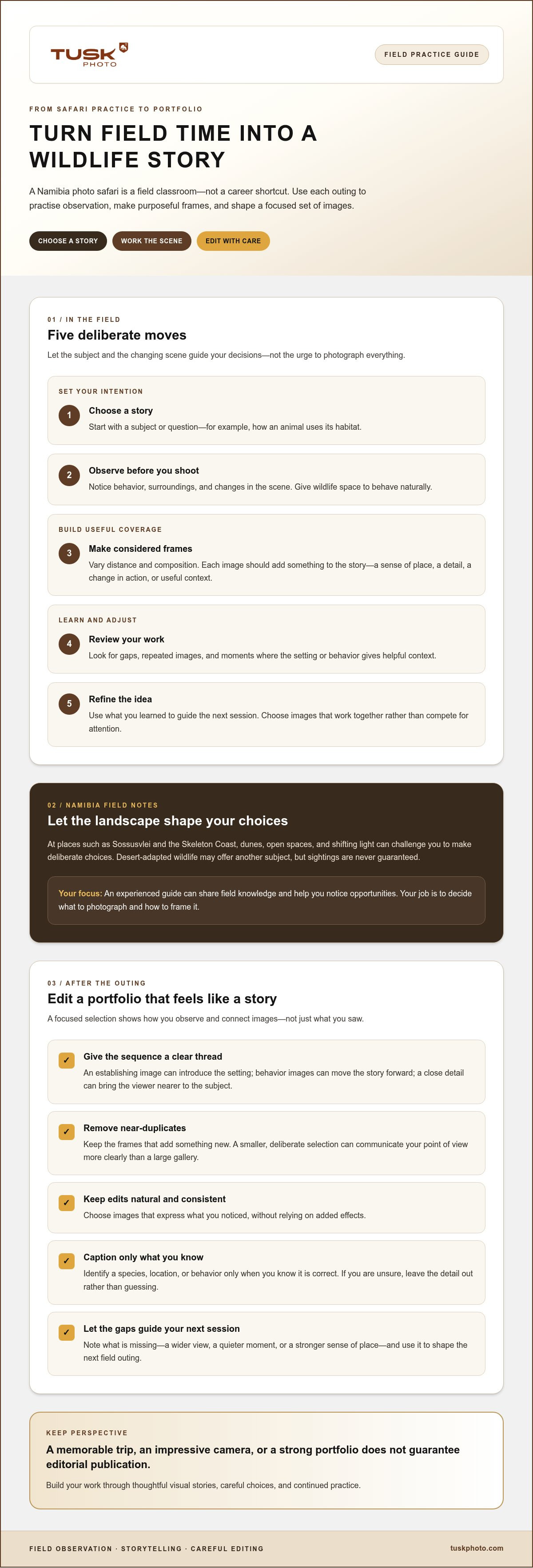
After a Namibia photo safari, the next step is careful editing. This isn’t about adding effects; it’s about choosing the images that best express what you noticed. A strong portfolio isn’t a record of every memorable sight. It’s a focused selection that shows how you observe, tell a story, and make thoughtful images across different moments.
Begin by looking for a clear thread. If your images follow one animal or place, arrange them so each frame adds something new. An establishing image can introduce the setting, photographs of behavior can move the story forward, and a close detail can give the viewer a more intimate sense of the subject. Remove near-duplicates, even if each one is beautiful. A smaller, deliberate selection often communicates your point of view more clearly than a large gallery.
Review the set at different times, then ask whether a viewer can follow it without your explanation. Keep edits natural and consistent. Captions need the same care: identify a species, location, or behavior only when you know it’s correct. If you’re unsure, leave the detail out rather than guessing. Accurate captions build trust, but no portfolio or submission can guarantee publication.
Keep developing after you edit. Note what’s missing from the story, such as a wider view, a quieter moment, or a stronger sense of place. Let that guide your next field session. Tusk Photo’s scheduled photography tours give you another opportunity to practise in the field with experienced guides. Continued observation and practice will help your portfolio grow over time.
Make your next step a project you can return to, not just another destination. Choose a subject, spend time observing it, and keep refining the way you photograph it. A Namibia photo safari may spark a strong idea, but your point of view grows through the care and attention you bring to each new story.
If guided field learning would help you keep developing, Tusk Photo offers scheduled, tailor-made, and on-demand wildlife photography expeditions. Each gives you a different way to shape a photographic journey around your preferences. Explore guided wildlife photography tours and take the next step at your own pace. Every thoughtful frame is practice, and every project gives you another chance to see the natural world more clearly.
Develop the working habits needed for editorial assignments as well as your photography. Practise meeting deadlines, researching subjects, and communicating clearly with editors and collaborators. Smaller publications or local organizations can offer useful experience handling assignments and feedback. Over time, learn to pitch ideas that match a publication’s interests and show that you can deliver the work reliably.
No particular degree is required to pursue this kind of photography. Study in journalism, biology, or visual arts may help you build useful knowledge, but you can also develop those skills through reading, independent projects, and practical experience. Choose learning that supports the subjects you want to cover, then apply it in your work.
Yes. Working around wildlife can help you practise responding to movement and making quick decisions while staying aware of your surroundings. For example, try following a moving subject in the viewfinder without losing track of its behavior or disturbing it. A trip can expose you to challenges that are hard to recreate at home, though progress still depends on continued practice afterward.
Start with a focused digital presentation that’s easy to browse. Keep your full image archive separate from the files you share, use clear file names, and organize your work into distinct projects. Ask a photographer or editor for specific feedback on image quality and presentation, then update your portfolio as your skills develop. A tidy, current collection is easier to maintain and share.


