
How the Kibale forest chimpanzee habituation photography tour works
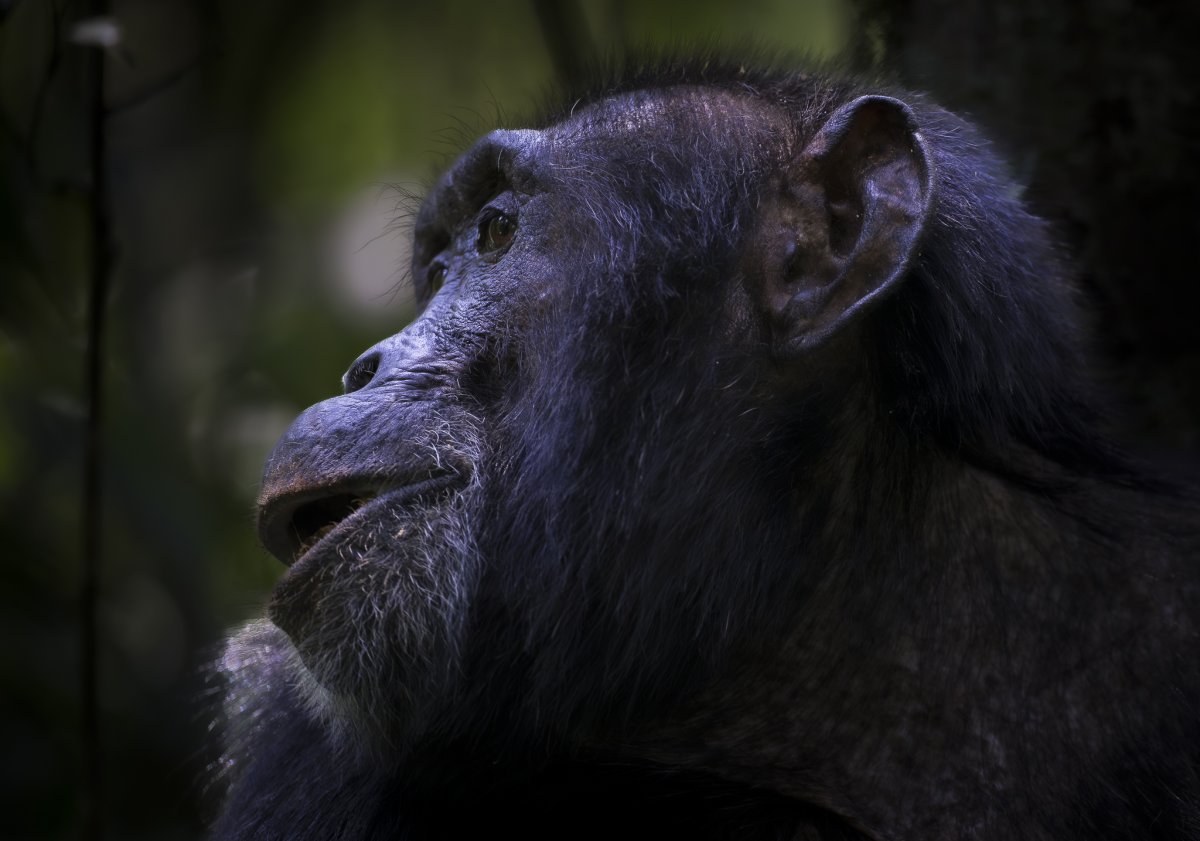

More time with chimpanzees does not simply mean more time behind the camera. A Kibale forest chimpanzee habituation photography tour can allow visitors up to four hours with a chimpanzee community, while a standard trek allows one hour observing a fully habituated community once it has been found. The longer visit follows the process of helping chimpanzees become comfortable around people.
If you hope for richer wildlife observation and more time to work on photographs, that difference matters. Habituation is gradual and can take several years, so the experience is less like a quick wildlife sighting and more like spending a day in the forest. This guide explains what happens, how habituation compares with chimpanzee trekking, and what photographers and wildlife enthusiasts should consider when deciding whether it suits them.
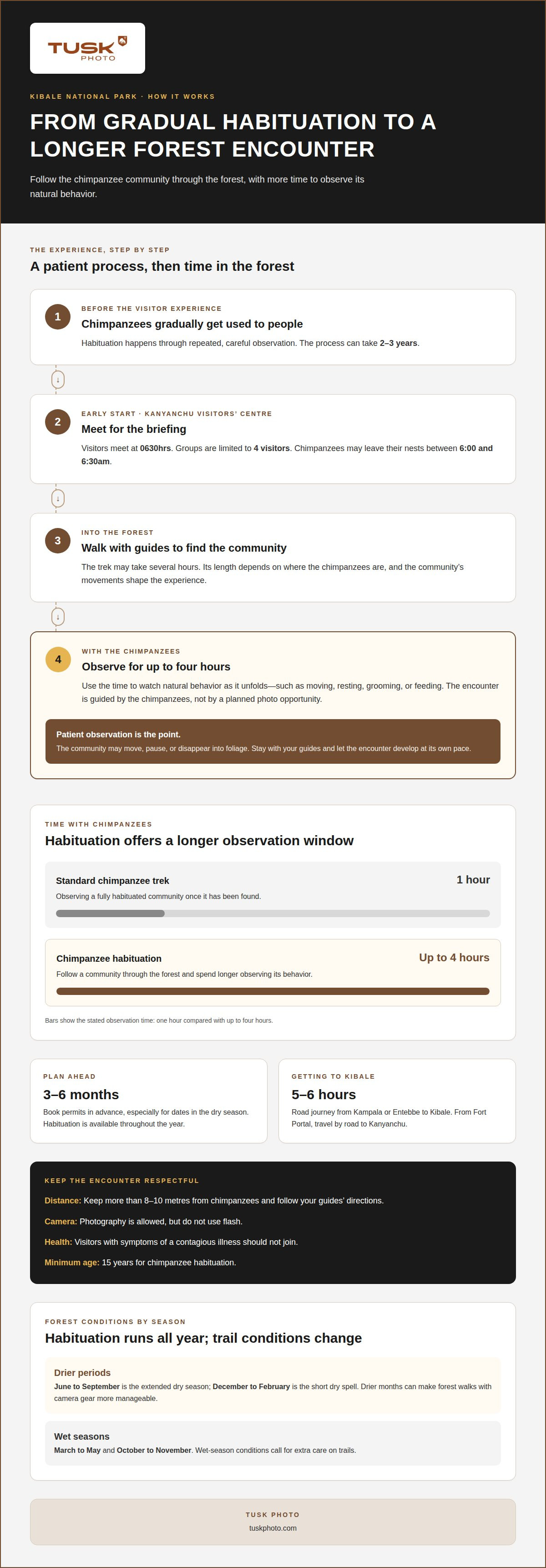
Habituation helps wild chimpanzees become accustomed to people through repeated, careful observation. The process can take 2–3 years, while the visitor experience follows a community as it moves through the forest. Kibale National Park is home to primates and many other species, making each morning a chance to observe natural behavior.
The day starts at Kanyanchu Visitors’ Centre, where visitors meet at 0630hrs for a briefing. The habituation experience allows up to four hours with chimpanzees, and each group is limited to 4 visitors. The trek itself may take several hours, depending on where the chimpanzees are. From Kampala or Entebbe, the road journey to Kibale takes about 5 to 6 hours; from Fort Portal, travel by road to Kanyanchu.
Book permits 3–6 months in advance, especially if your dates fall in the dry season. Habituation is available throughout the year.
That shorter encounter differs from habituation’s extended time in the forest. Whether you’re comparing Kibale with Bwindi or planning a wider trip in Africa, allow time for an early start and the forest walk.
Visitors may see chimpanzees leave nests between 6:00 – 6:30am; habituation typically begins with a briefing around 6-6:30.
In Kibale National Park, habituation offers a longer, more gradual encounter than standard chimpanzee trekking. Trekking allows one hour observing a fully habituated community after guides locate it; habituation can give visitors up to four hours with chimpanzees. The extra time may suit photographers hoping to observe different behaviors, such as feeding, rather than focus on a brief sighting.
Both experiences involve walking through forest, so prepare for changing terrain and time on foot. Follow the guides’ directions, keep more than 8–10 metres from chimpanzees, and use a camera without a flashlight. Visitors with symptoms of a contagious illness should not join the habituation experience. The Uganda Wildlife Authority sets the minimum age for chimpanzee habituation at 15 years.
For photography, Kibale’s extended dry season runs from June to September, and its short dry spell runs from December to February. The wet seasons are March to May and October to November. Drier months can make forest walks with camera gear more manageable, while wet-season conditions call for extra care on trails. Habituation takes place throughout the year, so the best timing depends on your travel dates and preferred conditions.
Chimpanzee and gorilla trekking are distinct wildlife experiences in Uganda, with different forest settings and animal behavior to observe. Kibale focuses on chimpanzees; Bwindi is associated with gorilla encounters. Whether you’re tracking chimpanzees or watching a gorilla family, stay with your guides and give wildlife room to move. The longer Kibale experience suits visitors who value patient observation; standard trekking fits those planning a shorter chimpanzee encounter.
A Kibale habituation visit suits photographers who value behavior and context over a quick portrait. Chimpanzees may be moving, resting, grooming, or feeding, so patient observation matters as much as camera timing. The experience can appeal to wildlife enthusiasts who want to follow a forest encounter as it unfolds, rather than treat chimpanzee tracking as a brief sighting.
Photography is allowed during the habituation experience, but camera flash must not be used. Choose equipment you can carry comfortably on a forest walk, and keep it ready without letting it distract you from your guides’ instructions. The forest setting can make clear, composed images challenging: chimpanzees may move through foliage or out of view, and their behavior cannot be directed for a photograph.
That uncertainty is part of the appeal. Researchers study habituation as chimpanzees gradually become accustomed to people, while visitors gain time to observe natural interactions. A moment of grooming, a feeding pause, or movement through the trees can be more rewarding than a posed-looking frame. Kibale’s Kanyanchu Primate Walk also offers the chance to seek 13 primate species, including monkeys, adding variety to an East Africa safari.
Choose this experience if you enjoy watching wildlife, adapting your framing, and accepting that each encounter develops at its own pace. It may suit beginners and experienced photographers alike, provided your goal is respectful observation rather than guaranteed close-up images. If you’re planning a Kibale forest chimpanzee habituation photography tour, the clearest takeaway is simple: bring a camera without flash, follow your guides, and make the encounter itself the priority.
Tusk Photo helps photographers and wildlife enthusiasts shape a journey around the kind of encounter they value, from time in the forest to opportunities for patient observation. Scheduled Tours, Tailor Made Tours, and On Demand Tours offer different ways to plan a wildlife photography expedition, including a journey designed around your interests.
If Kibale’s longer chimpanzee habituation experience fits your goals, consider how it could fit into your wider travel plans. Tusk Photo’s tailor-made photographic journeys can be shaped around the wildlife experiences you want to pursue.
For a planned departure or a more flexible journey, explore Tusk Photo’s tour options and choose the format that suits your plans. Get in touch with Tusk Photo to discuss your wildlife photography journey.
Let your interest in chimpanzee behavior guide the journey you plan next. A Kibale forest chimpanzee habituation photography tour can be a starting point for considering the images, wildlife encounters, and pace you want from a broader safari. Think about whether you prefer a set departure or a trip shaped around your interests and travel plans.
Tusk Photo offers Scheduled Tours, Tailor Made Tours, and On Demand Tours, giving you different ways to plan a wildlife photography journey. Choose the format that suits your next adventure, then take the first step toward making it real.
Contact Tusk Photo about your tour, and start planning a journey that reflects what you most want to experience in the wild.
In Kibale, visitors join guides in the forest to observe a chimpanzee community during its daily activity. The group’s location and movements shape the walk, so the encounter may involve watching, waiting, and following at a respectful distance. For photographers, the changing forest backdrop makes it useful to stay ready for brief moments of grooming or interaction.
Yes, a permit is required to take part in the chimpanzee habituation experience in Kibale Forest, Uganda. Plan your dates early: permits are advised to be booked 3–6 months ahead. This is especially useful if your travel schedule is fixed, since the permit is specific to the activity and your planned visit.
Chimpanzee trekking in Uganda can be physically demanding because the forest walk may last several hours, depending on where the chimpanzees are. The route and pace change with the group’s movements, so expect to spend time walking and watching rather than following a fixed trail. Comfortable walking shoes and a camera you can carry easily can make the outing more manageable.
Visitors aged 15 and older can participate in Kibale’s chimpanzee habituation experience. Anyone with symptoms of a contagious illness should sit out, helping protect the chimpanzees and other visitors. During the encounter, keep the required distance from the animals and follow the guides’ directions; this gives the community space to move naturally through the forest.
It’s a guided wildlife experience that gives visitors extended time to observe chimpanzees still becoming comfortable around people. Unlike a brief wildlife sighting, it offers time to watch natural behavior and take photographs without flash. A Kibale forest chimpanzee habituation photography tour may suit visitors who value patient observation and changing moments over a planned, close-up pose.


