
Greenland Wildlife Photography Tour: Your Friendly Guide to the Arctic Frontier (2026)


Picture the scene. A humpback whale breaks the glassy surface of a silent fjord, its breath hanging in the crisp Arctic air like a silver cloud. You reach for your camera, but instead of fumbling with settings or worrying about the biting wind, you feel completely prepared. We know that planning a journey to the edge of the world often feels overwhelming. It’s natural to worry about missing a rare sighting or having your gear fail just as a polar bear appears on the horizon. This guide is here to help you plan a Greenland wildlife photography tour that is both successful and stress-free. You’ll discover how to capture the Arctic’s most iconic animals, learn which months in 2026 offer the best light, and get expert advice on keeping your equipment safe in the cold.
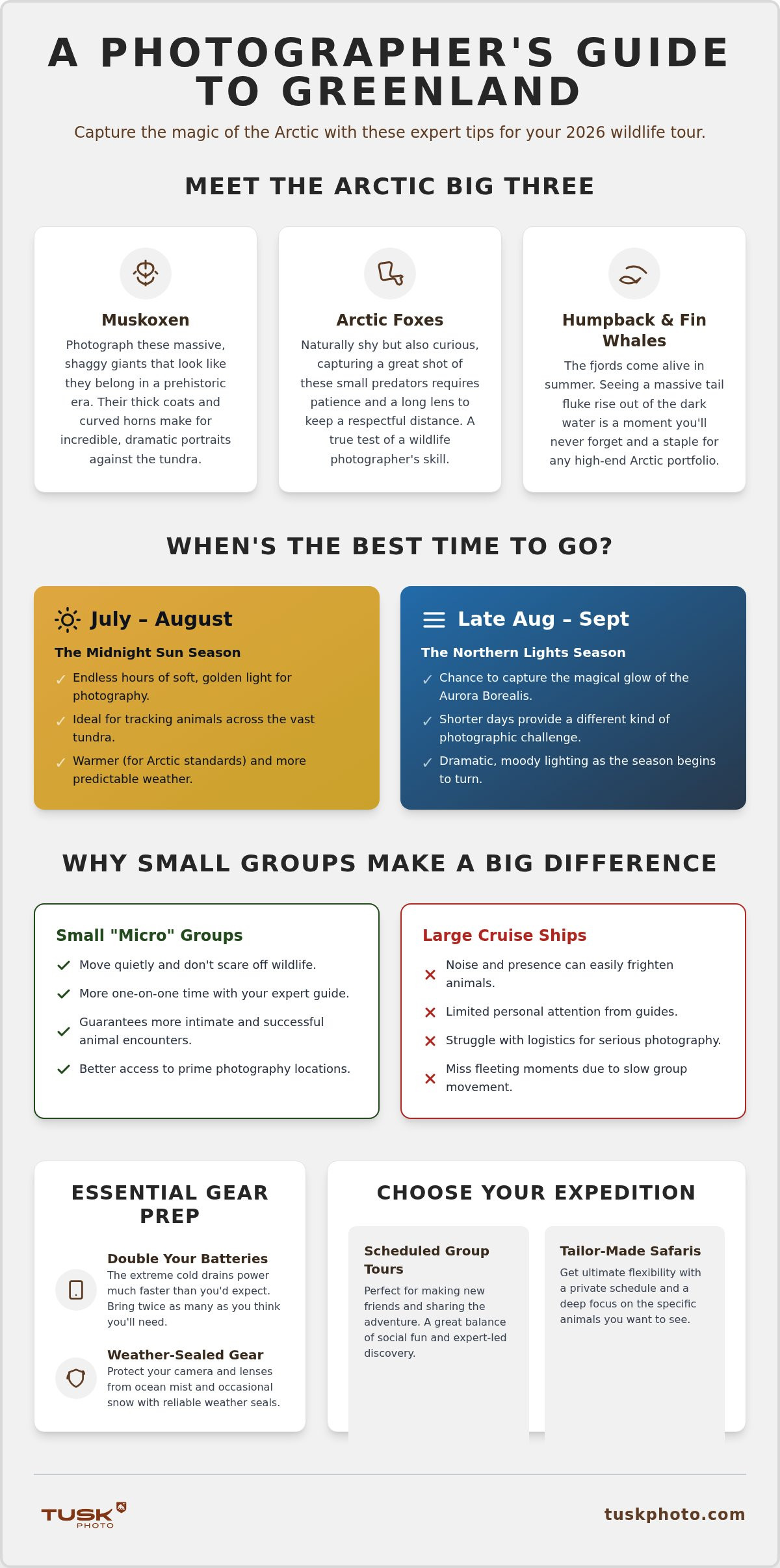
While the towering icebergs are stunning, the real magic of a Greenland wildlife photography tour lies in its hardy inhabitants. We often focus on the "Big Arctic Three": the muskox, the arctic fox, and the whales. Muskoxen are massive, shaggy giants that look like they belong in a prehistoric era. Their thick, layered coats and curved horns make for incredible, dramatic portraits, especially when they're grazing against the stark tundra landscape. They move with a quiet, heavy grace that's a joy to watch through a viewfinder.
Arctic foxes offer a different kind of thrill. These small predators are naturally shy, but they're also quite curious about visitors. Capturing a great shot requires plenty of patience and a long lens to keep a respectful distance. In the water, the fjords come alive during the summer months. You can expect to see humpback and fin whales surfacing for air. Seeing a massive tail fluke rise out of the dark water is a moment you'll never forget; it's a staple for any high-end Arctic portfolio.
Finding these animals requires knowing exactly where to look. We typically explore the coastal tundra to find muskoxen and navigate the deep, calm fjords to spot whales. The Scoresbysund region is a wildlife photographer's dream because its complex fjord system acts as a natural sanctuary for a huge variety of species. While you're scanning the horizon, don't forget to look for birdlife. You might spot the colorful Atlantic puffin or the majestic white-tailed eagle soaring above the cliffs. If you want a truly personalized Greenland wildlife photography tour, our tailor made tours allow us to focus specifically on the species you're most excited to photograph.
Choosing when to go is your first big decision. Summer months like July and August are ideal for a Greenland wildlife photography tour because the sun never truly sets. This midnight sun provides endless hours of soft, golden light, perfect for tracking animals across the tundra. If you prefer the magic of the Northern Lights, consider visiting in late August or September. The days are shorter, but the night sky often glows with green and purple ribbons, offering a completely different photographic challenge.
Don't let the cold intimidate you. It's easy to manage with a few simple habits. Always bring twice as many batteries as you think you'll need; the low temperatures drain power much faster than you'd expect. Make sure your camera has reliable weather seals to handle the ocean mist and occasional snow. For more advice on getting your skills ready, take a look at these wildlife photography tips for beginners. It's a great way to prepare before you step onto the ice.
Large cruise ships might offer comfort, but they often struggle with photography logistics. A "micro" approach is much better for capturing authentic moments. Small groups move quietly, which means we don't scare off the animals before you can even frame your shot. This setup also guarantees more one-on-one time with your expert guide. They can help you adjust your settings in the moment, ensuring you capture that perfect muskox portrait or whale breach. Whether you join one of our scheduled tours or a custom trip, the small group feel makes every encounter more intimate and successful.
Having an expert by your side changes everything. These guides don't just find the animals; they read their behavior with deep, professional field knowledge. If a whale is about to breach or a fox is about to pounce, they'll alert you to get ready. This foresight is why a Greenland wildlife photography tour is so much more effective than exploring on your own. You aren't just a visitor; you're a student of the wild with a mentor who ensures you never miss a shot because of a wrong camera setting or a slow reaction.
Beyond the technical help, there's a wonderful social side to these journeys. Joining a scheduled group means finding your "tribe" of fellow enthusiasts who share your passion for the Arctic. You'll share stories over dinner and compare your best shots from the day's adventure. For those who want something more specific, a tailor-made photography safari is the perfect solution. It lets you build a trip entirely around the specific species or landscapes you've always dreamed of seeing.
Deciding between a set group and a custom trip depends on what you want from your Greenland wildlife photography tour. Our scheduled tour dates offer a great balance of social fun and expert-led discovery. These trips are perfect for making new friends while capturing world-class images. If you prefer a private schedule or a deeper focus on a single animal, the tailor-made option gives you ultimate flexibility. Both styles are open to everyone, from beginners holding a camera for the first time to seasoned pros looking for that one-in-a-million portfolio piece. We handle all the tricky logistics so you can stay focused on the creative side of the journey.
Greenland is a place where prehistoric giants roam and the light never seems to end. By choosing the right season and keeping your group size small, you ensure that every wildlife encounter is both respectful and photographically rewarding. Whether you're tracking an arctic fox across the tundra or watching a whale breach in a silent fjord, having a mentor by your side makes all the difference. Our expert guides provide the professional field knowledge you need to master your settings and composition in the moment. We focus on small, intimate groups for better access and offer tailor-made options for those seeking a bespoke experience. It's time to turn your dream of a Greenland wildlife photography tour into a reality. Explore our upcoming Greenland and Arctic photography tours and start planning your 2026 journey. The Arctic is waiting for you.
The best time for a Greenland wildlife photography tour is during the summer months from June to August. This period offers the most active wildlife sightings, including migratory birds and whales. If you want a mix of animals and the Northern Lights, late August is a perfect choice. The weather is more stable then, and you get to experience the transition from 24-hour light to starry nights.
You'll want a versatile kit that includes both a wide-angle lens for landscapes and a powerful telephoto lens for animals. A lens reaching 400mm or 600mm is ideal for capturing shy foxes or distant whales without disturbing them. Don't forget a sturdy tripod for low-light shots and plenty of spare batteries. Keep your gear in a padded, weather-resistant bag to protect it from salt spray.
Seeing a polar bear is a highlight for many, but it is never guaranteed. These animals are most common in remote northern and eastern regions. We follow strict safety rules and maintain a respectful distance to protect both you and the bears. Since only licensed operators can offer sightings, we ensure all local regulations are met while using telephoto lenses to capture these giants safely.
Absolutely. This Greenland wildlife photography tour is designed for everyone, regardless of your experience level. Whether you're just starting out or you've been shooting for years, our professional mentors are there to help you in the field. They can explain your camera settings in simple terms and help you find the best compositions. It's a supportive environment where you can learn at your own pace.


