
Great Apes of Africa: A Guide for Your Safari Journey
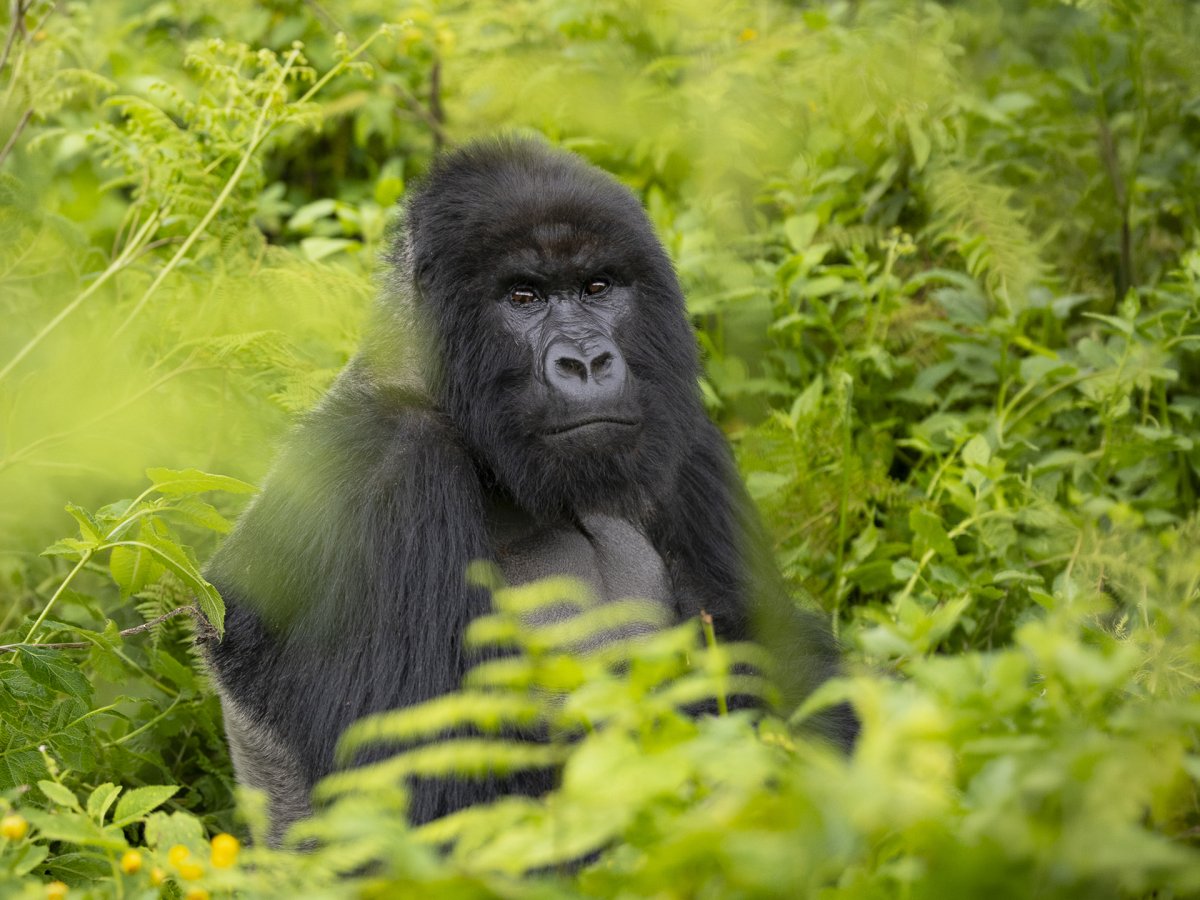

Have you ever wondered what it feels like to look into the eyes of a creature that shares nearly all of your DNA? It’s a profound, quiet moment that stays with you forever. To truly appreciate this connection, you should learn about The Great Apes of Africa in their natural, wild habitats. While the idea of a trek is the ultimate adventure, we know the logistics can feel a bit heavy. You might feel unsure about which country to choose or worry if the hike is too tough for your fitness level.
We believe that meeting our closest relatives should be inspiring, not stressful. In this guide, we’ll clear up the confusion and help you prepare for a safe, life-changing journey. You’ll discover the "Big Four" apes, find out exactly which countries offer the best sightings, and get a clear picture of what the physical trek actually looks like. By the end, you’ll feel ready to step into the forest with confidence and excitement.
To help you prepare for such a life-changing experience, you can explore custom travel planning and travel guides from Orizya Voyages, ensuring every detail of your trek is handled with care.
When you set out to learn about The Great Apes of Africa, you're looking into a mirror of our own history. This group includes gorillas, chimpanzees, and bonobos. They're our closest living relatives in the animal kingdom. We share about 98% of our DNA with them. That’s why seeing them in the wild feels so personal. You might see a mother cradling her infant or a youngster playing with a stick, and the resemblance to us is unmistakable.
These animals are incredibly smart. They use tools to find food, solve complex problems, and live in organized families. While they're very strong, they are generally peaceful forest-dwellers. They spend most of their days foraging for fruit and leaves, moving through the canopy or the forest floor with surprising grace.
Mountain Gorillas: These are the gentle giants you’ll find in high-altitude forests. There are only about 1,063 of them left in the wild. They're known for their thick fur and peaceful nature.
Lowland Gorillas: These apes live in the lush, flat forests of Central Africa. They're slightly smaller than their mountain cousins but just as impressive to see in person.
Chimpanzees: These are our most energetic cousins. They're loud, social, and very active. Watching a troop of chimps move through the trees is a masterclass in teamwork and communication.
Bonobos: Found only in the Democratic Republic of Congo, bonobos are often called the "hippie" apes. They've built peaceful societies where cooperation is more important than conflict.
Most great apes are currently listed as Endangered or Critically Endangered by the IUCN. This sounds heavy, but there is a bright side. Responsible tourism is one of the best ways to protect them. The money from scheduled tours and trekking permits goes directly toward hiring rangers and protecting the forests. When you visit these animals, your journey helps ensure they have a safe place to live for generations to come.
If you've spent time on a traditional safari, you're used to open plains and golden grass. Seeing great apes is a completely different experience. These animals live in deep, emerald forests where the air is cool and the canopy is thick. To find them, you'll need to swap the open-top jeep for a pair of sturdy boots. It’s a journey that takes you into the wild heart of the continent, far from the crowded grasslands.
Uganda and Rwanda are the most famous spots, primarily for mountain gorilla trekking. If you head further west into the Congo Basin, you’ll find the vast, untamed home of lowland gorillas and bonobos. For those who want to see chimpanzees, Tanzania’s Gombe Stream and Kenya’s Ol Pejeta offer incredible sightings. As you learn about The Great Apes of Africa, you’ll realize that each destination offers a unique atmosphere and level of adventure.
Deciding between these two countries is often the biggest question for travelers. Rwanda is known for its convenience. The drive from the airport to the forest is only about two and a half hours, making it perfect for shorter trips. However, the permits are more expensive at $1,500 per person. Uganda, on the other hand, offers a more rugged experience in the Bwindi Impenetrable Forest. Permits there are $800, which is more budget-friendly, though the journey to get there is usually a full day's drive.
If you're a photographer, the lighting in these dense forests can be tricky. You can find more detailed tips in The Ultimate Gorilla Trekking Photography Tour Guide. For those who prefer a professional to handle the complex logistics, our custom tours can be tailored to your specific pace and fitness level.
When you want to learn about The Great Apes of Africa beyond gorillas, Kibale National Park in Uganda is the place to be. It’s often called the "primate capital of the world" because sightings are so reliable. If you’re looking for a true "bucket list" experience, you’ll have to head to the Democratic Republic of Congo. It is the only place on Earth where you can find bonobos in the wild. It’s a challenging trip, but seeing these peaceful societies in person is something you’ll never forget.
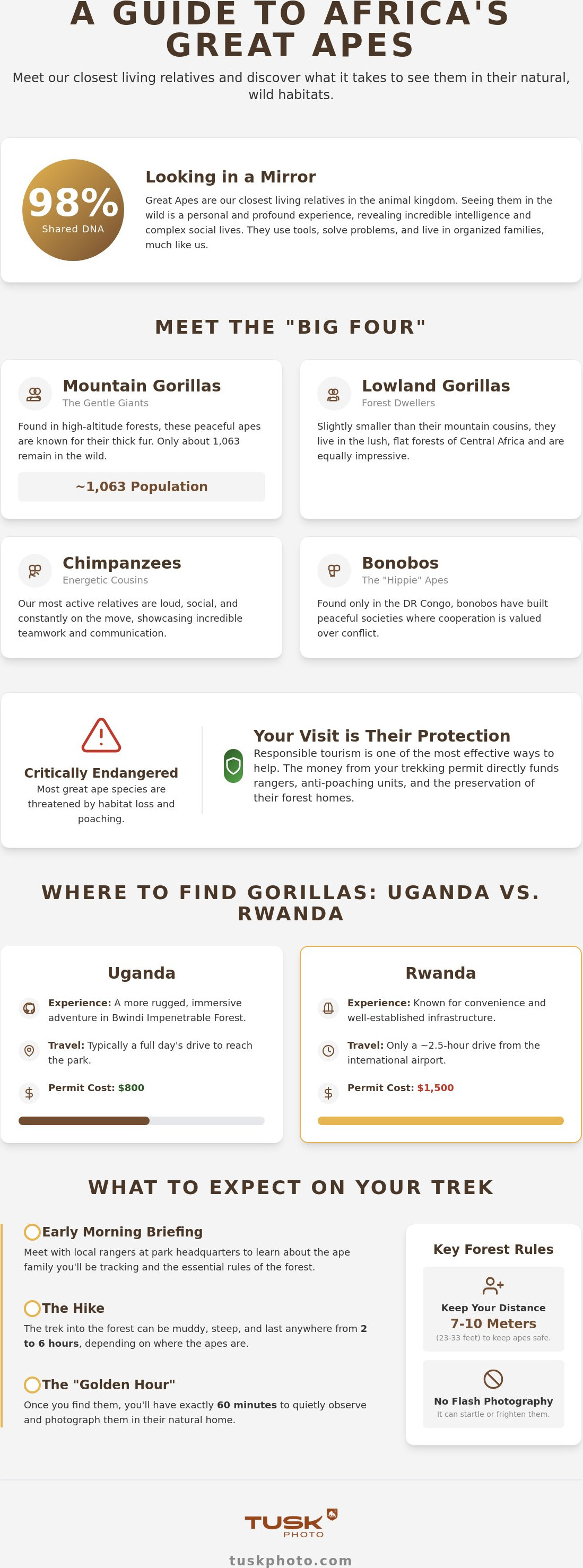
Your journey begins before the sun fully clears the forest canopy. You’ll meet at the park headquarters for an early morning briefing with local rangers. This is a vital part of the experience. You’ll hear about the specific family you’re tracking and the rules of the forest. To keep the animals healthy, you’ll learn about keeping a distance of 7 meters in Rwanda or 10 meters in Uganda. It’s a great moment to ask questions and learn about The Great Apes of Africa from the people who protect them every day.
Once the briefing ends, the real adventure starts. The hike through the forest is a sensory experience. It can be muddy, steep, and a bit humid, but the thrill of tracking through the vines makes every step worth it. Depending on where the apes moved overnight, your trek could last anywhere from two to six hours. When you finally find them, the world seems to stand still. You’ll have exactly 60 minutes, often called the "Golden Hour," to watch them in their natural home. You don't need to be a professional photographer to get incredible shots. The natural light and the sheer proximity of the animals make for stunning memories, whether you’re using a high-end camera or a simple smartphone.
A seasoned guide is your most important asset in the forest. They don't just lead the way; they understand the individual personalities of each ape family. They know which silverback is feeling relaxed and which youngsters are likely to be extra playful. This deep knowledge helps you stay safe and ensures the animals feel comfortable with your presence. Our Tusk Photo tours provide this expert level of support, so you can focus entirely on the connection with the apes.
Packing the right gear will make your trek much more enjoyable. We recommend bringing a pair of sturdy gardening gloves to help you grip vines and long socks to tuck your trousers into. A lightweight, waterproof jacket is essential, as rain can move in quickly in the rainforest. If you’re ready to start planning, take a look at our available tour dates. You can also explore our Scheduled Departure Photography Tours to find a trip that fits your 2026 travel goals.
Taking the time to learn about The Great Apes of Africa is the first step toward a journey you'll never forget. We've explored who our closest relatives are, where to find them in the lush forests of East Africa, and how to prepare for your first trek. These encounters are more than just a safari; they are a rare chance to connect with the natural world on a deeply personal level.
We're here to make the experience seamless and inspiring. Every trip features expert photography hosts to help you capture every detail of your journey. We also keep our group sizes small for more intimate encounters and offer custom itineraries designed for your specific pace. You don't have to worry about the complicated logistics of permits and transport. We handle the details so you can focus on the magic of the forest.
Are you ready to meet the giants of the wild? Explore our upcoming Great Ape expeditions and start planning your next great adventure today. We can't wait to see you out there.
Gorilla trekking is a physical activity, but you don't need to be an elite athlete to participate. Most treks last between two and six hours, depending on where the ape family moved overnight. The terrain is often steep and can be muddy, so a basic level of fitness certainly helps. If you're concerned about the hike, you can hire a local porter to help carry your gear and provide extra support on the slippery trails.
The best time for a trek is during the dry seasons from June to September and December to February. These months offer the easiest hiking conditions because the forest floor is less slippery and easier to navigate. If you're looking for a more budget-friendly trip, consider the low-season months of April, May, and November. This is a quieter time to learn about The Great Apes of Africa and often features discounted permit prices in countries like Uganda and Rwanda.
Yes, you can use your smartphone to capture memories of your trip. Many travelers get great shots, but you must keep your flash turned off to avoid upsetting or startling the animals. Since regulations require you to stay 7 to 10 meters away, a phone camera might not capture the fine details as well as a professional zoom lens. The thick forest canopy also creates low-light conditions that can be tricky for smaller phone sensors.
Great apes are generally very peaceful and the groups you visit are habituated to human presence. They spend most of their time foraging or resting and rarely pay much attention to visitors. Your expert rangers will be with you every step of the way to ensure everyone stays safe and comfortable. By following simple rules like keeping a respectful distance and staying quiet, you can learn about The Great Apes of Africa in a calm and secure setting.


