
First-Time Photo Safari Tips: A Beginner’s Checklist for 2026
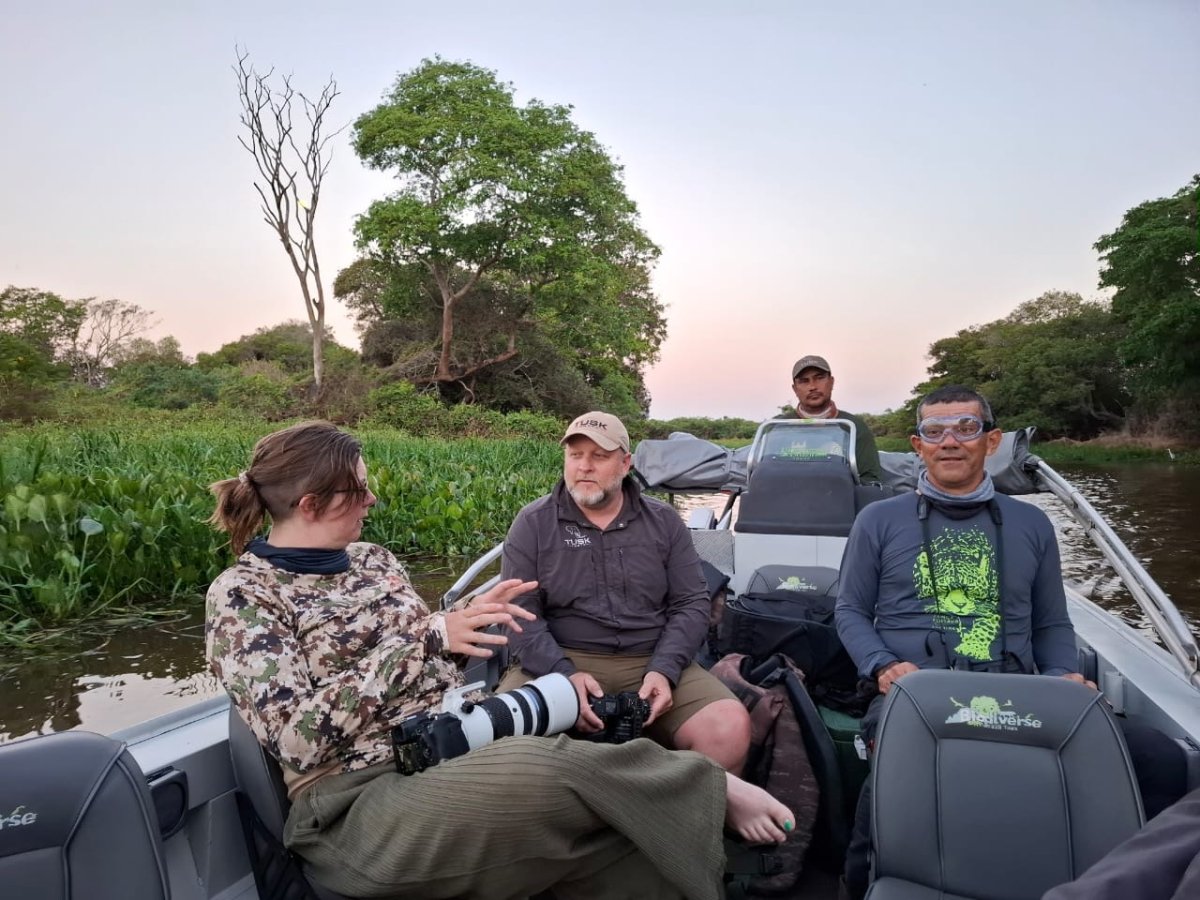

Your first photo safari isn’t a test of how much camera gear you own. Wildlife appears on its own schedule, often in changing light and farther away than you expect. These first time photo safari tips will help you prepare for the experience, not chase a perfect shot.
It’s natural to wonder what a safari day feels like, whether your camera is ready, or if being new will hold you back. Set realistic expectations, practise a few basic camera controls, and give yourself time to watch. That way, you can enjoy each encounter as it unfolds and respond to changing wildlife and light.
Use this beginner’s checklist to prepare, from camera basics and field habits to choosing a guided journey that suits your interests. Tusk Photo’s experienced guides lead photography expeditions for beginners and seasoned photographers. Choose a scheduled departure or explore a tailor-made journey to plan your first adventure.
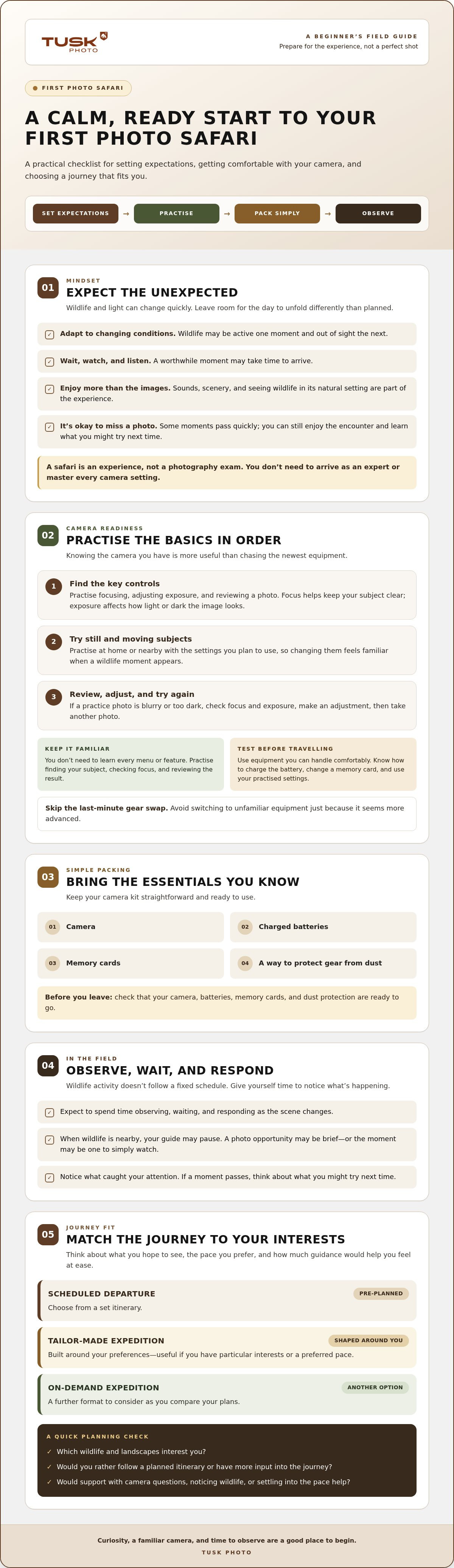
A first safari is easier to enjoy when you leave room for the unexpected. Wildlife may be active one moment and out of sight the next, and the light can change quickly. Keep this short checklist in mind:
The day may not unfold as planned, so be ready to adapt.
Watch and listen while you wait for a moment worth photographing.
The sounds, scenery, and experience of seeing wildlife in its natural setting matter too.
You don’t need to arrive as an expert. A guided photography expedition can suit beginners as well as experienced photographers, and a knowledgeable guide can help you settle into the experience. Learn as you go, without expecting to master every camera setting or come home with a perfect shot. These first time photo safari tips start with a simple idea: the trip is an experience, not a photography exam.
Expect to spend time observing, waiting, and responding. Your guide may pause when wildlife is nearby, but animal activity doesn’t follow a fixed schedule. You might have a brief chance to take a picture, or simply watch as the scene changes. Both are part of the outing.
Some moments will pass before you’re ready to photograph them. That’s normal, and it doesn’t mean the trip has gone wrong. Notice what caught your attention, then consider what you might try next time. You can enjoy a safari without mastering photography. A memorable encounter can stay with you even when you don’t capture it.
Good preparation is about knowing your camera, not owning the newest one. Before you leave, work through these steps in order:
Find how to focus, adjust exposure, and review a photo on your camera. Focus helps keep your subject clear; exposure affects how light or dark the image looks.
Photograph moving and still subjects at home or nearby. Try the settings you plan to use so changing them feels familiar when a wildlife moment appears.
Look through your practice photos. If a picture is blurry or too dark, check your focus and exposure settings, make an adjustment, and try again.
Keep it simple. You don’t need to learn every menu or feature before your trip. Practise finding your subject, checking that it’s in focus, and reviewing the result. This routine can help you feel more at ease when conditions change. For guided practice in the field, explore a guided wildlife photography tour. Tusk Photo’s experienced guides lead journeys designed for beginners as well as seasoned photographers.
Use equipment you can handle comfortably, and test it before travelling. Make sure you know how to charge the battery, change a memory card, and use the settings you’ve practised. Avoid switching to unfamiliar equipment at the last minute just because it seems more advanced.
Keep packing straightforward: bring your camera, charged batteries, memory cards, and a way to protect your gear from dust. A dedicated safari packing guide can help you plan the rest of your kit. The best first time photo safari tips are practical ones you can follow calmly, without turning preparation into a project of its own.
The right journey fits what you hope to see and how you like to travel. Before choosing, think about the wildlife and landscapes that interest you, the pace that feels comfortable, and how much guidance would help you feel at ease. For example, experienced safari operators like Travel Partner Limited can provide local expertise in destinations like Tanzania to help you spot wildlife and navigate the terrain comfortably. You don’t need advanced photography skills to join a guided expedition, but an experienced guide can be helpful as you learn.
Each format offers a different way to plan. A scheduled departure is pre-planned, so you can choose from a set itinerary. A tailor-made expedition is shaped around your preferences, making it a good fit if you have particular interests or a preferred pace. On-demand expeditions offer another option. Consider which approach suits your plans rather than assuming one format is right for every first-time photographer.
As you compare options, ask yourself whether you’d rather follow a planned itinerary or have more input into the journey’s design. If you want help building a broader bespoke travel experience, personal planners such as The Farsick Travel Co. can design custom itineraries tailored to your style. Think about what kind of guidance would help you enjoy the experience: support with camera questions, help noticing wildlife, or reassurance as you settle into the rhythm of the expedition. These questions can help you put the first time photo safari tips in this guide into practice.
Tusk Photo’s experienced guides lead wildlife photography journeys for beginners and seasoned photographers. Their guidance can make a first expedition feel approachable while giving you room to learn in the field. Explore tailor-made wildlife photography tours for a journey shaped around your interests, or browse Tusk Photo’s guided tours to compare journey formats.
Your first wildlife photography safari doesn’t need to begin with a perfect plan or a portfolio of polished images. Start with curiosity, choose a journey that suits you, and give yourself room to learn along the way. The best first time photo safari tips help you notice and enjoy what’s unfolding, even when the moment doesn’t go as expected.
As you plan, think about the landscapes and wildlife you’re drawn to, along with the kind of experience that would help you feel at ease. Then explore the available journeys and picture yourself in the field, camera in hand and attention on the world around you. Explore Tusk Photo’s wildlife photography tours and take your first step toward an adventure of your own.
Yes. You can join a photo safari without previous safari experience or advanced photography skills. For your first trip, a guided journey gives you the chance to ask questions and learn the rhythm of being in the field. These first time photo safari tips can help you prepare, but you don’t need to know everything before you go.
Yes, a basic camera can help you record the scenes you see, especially animals or landscapes within its reach. Enjoyment doesn’t depend on getting a close-up of every animal. Try framing the wider scene and including the setting around the wildlife. A camera you can use comfortably is often more useful than unfamiliar equipment with features you haven’t tried.
There may be quieter stretches, and no outing can guarantee a particular animal or photograph. Use that time to notice the landscape, changing light, and sounds around you. You can also watch for small signs of activity, such as birds moving through the area. Your guide can offer context about what you’re observing, even when animals remain out of view.
There’s no single ideal length. Think about how much time you’d like to spend settling into a new routine, and how comfortable you are with travel and time outdoors. A scheduled departure gives you a set itinerary to consider, while a tailor-made journey can be shaped around your preferences. Choose a pace that leaves you time to enjoy the experience without feeling rushed.


