
Essential Photo Safari Camera Gear: 2026 Guide
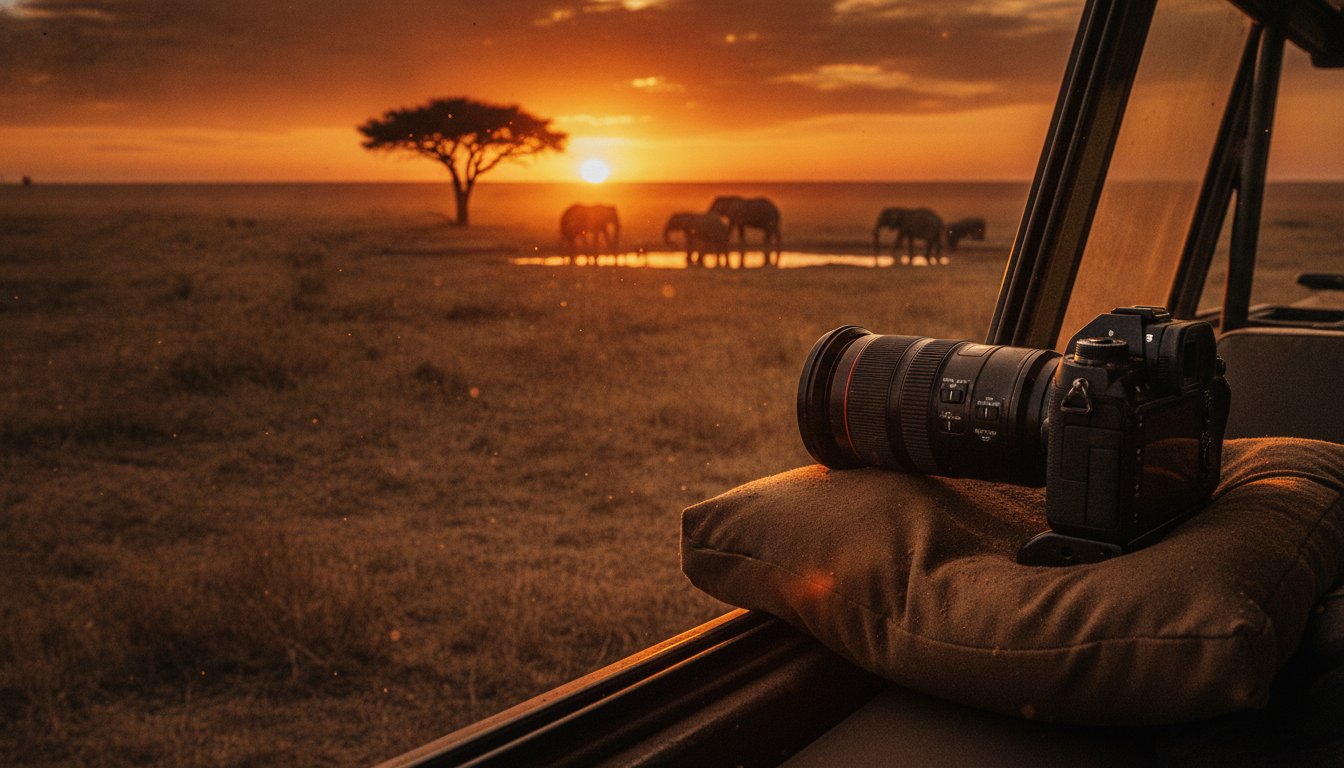

You don't need a heavy, overflowing bag to bring home professional wildlife photos. It's common to worry about missing a once-in-a-lifetime moment because of the wrong lens or confusing technical jargon. We understand the struggle of balancing equipment with strict weight limits. Choosing camera gear for a photo Safari should be an exciting part of your journey, not a source of stress. Focus on the animals, not your aching shoulders.
Pack with confidence. We'll show you exactly what equipment you need for stunning shots while keeping your kit manageable. Discover the best 2026 camera bodies and lenses, from mirrorless systems to simple all-in-one options. We also highlight the essential accessories that matter in the field. By the end, you'll have a clear gear list that fits in a standard bag, leaving you ready to capture memories for your family.
Selecting the right camera gear for a photo Safari often starts with a simple question: how many cameras should I bring? If your budget allows, carry two camera bodies. Dust is a constant companion in the bush, and swapping lenses in a moving vehicle can let grit reach your sensor. Having two cameras means you can keep a long lens on one and a wider lens on the other. It ensures you never miss a sudden moment because you were busy changing equipment.
Balance is everything when you're out in the field. While you want plenty of reach to see distant animals, you also have to consider weight. Lugging heavy bags through airports and in and out of vehicles gets old fast. If you're choosing between mirrorless and DSLR systems, remember that mirrorless cameras are generally lighter and offer incredible autofocus. While DSLRs have great battery life, the weight savings of mirrorless make them a favorite for modern travelers.
Think of focal length as a tool for bringing the animal to you. A versatile 100-400mm zoom lens is the true safari workhorse. It allows you to capture a wide scene of elephants at a watering hole and then quickly zoom in on a single calf. You don't need the most expensive prime lenses to get professional results. Modern zooms are sharp, reliable, and much easier to handle during our scheduled tours. They provide the flexibility you need without overcomplicating your packing list.
Keeping your camera steady is the secret to those crisp, professional-looking shots you see in magazines. While tripods are great for landscapes, they're often too bulky and restrictive for the tight spaces of a safari truck. Instead, a bean bag is your best friend. It provides a stable base on the window sill or roof rack while absorbing the vibrations of the engine. This simple setup allows you to pivot your camera gear for a photo Safari quickly to catch a bird taking flight or a lion waking from a nap.
Protection matters just as much as stability. You'll encounter fine, powdery dust that finds its way into every crevice of your equipment. A dedicated dust cover is ideal, but even a simple pillowcase can protect your camera between sightings. When traveling, choose a camera bag that fits comfortably under an airplane seat. This keeps your expensive gear within reach and avoids the risk of it being moved to the cargo hold where it might get bumped or shaken.
If you're worried about managing your kit in these rugged conditions, our scheduled tour dates offer a perfect chance to learn these field techniques from experts who do this every day.
Sensor dust is the ultimate enemy of safari photography because it leaves permanent, distracting spots on your most precious wildlife images. To fight back, keep a blower brush and a few microfiber cloths in your pocket for quick daily maintenance. It's also vital to remember one golden rule: never change your lens while the vehicle is moving. Wait until you're stopped and the air has settled to keep the interior of your camera clean and safe.
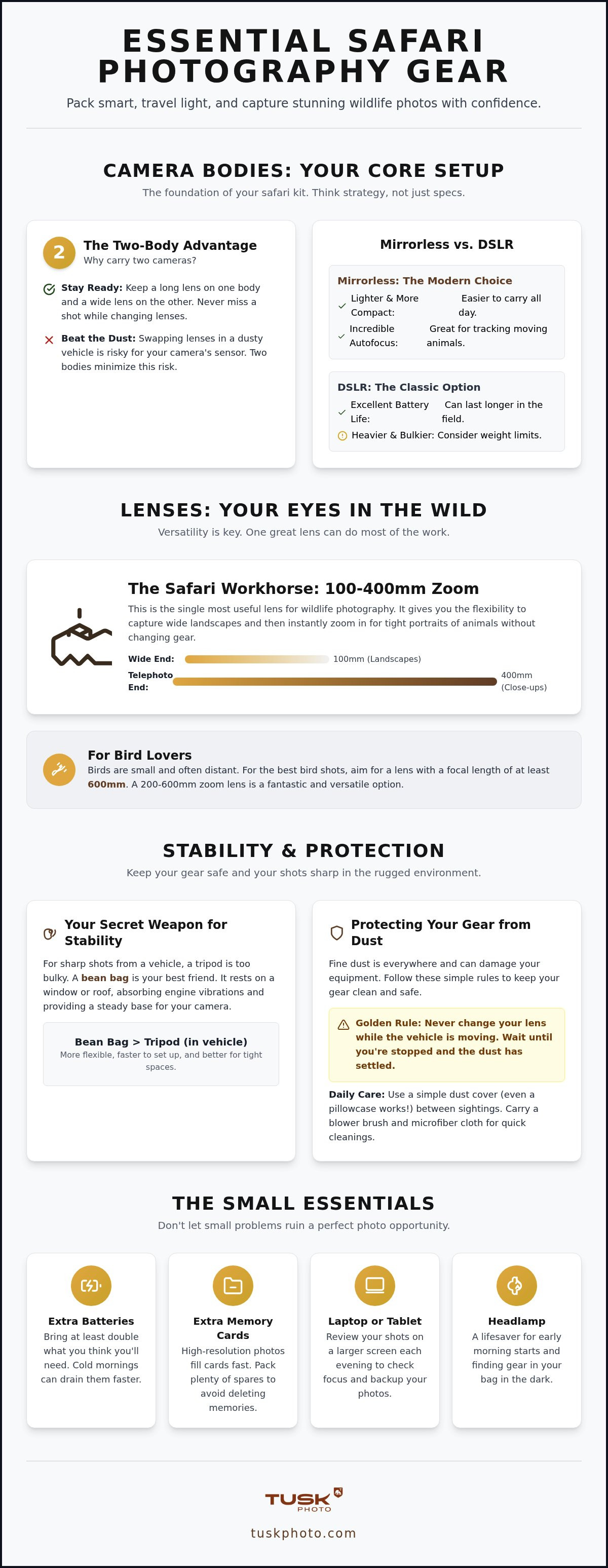
Don't let a dead battery or a full memory card cut your morning short. You'll likely take hundreds of shots during a single sighting, so bring at least double the storage and power you think you'll need. High-resolution cameras, such as the 45-megapixel bodies popular in 2026, fill up cards faster than you might expect. It's much better to have a pocket full of spares for your camera gear for a photo Safari than to spend your evening choosing which memories to delete to make room for tomorrow's sunrise.
Setting up a simple "digital darkroom" at camp is another great idea. A lightweight laptop or tablet lets you review your work while the excitement of the day is still fresh. It's easier to catch a small focus mistake on a larger screen than on the tiny display on your camera. Also, don't forget a basic headlamp. It's a lifesaver for changing settings or finding your lens cap during those dark, early morning starts or late-night drives back to the lodge.
Our Tusk Photo guides act as your on-site mentors, helping you fine-tune your camera gear for a photo Safari in real-time. They understand how light changes in the bush and can help you adjust your settings quickly for fast-moving predators. On a tailor-made journey, you can even design the trip around the specific gear techniques you want to master. For more field advice, read our Wildlife Photography Tips for Beginners to prepare for your next adventure.
Preparing the right camera gear for a photo Safari is the first step toward a successful adventure. By choosing versatile lenses, keeping your equipment safe from the elements, and packing plenty of spare power, you're ready for anything the bush throws your way. You don't need a bag full of complex gadgets to take photos you'll be proud to show your family. Our expeditions are led by pro photography hosts who offer immersive field workshops in small groups for better access and personal attention. We focus on helping you get the best out of your equipment while you enjoy the journey. Ready to test your gear in the wild? View our upcoming tour dates and start planning your journey. We look forward to helping you capture your own unforgettable images.
You won't use a tripod much inside a vehicle because space is limited. It's often easier to use a bean bag to steady your camera gear for a photo Safari on the window or roof. However, if you plan to take star photos or landscapes from your lodge at night, a lightweight tripod is still a good addition to your packing list.
For birds, you usually need a lens with a focal length of at least 600mm. While a 100-400mm lens is great for mammals, birds are smaller and often further away. You can achieve this extra reach with a 200-600mm zoom lens or by adding a teleconverter to your existing telephoto lens to see those fine feather details clearly.
Plan for at least 500GB to 1TB of total storage for a 10-day adventure. Since modern cameras capture high-resolution images, you'll fill cards faster than you expect. It's safer to bring several smaller cards, like 128GB each, rather than one giant one. This way, if a card fails or gets lost, you don't lose your entire trip's worth of memories.
Your smartphone is perfect for capturing wide landscapes or video of animals close to the vehicle. However, it lacks the optical zoom needed for distant wildlife. To get those classic close-up shots of a lion's mane or a leopard in a tree, you'll definitely want a dedicated camera with a telephoto lens. It ensures your photos stay sharp when you zoom in.


