
Creative Wildlife Photography Ideas: Make More Original Images
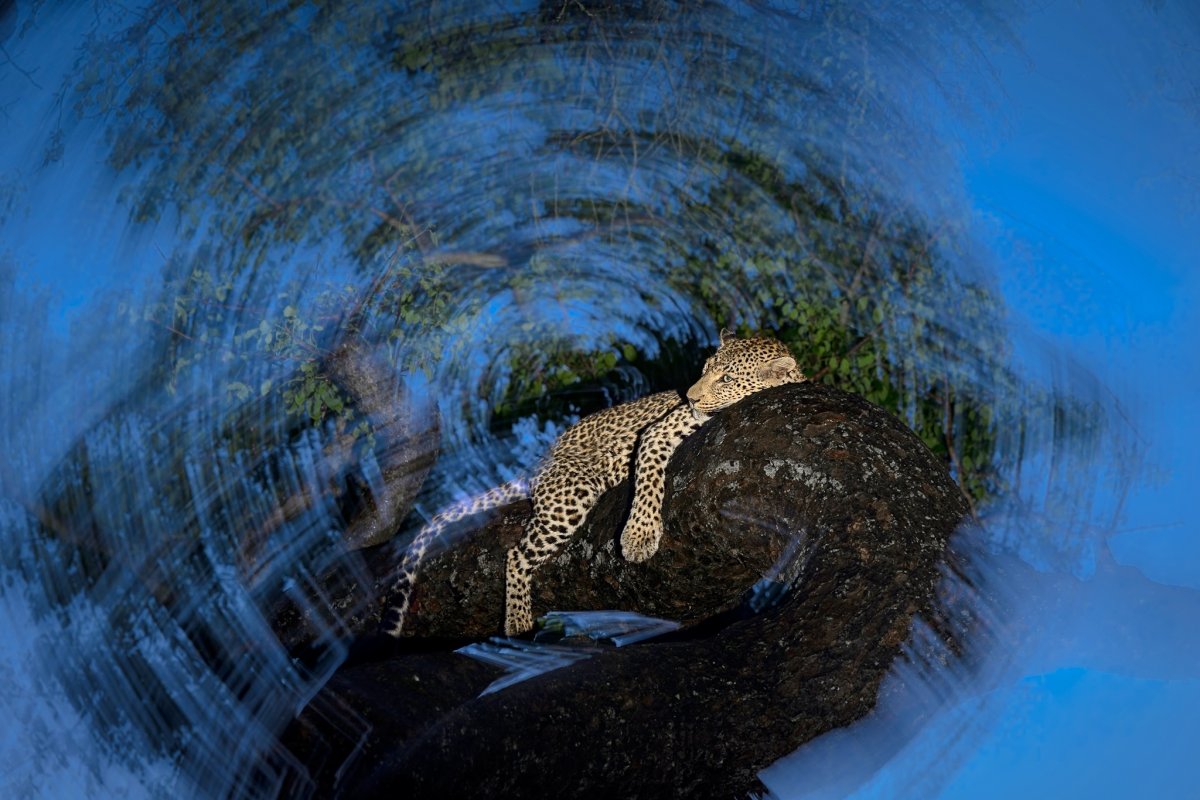

What if your most original wildlife photograph comes from an animal doing almost nothing? It’s easy to feel stuck when wildlife is resting, far away, or behaving just as you’ve seen it behave before. Familiar close-up portraits can start to feel repetitive, too. But fresh images don’t depend on rare sightings or complicated camera settings. Often, the shift begins with noticing what’s already there. These creative wildlife photography ideas will help you find new ways to work with an encounter, even when the animal isn’t moving much.
Use behaviour, habitat, distance and changing light to shape a more personal photograph. Make the surroundings part of the story, look for details while you wait, and keep the animal’s well-being at the heart of each decision. A little more observation can turn an ordinary moment into an image that feels distinctly yours.
You can return from a wildlife encounter with sharp focus, good exposure and a clear view of the animal, yet still feel the images look familiar. A closer view or a more dramatic setting isn’t always the answer. Before choosing a frame, notice how the animal holds itself, where it looks, how it moves and how it relates to its surroundings.
That attention gives you more to work with than a basic portrait. Watch for a head turn that changes the animal’s expression, a pause between movements, or a moment when it interacts with its habitat. A bird reaching for a seed, for example, can make a more revealing image than the same bird simply perched. Keep your camera ready, but let the animal’s behaviour guide when you shoot.
A change in gaze can add connection or tension to the frame.
After movement, an animal may settle into a gesture that feels calm and considered.
Watch for feeding, resting, climbing or moving through plants and branches.
Anticipation helps you notice the small gestures and relationships between obvious moments of action. An animal might glance toward another, adjust its position in the wind or return to the same patch of ground. These moments can suggest character and context without requiring a dramatic scene. Observation gives you a starting point for creative choices.
Try this on your next outing: choose one behaviour to follow, then make a few frames as it unfolds. If the animal is resting or distant, watch for a change in posture or a connection with its surroundings. Give it space. The aim is to respond to the moment, not interrupt it.
A change in light or viewpoint can make a familiar animal feel newly seen. Instead of filling the frame with the subject, consider how its habitat shapes the scene. Reeds can create lines, leaves can soften the edges, and still water may offer a reflection that adds balance or a second point of interest.
Light gives you another way to set the mood. Try photographing with the sun behind the animal, or return to the same view as the light shifts. Backlighting may outline fur, feathers or leaves, while a silhouette can draw attention to shape. To test either approach, check how much detail remains visible and adjust your position as the light changes.
Build the habitat into the frame without letting it hide the animal. Use a gap in foliage as a natural frame, include a strip of water to show where a bird is feeding, or let rain and mist suggest the feel of the day. If nearby leaves block an important part of the subject, shift your position to find a clearer view. For more field basics, explore wildlife photography tips for beginners.
Then change your perspective. Get lower to place the animal against open water or sky, or step back to show it within a wider landscape. A close composition can feel intimate; more space can show the animal’s place in its habitat. These creative wildlife photography ideas work even when the subject stays still. If you’d like to practise in a particular region or focus on particular species, a tailor-made wildlife photography journey can give you a focused setting for field practice.
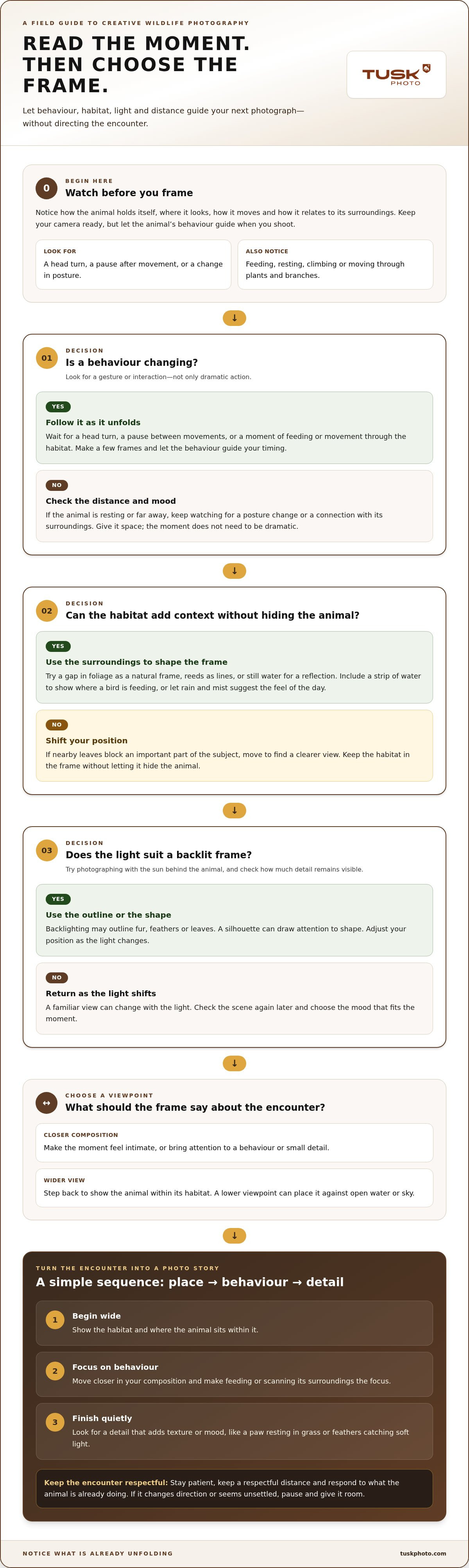
A single encounter can give you more than one kind of photograph. Start by noticing what the animal is doing, then choose a visual idea that suits the moment. You might show its place in the landscape, capture a change in its behaviour, or focus on a small detail. Wait, watch and adapt as the scene unfolds. If the animal moves or settles, let that guide your next frame instead of trying to direct the encounter.
Build a small sequence that gives the viewer a sense of being there:
Show the habitat and where the animal sits within it.
Make a behaviour, such as feeding or scanning its surroundings, the focus.
Look for a detail that adds texture or mood, like a paw resting in grass or feathers catching soft light.
The sequence doesn’t need dramatic action. A few thoughtful frames can tell a fuller story than several similar portraits. When editing, look for variety in distance, behaviour and composition, then arrange the images in the order the encounter unfolded.
Stay patient, keep a respectful distance and respond to what the animal is already doing. If it changes direction or seems unsettled, pause and give it room. Responsible observation sets the boundary for every creative choice.
Field time with experienced guides can help you practise noticing a scene and making choices as it changes. Explore wildlife photography tours for guided practice, or consider a tailor-made photography journey to focus on a particular species or region. Both offer a chance to develop creative wildlife photography ideas through observation, at a pace that respects wildlife.
Original wildlife photographs often begin with a simple change in attention. Watch how the animal behaves, then use the light, habitat and your viewpoint to shape the frame. A wide scene, a behaviour-focused image and a quieter detail can work together to tell a fuller story. These creative wildlife photography ideas don’t require a rare sighting. They ask you to notice what’s already unfolding and respond with care.
Want more time to practise in the field? Tusk Photo’s wildlife photography tours are led by experienced photography guides and designed for photographers at different experience levels. Explore wildlife photography tours and find a tour that helps you keep building your skills, one thoughtful encounter at a time.
Use your existing camera differently by changing your viewpoint, timing or composition. Try including more habitat, placing the animal off-centre, or using nearby foliage as a soft frame. Watch for a change in posture or gaze, and make a few compositions as the light shifts. Creative wildlife photography ideas often come from careful observation, not new equipment.
Photograph birds as part of their surroundings, not only as close-up portraits. Look for reflections near water, patterns in reeds or a bird moving between branches. You could also frame its silhouette against a bright sky or show a feeding or preening moment. Wait for natural behaviour, and try a wider view to give the bird’s habitat a role in the image.
Yes. A resting animal can make a calm, atmospheric photograph. Notice its posture and how it sits within the scene, then try a wider frame that shows the habitat or a closer composition focused on a small detail. Soft light, shadow or a natural foreground can add visual interest. Stay observant, since even a quiet animal may shift position or look up.
Keep a respectful distance and let the animal’s behaviour guide your choices. Don’t approach to change its position or interrupt feeding, resting or nesting. Instead, adjust your framing from where you are, wait quietly, and step back if your presence appears to affect its behaviour. Avoid flash on nocturnal animals. A thoughtful image should never come at the animal’s expense.


