
Capturing the Cold: Your Guide to an Arctic Wildlife Photography Expedition in 2026


What if you could stand at the edge of the world and capture a polar bear against the pack ice without being a professional explorer? Many photographers dream of an arctic wildlife photography expedition but worry that the frozen north is too harsh or that they aren't "pro enough" for such a journey. It's normal to feel unsure about which region to visit or how to keep your camera running in the deep cold. The Arctic demands respect but offers rewards like nowhere else on Earth.
This guide helps you plan your polar journey for 2026 with total confidence. You'll discover how expert mentorship turns a challenging environment into a creative playground for any skill level. We'll preview the best routes, explain new safety rules, and show you how a structured programme makes your goals achievable. You'll leave with a clear plan to find a supportive community and capture the portfolio of your dreams.
The Arctic isn't just a destination; it's a creative playground where the light behaves differently. In the far north, the sun stays low on the horizon, turning the usual golden hour into a long, glowing afternoon. This soft, ethereal light reflects off the pristine white landscapes, creating a dreamlike quality that's impossible to find anywhere else. Every shot you take becomes a study in texture and tone.
There's a profound emotional impact when you stand in the silent, frozen wilderness. It's a place of quiet intensity that demands your full attention. Because the subjects here are so rare, an arctic wildlife photography expedition offers you the chance to return with images that truly stand out. You aren't just taking pictures; you're documenting a world that feels both ancient and fragile.
Our scheduled tours provide an arctic wildlife photography expedition that focuses on the unique residents of the ice. We'll guide you through the best ways to frame these legendary animals:
Capture the King of the Arctic by using the pack ice to frame your subject. We'll look for ways to show their power against the vast, empty white while maintaining the required 300-metre distance.
These resilient animals are perfect for intimate portraits. We'll help you find beauty in the small details of the tundra and their thick, winter coats.
Framing these giants from a boat requires a steady hand. We'll show you how to use glaciers as a backdrop to show their massive scale and the true environment of the high seas.
Getting ready for an arctic wildlife photography expedition starts with a simple question: what do you want to see? If polar bears are at the top of your list, Svalbard is often the best choice. Once you've picked a spot, think about the light. You might want the 24-hour glow of the Midnight Sun or the deep, moody tones of the blue hour. These factors will shape every image in your portfolio.
When it's time to pack, keep your gear simple. You don't need every lens you own. Focus on versatile zooms and weather-sealed bodies that can handle the mist and freezing temperatures. For your own comfort, use a layered clothing system. It’s important to stay warm while keeping enough finger dexterity to adjust your dials in a hurry. If you aren't sure which window fits your schedule, you can browse our upcoming tour dates to find the perfect match.
The Arctic changes quickly throughout the year. Each month offers a different perspective for your lens:
You’ll find high ice and dramatic, snowy landscapes. It’s also the peak time for migratory birds returning to the cliffs.
This is when the ice melts enough for boats to reach remote fjords. You’ll enjoy 24-hour shooting opportunities under the Midnight Sun.
The tundra turns to beautiful autumn colours. In 2026, this is also a prime time for the Northern Lights because of the peak in the solar cycle.
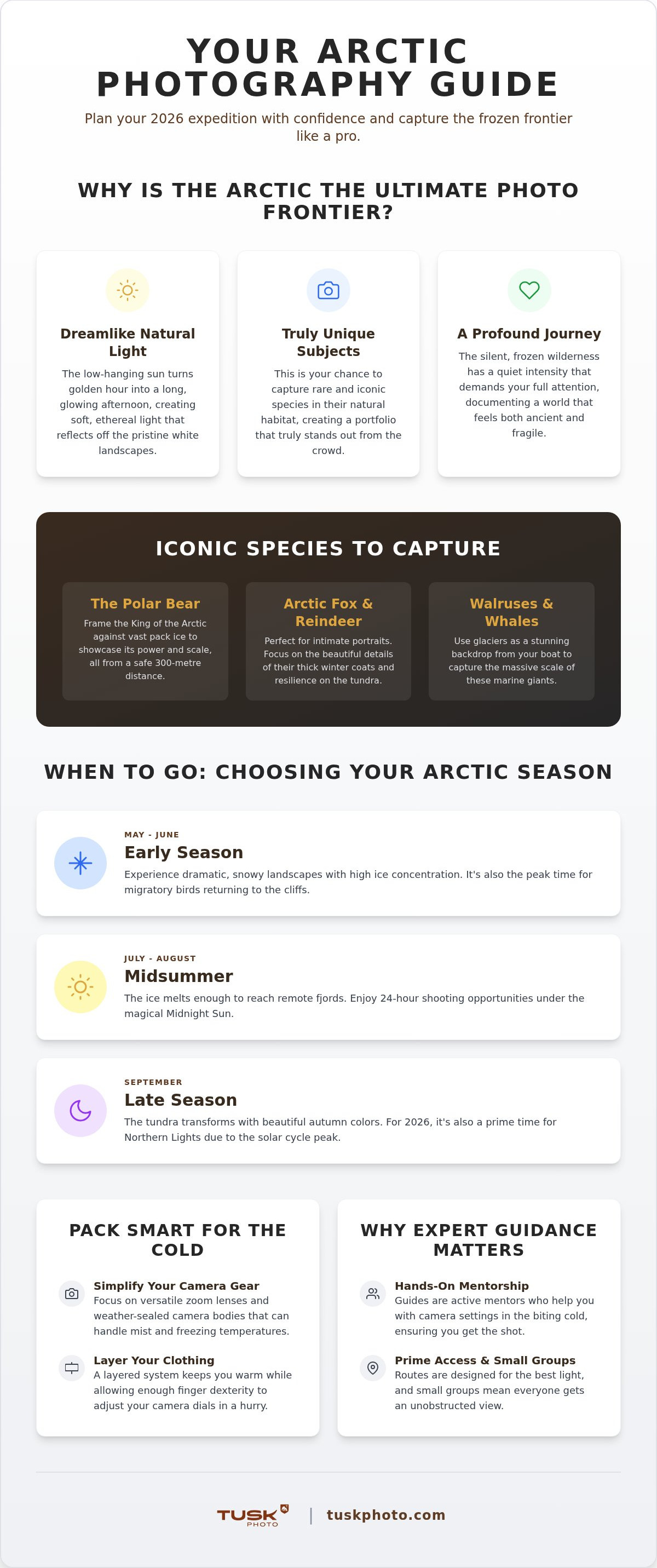
Standing on a frozen deck while a polar bear approaches is exhilarating. It's also the exact moment when your fingers might stiffen or you forget your exposure settings in the excitement. Our guides aren't just wilderness experts; they're active mentors who understand your gear. They stand right beside you during your arctic wildlife photography expedition, helping you adjust your camera in the biting cold. This hands-on support ensures you don't just witness the wildlife but actually return with the shot of a lifetime.
We specialise in bridging the gap between wildlife photography tips for beginners and high-end, professional execution. Our routes are designed for the best possible light and photographic angles, giving you exclusive access to scenes most travellers never see. Joining scheduled departure photography tours also builds a supportive community. You'll spend your evenings reviewing images and sharing techniques with like-minded creators who are just as passionate about the craft as you are.
Choosing the right format depends on your creative goals. Scheduled tours offer pre-planned precision. They use our deep knowledge of seasonal patterns to put you in the right spot at the right time. If you have a specific species or region in mind, you can design your own dream Arctic trip through our tailor-made service. We keep our groups small for a reason. This ensures everyone gets an unobstructed view and plenty of room to work. You won't have to fight for a spot at the railing, allowing you to focus entirely on the art of the capture.
The high latitudes offer a creative experience like no other, from the long golden hours to the sight of a polar bear on the pack ice. Success on your arctic wildlife photography expedition comes down to having the right plan and the right people by your side. Choosing the right season and gear will transform your portfolio. Now, it's about taking that first step toward the frozen frontier.
We provide expert photographic hosts on every journey to help you master your camera in the cold. Our small group sizes ensure you get maximum field time, and we offer bespoke Arctic itineraries on request. View our 2026 Arctic Tour Dates and join the expedition. Your journey to the edge of the world is waiting, and we're ready to help you capture every moment.
You should pack at least two weather-sealed camera bodies and a range of lenses, including a long telephoto zoom for wildlife and a wide-angle for landscapes. It's vital to have plenty of spare batteries because the cold drains them much faster than usual. Using a sturdy tripod and a waterproof bag will also help protect your gear from the mist and sea spray.
Absolutely, an arctic wildlife photography expedition is perfect for beginners because our expert hosts provide hands-on mentorship throughout the trip. You don't need to be a pro to join. We help you with camera settings and composition in the field, ensuring you return with high-quality images. It's a supportive environment where you can learn the craft at your own pace while exploring the north.
The best time depends on your goals, but July and August offer the most reliable access to polar bears as the ice retreats. If you want dramatic autumn light and a chance at the Northern Lights, September is a fantastic choice. We time our scheduled tours to match these peak windows, giving you the best opportunity to see the wildlife in action.
Temperatures during the summer months usually stay between -5°C and 5°C, but the wind chill on a moving boat can make it feel much colder. It is rarely as extreme as mid-winter, but you still need a high-quality layered clothing system. We recommend focusing on moisture-wicking base layers and a heavy, windproof outer shell to keep you comfortable during long sessions on deck.


