
Capturing Animal Behavior in Wildlife Photography: Read the Moment
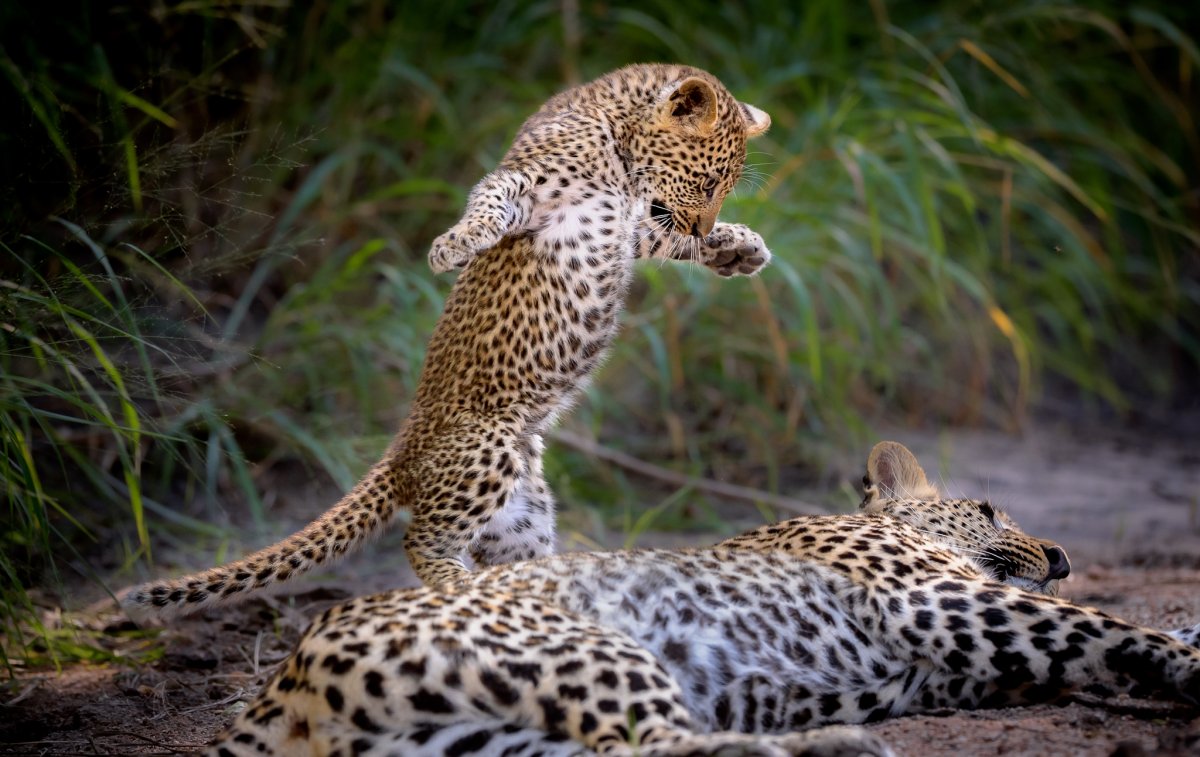

What if the best way to capture a split-second wildlife moment is to look away from your camera first? It’s easy to focus on settings, then realize an animal was about to feed, call, or interact just as the moment passed. Strong capturing animal behavior photography begins with patient observation, not constant adjustments.
Learning to read small changes in posture, gaze, and movement can help you prepare for what might happen next. In this guide, you’ll learn how to spot behavioral cues, choose a useful frame, and stay present as an encounter unfolds. You’ll also learn how to photograph without changing an animal’s natural behavior, so your images tell a meaningful story with respect. On a guided wildlife expedition, experienced guides help photographers at every level practise noticing and responding to these moments in the field.
A compelling wildlife image shows more than an animal in the frame. It reveals an action or interaction: a bird feeding, a mammal grooming, courtship behavior, an animal moving through its habitat, or a parent staying close to its young. The behavior gives the photograph a story. In capturing animal behavior photography, start by noticing what’s unfolding before deciding how to frame it.
Pause and observe. Look at the animal’s posture, where it’s facing, how quickly or slowly it’s moving, and whether it’s responding to another animal. Notice what changes and what repeats. A shift in attention or a repeated movement may be worth watching, but it doesn’t guarantee a particular action will follow. Keep your camera ready without letting its settings take your attention away from the scene.
Look for a change from the animal’s earlier pattern: a pause in feeding, repeated grooming, a turn toward another animal, or movement that gathers pace. These details can help you decide when to raise the camera or adjust your framing. They’re clues, not predictions.
A behavioral cue is an observable change in an animal’s posture, attention, movement, or interaction that helps a photographer notice when a meaningful moment may be developing.
Cues vary by species and setting, so don’t rely on a fixed checklist. Give the animal time, watch how it responds to its surroundings, and let its behavior guide your next choice. Experienced guides on wildlife photography expeditions can help you practise this patient way of seeing in the field.
Once you’ve noticed a possible change, keep your response simple. A clear sequence helps you stay attentive to the animal instead of getting caught up in camera adjustments. Capturing animal behavior photography means making thoughtful choices while leaving room for the moment to change.
Keep watching the animal and the space around it. Notice whether its movement or attention is changing, but stay open to different outcomes.
Decide what might matter in the frame, such as the animal’s movement or its relationship to another subject. Use this to prepare, not to predict.
Choose a workable composition before the action begins. Leave open space in the direction the animal is facing or moving, and check that every animal in an interaction is easy to see.
Be ready to adjust your framing as the scene shifts. Prepare for changes in movement and light, but don’t let technical checks take over your attention.
Start with a frame that gives the animal room to move. If it changes direction, make a small adjustment rather than rebuilding the composition from scratch. Check the background as well as the subject, since distracting shapes can make an action harder to read. When an action has several visible stages, a short sequence of frames can help show its progression. It won’t guarantee a strong image, so keep observing and choose the frames that communicate the moment most clearly.
Practise this rhythm in the field: observe, prepare, respond. Guided wildlife photography tours give you a chance to build that habit, with experienced guides supporting photographers as they respond to encounters.
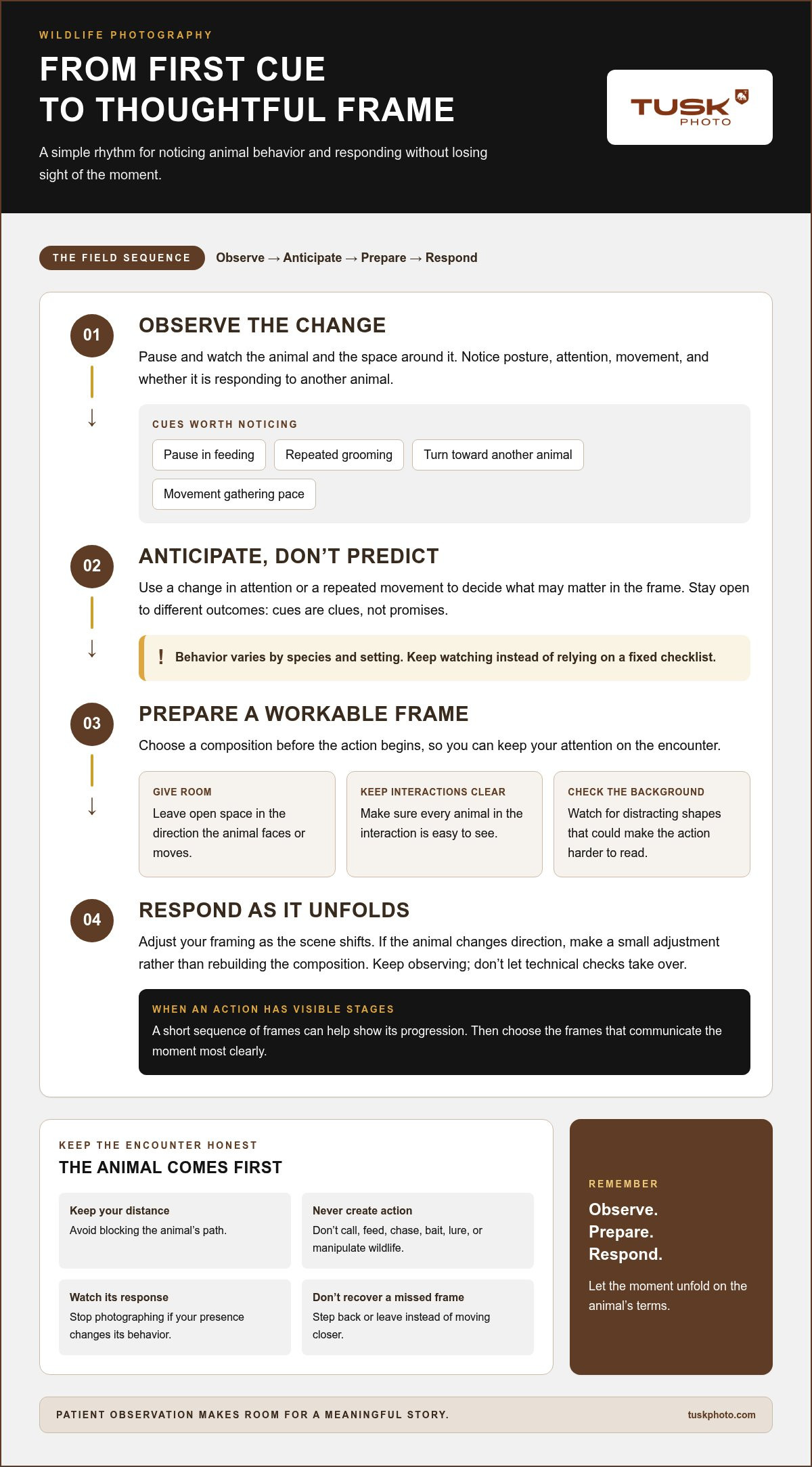
Good field practice starts with the animal’s needs, not the photograph. Keep a respectful distance, and never pursue, bait, lure, or otherwise encourage wildlife to move or act for your camera. If getting a closer view would mean changing the animal’s behavior, let the image go. The most meaningful encounter is one you haven’t forced.
Wildlife doesn’t follow a schedule. An animal may stay still, move out of view, or never appear during your time in the field. That isn’t a failed plan. Patience gives you room to notice what’s there without pressuring the encounter to become something else.
Build in a pause before and during photography. Observe from where you are, notice how the animal responds, and be ready to stop if your presence seems to change its behavior. Don’t move closer to recover a missed frame. Quietly step back or leave the area instead.
• Keep your distance and avoid blocking the animal’s path.
• Never call, feed, chase, or manipulate wildlife to create action.
• Stop photographing if the animal changes its behavior in response to you.
Respectful distance protects wildlife and gives photographs the honesty of behavior that unfolds on the animal’s terms. This principle guides capturing animal behavior photography: the image matters, but the encounter matters more.
On wildlife photography tours, experienced guides support thoughtful field practice and help photographers learn to respond to encounters. Their guidance can make the experience more informed, though wildlife sightings and photographic moments remain unpredictable.
Let your next wildlife encounter be a chance to slow down and see more. The more you practise capturing animal behavior photography, the more naturally you’ll notice the small changes that make an image feel alive. Stay curious, give the moment room to unfold, and let the experience matter as much as the photograph.
Put that approach into practice on a wildlife photography expedition with Tusk Photo. Experienced guides lead the tours, which welcome beginners as well as seasoned professionals, so you can build confidence at your own level. Explore wildlife photography expeditions with Tusk Photo and take your next step toward seeing the wild with fresh attention.
Not with certainty. You can make an informed guess based on what you’ve observed, but an animal may pause, change direction, or do something unexpected. Think of anticipation as a way to be ready, not as a promise about what comes next. Learning about a species’ usual habits can give context, while the individual animal and its surroundings still shape the moment.
Keep both animals and the space between them in view, so their relationship remains clear in the frame. Before they move, decide which part of the interaction matters most, such as a shared glance or a change in distance. Avoid watching only one subject through the viewfinder. A quick look at the wider scene can help you notice how the interaction is changing.
Yes, burst mode can help record a quick action in a short series of frames, such as a turn, leap, or brief exchange. Use it when the movement is fast and the sequence itself may matter. It won’t replace careful timing or guarantee a strong image. Choose moments deliberately, then review the frames for the clearest gesture and the most readable expression.
A clear story comes from showing what the animal is doing and giving viewers enough context to understand the moment. In capturing animal behavior photography, a visible gesture, the animal’s surroundings, or its relationship with another subject can add meaning. Keep the frame focused on one readable idea. If the viewer can sense the action without an explanation, the image is doing its work.


