
Brazil Jaguar Photography Tour: A Practical Planning Guide
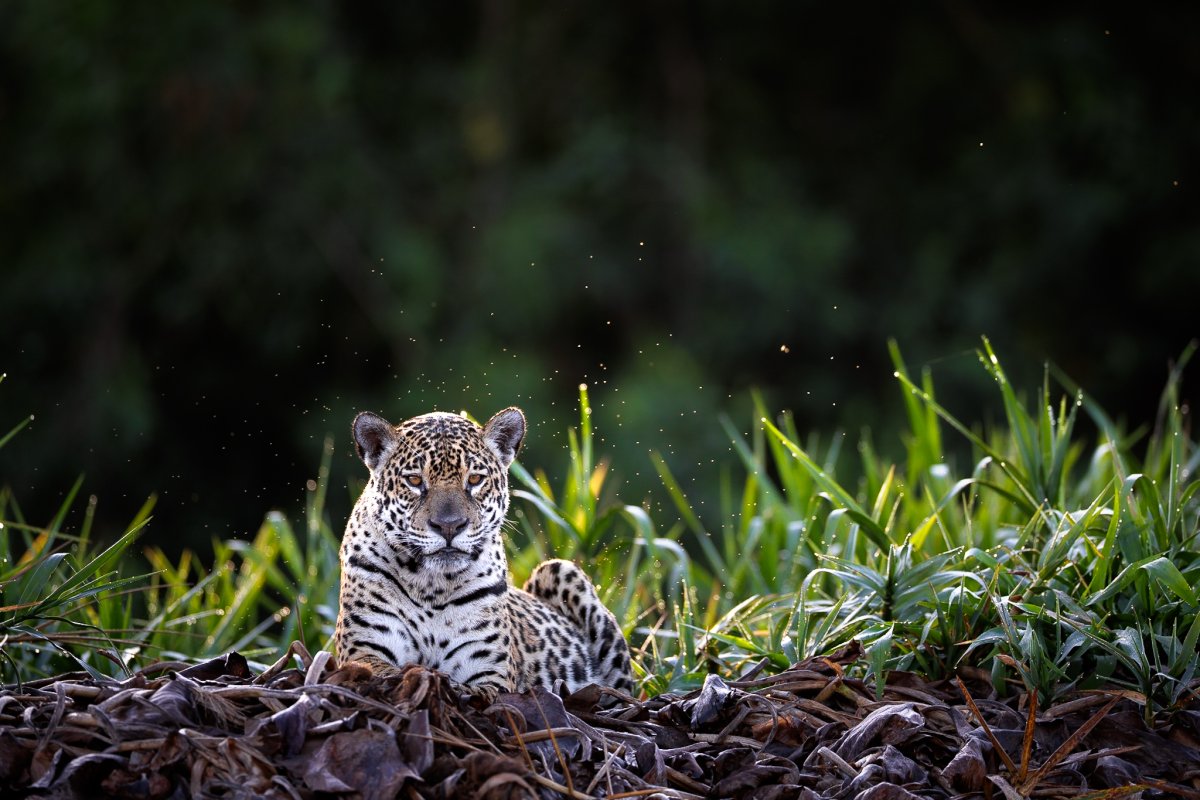

What makes a Brazil jaguar photography tour rewarding isn’t simply getting to the Pantanal. It’s choosing dates and an itinerary that fit your interests, preparing for the conditions, and knowing what you want your images to show. The Pantanal is a natural focus for jaguar photography, and the dry season, generally July to October, offers better visibility as wildlife gathers near water.
You don’t need advanced camera skills to plan well. This guide will help you compare timing and expedition formats, prepare your camera gear, and decide what you want from time in the field. You’ll also find practical ways to compare scheduled, tailor-made, and on-demand journeys, so you can choose an approach that suits your interests and travel style.
The Pantanal is a useful starting point when researching a jaguar-focused journey, but the region name alone isn’t a field plan. The specific itinerary determines where you’ll go and how you’ll spend your time. Compare those details rather than assuming every trip in the Pantanal offers the same route, schedule, or photographic conditions.
Start by researching the destination, then read the itinerary for each journey you’re considering. Look for the route, access arrangements, and daily schedule. These details help you decide what camera gear to carry and whether the pace and time in the field suit you. Avoid assuming that two journeys in the same region will offer the same experience.
Think beyond a single hoped-for image. You might want an immersive wildlife experience, time to practise camera skills, or guidance as you work toward a personal photography goal. Tusk Photo’s experienced guides support photographers at different skill levels, and each journey has its own itinerary. Explore wildlife photography tours to compare expedition formats and find an approach that fits your interests.
Make a few decisions in order to compare journeys against what matters to you, rather than choosing on the destination name alone.
Decide what you’d like to practise, such as getting sharper images of moving wildlife or including more of the surrounding landscape in a frame. A clear goal can help guide your choices, even if you’re new to wildlife photography.
Note the locations named, how the journey is arranged, and what the schedule says about time in the field. Use those details to judge whether the trip’s focus and pace fit your plans. Don’t assume two trips to the same region follow the same route.
Consider your calendar alongside the departure dates and any documented conditions for that period. Review scheduled tour dates to see which departures fit your plans.
A scheduled departure suits travellers who want to plan around set dates. A tailor-made journey can be shaped around personal interests and preferred pace. Consider your experience, the subjects you’re interested in, and how much flexibility you want.
Compare the documented conditions for your possible travel dates with the experience you want, rather than relying on a general claim about the best time. If you have a particular image in mind, consider whether the itinerary gives that interest room. In the field, follow your guide’s directions, give wildlife space, and let an encounter unfold without pressing for a closer view.
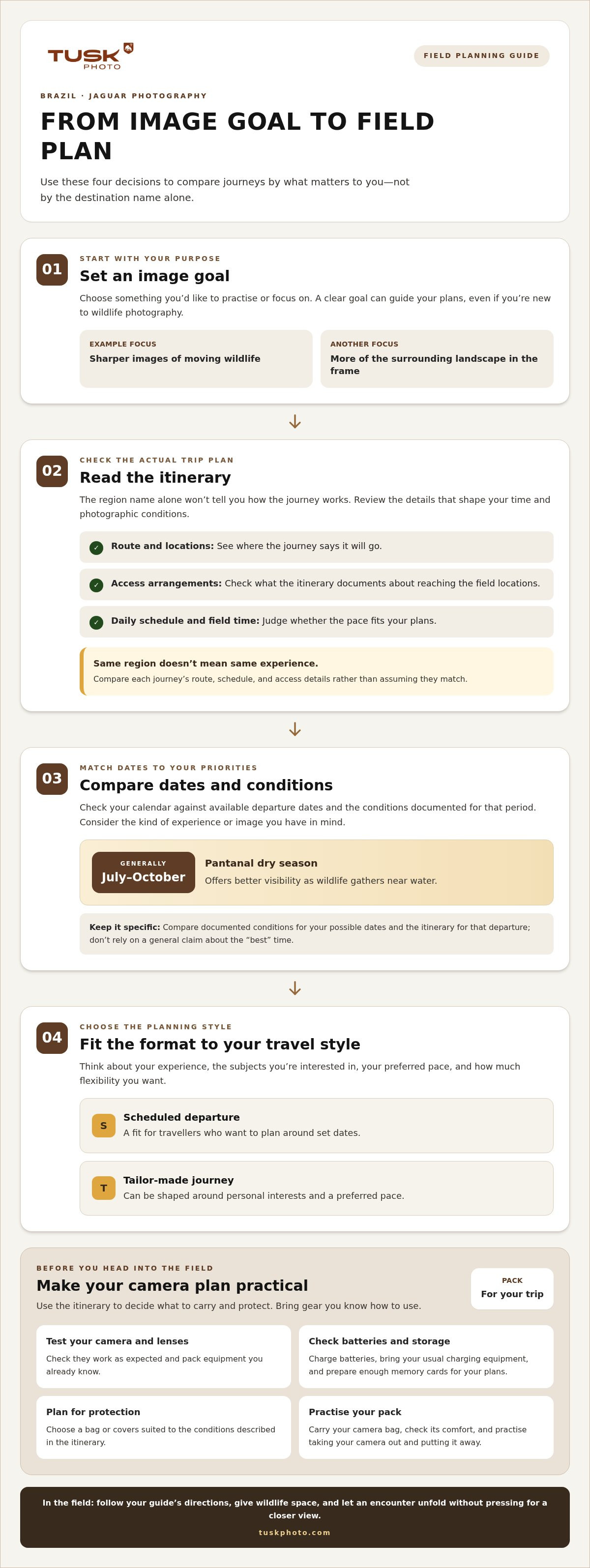
Choose a camera setup you’re comfortable carrying and can use confidently in the field. Before you travel, test the equipment and organise it so you can reach key items without unpacking your whole bag.
Check that they work as expected, and pack equipment you already know how to use.
Charge your batteries, bring the charging equipment you normally use, and prepare enough memory cards for your plans.
Choose a bag or covers suited to the conditions described in your itinerary.
Organise spare batteries and cards so you can find them quickly while travelling.
Do a practice pack before departure. Carry your camera bag as you would on the trip, check that it feels comfortable, and practise taking out and putting away your camera. Review the itinerary for details that affect what you’ll need to carry or protect. This can help you leave unnecessary gear behind and feel more prepared.
When choosing a journey, compare its itinerary with your interests, preferred pace, and practical travel needs. Tusk Photo offers wildlife photography tours, including custom-made photography journeys shaped around individual preferences. Choose the format that best fits the experience you have in mind, and base your equipment plan on the details of that trip.
Before choosing a journey, picture the kind of time in the field you want: a chance to practise, focus on a photography interest, or observe wildlife with care. Let that goal guide your choice of dates and trip format. A thoughtful Brazil jaguar photography tour is about more than the images you hope to bring home. It’s also a chance to learn from the landscape and the guides leading your experience.
Tusk Photo’s wildlife photography expeditions are led by experienced guides and include scheduled, tailor-made, and on-demand journeys. Explore Tusk Photo’s wildlife photography journeys and choose a format that fits your interests. Start with the itinerary, prepare at your own pace, and plan for a rewarding experience in the field.
There isn’t one best time for every photographer. For a Brazil jaguar photography tour, compare documented regional conditions with the dates, access, and plans for a particular departure. If you have a specific kind of scene in mind, look for seasonal information that relates to it. Conditions vary, and no month or departure can guarantee sightings or photographs.
The Pantanal is a region photographers commonly research when planning jaguar-focused travel in Brazil. The region name alone won’t tell you where a particular journey goes or how it operates. Itineraries vary, so use the published information for each trip to understand its route and access arrangements. This helps you judge whether the journey fits your interests and travel preferences.
Bring equipment you already know how to use, including your camera body, lenses, batteries, memory cards, and a way to protect your gear. You don’t need to add unfamiliar equipment just for the trip. Practise changing focus and exposure settings before you travel, and use the itinerary to decide what kind of protection to pack. No particular camera setup guarantees a photo opportunity.
Yes. Tusk Photo’s wildlife photography expeditions welcome photographers from beginner to experienced levels and are led by experienced guides. Before choosing a journey, think about what you’d like to learn, which subjects interest you, and how much structure you prefer. Scheduled, tailor-made, and on-demand formats offer different ways to plan, but no trip can promise particular sightings or photographs.


