
Botswana Photography Safari: Complete Guide to the Okavango in 2026
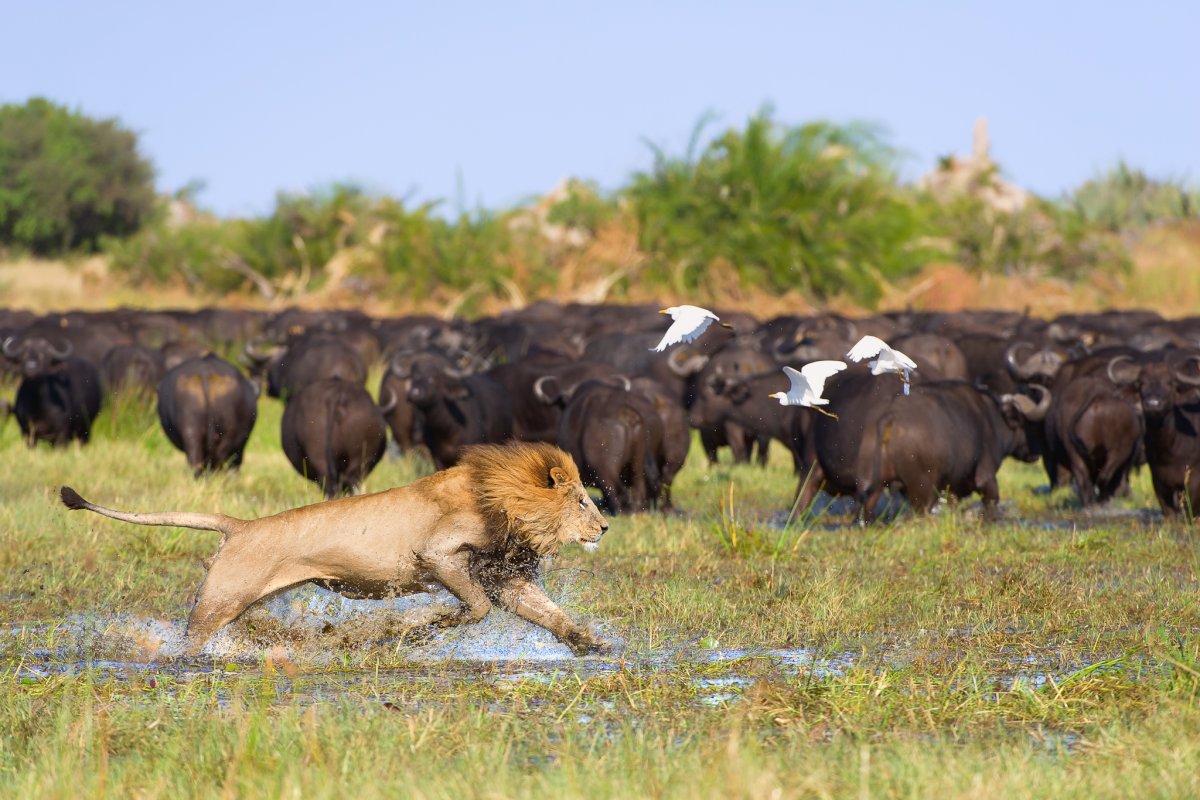

What if your best wildlife photograph depended less on a bigger lens than on where the vehicle stops? On a Botswana photography safari, it’s natural to wonder whether your camera gear is ready, which season suits the scenes you hope to capture, and whether you’ll have room to shoot from a shared vehicle.
You don’t need a complicated setup to get started. Thoughtful timing and careful positioning can make a real difference, while an experienced photography guide can help you respond to changing light and animal behaviour. This guide covers seasonal differences in the Okavango Delta, practical gear choices, and the questions to ask when comparing photo-focused trips. You’ll have a clearer plan for capturing the Delta with confidence.
A Botswana photography safari offers more than beautiful scenery. The country’s mix of protected wilderness, varied habitats, and carefully managed tourism creates opportunities to watch wildlife without rushing from one sighting to the next. In some private concessions, vehicles may be allowed to leave established tracks when local rules and conditions permit. That flexibility can help guides find a better angle or photograph animals against a natural backdrop. Access varies by area, so check what’s permitted on your itinerary.
Botswana's high-value, low-volume tourism approach limits visitor numbers, helping keep wildlife sightings peaceful and uncrowded. Wildlife-rich areas also offer chances to observe predators and prey behaving naturally. A skilled guide can read signs of movement and help position the vehicle with care. Patience gives you time to compose a frame rather than simply record a sighting.
The Okavango Delta is a network of waterways, islands, and floodplains. Changing water levels create varied scenes, from reflections and reeds to animals moving across open grass. Chobe’s riverfront has a different feel: broad views of the water draw wildlife to the banks, especially elephants. The contrast gives photographers a choice between intimate wetland scenes and expansive river gatherings.
On a boat outing, you can photograph elephants drinking from closer to water level, creating a perspective that’s difficult to get from a vehicle. The slower pace also gives you time to watch how animals approach the river and interact. On a guided photo expedition, ask how the guide can help with positioning, light, and timing. That support can be useful whether you’re learning in the field or refining your approach.
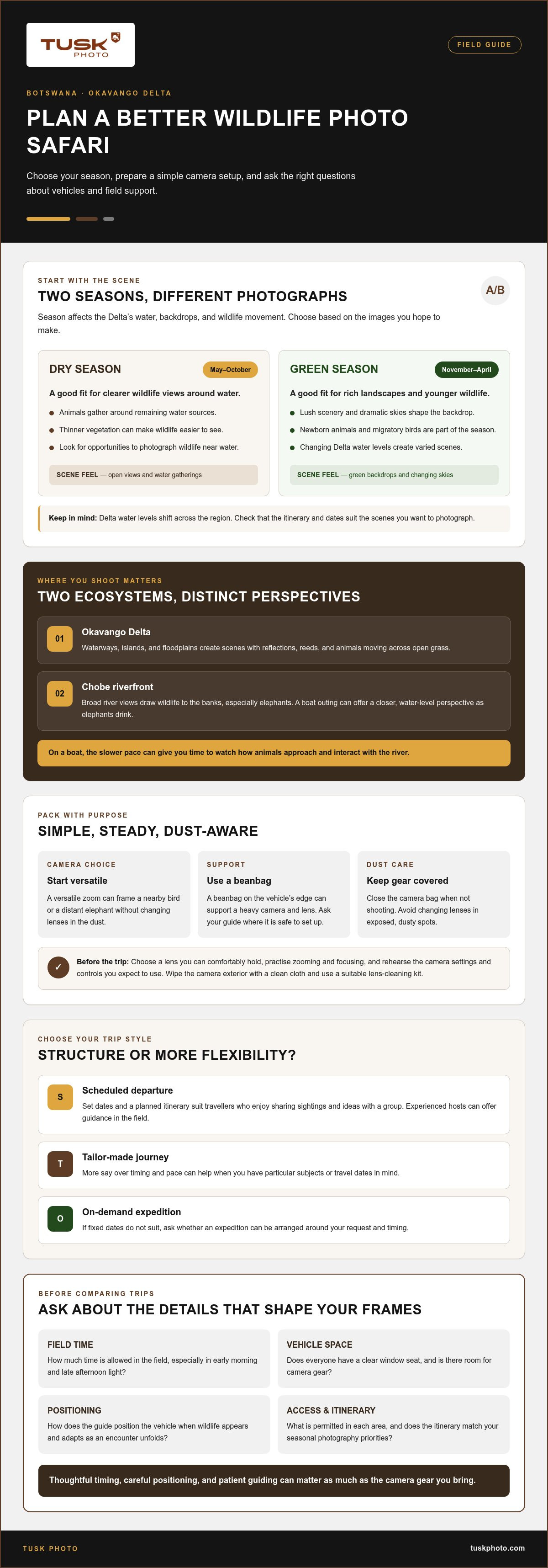
You don’t need a bag full of equipment for a Botswana photography safari. Start with a versatile zoom lens, which lets you frame a nearby bird or a distant elephant without changing lenses in the dust. Choose a lens that feels manageable to hold for long periods, and practise zooming and focusing before the trip. If you already own more than one lens, consider which one you’re most likely to use from a vehicle before packing extras.
A beanbag placed on the vehicle’s edge can support a heavy camera and lens. Rest the lens on it, keep your grip light, and adjust your position as the animal moves. Ask your guide where it’s safe to set up.
Store camera gear in a closed bag when you’re not shooting. Avoid changing lenses in exposed, dusty spots. Wipe the camera’s exterior with a clean cloth, and use a suitable cleaning kit for the lens.
Season affects the Delta’s water, backdrops, and wildlife movement. In the dry season, from May to October, animals gather around remaining water sources, and thinner vegetation can make them easier to see. The green season, from November to April, brings lush scenery, dramatic skies, newborn animals, and migratory birds. Delta water levels shift, so waterways and floodplains offer different scenes as conditions change across the region.
Choose based on the images you want: clearer views of wildlife around water in the dry months, or richer landscapes and young animals in the green season. Then check what the itinerary covers and whether the dates suit your priorities. To explore guided photography expeditions, see these scheduled wildlife photography tours. Before departure, practise the camera settings and controls you expect to use most.
A dedicated photography trip is planned around the moments you’re there to capture. Early morning often brings soft golden light and active wildlife, so ask how much time the itinerary allows in the field and how guides adapt when an animal encounter is unfolding. It’s also worth checking how the daily schedule balances dawn outings with camp meals and rest.
Vehicle setup matters, too. A standard tourist jeep may need to serve passengers with different interests, while a photo-focused vehicle can offer photographers more room to work. Before booking, ask whether everyone has a clear window seat, how much space there is for camera gear, and how the guide handles positioning when wildlife appears. These details can make it easier to follow a moving subject without competing for a sightline.
Scheduled departures suit travellers who enjoy sharing sightings and ideas with a group. They have set dates and a planned itinerary, with experienced hosts offering guidance in the field. A tailor-made journey gives you more say over timing and pace, which can be useful if you have particular subjects or travel dates in mind. If fixed dates don’t suit your plans, ask whether an on-demand expedition can be arranged around your request and timing.
Before choosing, consider whether you prefer the structure of a scheduled trip or more flexibility to shape your journey. Review the upcoming photography tour dates and compare them with seasonal wildlife patterns. Ask about vehicle arrangements, field support, and how much room the itinerary leaves for photography. Tusk Photo offers scheduled, tailor-made, and on-demand photography journeys, so you can explore the format that best fits your interests and plans.
A memorable Botswana photography safari comes together through good timing, a simple and reliable camera setup, and thoughtful positioning in the field. Choose a season that suits the scenes you hope to capture, from wildlife gathering near water in the dry months to lush scenery and newborn animals in the green season. You don’t need complicated gear to make meaningful images.
Experienced photography hosts can offer guidance in the field, while a well-planned itinerary can make time for early morning and late afternoon light. When comparing trips, ask how the schedule, vehicle arrangements, and guiding support fit your photography priorities. That information can help you focus on watching wildlife, learning, and making photographs at your own pace.
Ready to plan your trip? Explore Tusk Photo’s wildlife photography tours, review the scheduled departures, and ask about a tailor-made or on-demand journey that suits your interests.
No, you can take strong wildlife photos without professional-level equipment. A camera with a versatile zoom lens can help you frame both nearby and distant animals. A beanbag can steady your camera on a vehicle, and keeping gear in a closed bag when you’re not shooting helps limit dust exposure. Practise with your camera before you travel so you’re comfortable using it.
Photo safaris are planned around photography, with more attention to light, animal behaviour, and vehicle positioning. Experienced photography hosts can offer guidance in the field, and the vehicle setup can affect how much room you have to work. Standard game drives may serve travellers with varied interests, so ask about seating, gear space, and time in the field before booking.
The dry season, from May to October, is generally best for concentrated wildlife viewing as animals gather near water and vegetation is less dense. July to October can be especially rewarding for elephant sightings in Chobe. From November to April, the green season brings lush backdrops, dramatic skies, newborn animals, and migratory birds. Choose the season that best suits the images you hope to make.
Yes. Beginners can join dedicated wildlife photography tours, and you don’t need to arrive with advanced skills. Tusk Photo’s expeditions are led by experienced guides who support both beginners and seasoned photographers. In-field guidance can help you work with changing light, follow animal behaviour, and improve your positioning. Bring a camera you know how to use, and ask what support the itinerary includes.


