
Big Five Photography Safari: A Field Guide to Photographing Africa’s Iconic Wildlife

What if your best wildlife photograph begins with patience, not a checklist? On a big five photography safari, the aim isn’t simply to spot Africa’s lion, leopard, elephant, Cape buffalo and rhino. It’s to observe, anticipate and be ready when a fleeting moment unfolds. That can feel different from a standard game drive, especially if you’re new to wildlife photography.
You may be wondering how to prepare, whether you need specialist experience and how to avoid missing a moment. This guide explains the photographic challenge each of the Big Five presents and offers practical ways to observe and compose images in the field. It also helps you choose an expedition format that fits your interests, with guidance from experienced wildlife photography hosts.
A big five photography safari is about more than finding animals. It gives you time to notice how each subject moves, responds to its surroundings and looks in changing light. An experienced guide can help you read a scene and anticipate what might happen next, but wildlife encounters are never guaranteed. The focus is on being ready and respectful, rather than rushing from one sighting to another.
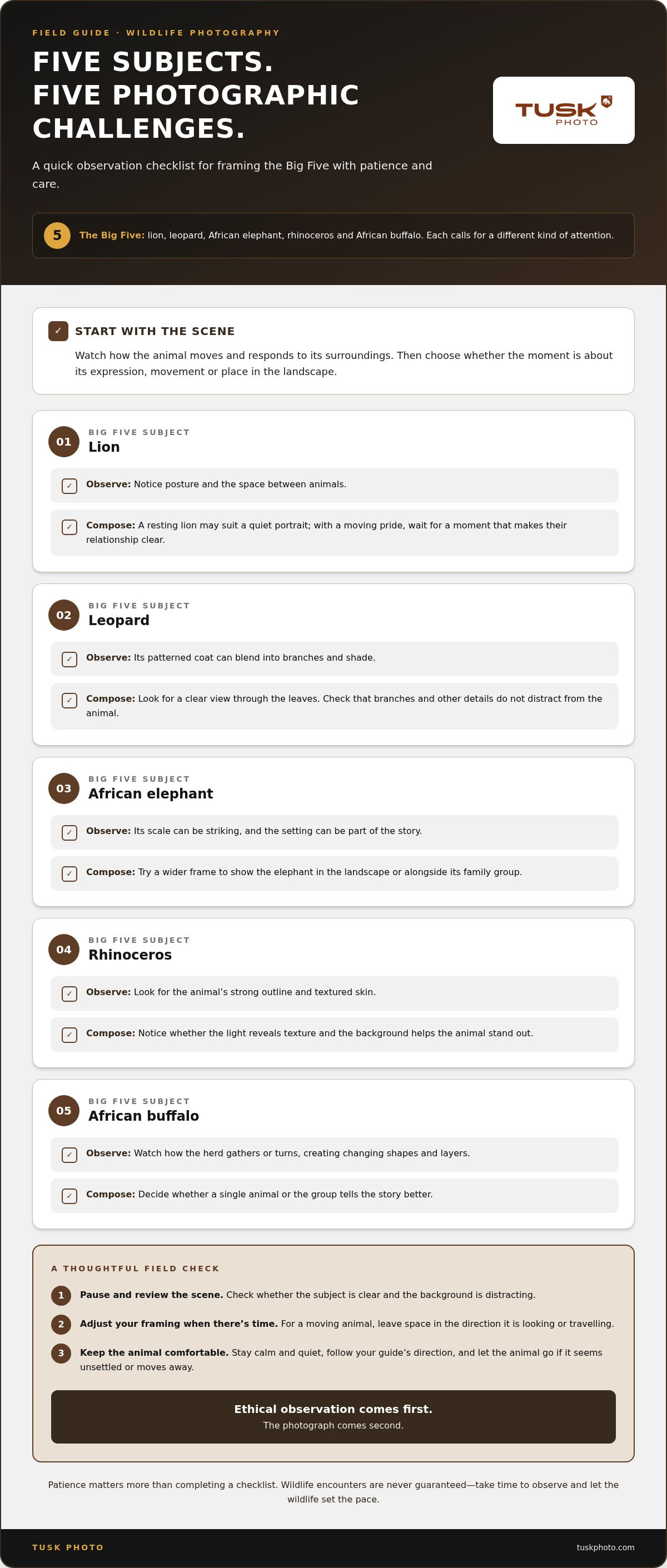
The Big Five are the lion, leopard, African elephant, rhinoceros and African buffalo, five iconic animals found on African safaris. The name describes this group; it isn’t a promise that you’ll see all five on a trip.
Each animal calls for a different kind of attention. Size, movement, behaviour and setting all affect how you might frame a photograph. Watch the scene first, then decide whether to capture the animal’s expression, movement or place in the landscape.
A resting lion may suit a quiet portrait, while a moving pride can change the scene quickly. Notice posture and the space between animals, and wait for a moment that makes their relationship clear.
Its patterned coat can blend into branches and shade. Look for a clear view through the leaves, and check that branches or other details don’t distract from the animal.
Its scale can be striking, but a close portrait may leave out the setting. Try a wider composition to show the animal in the landscape or alongside its family group.
Its strong outline and textured skin offer details to observe. Look for light that reveals the texture and a background that helps the animal stand out.
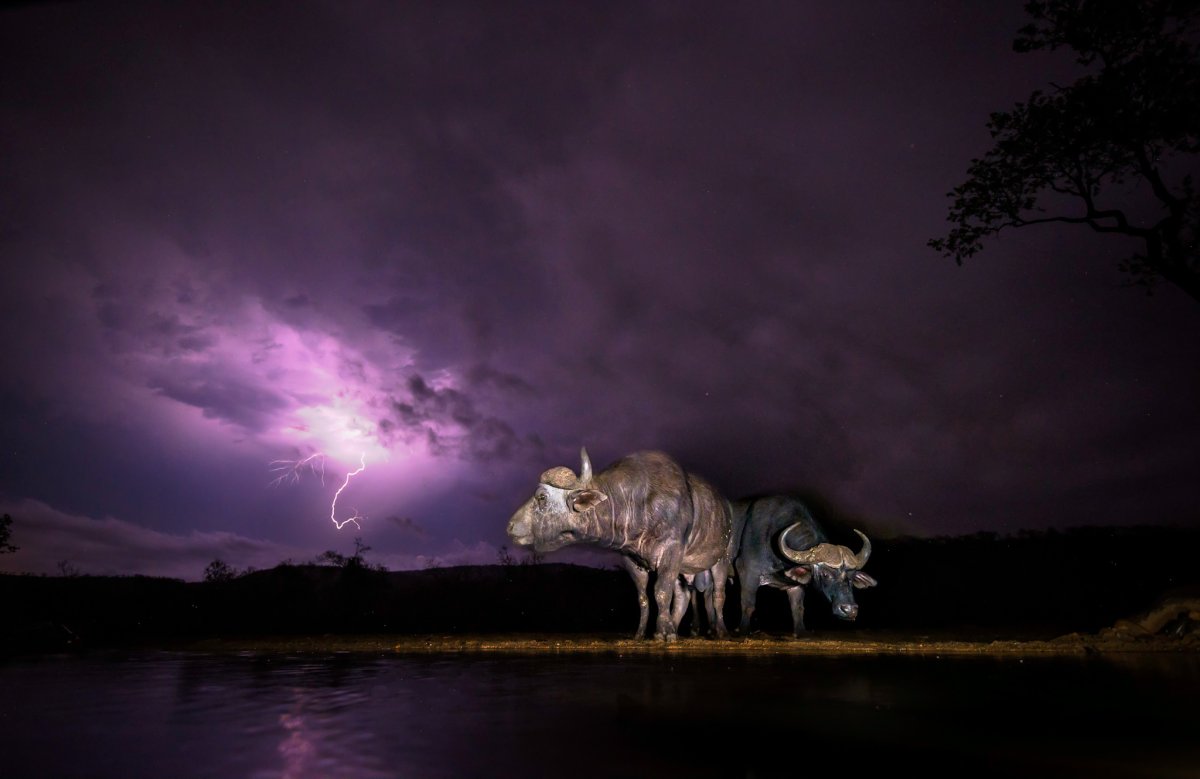
A herd creates changing shapes and layers. Watch how individuals gather or turn, then choose whether a single animal or the group tells the story better.
Patience matters more than completing a checklist. Take time to observe, listen to your guide and let the wildlife set the pace. Sometimes the most memorable image is not a close-up, but one that shows an animal in its habitat. A common mistake is to keep shooting without checking whether the subject is clear or the background is distracting. Pause, review the scene and adjust your framing when there’s time.
Good wildlife photographs often begin before you lift your camera. Watch how an animal moves, where it turns and what it pays attention to. A lion shifting in the grass, for example, may offer a more natural moment than a rushed close-up. Give yourself time to notice what is unfolding. Then choose a framing that shows the animal clearly without losing the scene around it. If the animal is moving, allow space in the frame in the direction it is looking or travelling.
Light changes the feeling of a photograph. Early or late in the day, softer light can bring out detail in fur, skin and landscape without the sharp contrast of brighter conditions. It can also add warmth and depth to a scene. Rather than chasing a particular look, notice how the light falls on the animal and whether the background helps your subject stand out.
Before taking a photograph, consider the animal’s comfort. Keep your movements calm, stay quiet and follow your guide’s direction. If an animal seems unsettled or moves away, let it go. A thoughtful approach in the field matters more than any single frame.
Ethical observation comes first; the photograph comes second.
On a big five photography safari, an experienced guide can help you read animal behaviour and make better use of changing conditions. That support is useful whether you’re learning to anticipate a moment or refining how you frame it. Tusk Photo’s wildlife photography tours are designed for beginners and seasoned photographers, with experienced guides leading the expeditions.
The right expedition depends on what you want from the experience. Consider your photography experience, the wildlife or scenes you’re most interested in, and whether you prefer a set departure or a journey shaped around your interests. You don’t need to be a seasoned photographer to benefit from guidance in the field. A big five photography safari can give you room to learn as you observe, practise and refine your approach.
Scheduled tours have planned departure dates. Browse the scheduled tour dates to compare the departures and choose a structure that suits you.
Tailor-made tours shape a journey around the photography subjects and goals that matter most to you. Explore tailor-made photography tours.
On-demand tours offer another way to shape an expedition around your requests and timing.
Tusk Photo’s experienced guides lead wildlife photography expeditions for beginners and seasoned photographers. Their guidance can help you build confidence in the field, notice details you might otherwise miss and keep learning as situations change. A scheduled departure may suit you if you value a defined structure. A tailor-made journey can focus more closely on your individual interests, while an on-demand tour offers a flexible format.
Before choosing, name one or two goals you’d like to pursue, such as observing an animal’s behaviour or practising thoughtful composition. Clear priorities can help you find a format that feels right, while leaving space for the unpredictability of wildlife. To compare the expedition options, explore Tusk Photo’s wildlife photography tours.
Before you plan a big five photography safari, picture how you want to feel in the field. Perhaps you want to grow more confident behind the camera, explore a particular photographic interest or learn to notice more of what’s happening around you. Let that intention guide your choice of expedition. The most rewarding journey leaves room for curiosity, learning and the unexpected.
Tusk Photo’s experienced guides lead wildlife photography expeditions for beginners and seasoned photographers, with scheduled, tailor-made and on-demand options. Choose the format that fits your goals and take the first step toward your next photographic adventure. Explore Tusk Photo’s guided wildlife photography tours and start planning a journey shaped by observation and discovery.
It’s possible, but no safari can guarantee sightings of all five or the chance to photograph them. Wildlife moves freely, and what you encounter depends on what the animals are doing during your time in the field. On a big five photography safari, treat each sighting as its own experience. Enjoy the animals you do see and leave room for the unexpected.
Yes. You can start without advanced photography skills. Before your trip, practise using your camera so you can adjust its basic settings without taking your attention away from the animals. Try photographing moving subjects at a local park or wildlife reserve, then review which images feel clear. Short practice sessions can help you feel more prepared when a memorable moment unfolds.
No. A professional camera isn’t essential for enjoying a Big Five photography safari. Use equipment you’re comfortable handling, whether that’s a phone, a compact camera or a more advanced model. The best choice depends on what you want to photograph and how you like to work. Practise framing and focusing with your own device before you travel, so you can respond naturally in the field.


