
Best Time for Botswana Wildlife Photography: 2026 Guide


The perfect shot of a lion stalking through golden grass doesn't happen by accident; it's all about being in the right place at the right time. You might worry that the thick bush will hide the animals or that the heat will be too much for your camera gear. Finding the best time for wildlife photography in Botswana is the first step to coming home with a portfolio you're proud of.
We know how tricky it can be to plan a trip when you aren't sure when the Okavango Delta floods or when the predators are most active. This 2026 guide helps you choose the perfect window for your adventure. You'll learn which months offer the best visibility and how to capture iconic landscapes in their best light. We'll break down the seasons so you can book your tour with confidence.
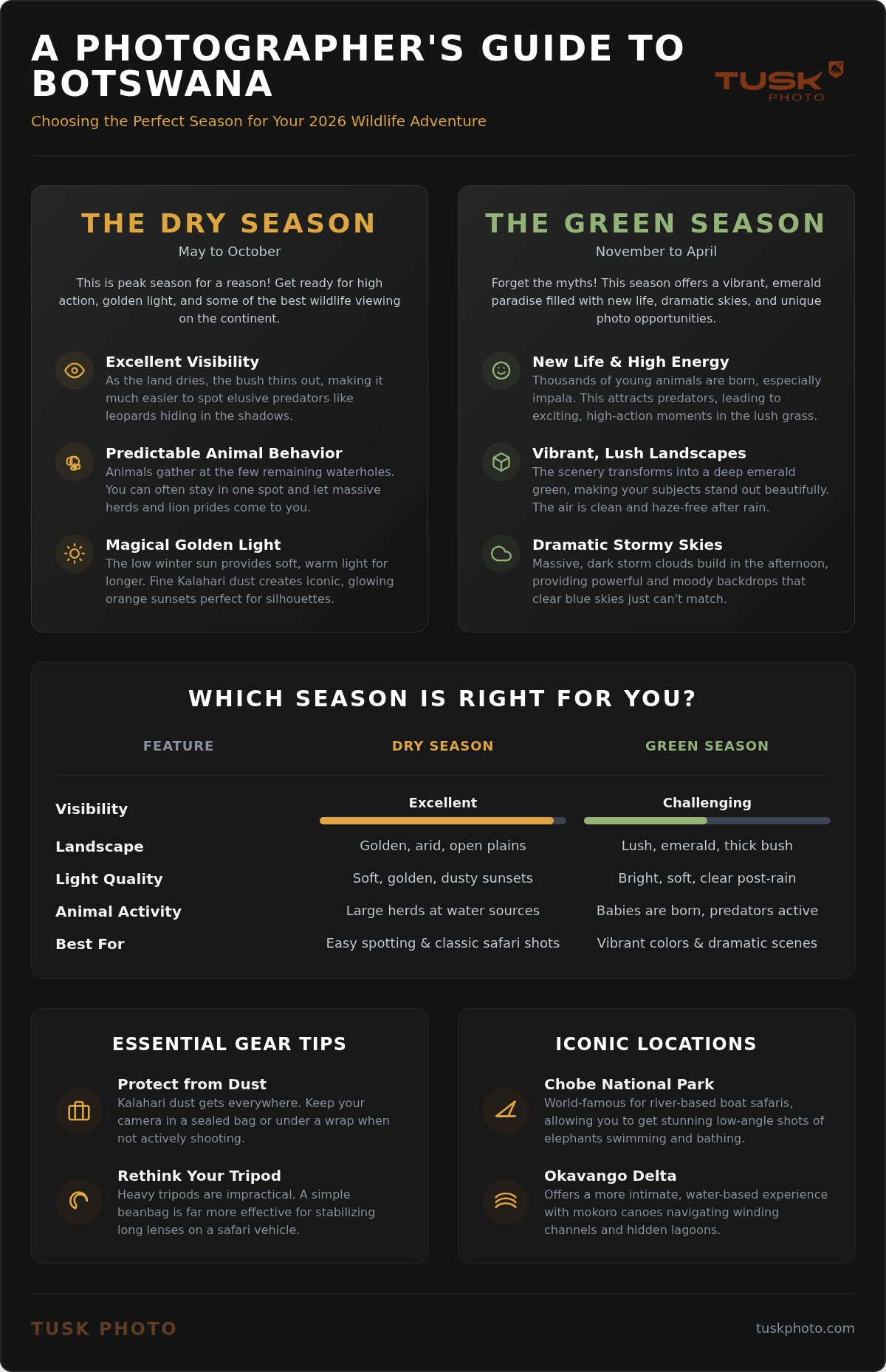
May to October is widely considered the peak window for a reason. Watch as the rain stops and the land dries out, causing the thick bush to thin. This makes it much easier to spot elusive predators like leopards that usually hide in the shadows. Many experts agree this is the best time for wildlife photography in Botswana because animal behavior becomes so predictable.
Water becomes the center of life during these months. Capture large prides of lions and massive herds of elephants as they gather at the few remaining permanent waterholes. You can often stay in one spot and let the animals come to you. This season also brings the famous floodwaters to the Okavango Delta. Between June and August, the channels fill up. This offers unique chances to photograph wildlife interacting with the water against a dry backdrop. Our 2026 scheduled departures are timed perfectly to catch these peak flood levels.
In the southern hemisphere winter, the sun sits at a lower angle in the sky all day. This is a huge benefit for your portfolio. It means you get soft, warm light for much longer than you would in the summer. You won't have to deal with the harsh shadows that usually ruin midday shots. If you want high-action predator shots and easy spotting, this is the best time for wildlife photography in Botswana.
The dry air also carries fine dust from the Kalahari. While this might sound like a challenge for your gear, it actually creates a stunning atmospheric effect. When the sun hangs low, this dust catches the light and produces a deep, glowing orange. It is the secret behind those iconic African sunset shots with dark silhouettes of giraffes and baobab trees.
Don't believe the myth that the rainy season is a bad time for your camera. While the dry months are famous for easy spotting, the "Green Season" from November to April tells a much more vibrant story. The landscape transforms into a deep emerald paradise that makes your subjects stand out beautifully. If you're looking for the best time for wildlife photography in Botswana to capture color and drama, this is it. Massive, dark storm clouds build up in the afternoon, providing moody and powerful backdrops that clear skies simply can't match.
This is also a season of incredible energy. With water everywhere, animals aren't stuck at waterholes, so they move through the lush grass in peak physical condition. You'll witness high-action predator moments as they track the new arrivals. For those who love detail, the influx of migratory birds brings a splash of color to every branch. If you have a specific species you're dying to photograph, our Tailor Made Tours can help you find them in these hidden corners of the bush.
The "lambing" season is one of nature's greatest spectacles. Thousands of young impala arrive within a few weeks, offering endless chances for emotional and high-speed shots. The light after a summer rain shower is a gift for any photographer. It's bright and soft, with the rain washing the air clean of any haze. This creates a perfect environment for capturing saturated colors and fine details, from the wet fur of a cub to the iridescent feathers of a kingfisher.
Picking the right trip depends on your personal style and goals. Our Scheduled Tours are fantastic for meeting fellow enthusiasts who share your passion. If you prefer a private experience, Tailor Made Tours offer total flexibility for your specific schedule. A key factor is having a guide who actually understands photography. They don't just find a lion; they position the vehicle so the light hits the subject perfectly. This specialized knowledge ensures you maximize the best time for wildlife photography in Botswana.
You also need to decide which regions to explore. Chobe is world-famous for its river-based boat photos, allowing you to get low-angle shots of elephants swimming. The Okavango Delta offers a more intimate, water-based experience with winding channels and hidden lagoons. Choosing the right area is just as important as picking the best time for wildlife photography in Botswana. If you aren't sure where to start, our scheduled departure photography tours for 2026 cover the most iconic spots at the best possible times.
Botswana is beautiful, but it can be tough on equipment. The fine Kalahari dust is famous for getting into every nook and cranny of your lens. Always keep your camera in a sealed bag or under a protective wrap when you aren't actively shooting. Also, leave the heavy tripod at home. A simple beanbag is much more effective for stabilizing long lenses on the frame of a safari vehicle. For more help getting started, check out our wildlife photography tips for beginners.
Botswana is a photographer's dream throughout the year. Whether you want the golden dust of the dry season or the emerald landscapes of the green season, you'll find something incredible to capture. The best time for wildlife photography in Botswana really depends on the specific story you want to tell with your lens.
We're here to make sure you get the perfect shot. Every journey features expert photography hosts who know exactly where to find the most dramatic action. We keep our groups small to ensure you have the best shooting angles at every sighting. If you have a specific goal in mind, we even offer customizable itineraries to suit your needs.
Ready to pack your bags? Check out our 2026 Botswana tour dates here! We can't wait to see the amazing images you'll create in the wild.
No, the rainy season is a fantastic time for your camera. While the bush is thicker, the vibrant green colors and dramatic storm clouds create stunning backdrops. It's also when many baby animals are born, which brings out the predators. If you want unique shots that aren't just brown and dusty, this is the best time for wildlife photography in Botswana.
For the best chance of spotting leopards, aim for the peak dry months between July and October. As the land dries out, the vegetation thins, making it much harder for these shy cats to hide. They also stay closer to permanent water sources during this time. Our guides know the specific territories well, helping you find these elusive subjects in the best possible light.
A long lens is definitely a good idea for a safari. Most photographers find that a lens reaching at least 400mm or 500mm is essential for capturing birds and distant predators. However, don't forget a wider lens for those massive African landscapes and sunset shots. Having a mix of lenses ensures you're ready for everything from a tiny kingfisher to a herd of elephants.
The Okavango Delta usually reaches its peak flood levels between June and August. Even though this is the dry season in Botswana, the water travels all the way from the highlands of Angola. It takes several months for the flood to arrive and fill the channels. This creates a beautiful contrast where the delta is lush and full while the surrounding areas are dry.


