
Best Places to Photograph Leopards in Africa
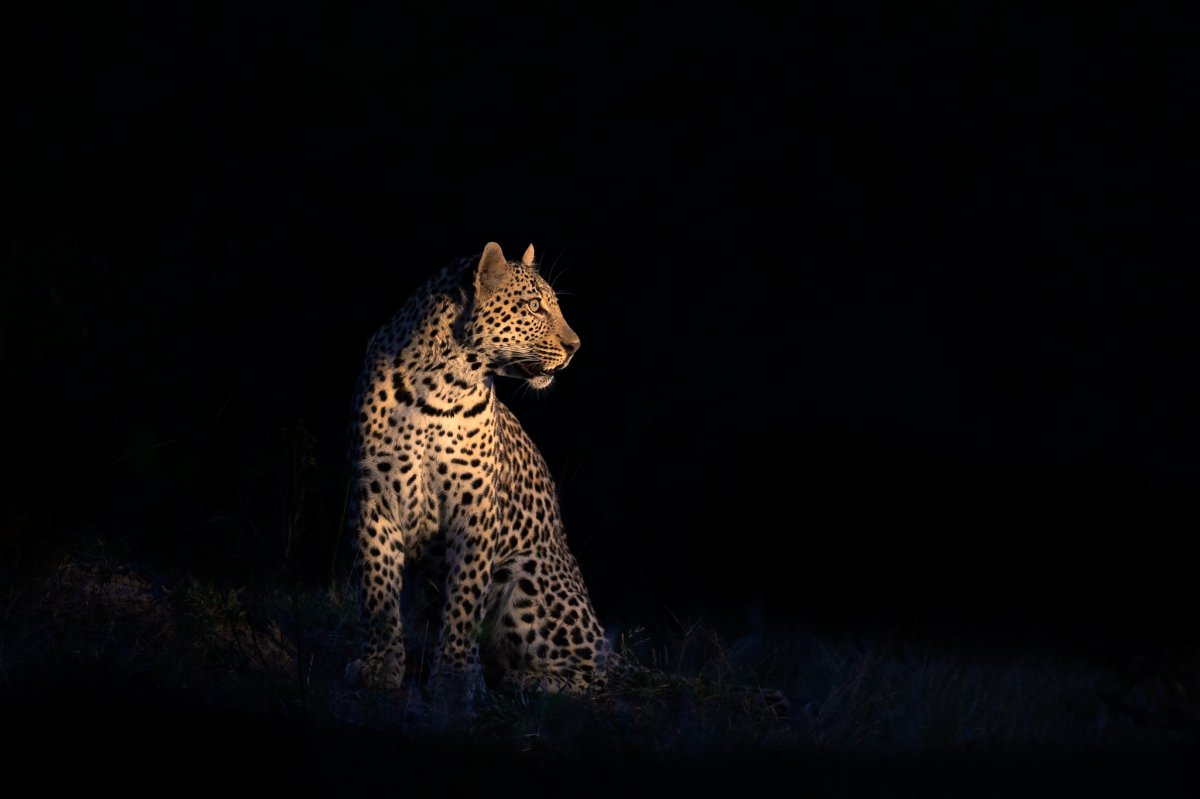

Most photographers spend their entire safari squinting at distant thickets, hoping for a spotted tail that never appears. It is a common frustration to invest thousands in a trip only to leave without a single clear frame of the world's most elusive cat. You deserve more than a fleeting glimpse from a crowded main road where you aren't allowed to follow the action. If you are tired of guides who don't understand how to position a vehicle for the morning light, it's time for a different approach.
Knowing exactly where to photograph leopards in Africa is the first step toward capturing that career-defining shot of a cat draped over a leadwood branch. In this guide, you'll discover the absolute best locations and professional secrets to finding and photographing these predators in their natural habitat. We'll look at high-density hotspots like South Luangwa, where there is roughly one leopard for every two square kilometers, and the private sands of Greater Kruger. You will also learn how expert tracking and off-road access can turn a quiet morning into an exclusive, front-row seat to the raw beauty of the African bush.
Finding a leopard is a challenge; photographing one is even harder. Success usually depends on one specific factor: habituation. This doesn't mean the cats are tame. It means they've grown comfortable with the presence of vehicles over many years. When a leopard is habituated, it won't bolt the moment you arrive. Instead, it might continue grooming, sleeping, or even hunting while you're parked nearby. If you are deciding where to photograph leopards in Africa, you should prioritize regions where this trust between wildlife and guides has been built over decades.
The Sabi Sands in South Africa is the world's gold standard for leopard encounters. Because it is a private reserve, our guides can drive off-road to follow a sighting deep into the thickets. You aren't stuck on a paved road watching a distant speck through binoculars. You're right there, often just a few meters away, as a leopard moves through the grass. Research from MalaMala shows that guides in this area typically view more than 20 individual leopards every month. This high density, combined with the ability to use spotlights for night photography, creates portfolio-worthy opportunities that are hard to find elsewhere.
Zambia's South Luangwa National Park is legendary for its leopard population. In some parts of the park, it's believed there is one leopard for every two square kilometers. This is the place to capture the iconic shot of a leopard draped over the limb of a sausage tree. The trackers here are some of the most skilled in the world, a talent rooted in the region's long history of walking safaris. They don't just find the cats; they predict their next move. This level of expertise is exactly what we bring to our 2026 scheduled tours, ensuring your vehicle is positioned for the best light before the action starts.
While the Sabi Sands and South Luangwa offer riverine forests, the Masai Mara in Kenya provides a different look. Here, you can find leopards on rocky outcrops or moving across the open plains. The wide-open spaces of the Mara make it easier to track a leopard's movement from a distance, giving you plenty of time to adjust your camera settings before the cat comes into range.
Picking where to photograph leopards in Africa is about more than just finding the cat. It's about the story you want your camera to tell. Every landscape offers a different aesthetic. Some photographers dream of a leopard draped over a thick branch, while others want a cat perched on a massive granite boulder under a vast sky. Your visual style should dictate your destination.
The granite boulders of the Masai Mara and Serengeti create a completely different feel than the riverine forests of Zambia. These rocks provide a clean, uncluttered background that makes the leopard's patterns stand out. To get the most out of these sightings, try using negative space in photography. This technique allows the environment to frame your subject, making the leopard pop against the wild bush without distracting elements in the frame.
Deciding between a national park and a private reserve is a choice between rules and freedom. In a national park, you're usually limited to the roads. In a private conservancy, we have the freedom to go off-road. This means we can follow a leopard as it moves through the brush, giving you the chance to wait for a perfect yawn or an intense stare. Fewer vehicles also mean more time with the cat. You won't feel rushed by a line of cars waiting for their turn. If you're looking for this level of exclusivity, our tailor made tours are designed to put you in the right spot at the right time.
Timing and gear are your final considerations. The dry season from June to October makes tracking easier because the grass is short. However, the green season brings dramatic clouds and lush colors that make for striking portraits. Your lens choice will also change. In the Sabi Sands, the cats are often relaxed enough for a wide-angle shot. In the open plains of the Mara, you'll likely need a 500mm or 600mm lens to capture the action from a distance.
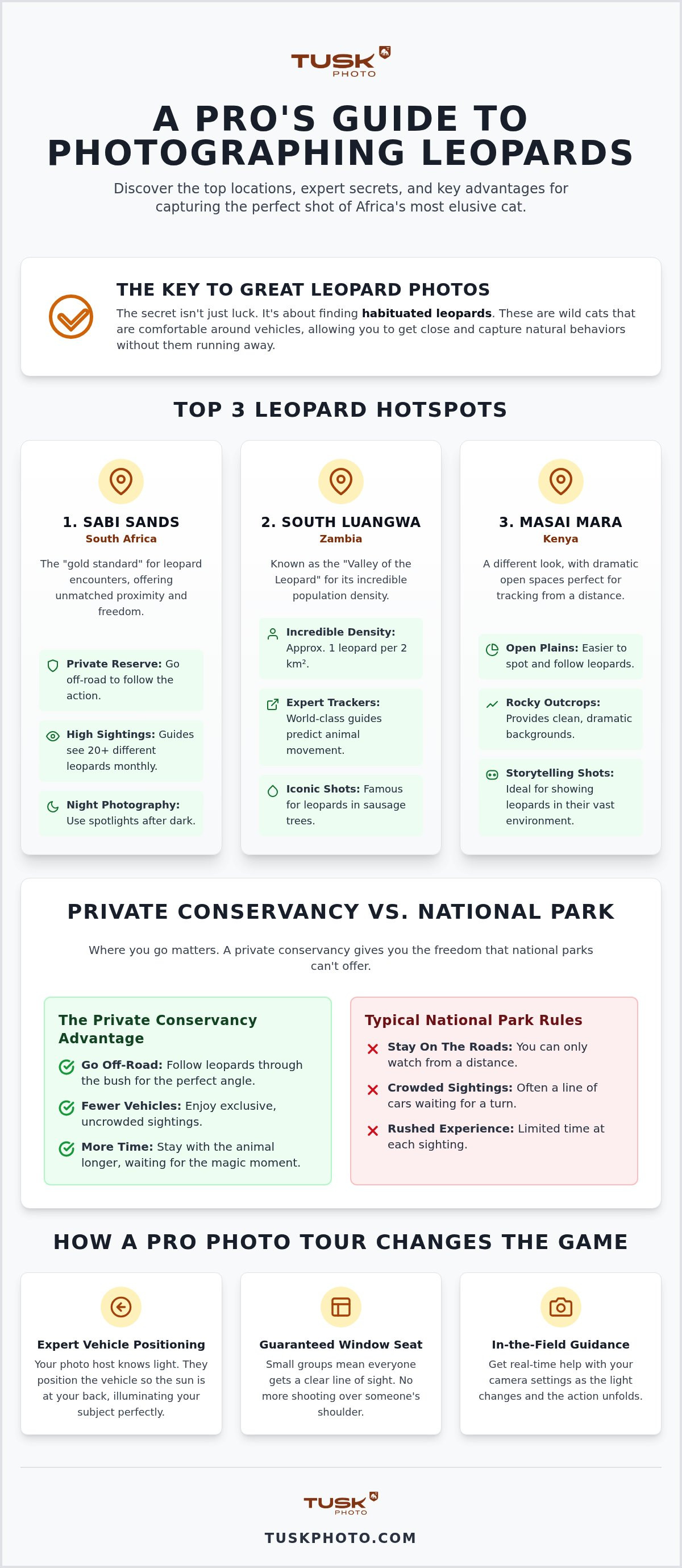
Deciding where to photograph leopards in Africa is a major part of the puzzle, but who you travel with is just as important. A standard safari guide is trained to find wildlife and keep you safe. A photography host does all that while also speaking the language of your camera. They understand that a leopard in a dark thicket requires different settings than one perched on a sunlit branch. Our hosts prioritize vehicle positioning, ensuring the sun is at your back so the leopard's eyes are perfectly illuminated.
Our tours are designed for everyone, from those picking up a camera for the first time to seasoned pros. Your host is there to help you adjust your settings on the fly as the action happens. If a leopard suddenly moves from deep shade into a patch of golden light, we'll guide you through the changes needed to keep your exposure perfect. It's like having a mentor right beside you in the bush, helping you turn a good sighting into a great photograph.
If you have a very specific shot in mind, a tailor-made photography safari is the best way to reach your goals. We can customize the itinerary to spend more time in regions that match your visual style. For those who prefer the ease of a pre-planned journey, booking a scheduled departure photography tour takes the stress out of planning. You can check our latest tour dates to start planning your 2026 expedition and finally capture the elusive beauty of Africa's most graceful cat.
Capturing a world-class image of a leopard takes more than just being in the right park. It requires understanding how habitat dictates your background and why private access is essential for following a sighting off-road. Whether you choose the riverine forests of Zambia or the granite boulders of the Mara, your success depends on a guide who understands light as well as they understand tracking.
When you are deciding where to photograph leopards in Africa, remember that exclusivity and expertise make all the difference. Our tours provide exclusive access to Africa’s premier leopard territories. You'll be led by award-winning photography hosts who ensure you are always in the best position for the shot. With small groups limited to a maximum of six photographers, you'll have the space and mentorship needed to truly elevate your portfolio.
Ready to start your journey? View our 2026 Leopard Photography Tour Dates and join us for an unforgettable expedition. The wild is waiting, and we can't wait to help you see it through your lens.
The dry season between June and October is generally the best time for leopard photography. During these months, the vegetation thins out and the grass is much shorter, making it easier to spot cats that would otherwise stay hidden in thick brush. Since water is scarce, leopards often stick close to permanent water sources, which makes their movements much easier for our trackers to predict.
You don't always need a giant lens to get great shots, especially in places like the Sabi Sands where the cats are very relaxed. In these private reserves, we can often get quite close to the subject, making a versatile 100-400mm lens perfect. However, when you are deciding where to photograph leopards in Africa, keep in mind that open plains like the Masai Mara might require a longer 500mm or 600mm lens to capture distant action.
Both regions are incredible, but they offer very different photographic styles. South Africa is the best choice for close-up portraits and night photography because of the high density of habituated cats in private reserves. East Africa is better if you want to capture leopards in wide-open landscapes or perched on large granite boulders. Both areas provide world-class sightings, so the choice depends on the specific look you want for your portfolio.
Leopards are not dangerous to photograph from an open vehicle as long as you follow the safety rules. These cats have grown up around safari trucks and see the vehicle as a single, neutral object rather than a threat or a meal. It's vital to stay seated and keep your gear inside the frame of the car. This respect for their personal space keeps the animals calm and allows them to behave naturally while you take your photos.


